Boost critical thinking Math Worksheets for Ages 4-7
4 filtered results
-
From - To
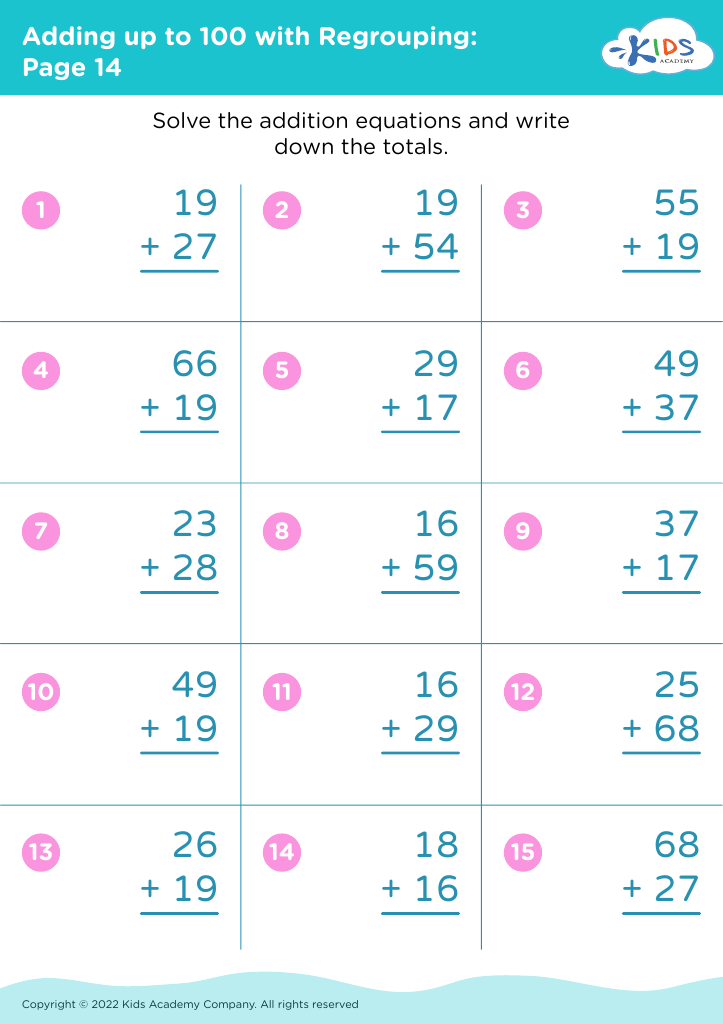
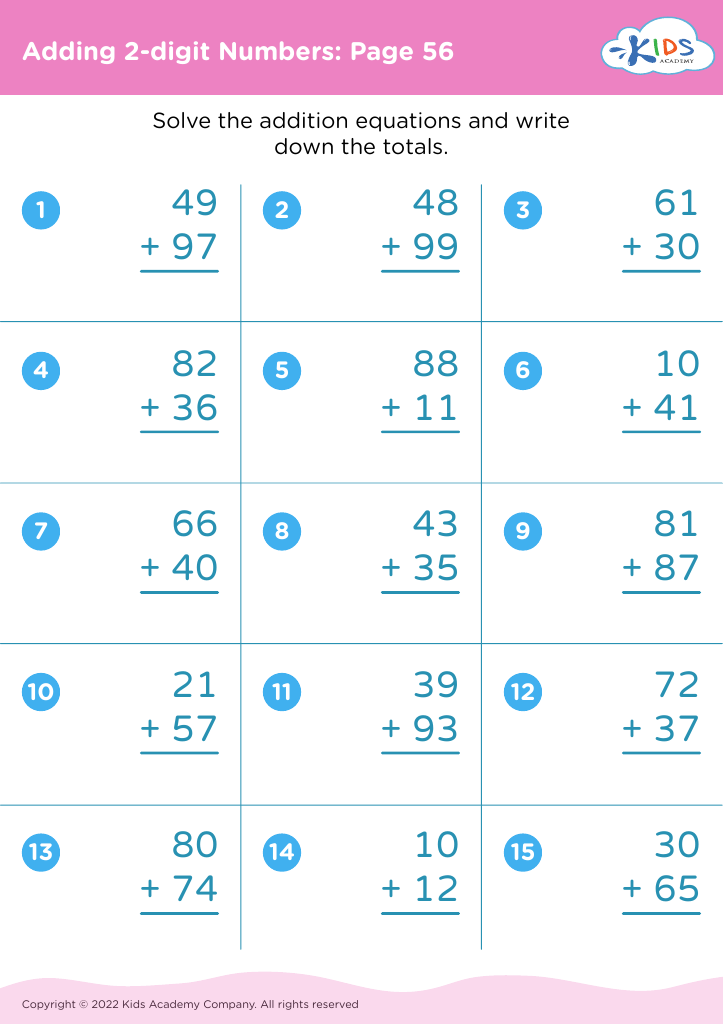
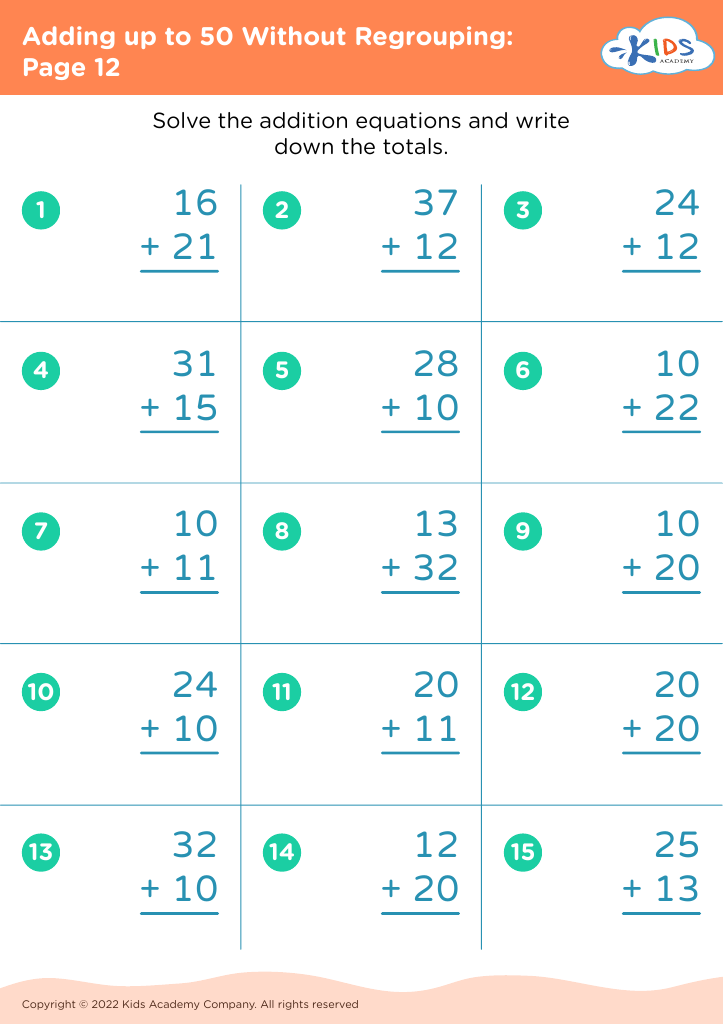
Unlock your child's potential with our "Boost Critical Thinking Math Worksheets" designed for ages 4-7. These engaging worksheets enhance early mathematical skills through fun challenges that promote critical thinking and problem-solving. Our carefully crafted activities encourage children to analyze, evaluate, and apply their knowledge, laying a strong foundation for future learning. Whether exploring shapes, patterns, or simple addition, each worksheet enhances cognitive development while keeping math enjoyable. Ideal for both home and classroom settings, these resources inspire curiosity and confidence in young learners. Start your child's learning journey today and watch them thrive with essential critical thinking skills!

 Assign to My Students








Boosting critical thinking in math for children ages 4-7 lays a foundational skill set crucial for their overall development. At this age, children are naturally curious, and fostering this curiosity through critical thinking encourages active engagement rather than passive learning. By focusing on problem-solving, reasoning, and analytical skills, children learn to approach mathematical challenges with creativity and persistence.
Parents and teachers should care because these early years are pivotal for cognitive development. Critical thinking not only enhances math skills but also applies to everyday decision-making and learning in other subjects. Skills such as identifying patterns, making predictions, and understanding cause-and-effect relationships are essential life skills that transcend mathematics.
Moreover, nurturing critical thinking helps children build confidence in their abilities, creating a positive association with learning. It encourages them to ask questions, think independently, and develop resilience when facing challenges. In a rapidly changing world that increasingly values innovation and adaptability, equipping young learners with these critical skills prepares them for future academic and personal success. Ultimately, by prioritizing critical thinking in math during the early years, parents and teachers invest in a child’s lifelong learning journey and emotional well-being.








