Building vocabulary Math Worksheets for Ages 4-7
3 filtered results
-
From - To
Unlock your child's mathematical potential with our "Building Vocabulary Math Worksheets for Ages 4-7". Designed for early learners, these engaging worksheets foster vocabulary development while enhancing math skills. Our age-appropriate activities introduce key terms and concepts in a fun and interactive way, enabling children to grasp foundational math language with ease. Parents and educators can utilize these resources to support young students in recognizing and using essential math vocabulary, empowering them for future academic success. Perfect for at-home learning or classroom use, these worksheets make math accessible, enjoyable, and comprehensible – setting a strong groundwork for your child’s educational journey!
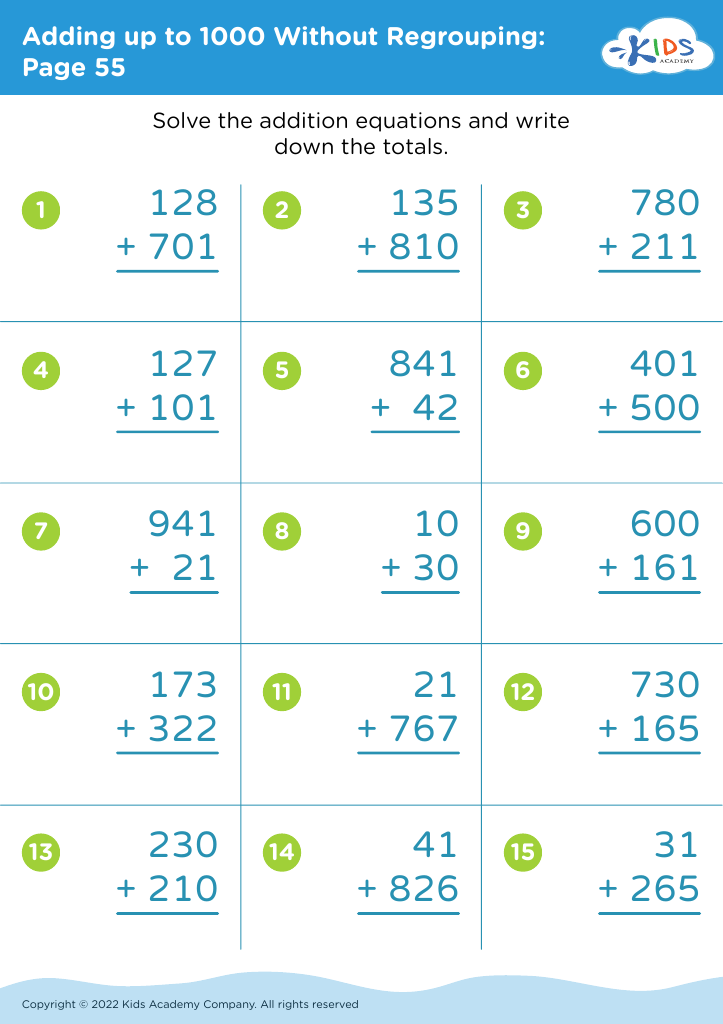
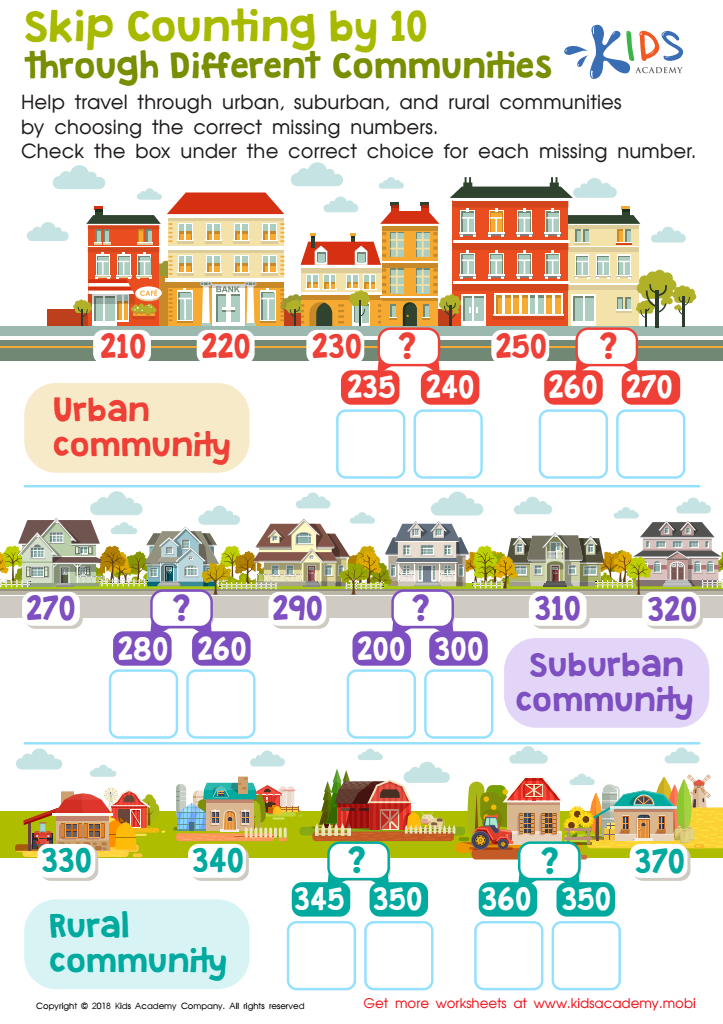
Skip Counting by 10 through Different Communities Worksheet
 Assign to My Students





.jpg)


Building vocabulary in math for children aged 4-7 is crucial for their overall cognitive development and future academic success. At this age, children are in a key stage of linguistic and mathematical growth, where they begin to understand and articulate mathematical concepts. Introducing mathematical vocabulary early—such as "add," "subtract," "more," "fewer," and "equal"—helps them develop a foundational understanding of numbers and operations, facilitating problem-solving skills later on.
Furthermore, a strong math vocabulary reinforces comprehension; when children can express their mathematical ideas clearly, they are more likely to understand new concepts and retain information. This early fluency boosts their confidence, encouraging them to engage with math-related activities without fear or confusion.
When parents and teachers prioritize math vocabulary, they empower children to communicate their thoughts, ask questions, and explain their reasoning—all of which are vital skills in both math and learning in general. Moreover, fostering a positive relationship with math early on can lead to increased interest and performance in the subject as they grow, setting the stage for future success in STEM pathways. Overall, building vocabulary in math not only enhances mathematical skills but also supports broader educational development.








