Filters

358 filtered results

Clear all filters
Favorites
With answer key
Interactive

358 filtered results

Difficulty Level

Grade


Check out this FREE Trial Lesson on Math for age 4-7!

Breaking Down 6

Favorites
With answer key
Interactive
  • 4-7
  • Counting practice
  • Math
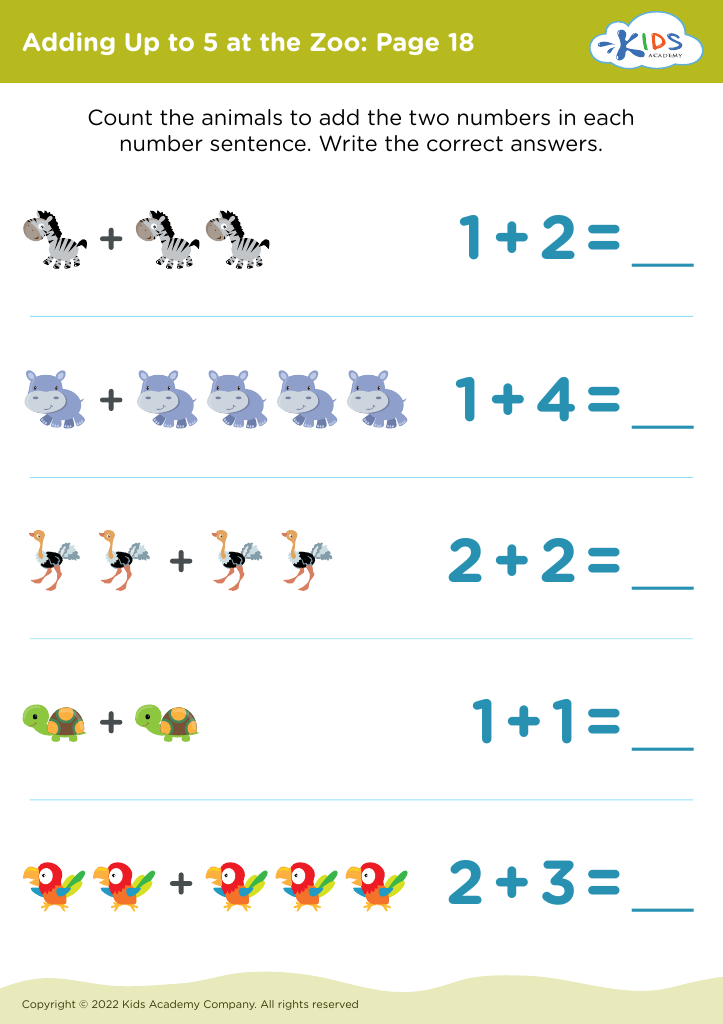
Adding Up to 5 at the Zoo: Page 18
Worksheet
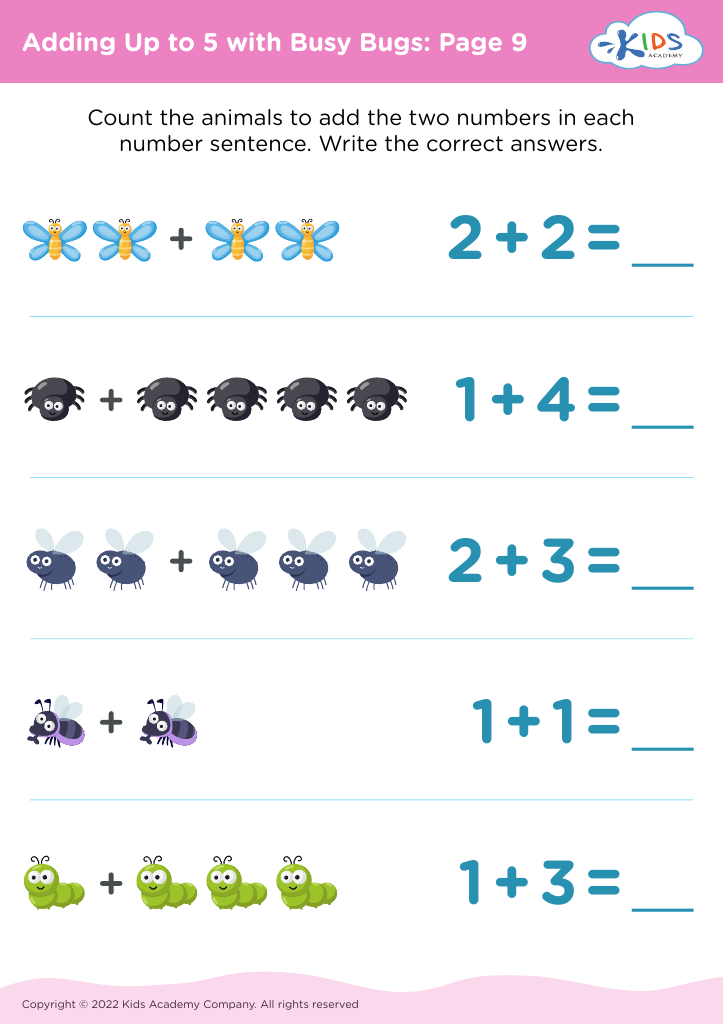
Adding Up to 5 with Busy Bugs: Page 9
Worksheet
6 Parrots Worksheet
6 Parrots Worksheet

6 Parrots Worksheet

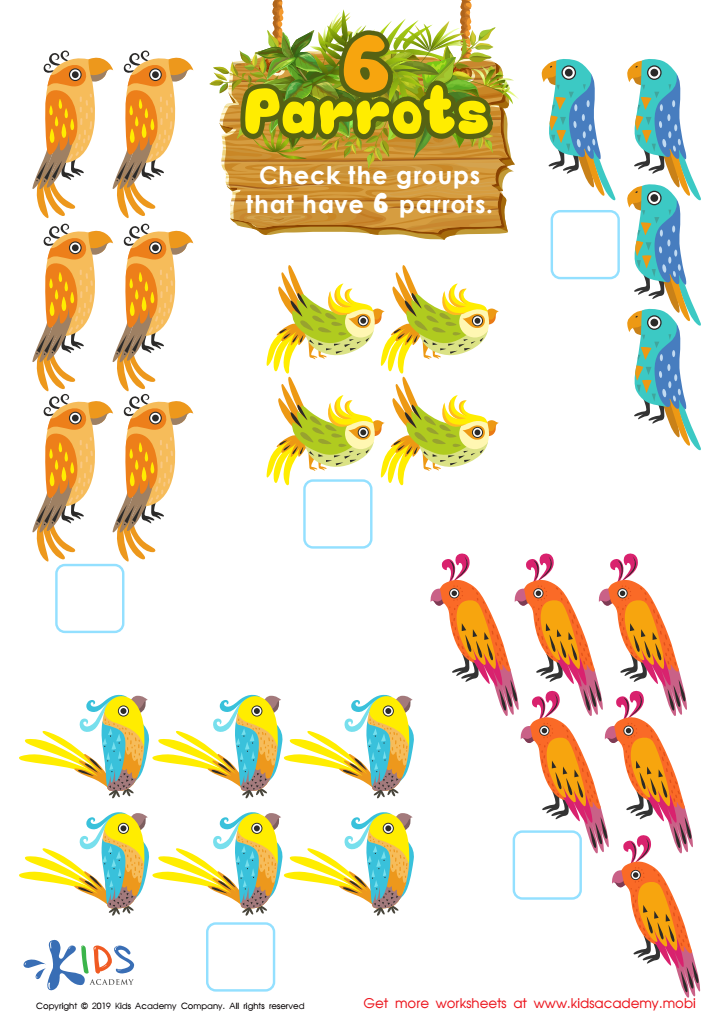
Love parrots? Here's a free worksheet to help your children practice counting to six with colorful parrot representations! Kids will adore counting the parrots and checking off groups of six - and it won't even feel like math! Just a fun way to make some new and exciting friends.
6 Parrots Worksheet
Worksheet
Make it Even: St. Valentine's Day Worksheet
Make it Even: St. Valentine's Day Worksheet
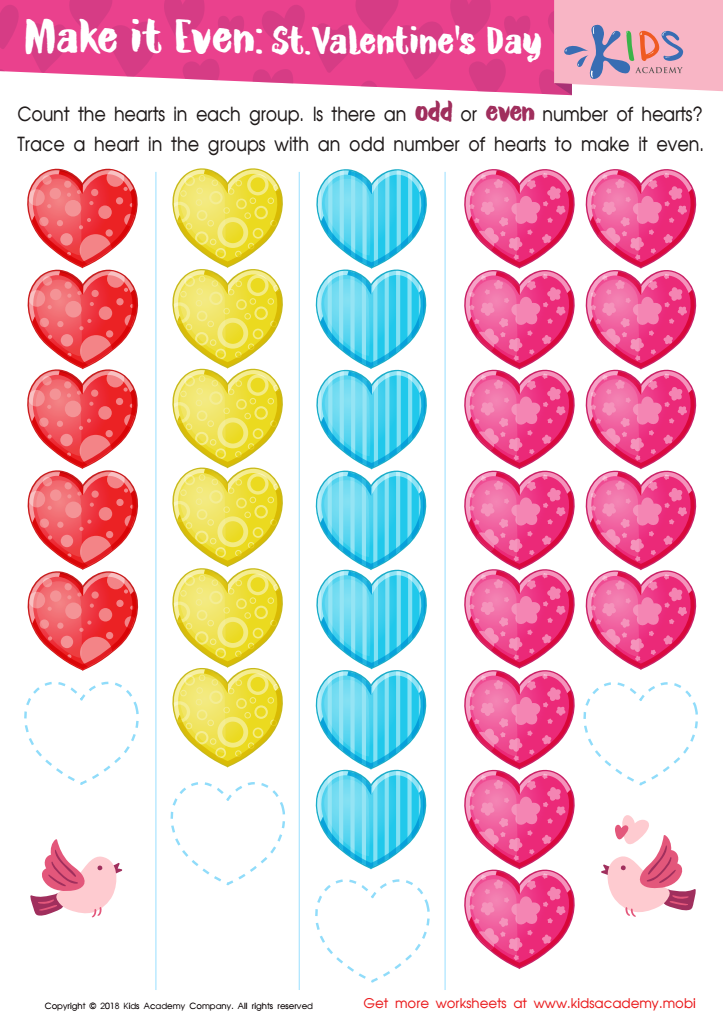
Does your child love Valentine's Day? Make it special with this worksheet! Kids can use their counting skills to determine if each group has an even or odd number of hearts, then trace a heart in the odd groups. Help them make it even and have fun!
Make it Even: St. Valentine's Day Worksheet
Worksheet
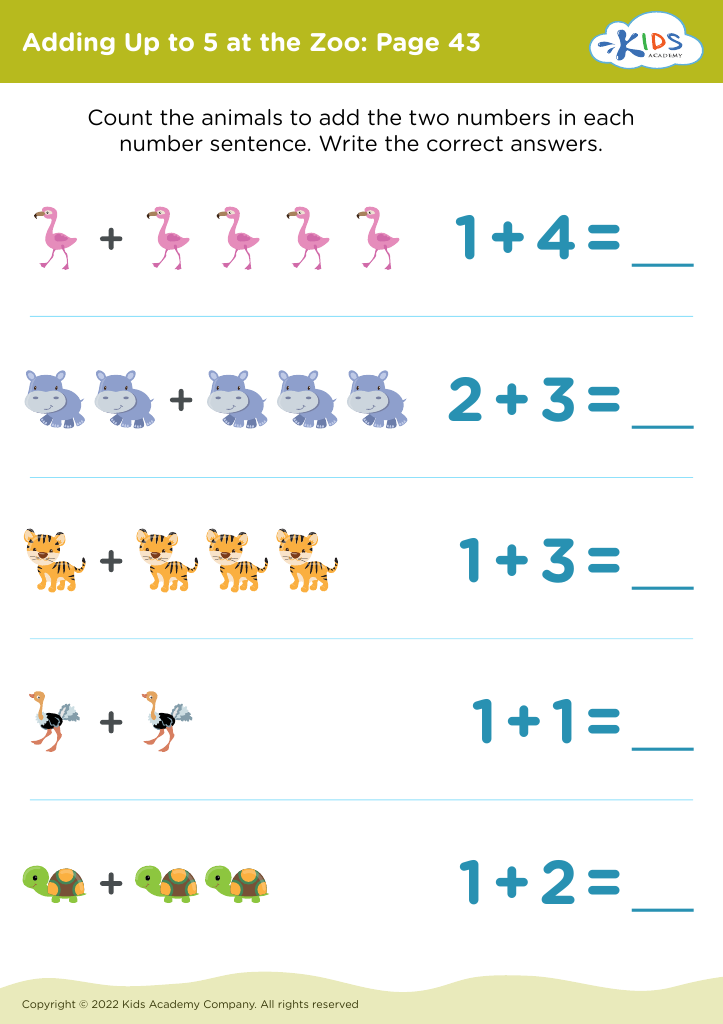
Adding Up to 5 at the Zoo: Page 43
Worksheet
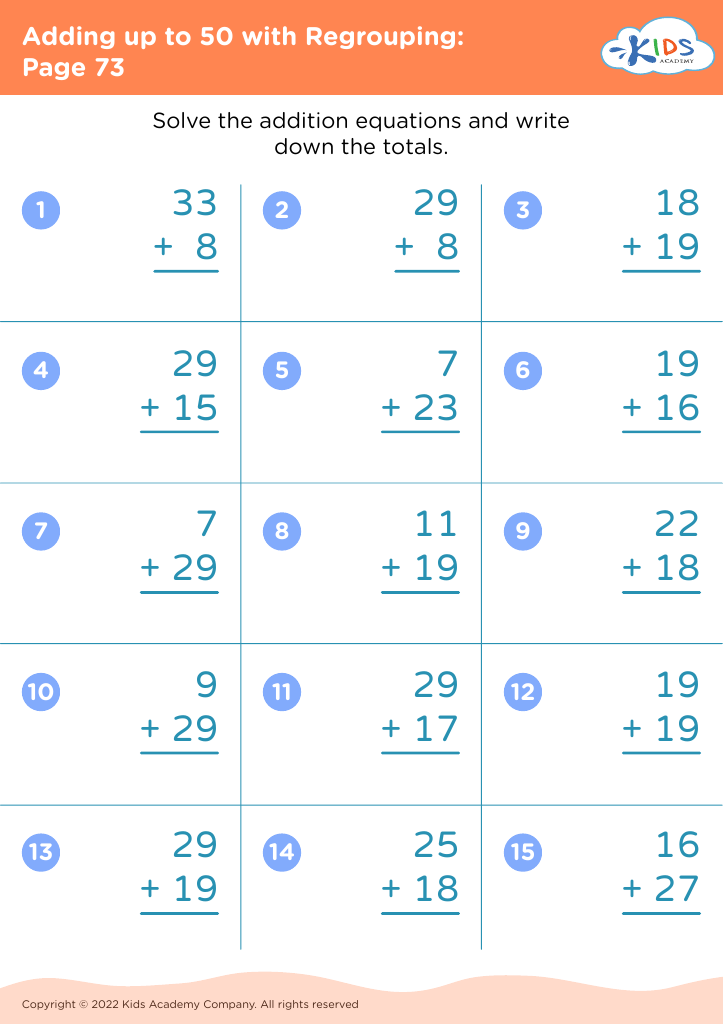
Adding up to 50 with Regrouping: Page 73
Worksheet
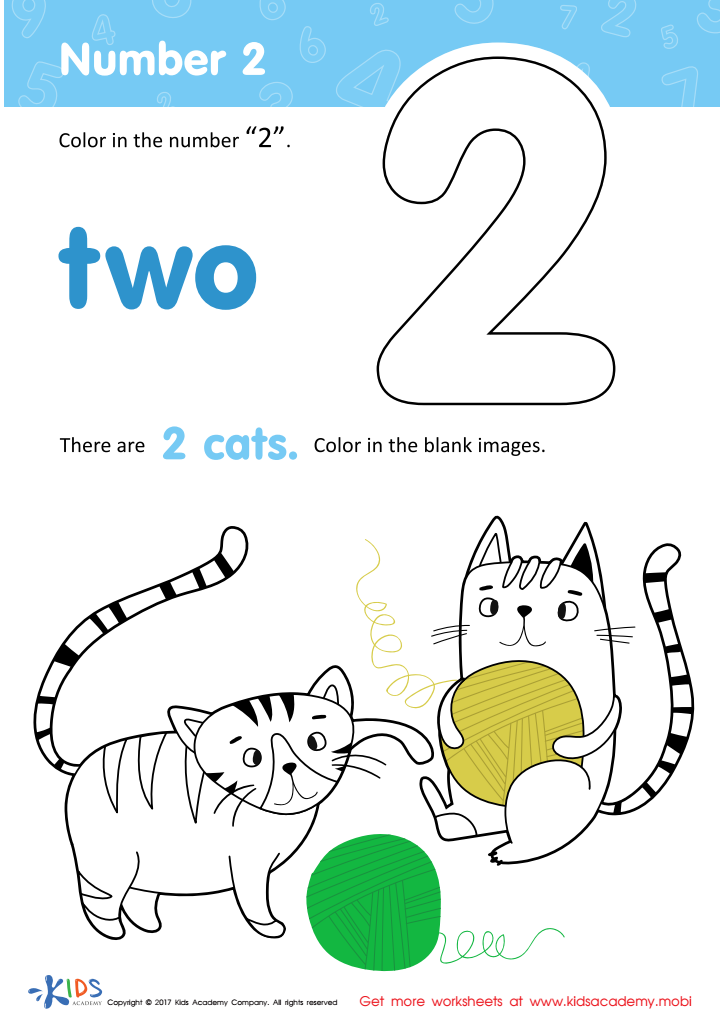
Coloring Page: Number 2

Number 2 Printable

Help your child learn to recognize the number two with these cats and their yarn balls. Print this coloring page – it's great for counting and coloring fun! Your child will develop basic numeracy skills as they visually see numbers in action.
Download (PDF)
Assign to My Students
Number 2 Printable
Worksheet
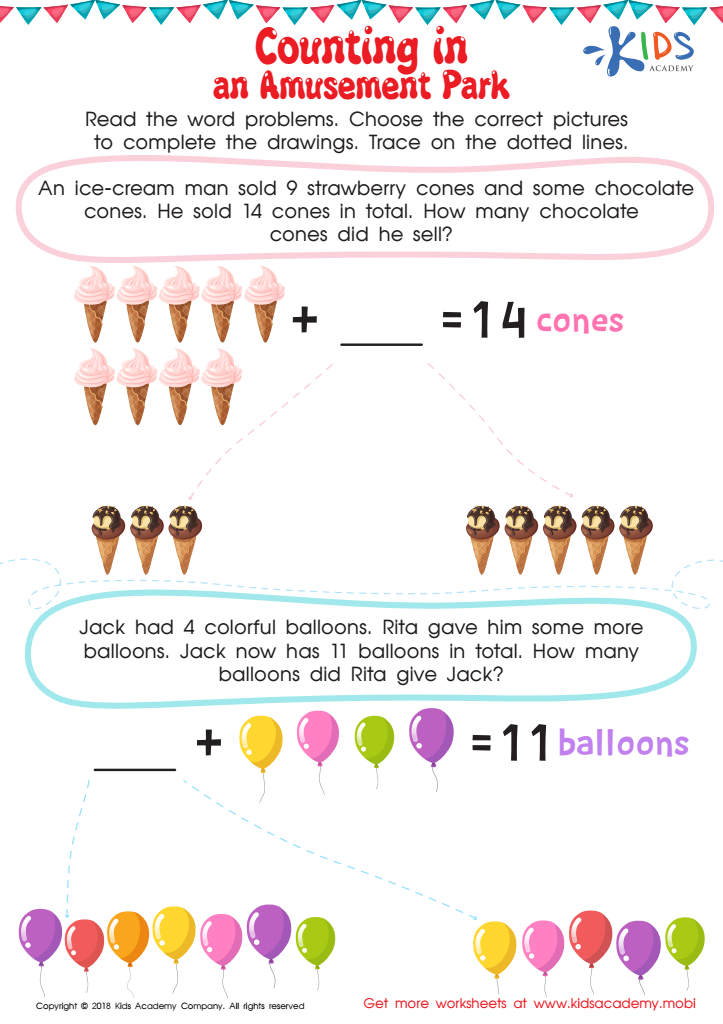
Counting in an Amusement Park Worksheet
Counting in an Amusement Park Worksheet

Love amusement parks? This colorful worksheet is sure to delight your child as they solve basic addition problems with missing addends. Picture representations help them solve the math equations, while traceable lines help them accurately complete the drawings. No roller coaster ride here, but still loads of fun!
Counting in an Amusement Park Worksheet
Worksheet
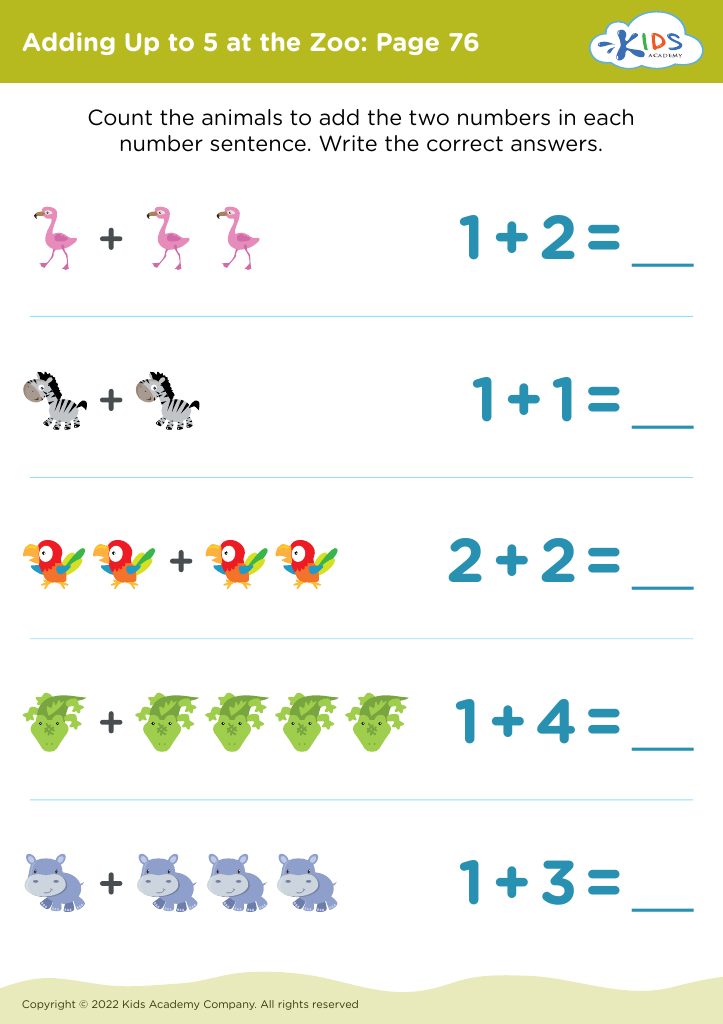
Adding Up to 5 at the Zoo: Page 76
Worksheet
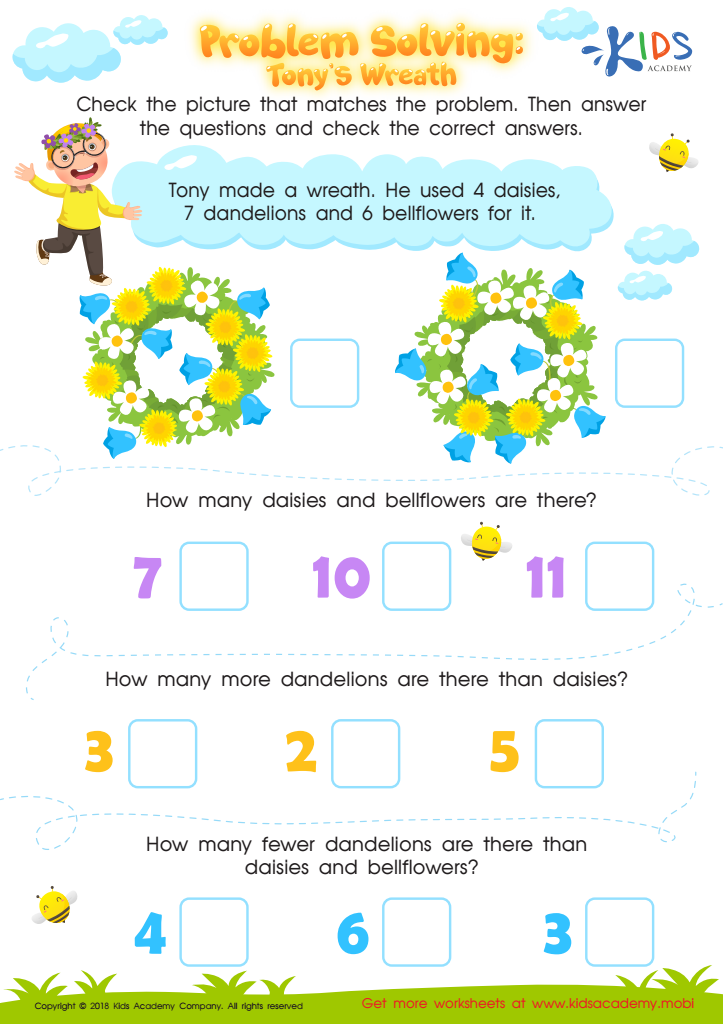
Problem Solving: Tony's Wreath Worksheet
Problem Solving: Tony's Wreath Worksheet
Tony needs help! He's made a beautiful, colorful wreath and needs help counting the flowers. Your math student can read the word problems, match answers to the problems and solve basic addition and subtraction. They'll practice with two and three addends, minuends and subtrahends to find sums and differences and help Tony and his bee friends.
Problem Solving: Tony's Wreath Worksheet
Worksheet
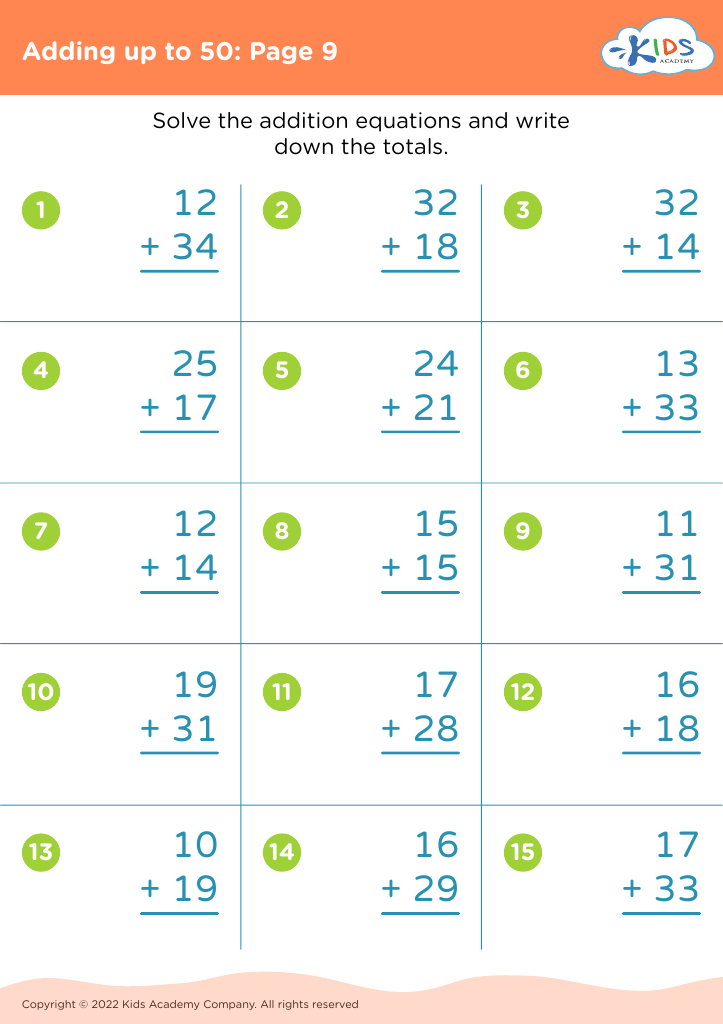
Adding up to 50: Page 9

Adding up to 50: Page 9

Adding up to 50: Page 9
Worksheet
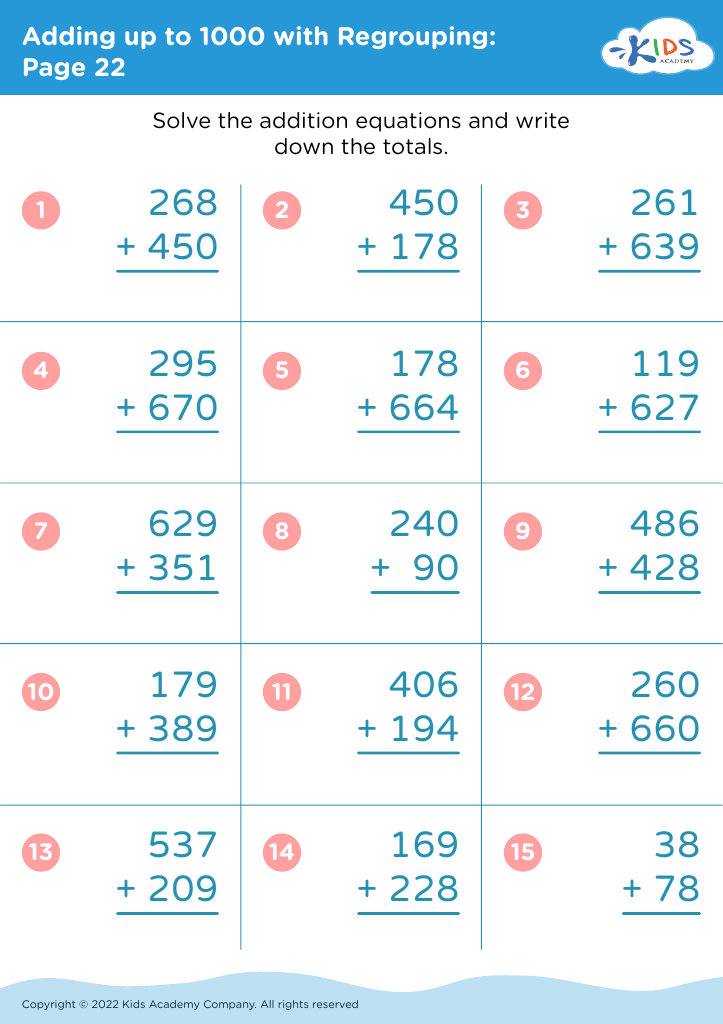
Adding up to 1000 with Regrouping: Page 22
Worksheet
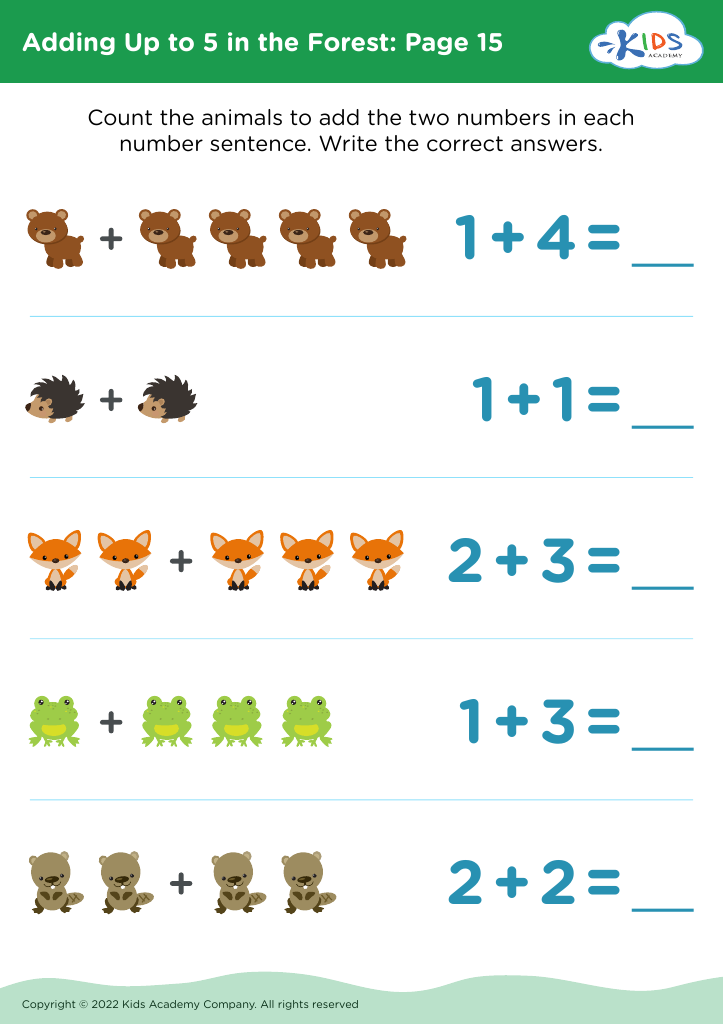
Adding Up to 5 in the Forest: Page 15
Worksheet
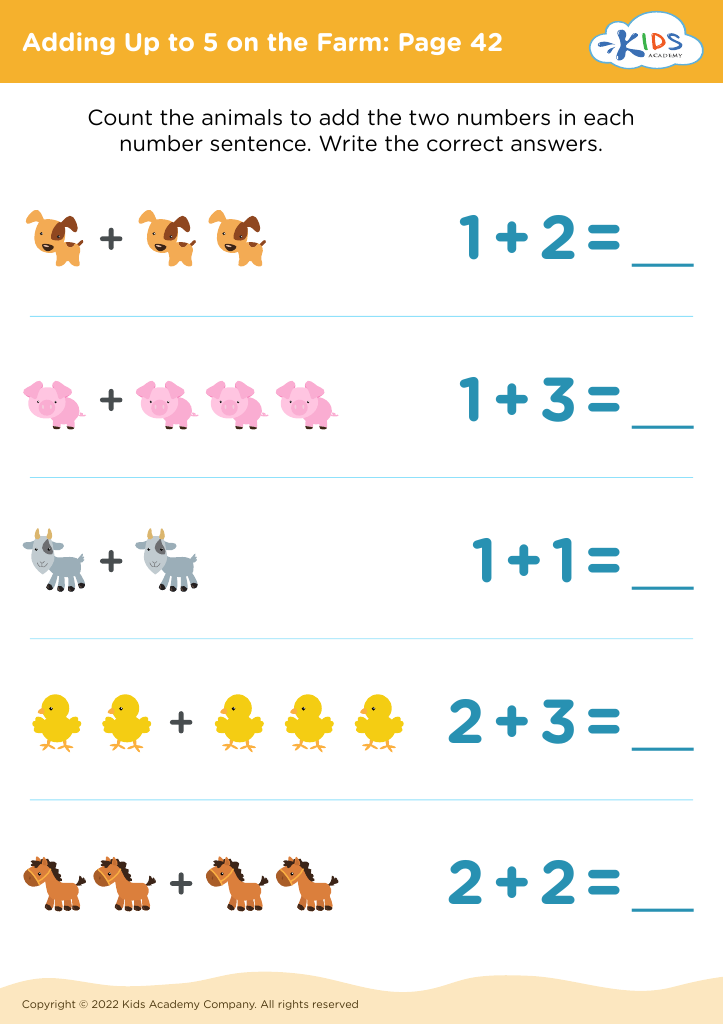
Adding Up to 5 on the Farm: Page 42
Worksheet
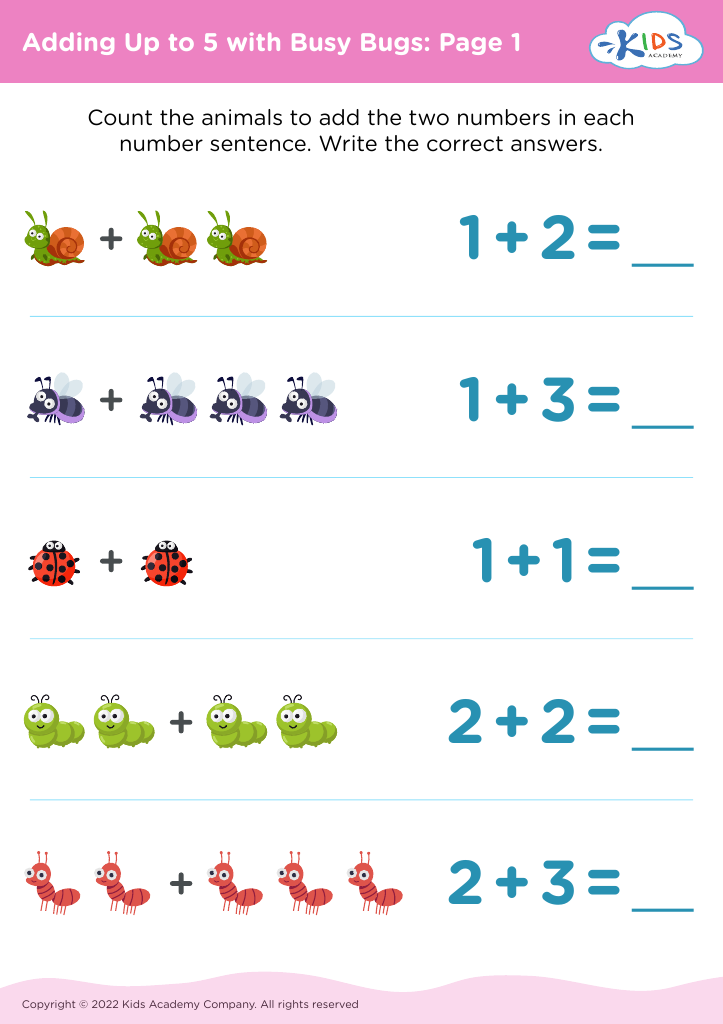
Adding Up to 5 with Busy Bugs: Page 1
Worksheet
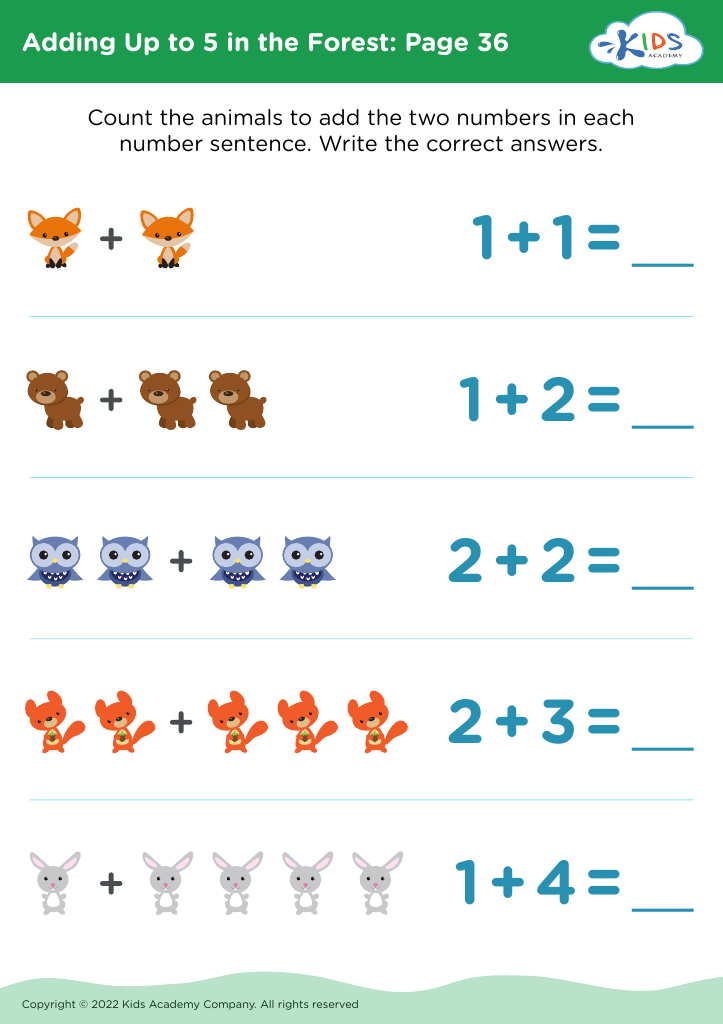
Adding Up to 5 in the Forest: Page 36
Worksheet
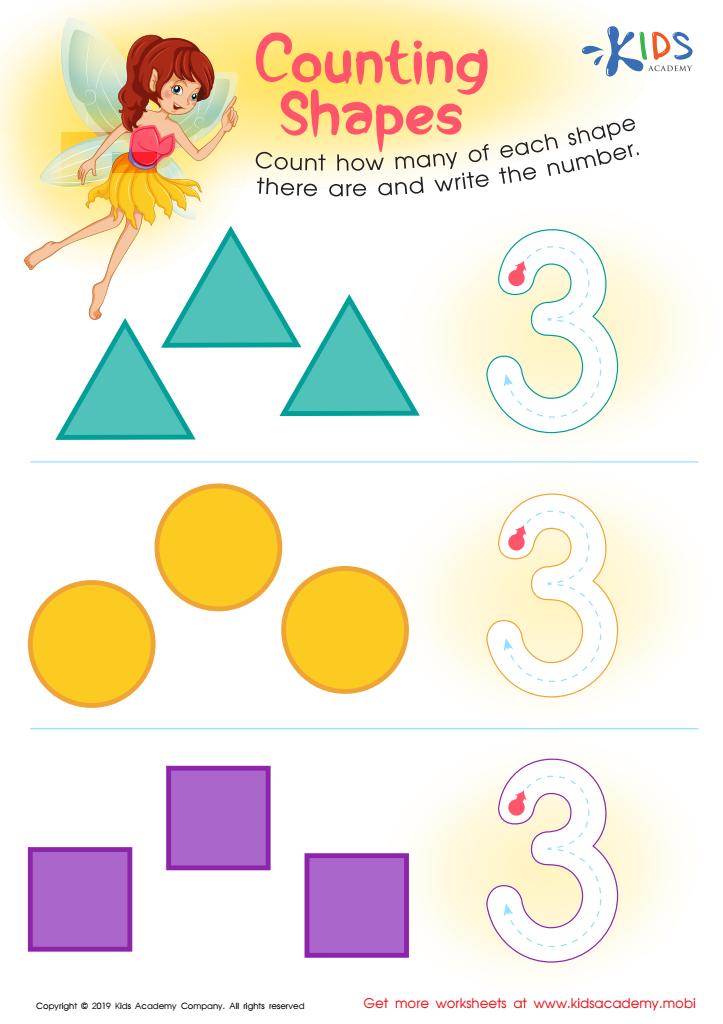
Counting Shapes Worksheet
Counting Shapes Worksheet
Counting and number sense are essential skills. Picture representation helps kids understand and remember concepts. This free worksheet is perfect for introducing numbers and counting in groups of three. It also helps kids to practice writing numbers with traceable lines and guiding dots. It's an easy and fun way to give little mathematicians a successful start.
Counting Shapes Worksheet
Worksheet
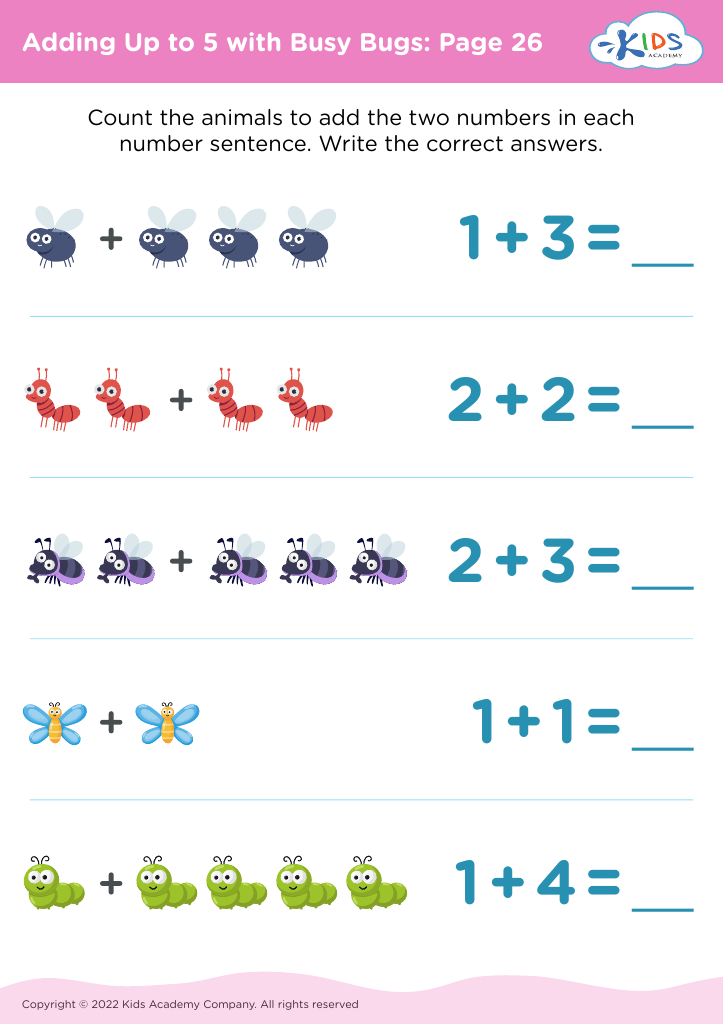
Adding Up to 5 with Busy Bugs: Page 26
Worksheet
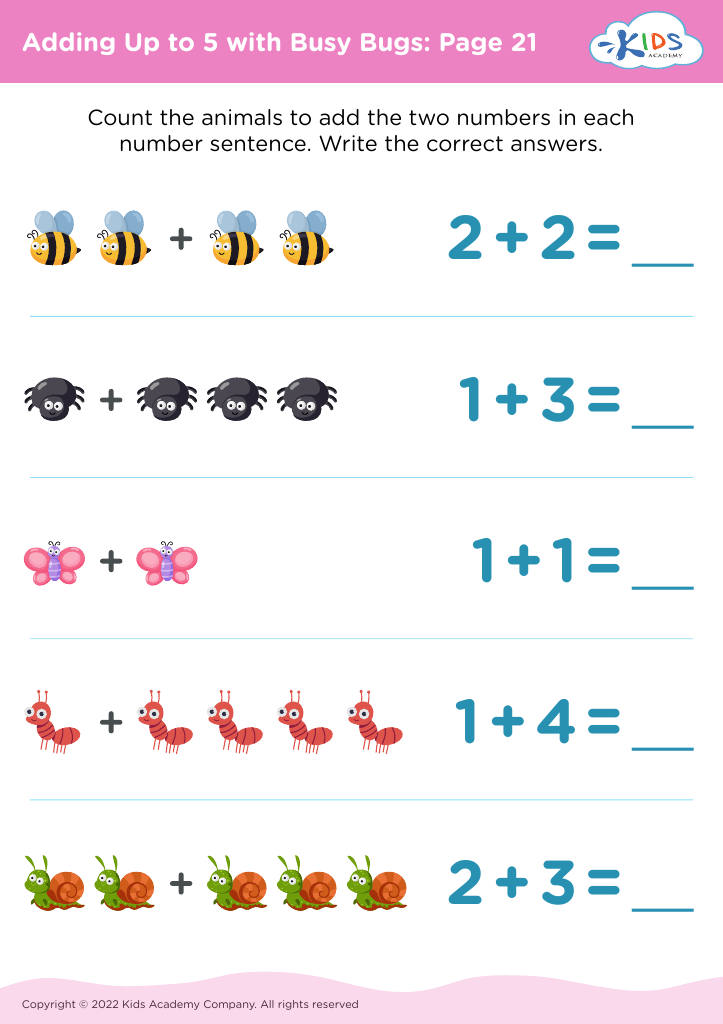
Adding Up to 5 with Busy Bugs: Page 21
Worksheet
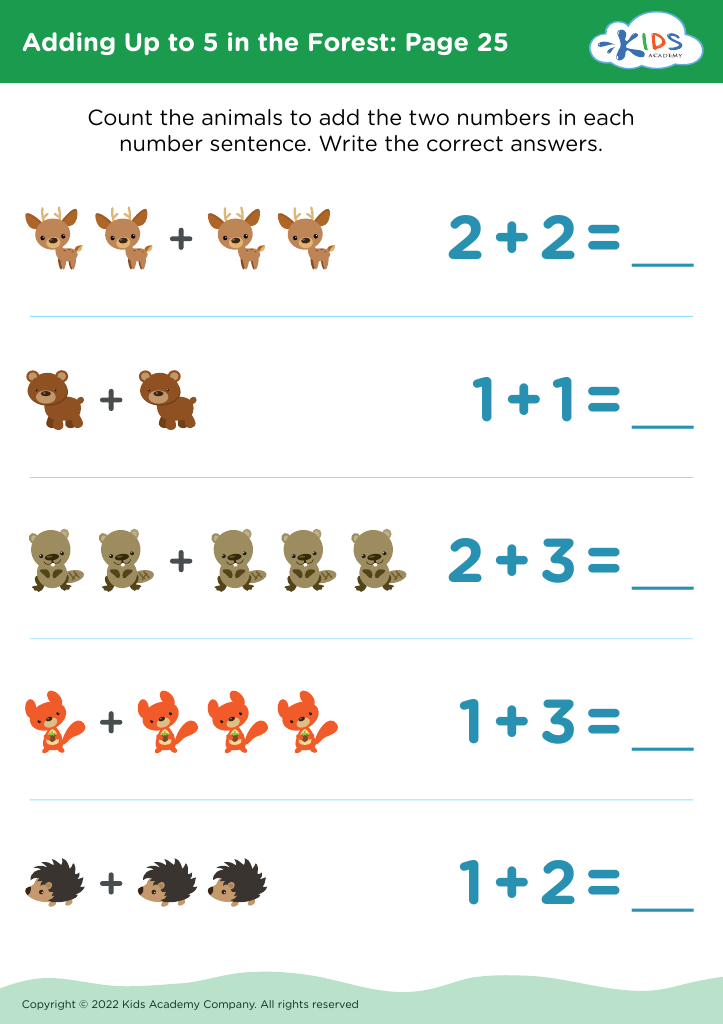
Adding Up to 5 in the Forest: Page 25
Worksheet
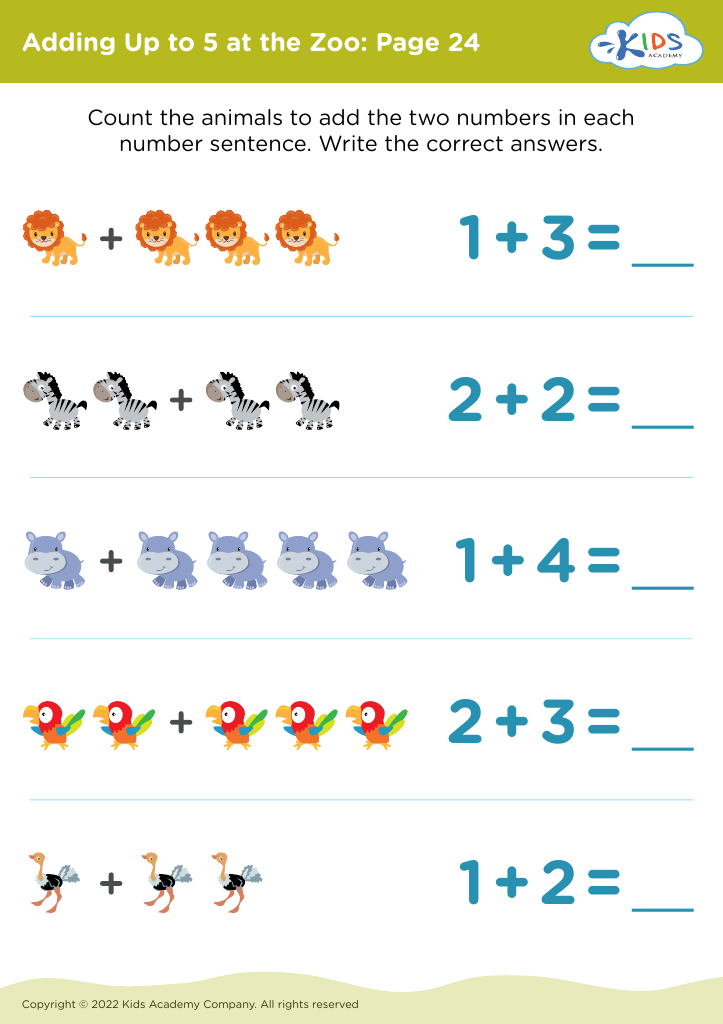
Adding Up to 5 at the Zoo: Page 24
Worksheet
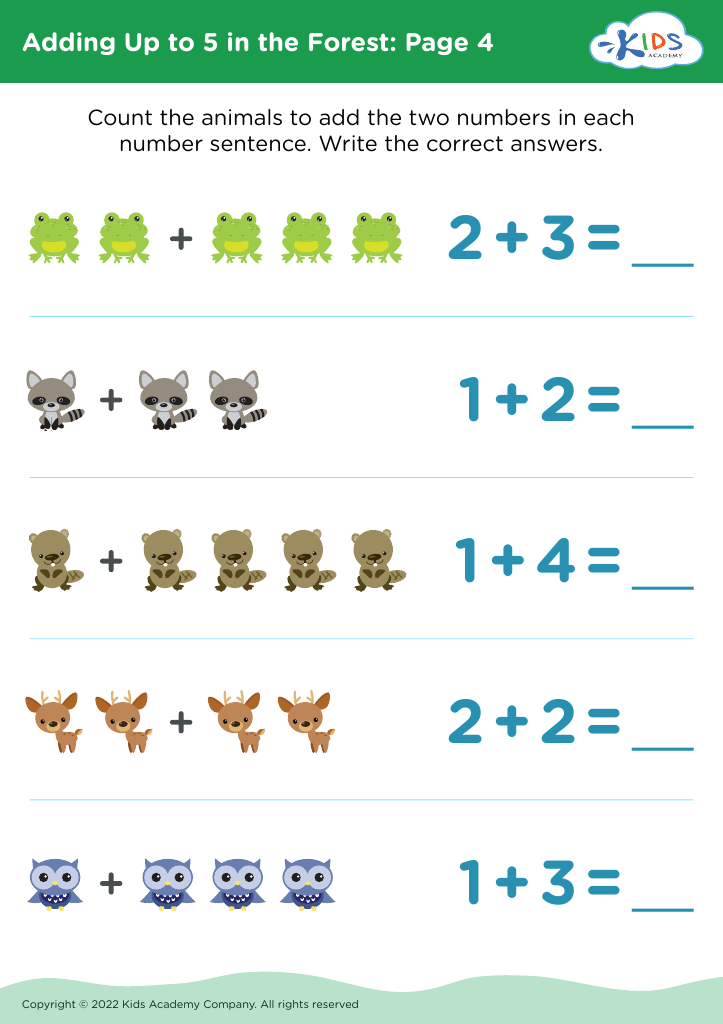
Adding Up to 5 in the Forest: Page 4
Worksheet
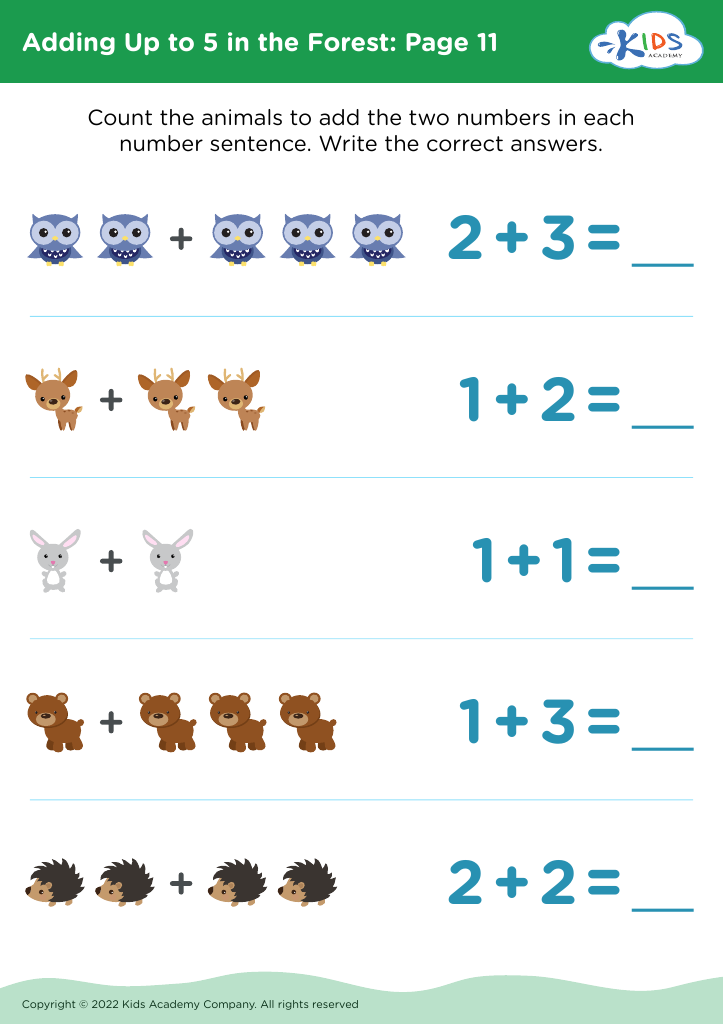
Adding Up to 5 in the Forest: Page 11
Worksheet
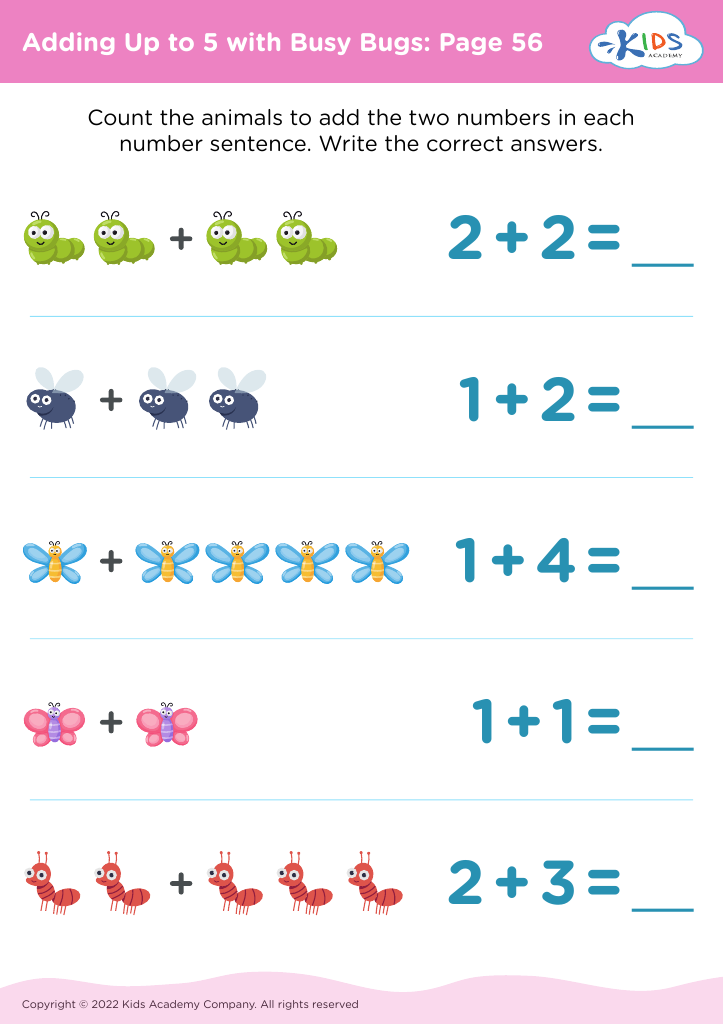
Adding Up to 5 with Busy Bugs: Page 56
Worksheet


Counting practice is a fundamental aspect of early childhood education, particularly for children aged 4-7, as it builds the foundation for all future mathematical learning. Parents and teachers should prioritize this practice because it enhances number sense, the ability to recognize, relate, and manipulate numbers. Proficiency in counting helps children understand basic concepts such as more or less, sequencing, and basic arithmetic, which are crucial for more advanced math topics.

Early counting practice also develops cognitive skills including memory, attention, and logical reasoning. When children engage in activities like counting objects, they learn to focus, follow sequences, and process information in an organized manner.

Moreover, counting practice encourages children to develop problem-solving skills. Teaching kids how to count objects, for example, also teaches them how to approach and solve small problems, making them more adept at handling bigger challenges in the future.

Socially and emotionally, being competent in counting can boost a child's confidence. Mastery of this fundamental skill often leads to early academic success, which can foster a love for learning and set a positive trajectory for a child's educational journey.

In summary, counting practice is not just about numbers but is integral in nurturing well-rounded cognitive and emotional development for young learners. It's an investment in a child’s future, ensuring they have the skills needed for academic success and practical everyday tasks.