
Develop problem-solving skills Math Worksheets for Ages 4-7
9 filtered results
Difficulty Level
Grade
Age
-
From - To
Subject
Activity
Standards
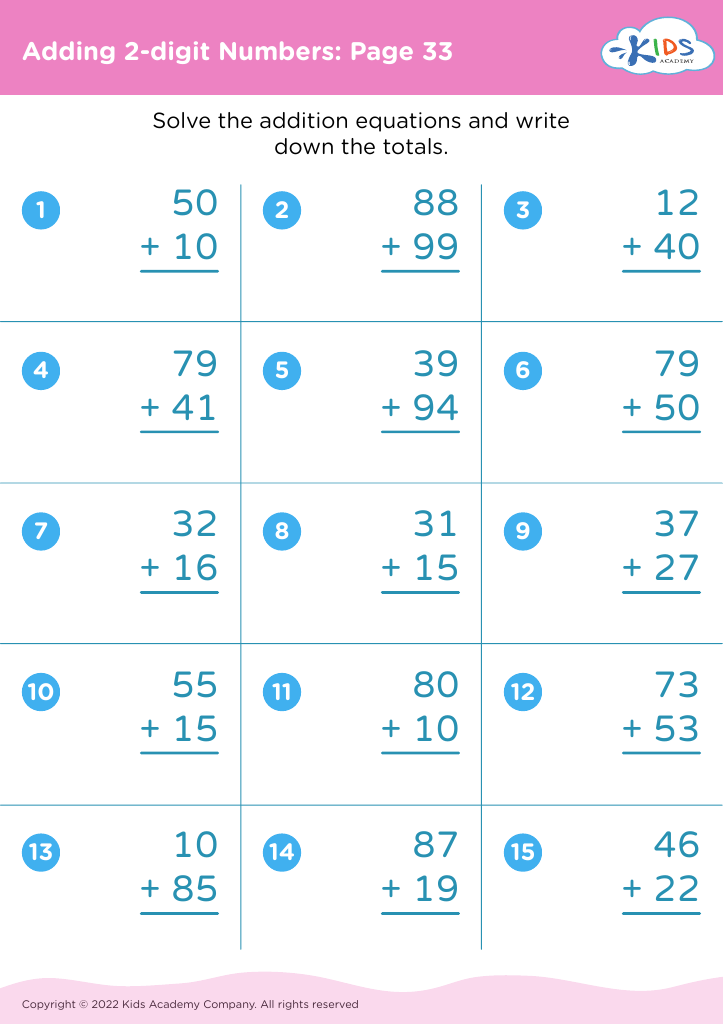
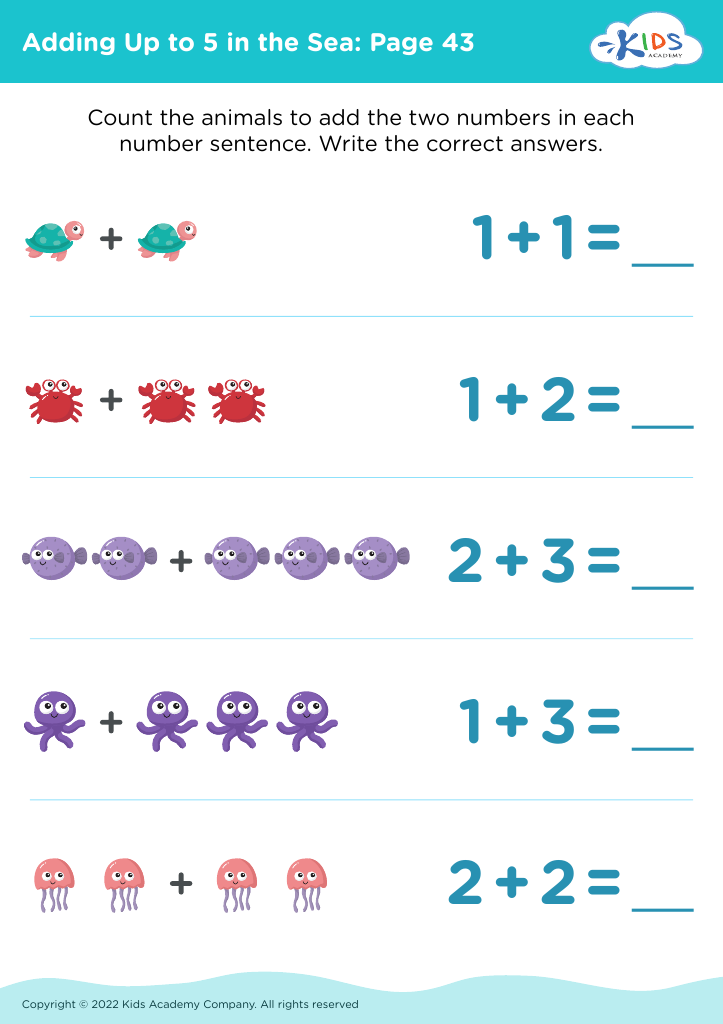
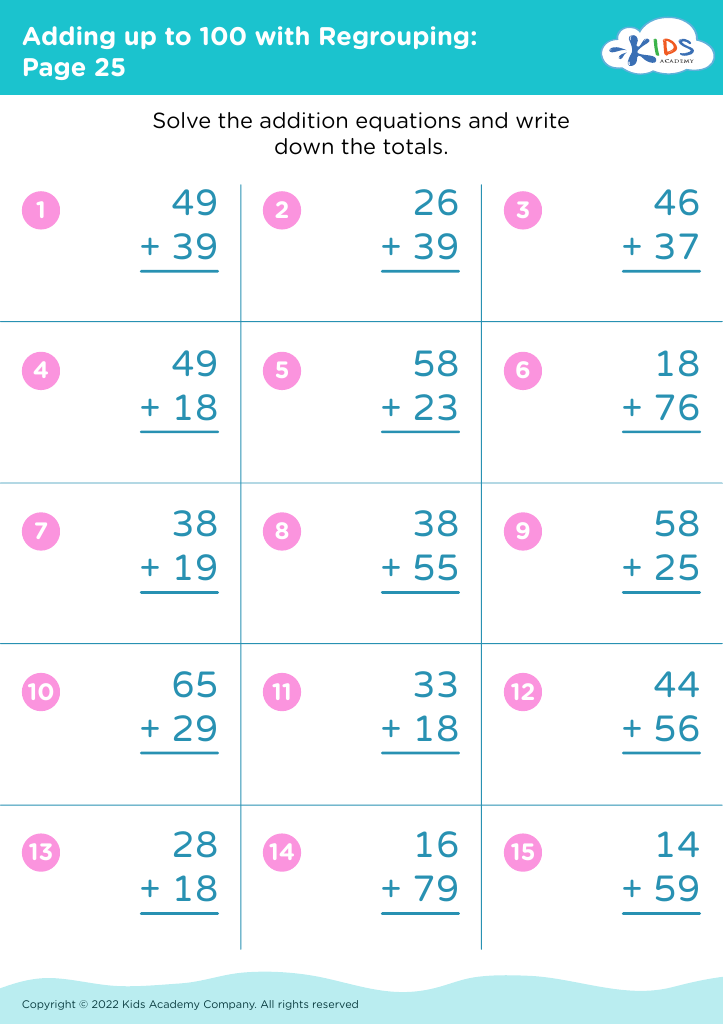
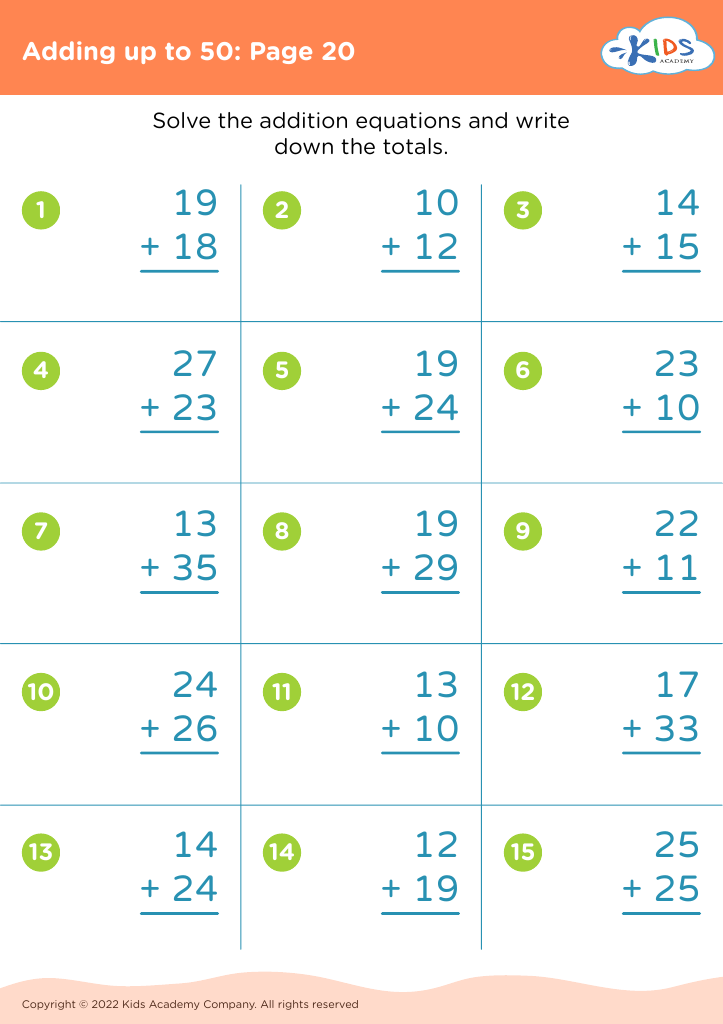
Unlock your child's potential with our Math Worksheets designed specifically for ages 4-7. These engaging activities build essential problem-solving skills while making learning fun. The worksheets include various exercises like counting, addition, subtraction, shape recognition, and basic logic puzzles. Each sheet encourages critical thinking and enhances concentration, establishing a solid mathematical foundation. Perfect for both classroom and home use, our worksheets adapt to your child's learning pace, boosting their confidence and creativity in math. Watch as they tackle challenges, gain new skills, and develop a love for learning mathematics with our carefully crafted resources.
Favorites
With answer key
Interactive
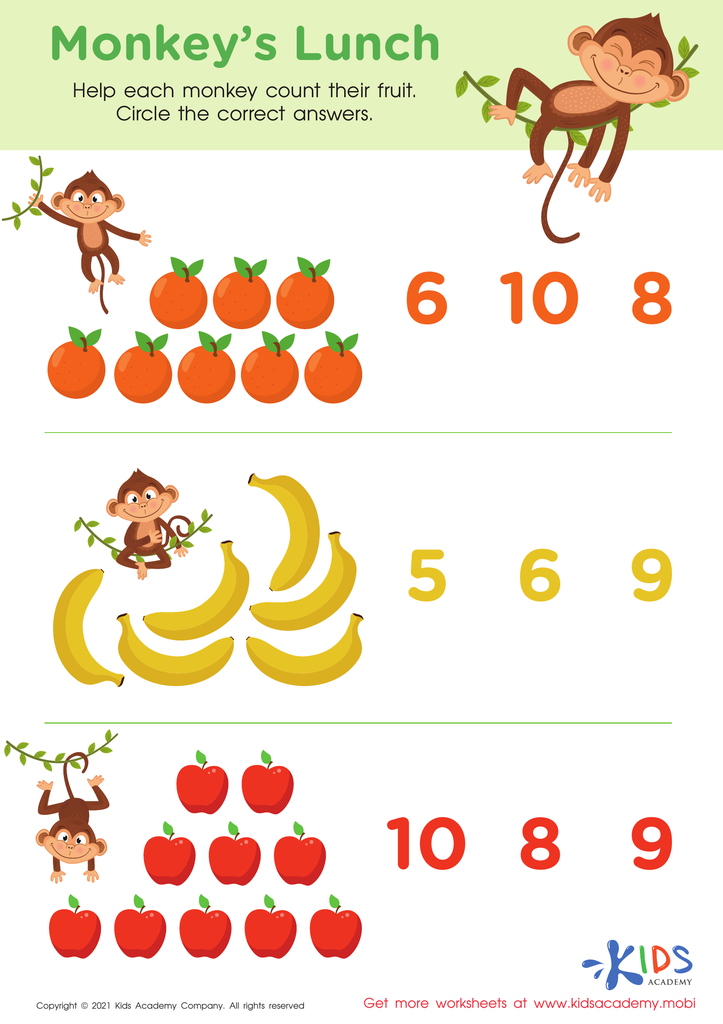
Monkey’s Lunch Worksheet
Download this free worksheet to help your kindergartner perfect their counting skills! Have your child circle the correct answers and count the fruits for the monkeys. It'll seem like fun, but your child is really learning how to count, group objects, and identify numbers.
Monkey’s Lunch Worksheet
Worksheet
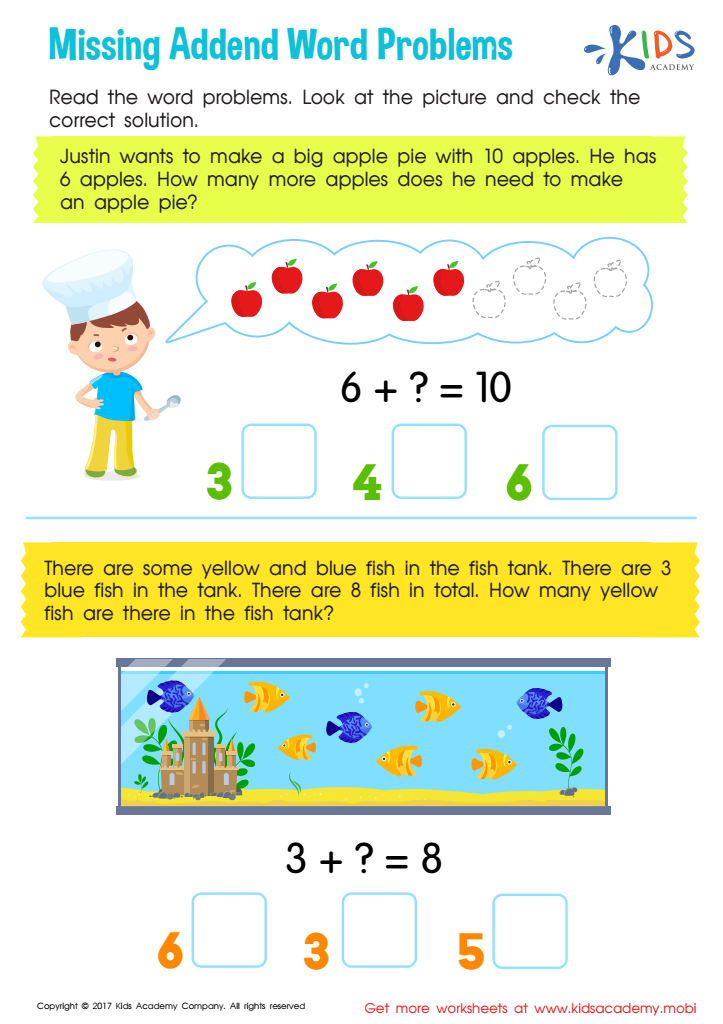
Missing Addend Word Problems Worksheet
Doing many addition and subtraction problems is key for fluency and mastery. Word problems can help kids understand how math works in everyday life. Our math worksheet uses fun scenarios and pictures to teach how to find the missing addend. It's the perfect tool to help kids understand math better!
 Assign to My Students
Missing Addend Word Problems Worksheet
Worksheet
Join Kids Academy for Free
Who is primarily going to use this learning content?





%20(1).jpg)


Developing problem-solving skills in math for children ages 4-7 is crucial for several reasons. First, it builds a strong foundation for future learning. These early years are formative, and mastering basic math concepts sets the stage for more complex problem-solving and logical thinking. When children learn to approach a problem methodically, it not only helps with math but also enhances their cognitive development.
Second, integrating problem-solving skills in math promotes critical thinking. It teaches kids to analyze situations, recognize patterns, and devise strategies. This thinking is transferable across all areas of learning and everyday life. For example, understanding sequences and patterns can help in reading and understanding stories or following instructions.
Third, early exposure to problem-solving creates confidence. Success in overcoming small challenges encourages children to tackle more difficult tasks with a positive attitude. This resilience is vital for academic success and personal growth.
Finally, collaborative problem-solving in math strengthens social skills. Working in groups allows children to communicate their reasoning, listen to others, and appreciate different perspectives. This teamwork fosters empathy, cooperation, and better prepares them for later collaborative environments.
In summary, focusing on problem-solving skills in math for young children benefits their intellectual, emotional, and social development, making it a crucial aspect of early education.








