Developing problem-solving skills Math Worksheets for Ages 4-7
9 filtered results
-
From - To
Discover our engaging "Developing Problem-Solving Skills Math Worksheets" tailored for children ages 4-7. These worksheets encourage young learners to think critically and approach math problems with confidence. Designed with vibrant visuals and age-appropriate challenges, each activity promotes logical reasoning, pattern recognition, and analytical skills through fun and interactive exercises. By solving problems involving basic addition, subtraction, and pattern creation, children will build a strong foundation in mathematics. Perfect for classrooms or home learning, our resources make skill development enjoyable and effective. Start cultivating your child's problem-solving abilities today and watch them thrive in math!
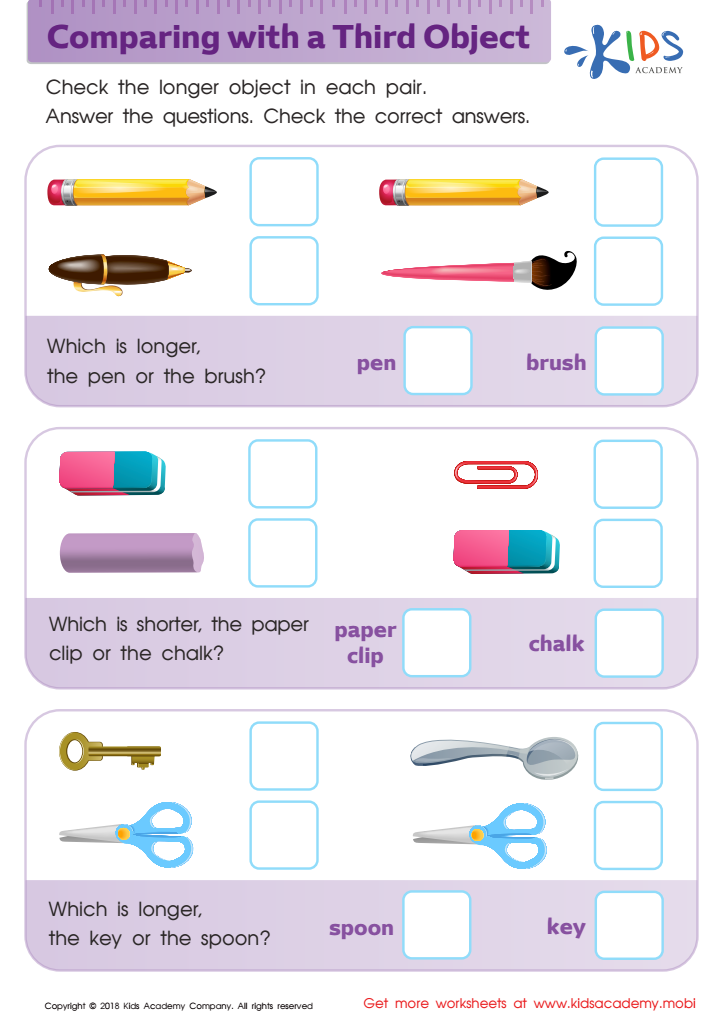
Comparing with a Third Object Worksheet
 Assign to My Students
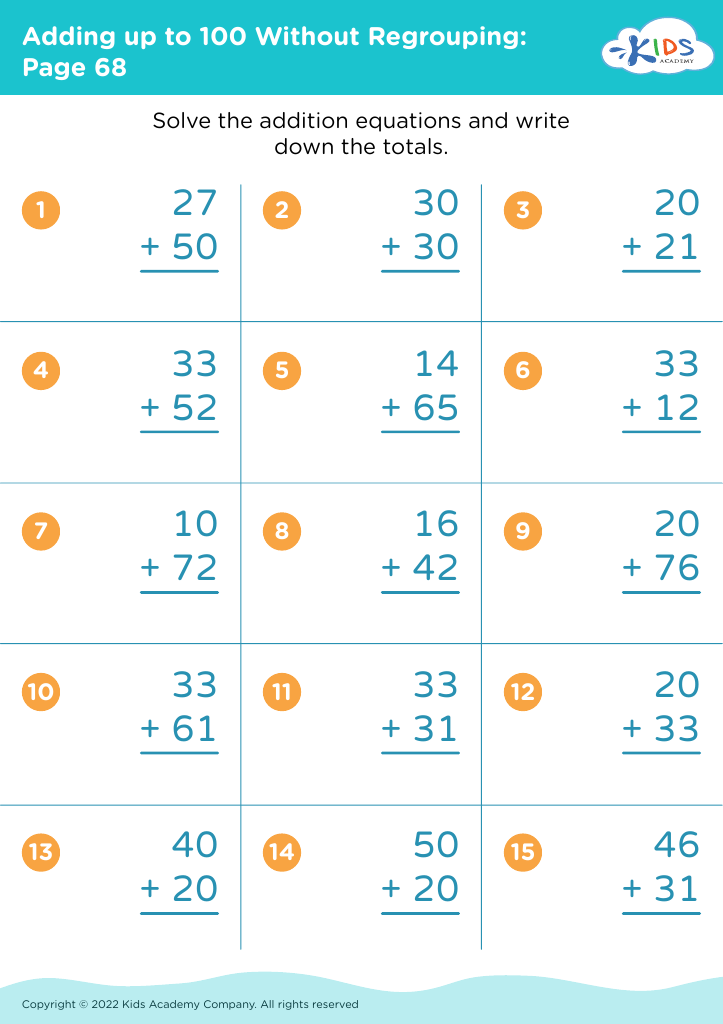
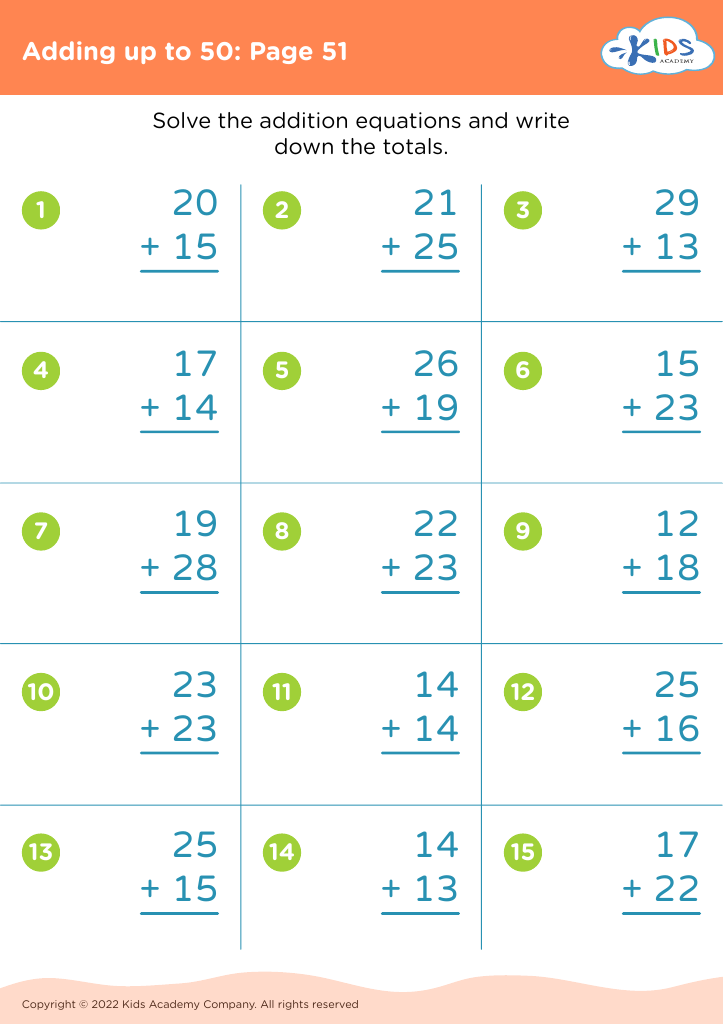

Under the Sea Addition Worksheet
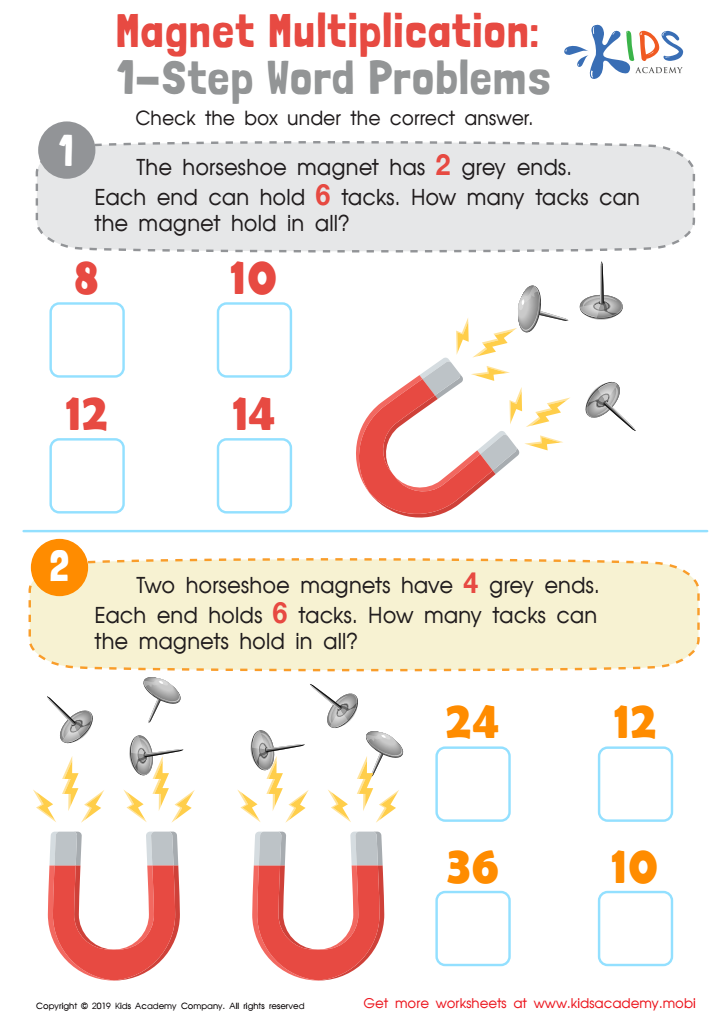
Magnet Multiplication: 1-Step Word Problems Worksheet
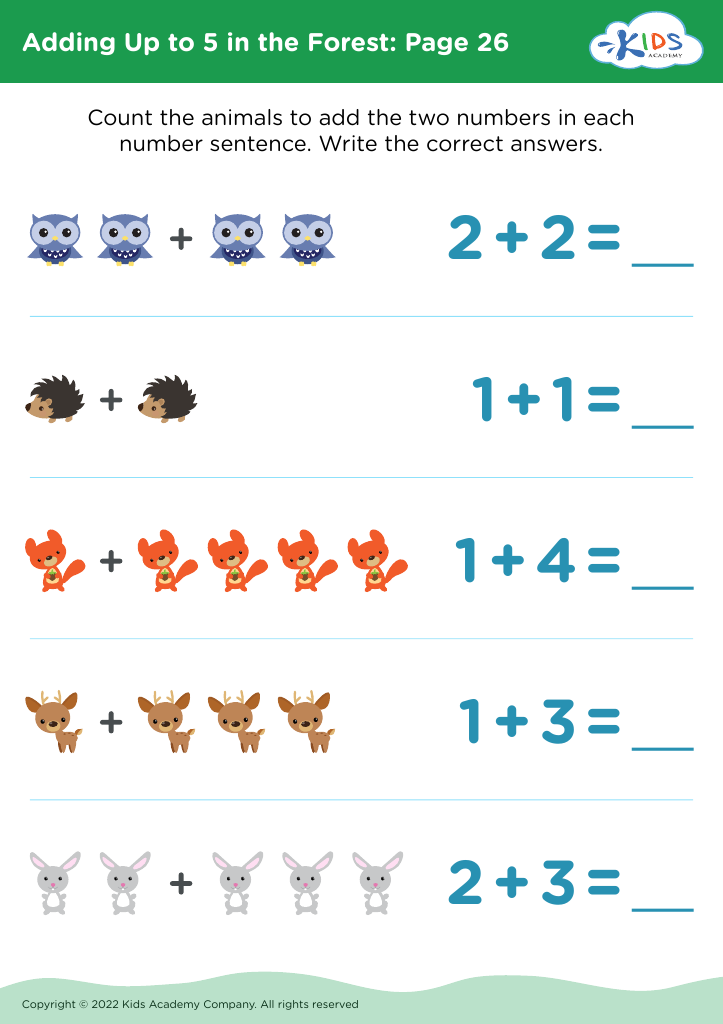
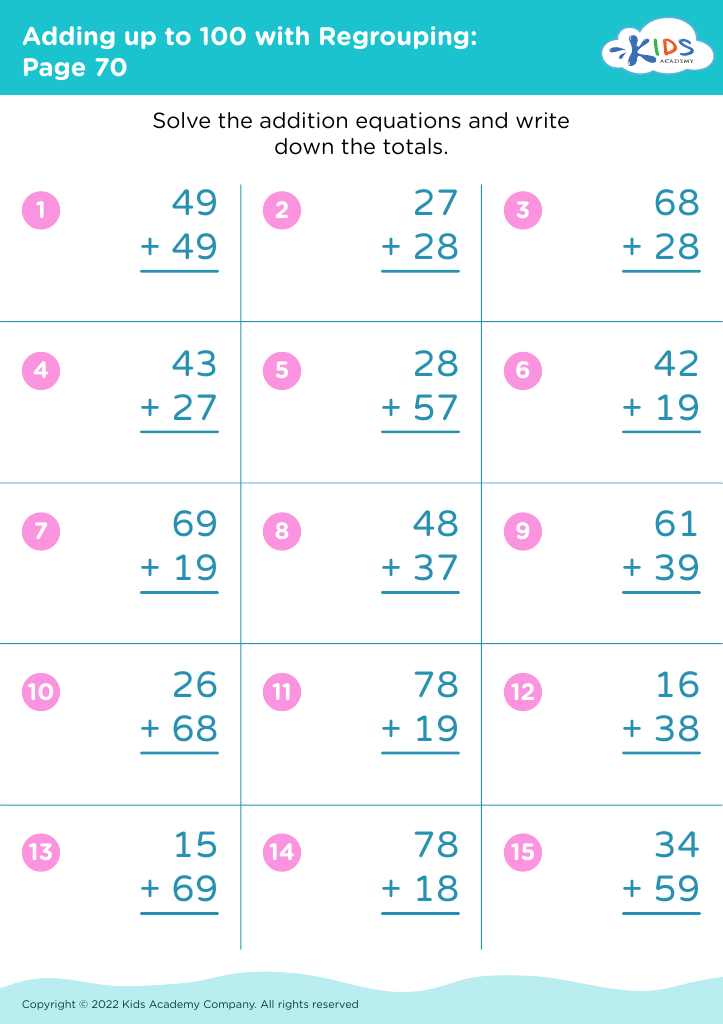
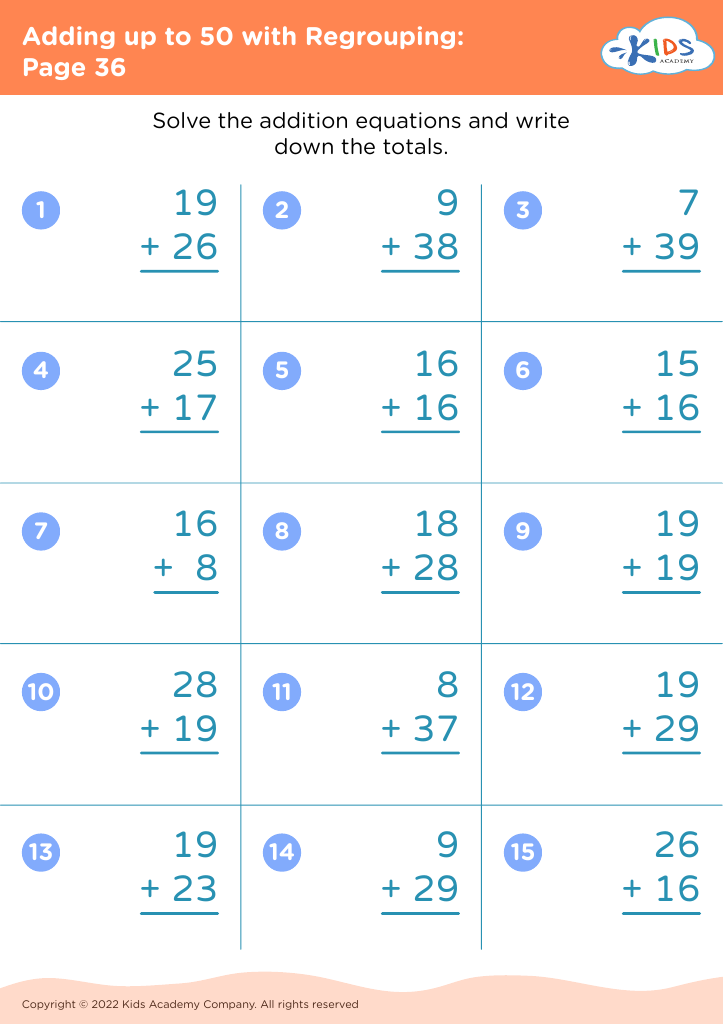
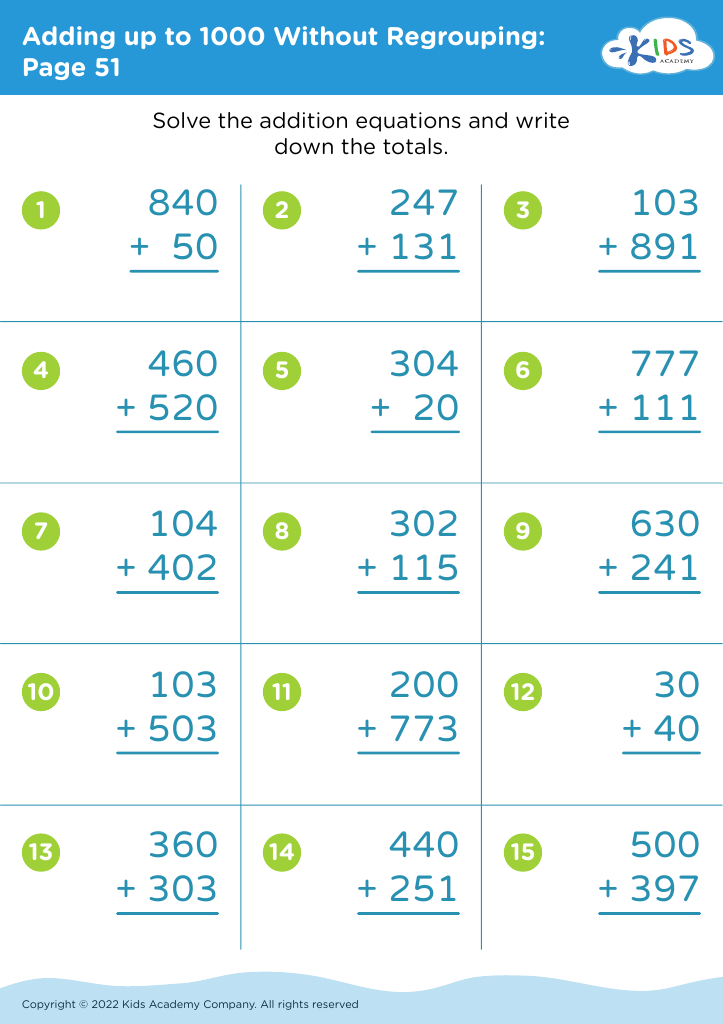








Developing problem-solving skills in young learners aged 4-7 is crucial for several reasons. Firstly, this foundational stage in a child's life sets the tone for their future academic pursuits. When children engage in mathematical problems, they begin to learn how to think critically and logically. These skills are not just limited to math; they translate across subjects and into everyday scenarios, fostering a well-rounded approach to challenges.
Secondly, problem-solving encourages persistence. When faced with difficult tasks, children learn the value of trying multiple solutions, which helps develop a growth mindset—an understanding that effort and resilience lead to improvement. This mindset is essential for their overall social and emotional growth.
Moreover, early problem-solving experiences promote collaboration and communication. Working with peers to solve puzzles or math challenges not only enhances cognitive abilities but also nurtures teamwork skills crucial for social interactions in school and beyond.
Lastly, cultivating problem-solving skills supports future success in a world where analytical and creative thinking is increasingly valued. By prioritizing math-related problem-solving in early education, parents and teachers equip children with tools to navigate life's complexities confidently, paving the way for lifelong learning and adaptability.








