
Environmental awareness Math Worksheets for Ages 4-7
5 filtered results
Difficulty Level
Grade
Age
-
From - To
Subject
Activity
Standards
Explore our engaging Environmental Awareness Math Worksheets designed for children aged 4-7! These worksheets blend foundational math skills with important lessons about our planet, making learning both fun and educational. From simple counting activities featuring animals and nature to basic problem-solving that encourages eco-friendly thinking, these resources promote valuable knowledge about environmental conservation. Perfect for home or classroom use, our colorful and interactive worksheets help young learners develop essential math skills while fostering a love for the environment. Empower your child to understand and appreciate the world around them with these thoughtfully crafted activities! Start cultivating environmental awareness today!
Favorites
With answer key
Interactive
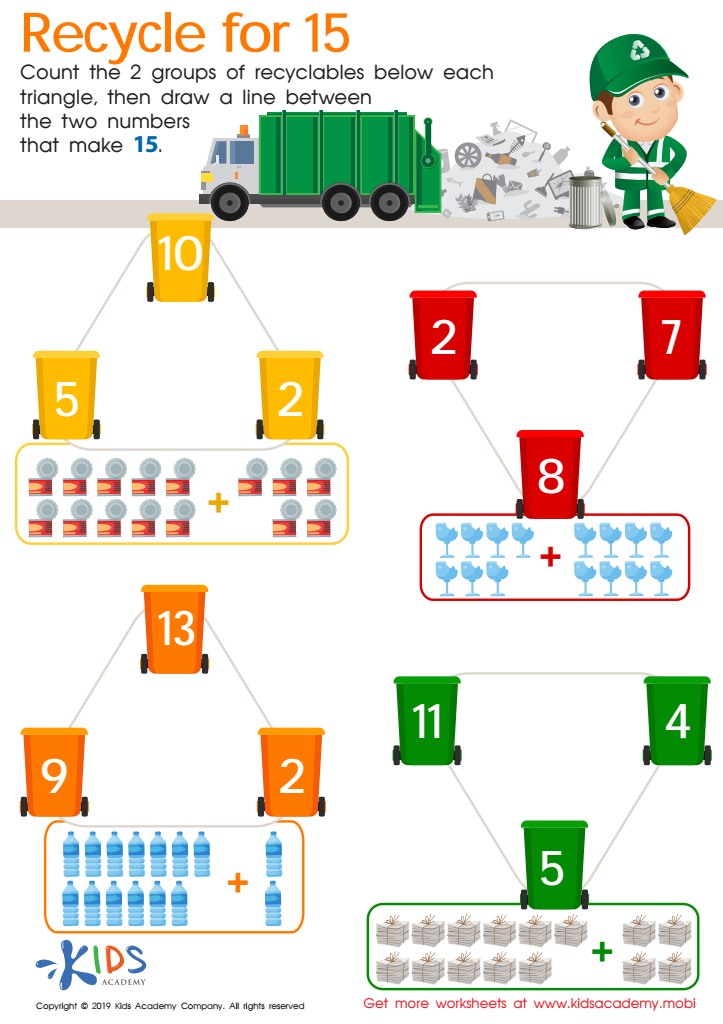
Recycle for 15 Worksheet
Recycle to help the planet! Have students count the recyclables and draw a line between the two numbers that make 15. This will help them understand the importance of recycling.
 Assign to My Students
Recycle for 15 Worksheet
Worksheet
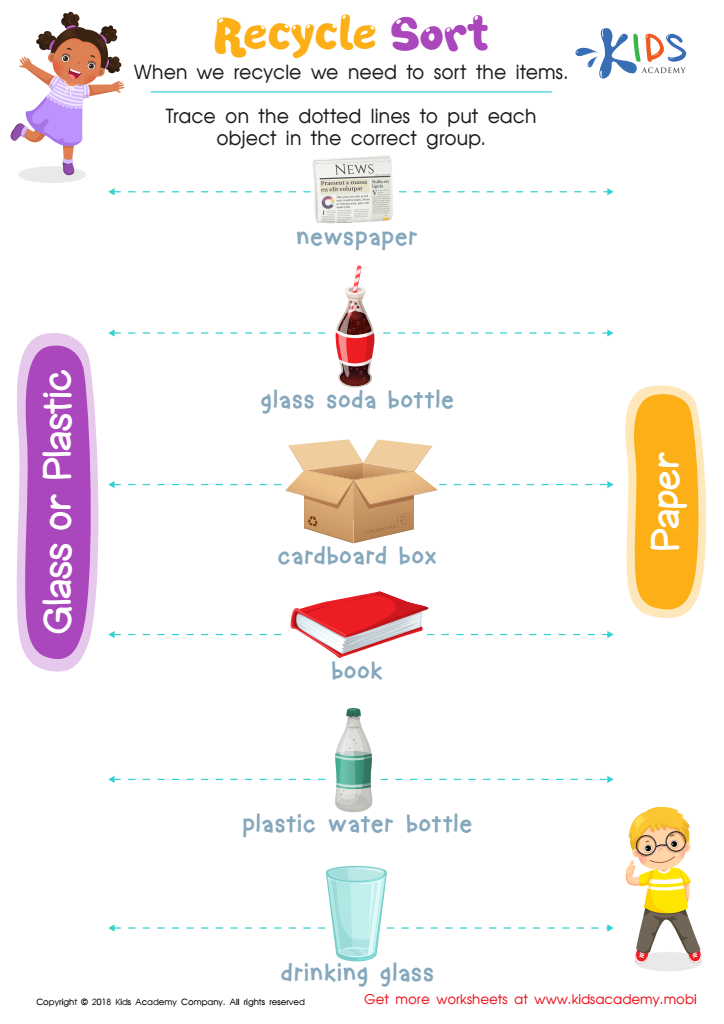
Recycle Sort Worksheet
Help your children become eco-warriors while they develop critical thinking and fine motor skills with this free downloadable worksheet! Engaging pictures and matching words, plus fun and bright colors, will have kids analyzing and sorting recyclables into paper or glass/plastic groups using traceable lines.
Recycle Sort Worksheet
Worksheet
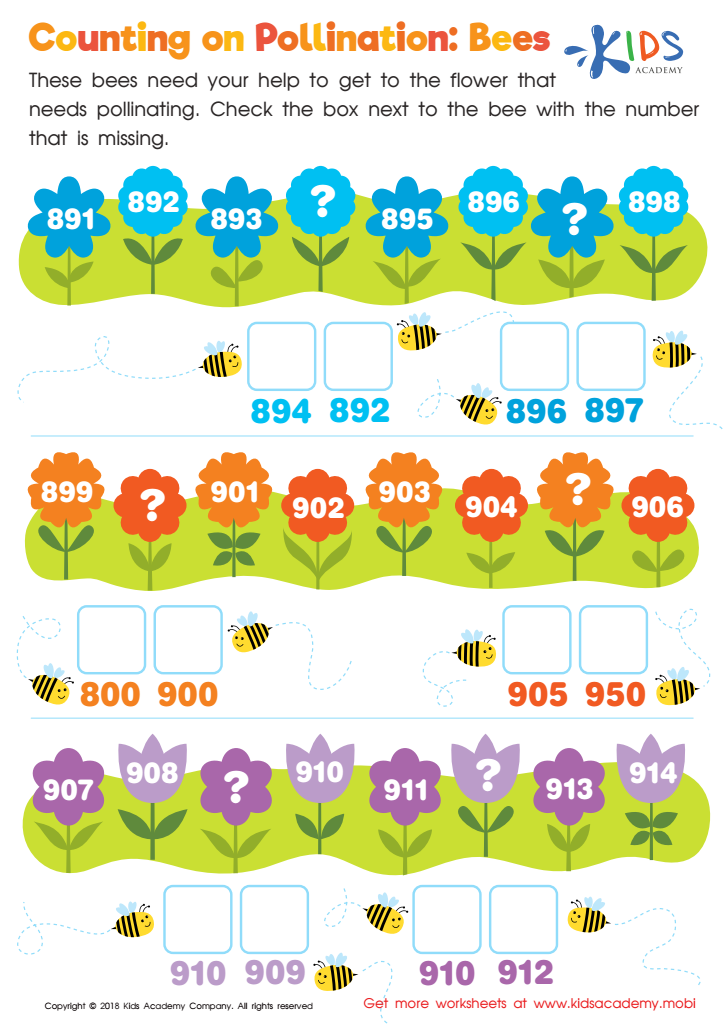
Counting on Pollination: Bees Worksheet
This downloadable worksheet helps kids improve their math skills while having fun - they'll help the bees pollinate the flowers by finding the missing number. It's an entertaining way to practice number patterns, sequences and number line skills, aiding in fast and efficient math computations.
Counting on Pollination: Bees Worksheet
Worksheet
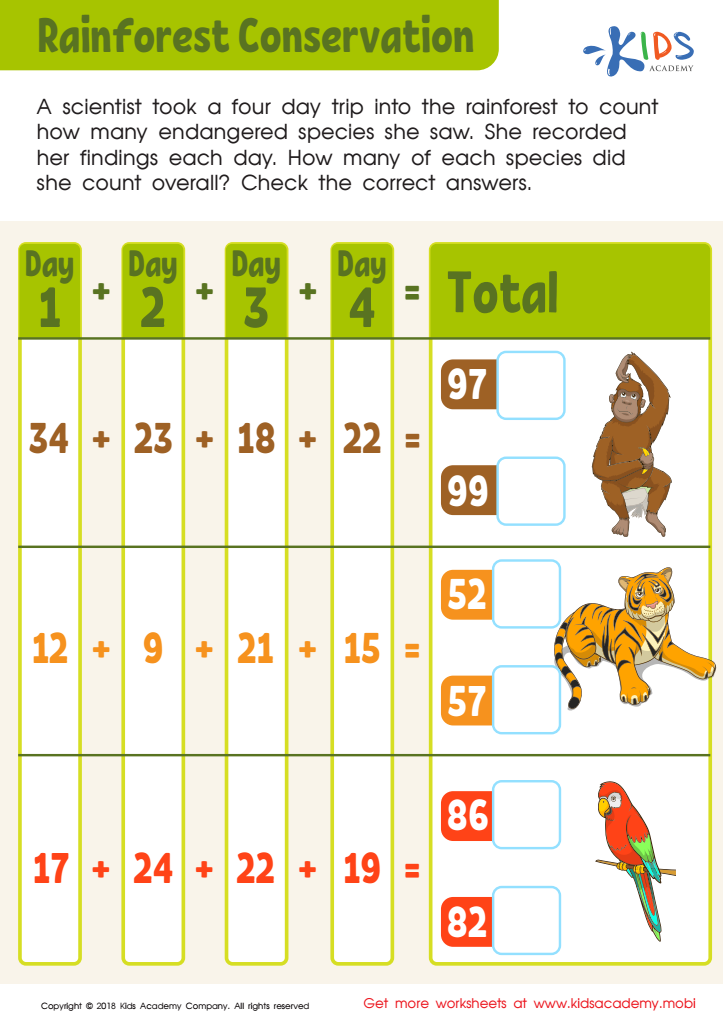
Rainforest Conservation Worksheet
Explain to your child what a rainforest is and why it's important. A scientist took a four-day trip to count endangered species. Let your child count how many of each species were seen in total. Check the answers and help them understand.
Rainforest Conservation Worksheet
Worksheet
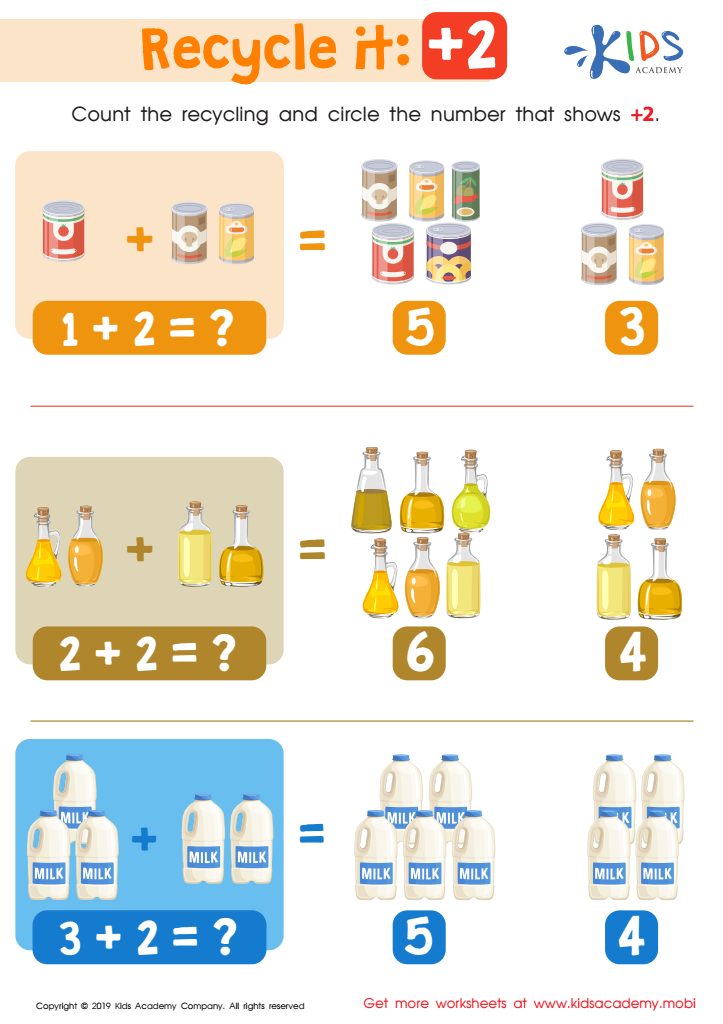
Recycle It: +2 Worksheet
Your kindergartners likely count everything they see, which is great for practice. Give them simple exercises such as in this worksheet to stimulate their minds. Ask them to count the recycling cans and then circle the number that shows +2.
Recycle It: +2 Worksheet
Worksheet
Join Kids Academy for Free
Who is primarily going to use this learning content?







Environmental awareness for young children, especially through engaging subjects like math, is crucial for nurturing responsible future citizens. For ages 4-7, embracing math concepts within an environmental context allows children to develop both cognitive and emotional connections to the world around them.
By incorporating themes of nature, sustainability, and conservation into early math lessons, teachers and parents can foster a sense of curiosity and responsibility in children. For instance, counting real leaves, measuring the height of growing plants, or sorting recyclables not only reinforces numeracy skills but also teaches children about ecosystems and the importance of caring for our planet.
Moreover, integrating math with environmental themes promotes problem-solving skills. As children tackle real-world scenarios, they learn to apply their mathematical knowledge while understanding the impact of their choices on the environment. This early exposure sets the stage for lifelong eco-friendly habits and critical thinking.
Ultimately, an educational approach that marries environmental awareness with foundational math skills strengthens children's understanding of both subjects. Parents and teachers can guide children to become mindful stewards of the earth, equipped with the decision-making skills necessary to face future global challenges as they grow.








