
Improve reading comprehension Math Worksheets for Ages 4-7
11 filtered results
Difficulty Level
Grade
Age
-
From - To
Subject
Activity
Standards
Unlock your child's potential with our engaging "Improve Reading Comprehension Math Worksheets" designed for ages 4-7. These worksheets seamlessly blend math concepts with reading comprehension skills, fostering a love for learning in young minds. By tackling fun, age-appropriate questions, children enhance their understanding of both mathematical principles and reading strategies. Our interactive activities encourage critical thinking and problem-solving while reinforcing essential literacy skills. Perfect for at-home practice or classroom support, these worksheets offer the ideal resource to help your child thrive academically. Dive into a world of learning and watch their confidence soar with every completed worksheet!
Favorites
With answer key
Interactive
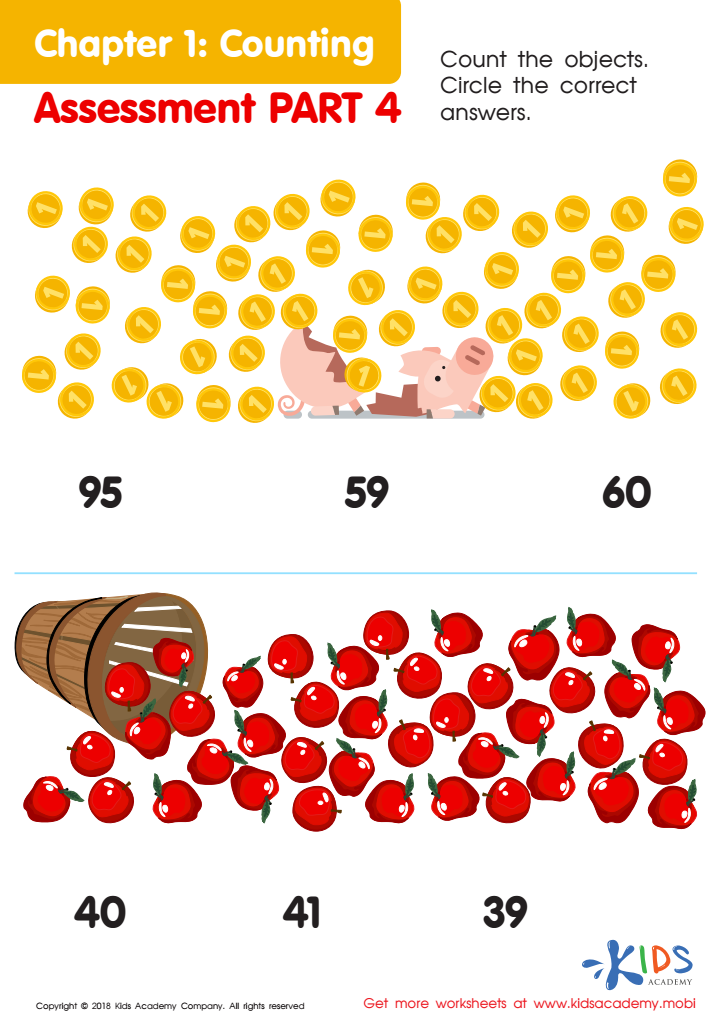
Counting: Assessment 4 Worksheet
Encourage your students to count objects in this colorful worksheet. Ask them to circle the correct answers from the options given. See how much their counting skills have improved with your guidance. Have fun!
 Assign to My Students
Counting: Assessment 4 Worksheet
Worksheet
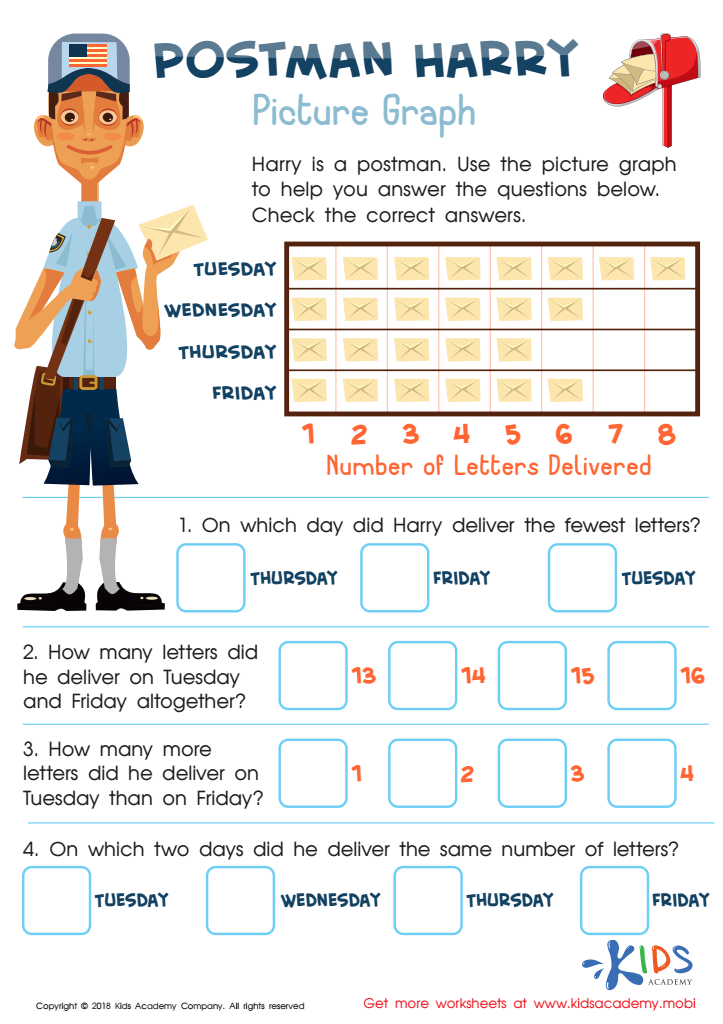
Postman Harry: Picture Graph Worksheet
Show your kids a picture of Harry the Postman and ask if they can identify his profession. Then, with this simple picture graph worksheet, help Harry out by having your kids answer the questions below the picture graph. It shows the number of letters he delivered, and on what day. Get your kids to use the picture graph to solve it.
Postman Harry: Picture Graph Worksheet
Worksheet
Join Kids Academy for Free
Who is primarily going to use this learning content?







Parents and teachers play a crucial role in the early development of reading and math skills for children aged 4 to 7, as these foundational years are pivotal for a child's lifelong learning journey. Improving reading comprehension during this age helps children engage with stories, understand basic concepts, and develop vocabulary. When children grasp what they read, it fosters a love for literature and critical thinking skills. Additionally, strong reading skills are linked to academic success in all subjects, including math.
Math comprehension is equally important, as early numeracy skills lay the groundwork for more advanced math concepts later on. Children learn to recognize numbers, understand quantities, and solve simple problems, enhancing their logical reasoning and analytical abilities. By connecting math to everyday situations, such as counting objects or measuring ingredients, children see the relevance of math in their lives.
Incorporating both reading and math comprehension into early education encourages curiosity, confidence, and a lifelong eagerness to learn. Parents and teachers should prioritize these skills to support a child’s academic and social development, enabling them to become well-rounded individuals ready to tackle challenges in their future education. Investing in these foundational skills is essential for successful, holistic child development.








