
Learning subtraction Math Worksheets for Ages 4-7
3 filtered results
Difficulty Level
Grade
Age
-
From - To
Subject
Activity
Standards
Explore our engaging subtraction math worksheets designed specifically for children aged 4-7! These interactive resources help young learners grasp the concept of subtraction through fun, colorful activities. Our worksheets promote essential skills like number recognition, problem-solving, and critical thinking, all while providing a supportive environment for developing math fluency. With varied exercises including counting objects, number lines, and visual aids, your child will build confidence in their subtraction abilities. Perfect for homeschooling or supplementing classroom learning, these worksheets offer an excellent way to make math enjoyable. Start your child’s subtraction journey today with our thoughtfully designed materials!
Favorites
With answer key
Interactive
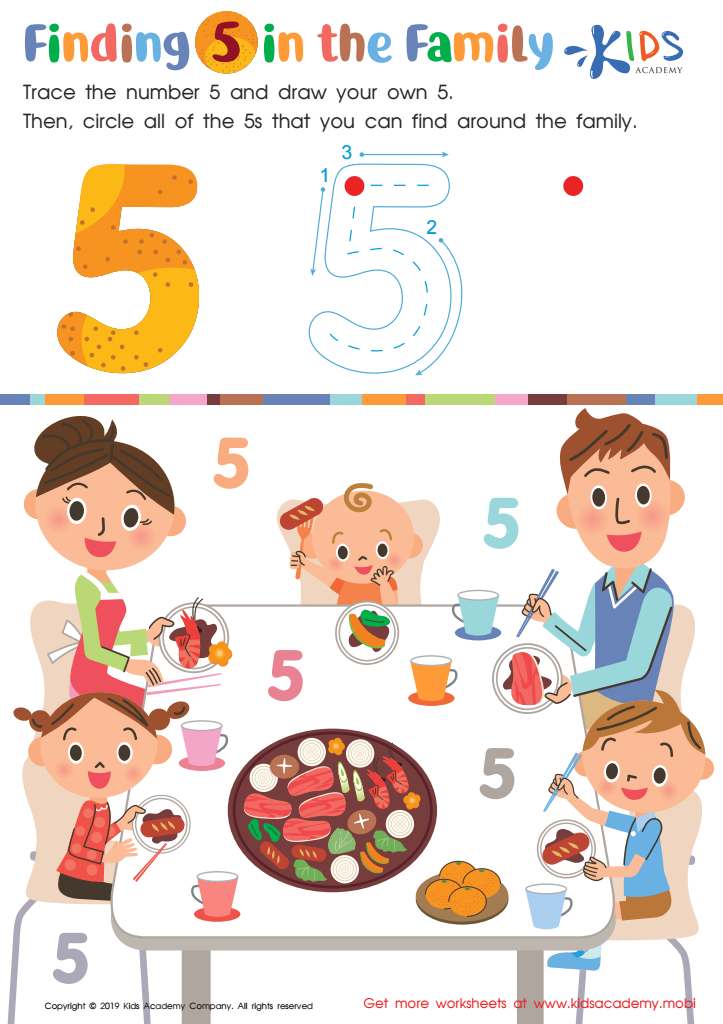
Finding 5 in the Family Worksheet
This worksheet helps kids identify and write the number 5. Ask what the family is doing and who the family members are. Help them trace and draw the 5, then have them circle all 5s in the picture.
 Assign to My Students
Finding 5 in the Family Worksheet
Worksheet
Join Kids Academy for Free
Who is primarily going to use this learning content?







Learning subtraction for ages 4-7 is crucial for several reasons. At this developmental stage, children are beginning to grasp fundamental mathematical concepts, and subtraction is a key operation that lays the groundwork for more advanced calculations. Mastering subtraction helps children understand the concept of "taking away" which is fundamental to their cognitive development and promotes logical thinking.
Additionally, early proficiency in subtraction enhances problem-solving skills and fosters confidence in handling numbers. As students encounter real-life situations—such as sharing snacks or counting toys—being adept in subtraction helps them navigate daily experiences effectively.
Moreover, practicing subtraction encourages critical thinking and strengthens their grasp of the number system, setting a strong precedent for future math learning. It also supports the development of perseverance and reflects an understanding that learning involves challenges.
For teachers and parents, supporting subtraction learning provides a framework to help children develop resilience in facing difficulties, promoting a positive attitude towards math. Engaging children through playful activities and engaging challenges can make subtraction enjoyable, helping to reinforce their skills. Overall, prioritizing subtraction during these formative years paves the way for academic success and a lifelong appreciation of mathematics.








