Math skills improvement Math Worksheets for Ages 4-7
7 filtered results
-
From - To
Discover engaging and effective math skill improvement worksheets designed specifically for children aged 4 to 7. Our Math Worksheets cater to young learners, promoting essential foundational math skills through fun and interactive activities. Each worksheet is crafted to encourage critical thinking and enhance counting, addition, and subtraction abilities. Perfect for use at home or in classroom settings, these worksheets provide valuable practice to help your child gain confidence in their math proficiency. Join thousands of parents and educators who have chosen Kids Academy for high-quality educational resources. Start your child's math journey today and watch them thrive in their learning!
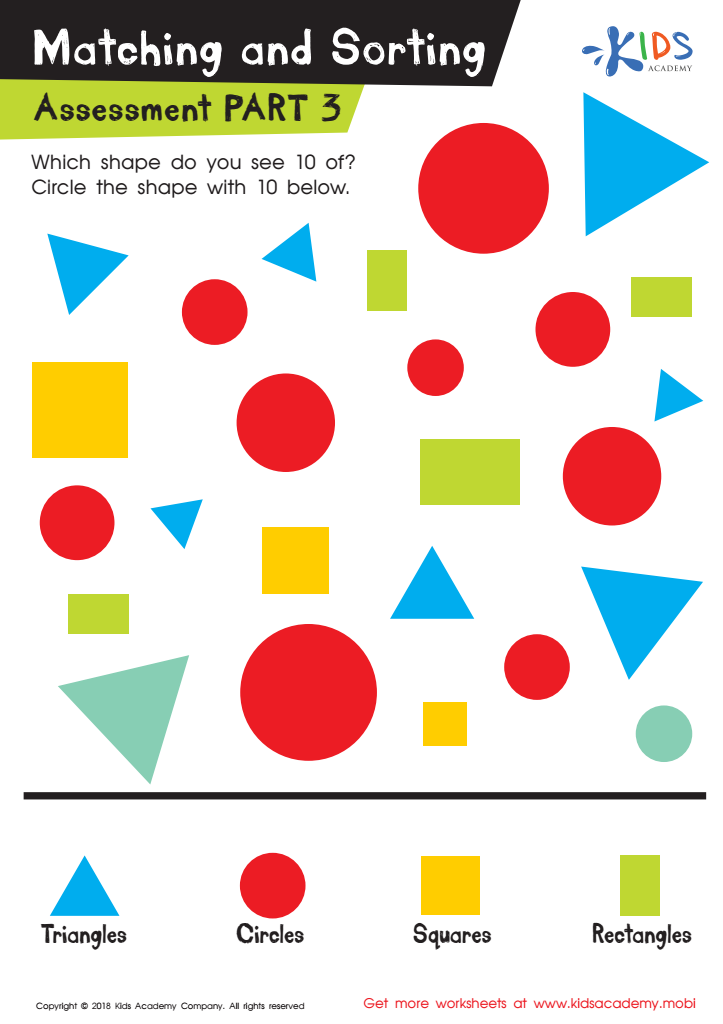
Matching and Sorting for Kindergarten: Assessment 3 Worksheet
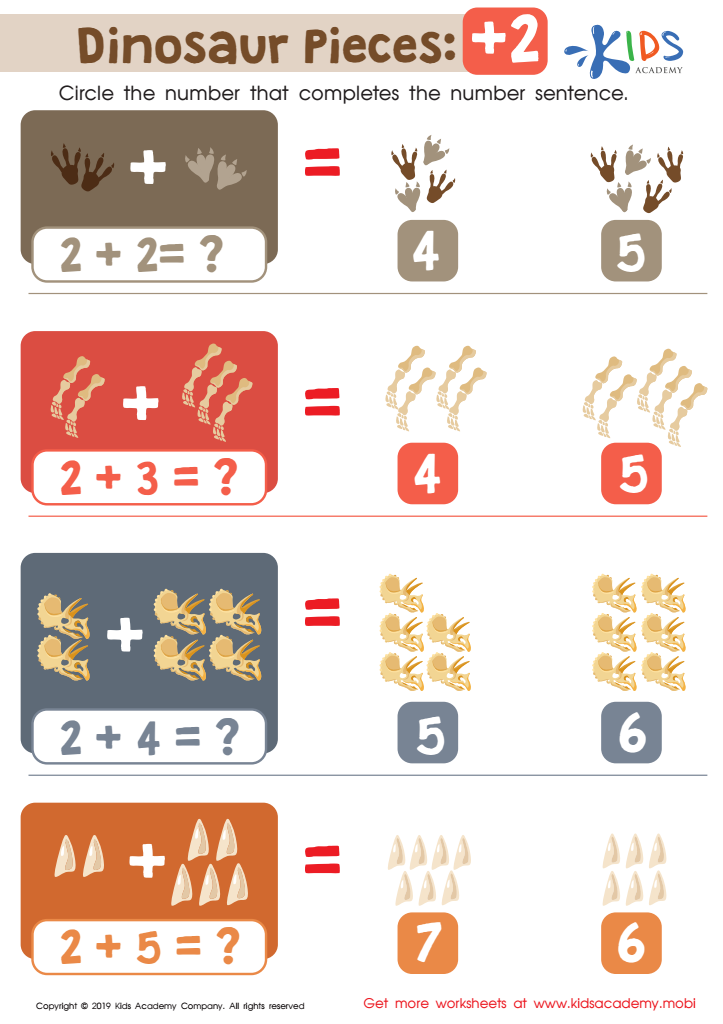
Dinosaur Pieces: +2 Worksheet
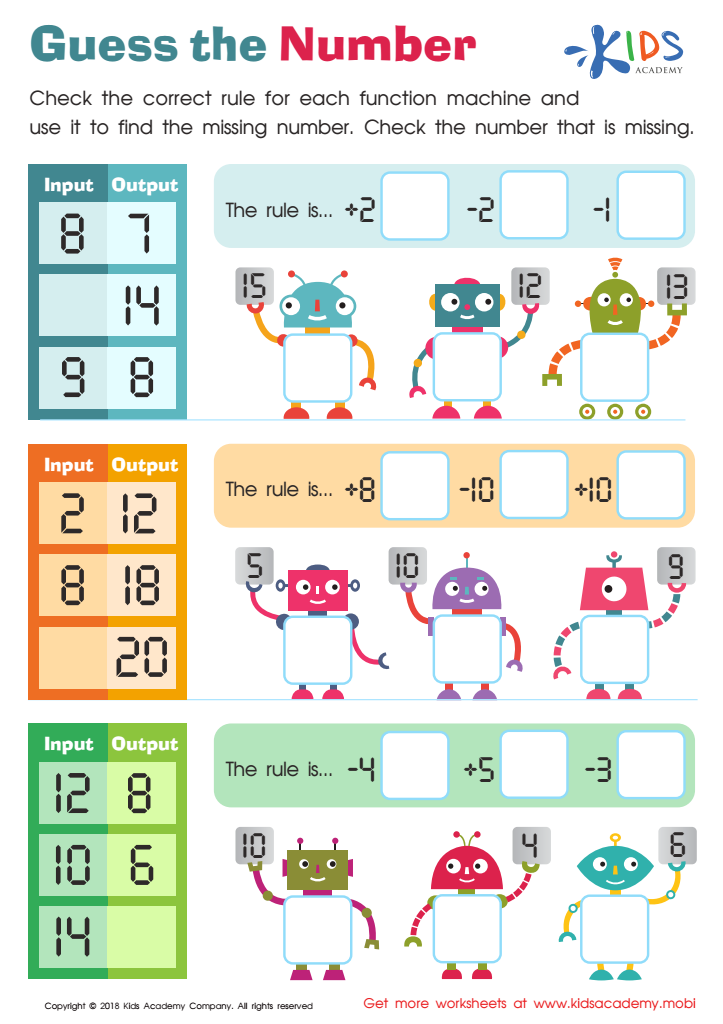
Guess the Number Worksheet
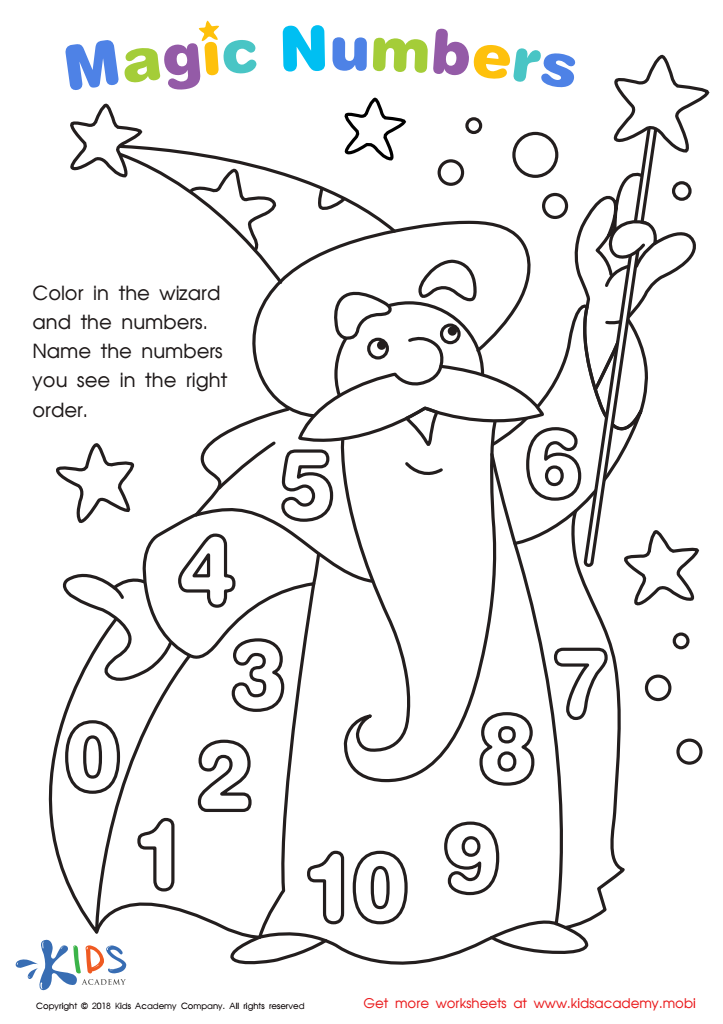
Magic Numbers Worksheet
 Assign to My Students
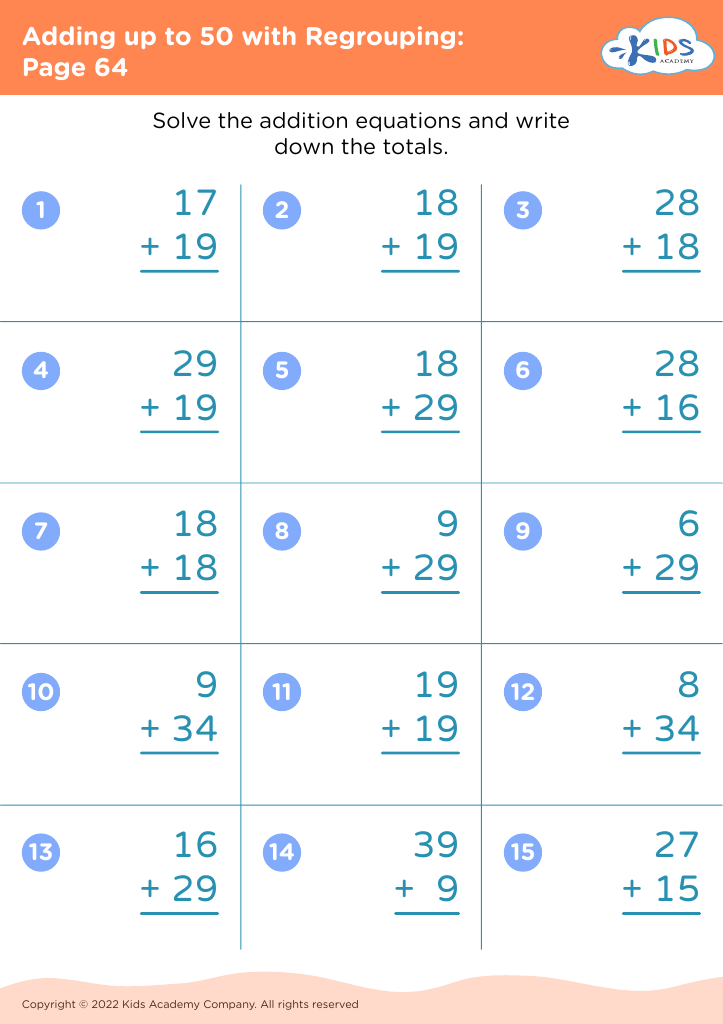
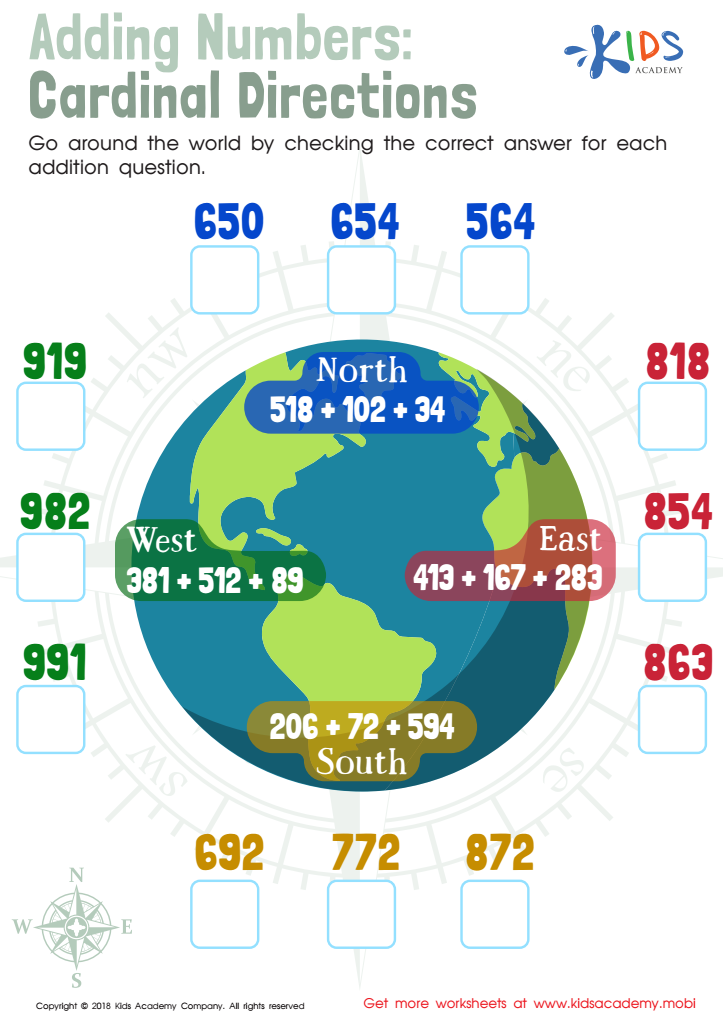
Adding Numbers: Cardinal Directions Worksheet







Math skills development in children aged 4-7 is crucial for several reasons that parents and teachers should prioritize. This foundational period is when young learners grasp essential concepts like counting, number recognition, and basic operations, setting the stage for future academic success. Early mathematics education strengthens critical thinking and problem-solving skills, fostering a positive attitude toward learning.
Strong math skills impact overall cognitive development, enhancing a child's ability to understand patterns, relationships, and logical reasoning. These skills translate to everyday situations, helping children navigate real-world problems, from simple activities like sharing toys to planning sequences for daily routines.
Furthermore, early math proficiency is linked to literacy and language development, as both areas often reinforce one another. Engaging young children in math activities promotes creativity, curiosity, and perseverance, making learning enjoyable and motivating.
Lastly, in our increasingly technology-driven world, a solid grasp of math is essential for future career opportunities, even in professions not traditionally associated with math. By investing in math skills improvement during these formative years, parents and teachers can support children in becoming confident learners, better equipped for academic challenges ahead and life’s demands.








