Money counting skills Math Worksheets for Ages 4-7
4 filtered results
-
From - To
Boost your child's financial literacy early with our engaging Money Counting Skills Math Worksheets, designed for ages 4-7! These fun, interactive worksheets help kids recognize and count various coins and bills, enhancing their math skills and money management abilities. Perfect for preschool through first grade, our expertly crafted resources align with educational standards, ensuring a seamless learning experience. From identifying coins to solving word problems involving money, each worksheet provides a playful yet educational journey for young learners. Give your child a head start on essential life skills with our money counting worksheets. Visit Kids Academy for more details.
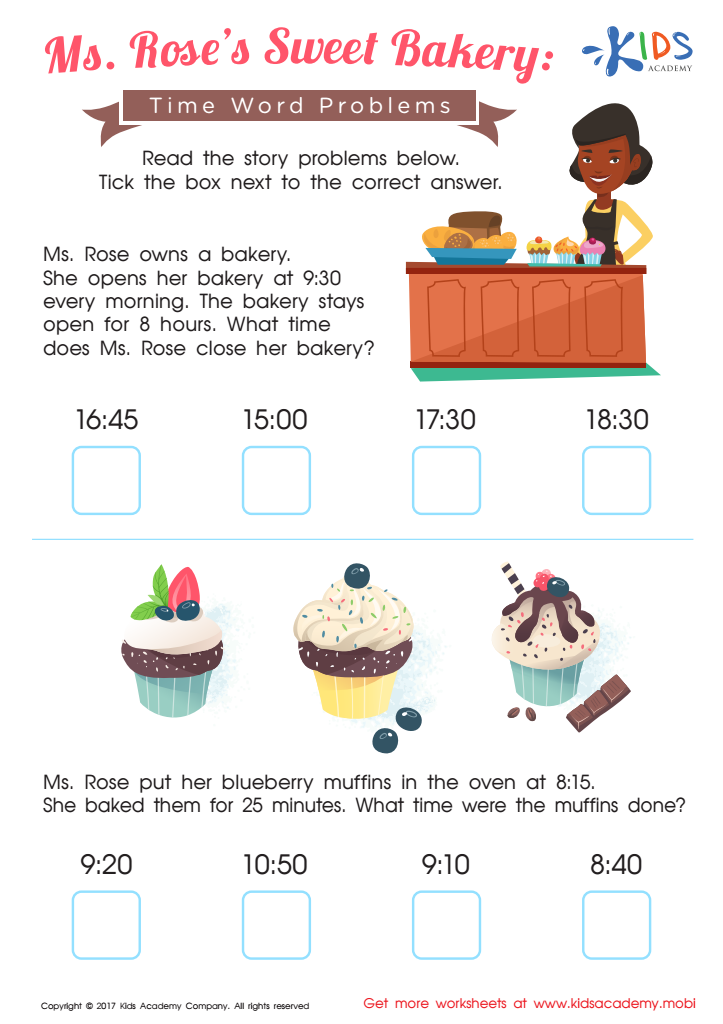
Ms. Roseв's Sweet Bakery Time Worksheet
 Assign to My Students
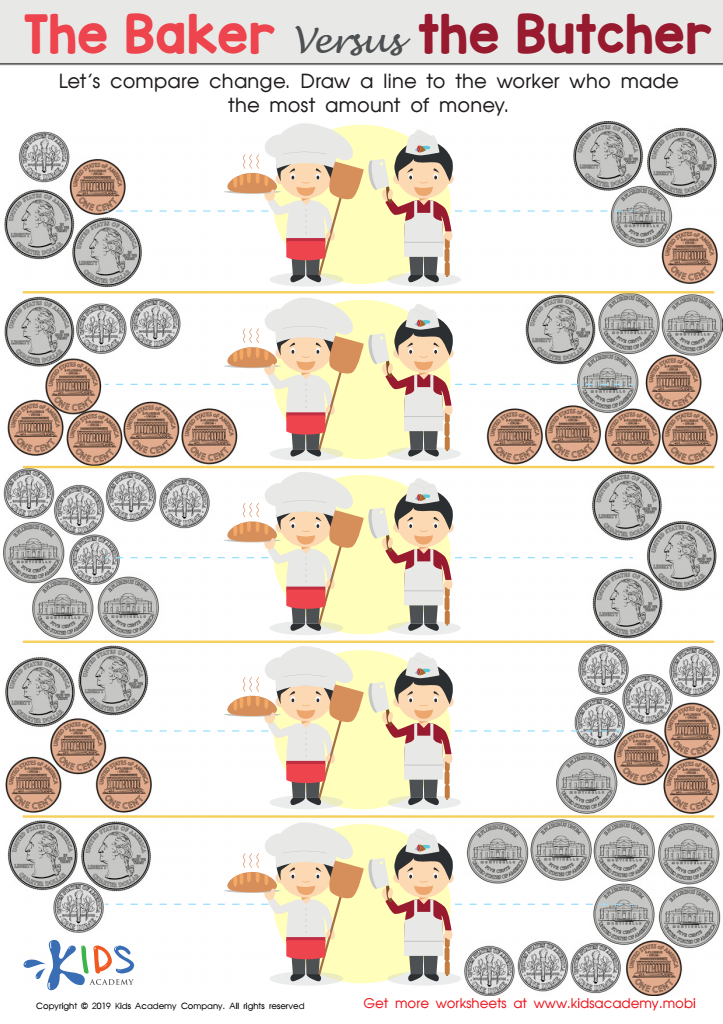
The Baker versus the Butcher Worksheet
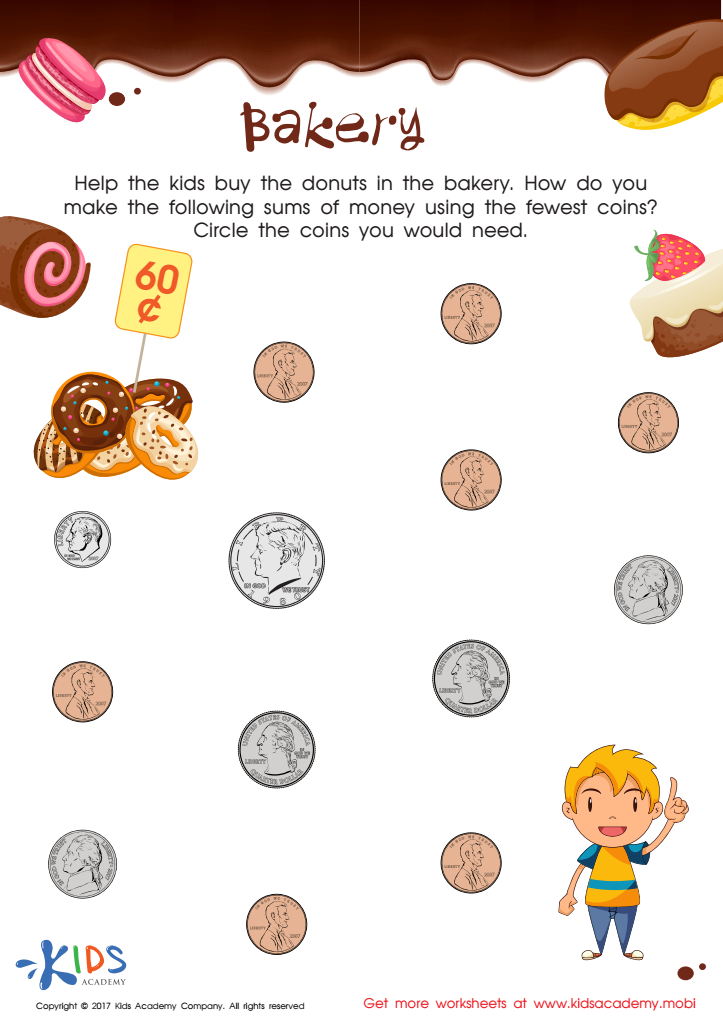
Counting Coins Worksheet
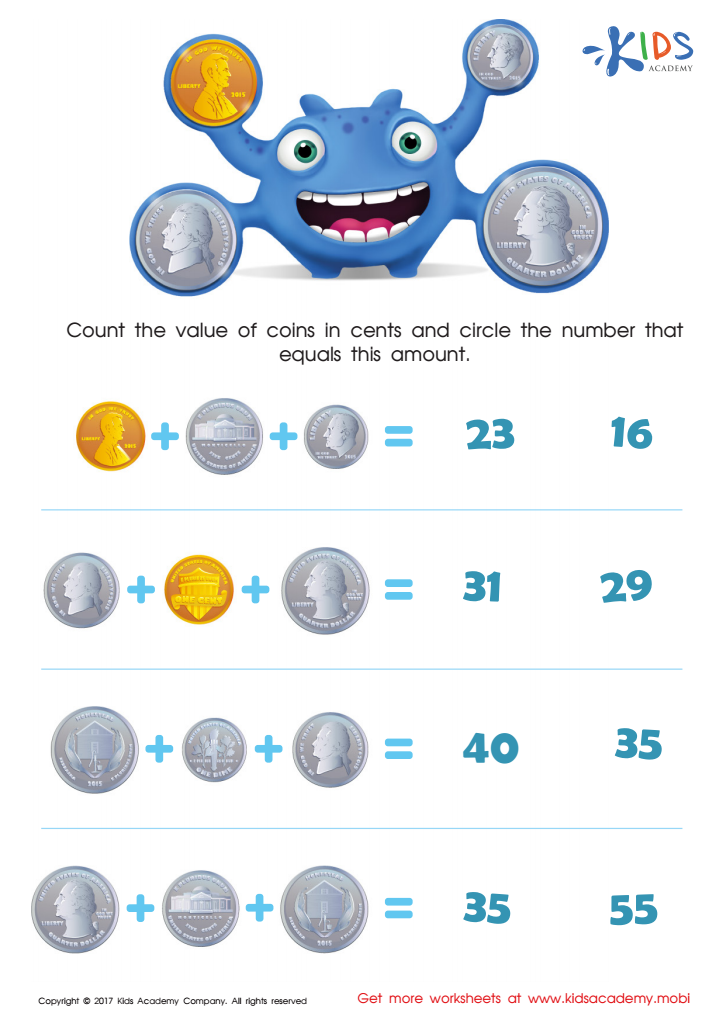
Counting the Coins Money Worksheet








Teaching money-counting skills to children aged 4-7 is foundational for their overall development and future success. At this tender age, children are most receptive to learning basic concepts that they will use throughout their lives. Introducing them to money and its values can significantly enhance their mathematical understanding and problem-solving skills. By recognizing and counting coins and bills, children learn to add, subtract, and understand the concept of value, laying a strong groundwork for more complex math concepts later on.
Furthermore, money counting aids in developing cognitive and motor skills. Handling small coins can improve children's fine motor skills, and distinguishing between different denominations fosters critical thinking and attention to detail. Teaching kids to count money also imparts essential life skills such as financial literacy, enabling them to make informed decisions about spending and saving in the future.
Beyond academics, these skills empower children with a sense of independence and responsibility. They learn the importance of money management from an early age, helping to establish healthy financial habits that can last a lifetime. Engaging children in these learning activities at home or school provides a practical application of their math skills, making learning both fun and relevant to their everyday lives.








