Sea creatures identification Math Worksheets for Ages 4-7
3 filtered results
-
From - To
Dive into learning with our "Sea Creatures Identification Math Worksheets" designed for ages 4-7. These engaging worksheets combine math skills with the wonders of the ocean, making learning both fun and educational. Children will identify sea creatures while practicing counting, addition, subtraction, and number recognition. Each worksheet features colorful illustrations and easy-to-follow instructions to keep young learners captivated. Perfect for home or classroom use, these worksheets support Early Math learning standards and promote a hands-on approach to master foundational skills. Embark on an undersea adventure and watch your child’s confidence and math abilities grow!
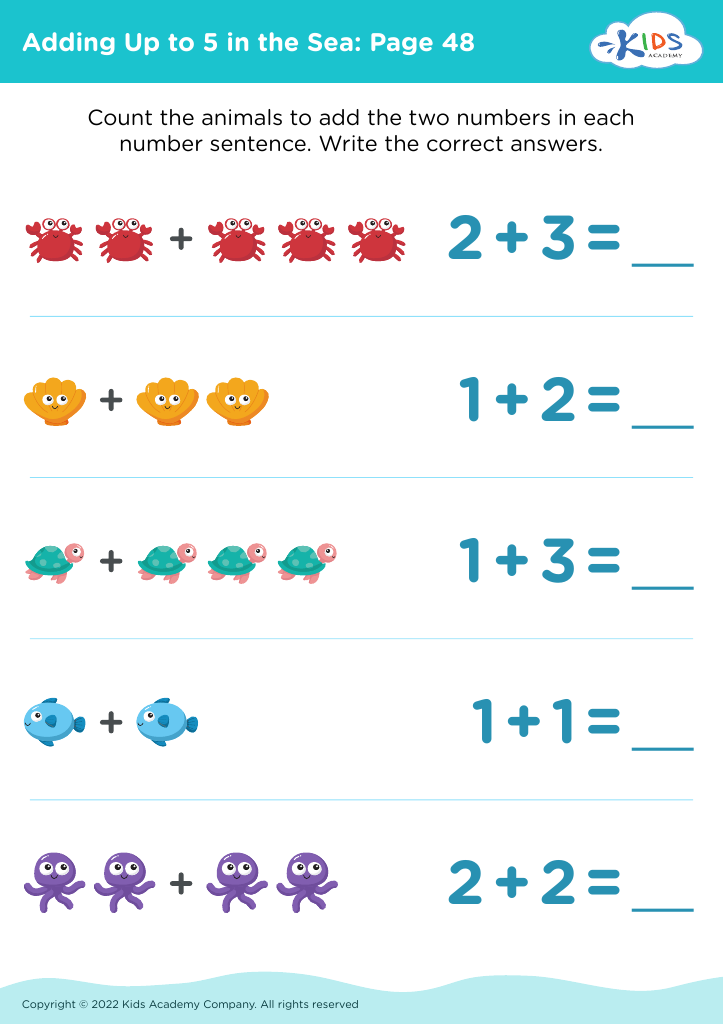
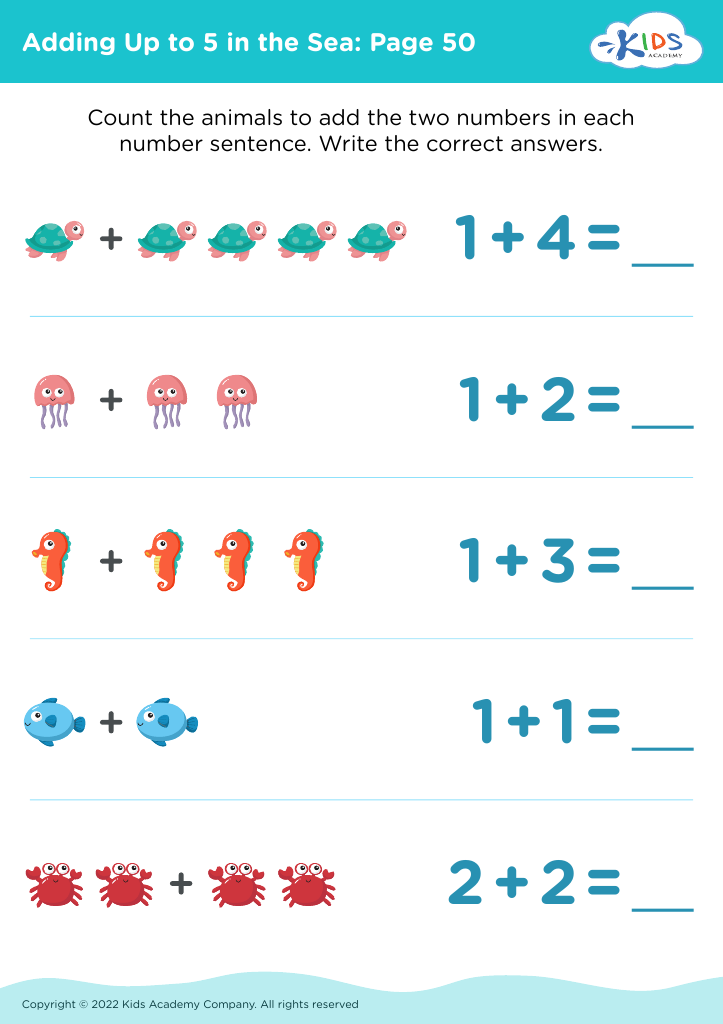
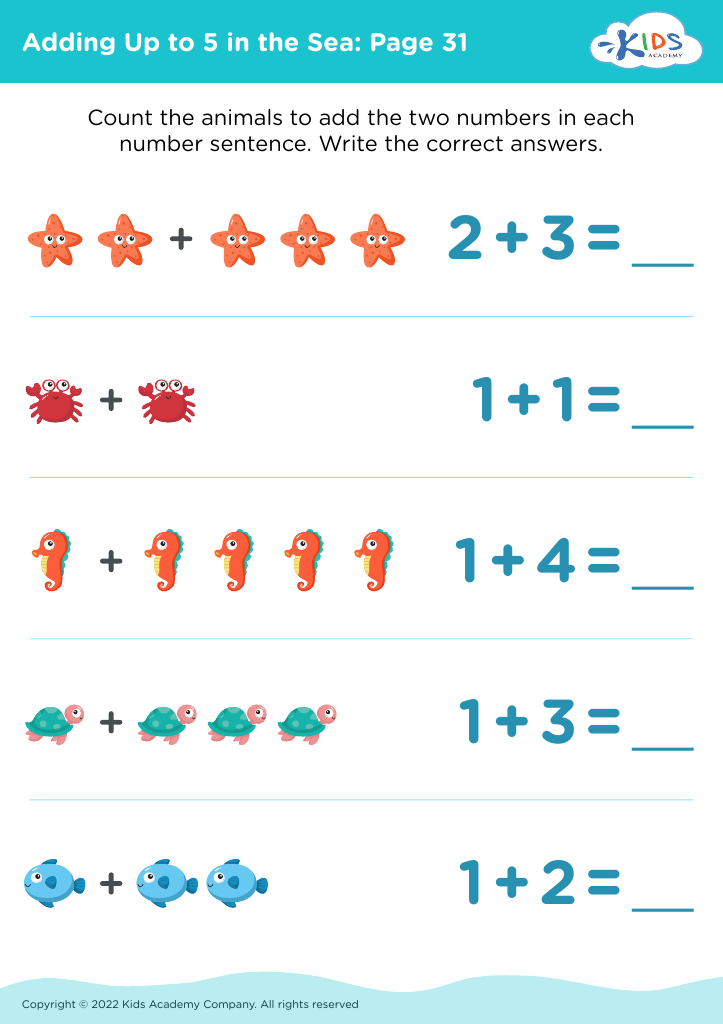






Introducing sea creatures identification math to young children offers numerous developmental benefits that extend beyond basic math skills. First, engaging children with sea creatures piques their natural curiosity, turning learning into an enjoyable experience. By connecting math concepts to captivating marine life, children are more motivated, making the learning process smoother and more effective.
From an academic standpoint, identifying and counting sea creatures helps children build essential foundational skills in numbers and basic arithmetic. Recognizing patterns and categorizing different species fosters critical thinking and problem-solving abilities. Additionally, the unique features of underwater animals enhance memory retention and cognitive development, as children associate math tasks with specific, colorful creatures.
Furthermore, this integrated approach teaches children the value of cross-disciplinary learning. Parents and teachers can introduce basic concepts of marine biology alongside math, encouraging a broader intellectual curiosity. Early exposure to diverse subjects lays the groundwork for future learning and helps children understand the interconnectedness of different areas of knowledge.
Lastly, fostering an appreciation for sea life emphasizes the importance of environmental stewardship from a young age. When children learn about various sea creatures and their habitats while engaging in math activities, they develop a deeper respect and sense of responsibility for the natural world.
In summary, sea creatures identification math harmonizes educational growth with the joy of discovery, providing a rich, multi-faceted foundation for young learners.








