Shape comparison Math Worksheets for Ages 4-7
4 filtered results
-
From - To
Teach young learners the fundamental concepts of geometry with our "Shape Comparison Math Worksheets for Ages 4-7." These engaging and interactive activities are designed to help children differentiate, compare, and understand various shapes. Perfect for early grade students, our worksheets develop critical thinking and visual-spatial skills through fun exercises that involve matching, sorting, and identifying shapes. Easy to download and print, they provide a valuable resource for parents and teachers aiming to build a solid math foundation. Foster a love for learning and enhance shape recognition through playful and educational practice!
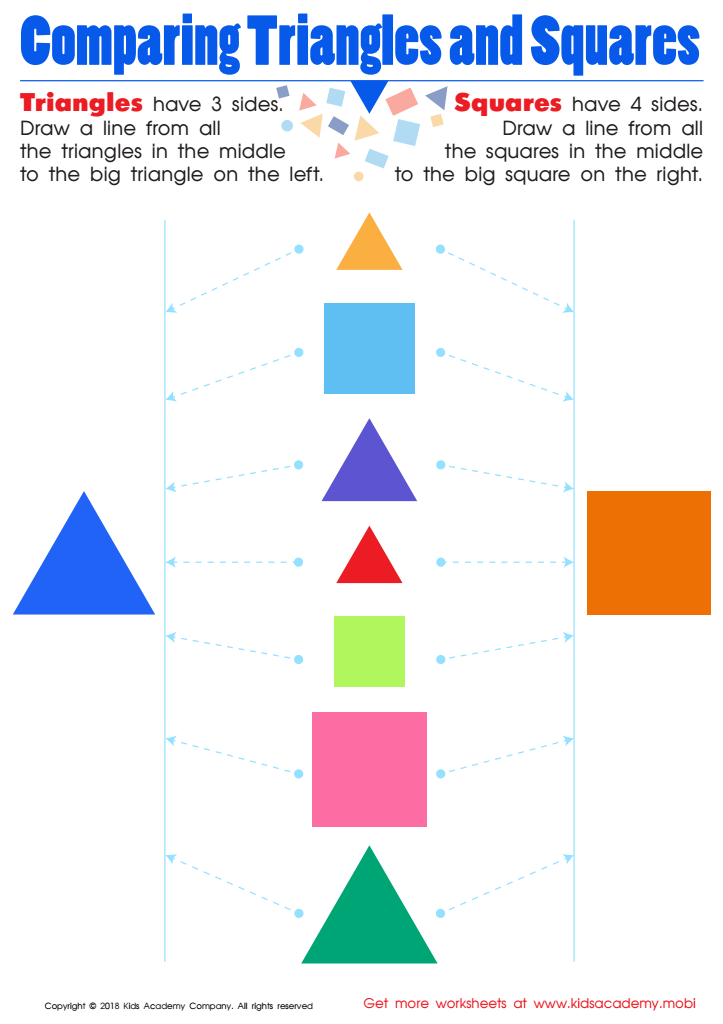
Comparing Triangles Squares Worksheet
 Assign to My Students
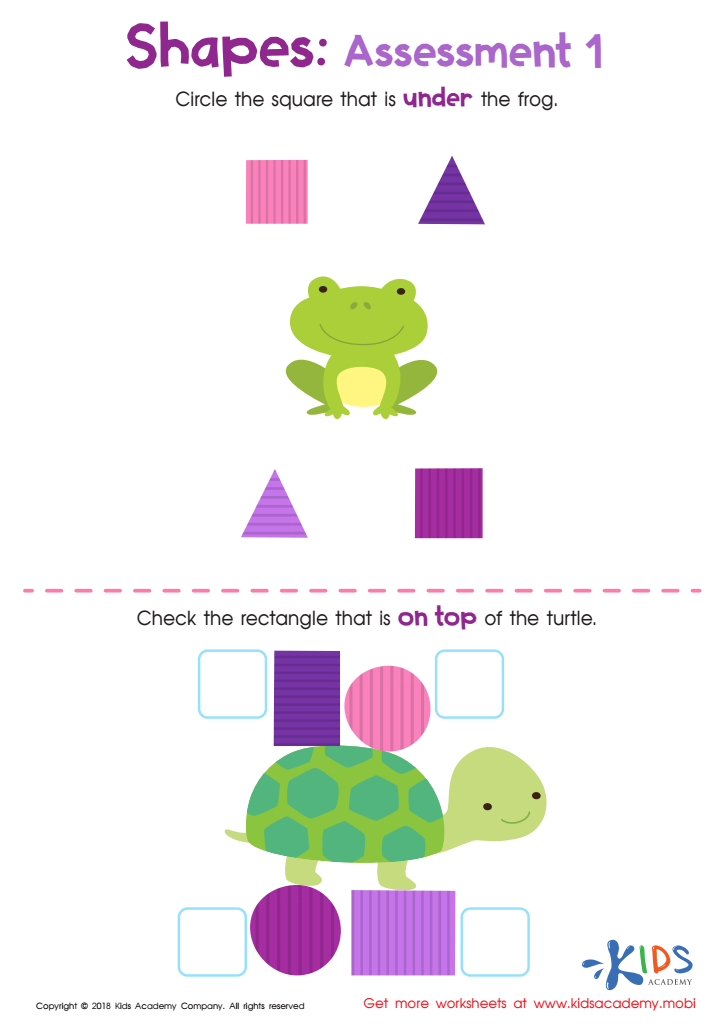
Geometry – Assessment 1 Worksheet
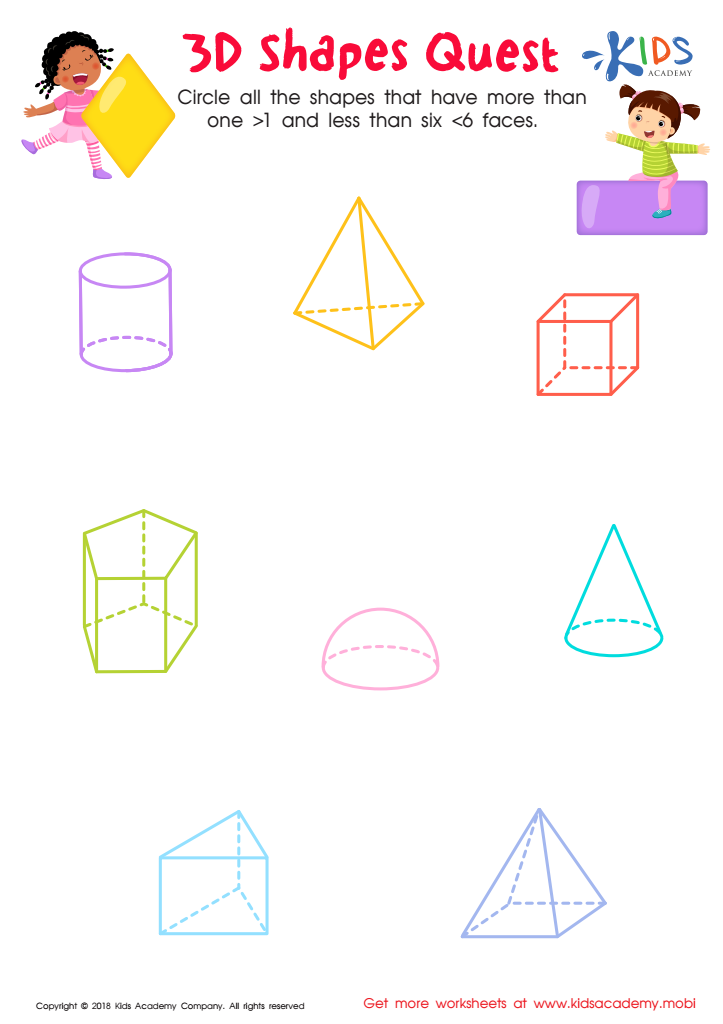
3D Shapes Quest Worksheet
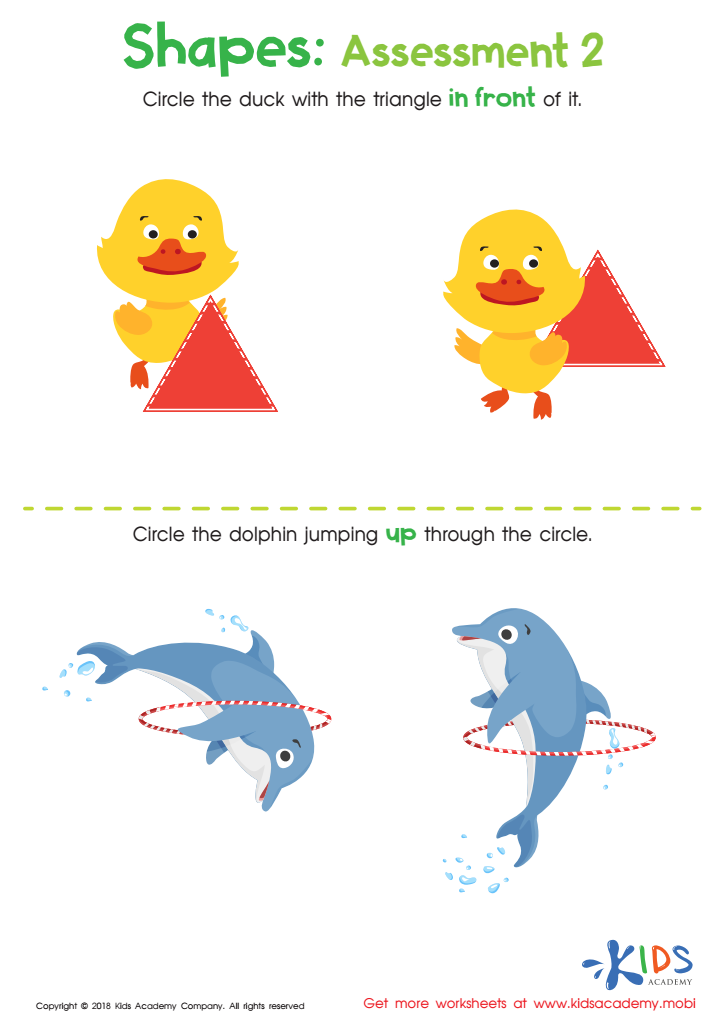
Geometry – Assessment 2 Worksheet







Shape comparison math for children ages 4-7 is crucial for early cognitive development and lays a foundation for more complex mathematical concepts. At this age, children are developing their spatial awareness, which is the ability to visualize and manipulate objects in their mind. Comparing shapes helps them understand the attributes and properties of different geometric objects, such as circles, squares, triangles, and rectangles.
Parents and teachers should care about shape comparison because it fosters critical thinking and problem-solving skills. When children compare shapes, they learn to observe differences and similarities, recognize patterns, and classify objects. This process significantly enhances their analytical abilities.
Moreover, shape comparison activities promote language development. As children describe and discuss shapes, they acquire new vocabulary and improve their communication skills.
Additionally, understanding shapes is connected to numerous real-world applications. Early familiarity with geometric concepts can help in various fields such as architecture, engineering, and art later in life.
Shape comparison also aligns with educational standards and lays a groundwork for subjects like geometry, physics, and computer science. When children grasp these foundational concepts early, they are more likely to succeed academically in these subjects as they progress through school. Therefore, incorporating shape comparison into early education is both essential and beneficial for holistic developmental growth.








