Telling time Math Worksheets for Ages 4-7
4 filtered results
-
From - To
Discover our engaging "Telling Time Math Worksheets" designed for children ages 4-7! Our printable worksheets are perfect for fostering time-telling skills in a fun and interactive way. Each activity encourages young learners to read analog and digital clocks, understand time intervals, and solve simple time-related problems. With colorful visuals and age-appropriate layouts, your child will develop confidence in their time-telling abilities while enhancing their overall math skills. Ideal for classroom activities or at-home practice, these worksheets provide a valuable educational resource that aligns with early learning standards. Start your child’s journey to mastering time with our delightful worksheets today!
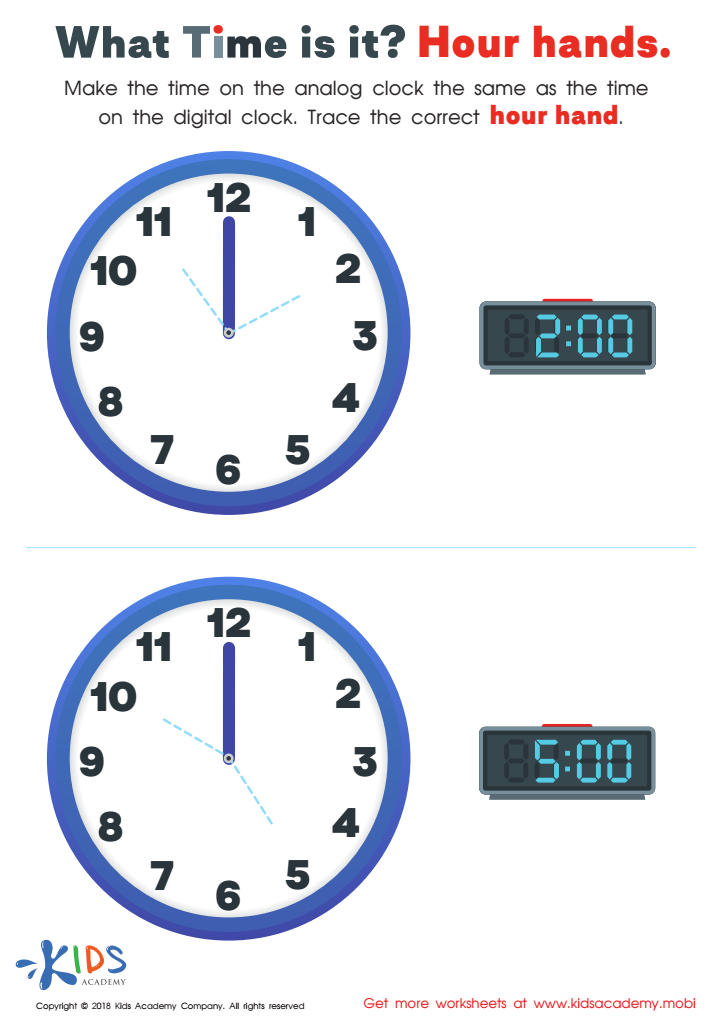
What Time Is it? Hour Hands Worksheet
 Assign to My Students







Telling time is a fundamental skill that lays the groundwork for various aspects of daily life and learning, particularly for children ages 4 to 7. For parents and teachers, fostering this skill is crucial because it helps instill a sense of routine and organizational skills in young learners. Understanding time promotes independence, enabling children to manage their schedules better and transition smoothly between activities, which is essential for emotional regulation and reducing anxiety.
Moreover, telling time strengthens foundational math concepts. As children learn to read clocks, they develop an understanding of numbers, fractions, and the concept of intervals. This deepens their cognitive abilities and supports their overall mathematical literacy.
Parents and teachers also play a pivotal role in making learning about time engaging. Through interactive activities, such as using timers or related games, children can grasp time concepts more effectively. Ultimately, teaching kids to tell time is not just about reading the clock; it's about nurturing their growth into responsible, self-sufficient individuals who can navigate their world confidently. By prioritizing this skill, adults set young learners on a path toward academic success and everyday life proficiency.








