Understanding comparisons Math Worksheets for Ages 4-7
5 filtered results
-
From - To
At Kids Academy, our "Understanding Comparisons Math Worksheets for Ages 4-7" provide engaging and child-friendly activities that help young learners grasp essential comparison skills. Perfectly designed for early graders, these worksheets teach children to compare quantities, sizes, lengths, and weights using fun illustrations and easy-to-follow instructions. Each exercise fosters critical thinking and problem-solving abilities, laying a strong foundation for future mathematical learning. With these worksheets, children develop confidence in recognizing differences and similarities, an essential skill in both daily life and academic applications. Start your child's learning journey with Kids Academy and watch their understanding and enthusiasm for math grow!
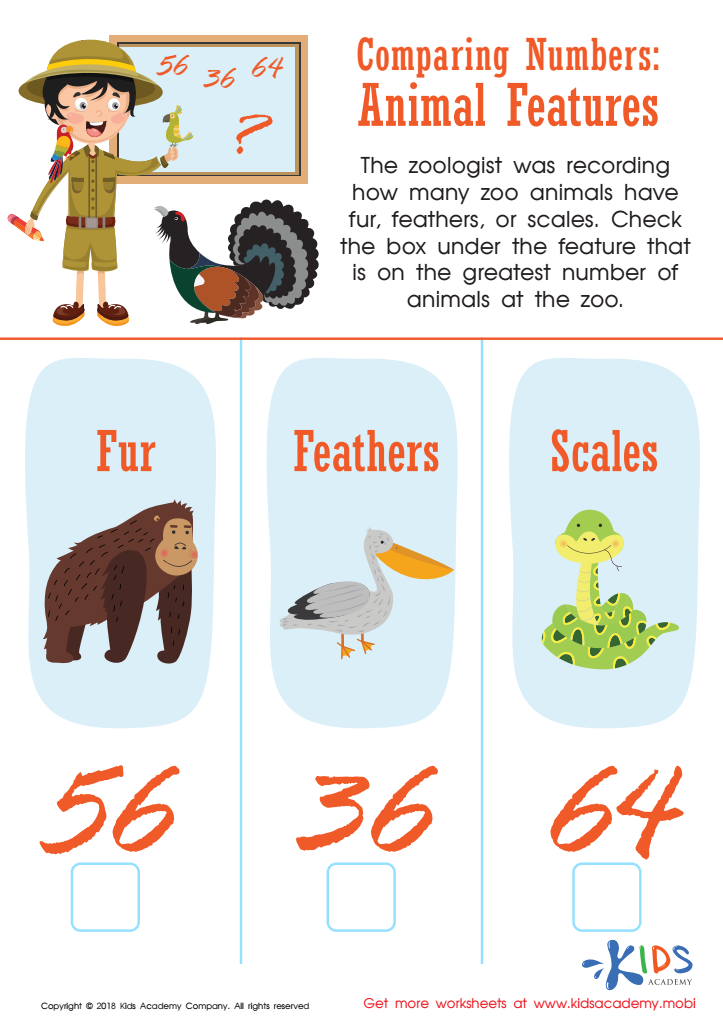
Animal Features Worksheet
 Assign to My Students
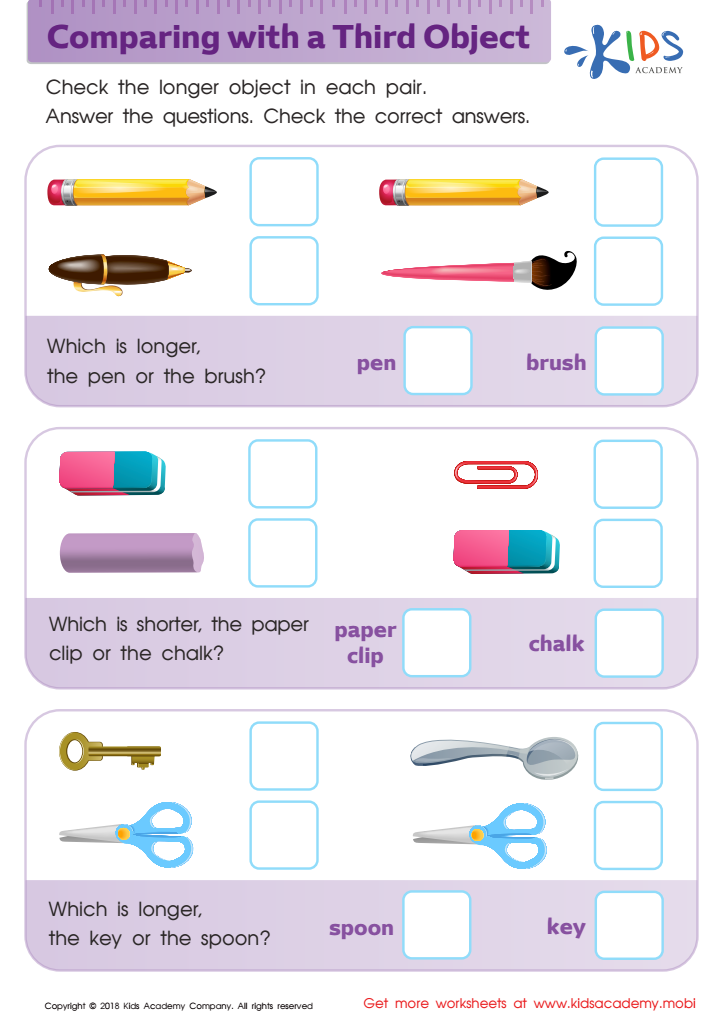
Comparing with a Third Object Worksheet
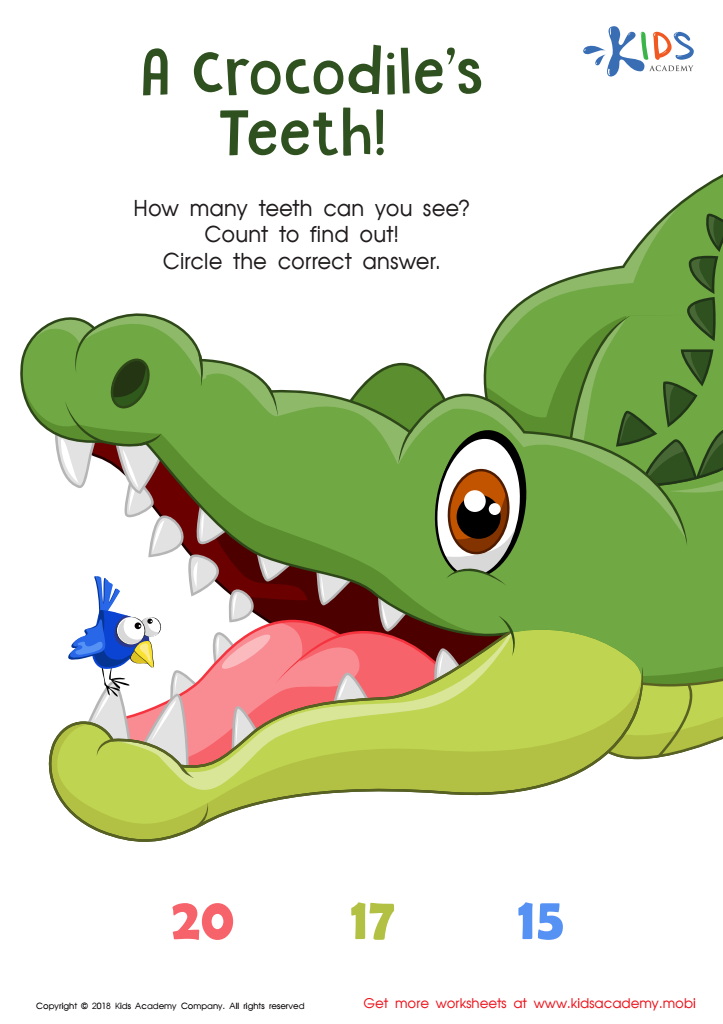
A Crocodile's Teeth Worksheet
Matching: Classifying Toys by Size Worksheet
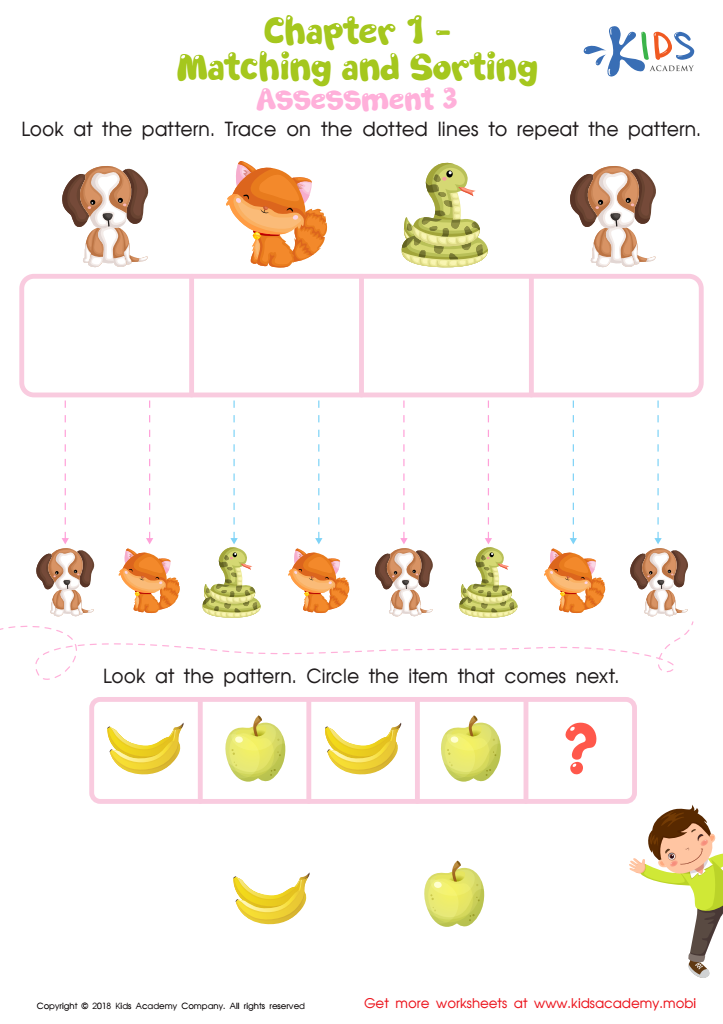
Matching and Sorting for Preschool: Assessment 3 Worksheet







Understanding comparisons in math is crucial for children aged 4-7 because it lays the foundational building blocks for their overall mathematical development. At this early stage, children are beginning to navigate the concepts of sizes, quantities, and measurements, all of which are pivotal for more advanced math skills. When children learn to compare objects or numbers, they are honing their analytical and critical thinking skills, which translate into better problem-solving abilities.
From a cognitive development standpoint, the ability to compare helps children make sense of the world around them. They can understand spatial awareness, categorization, and sequencing. For instance, determining which pencil is longer or which group of toys is bigger involves basic comparison, which in turn paves the way for grasping more sophisticated ideas like addition and subtraction.
For parents and teachers, fostering an environment where these comparisons are encouraged can make learning more engaging and practical. Simple activities like comparing the heights of family members, counting and comparing fruits, or arranging items by size can integrate learning seamlessly into everyday life. This relevance not only keeps young learners interested but also helps them retain concepts better. By caring about these foundational skills, we help set children up for future academic success and functional aptitude in everyday tasks.








