Understanding number sequences Math Worksheets for Ages 4-7
7 filtered results
-
From - To
Unlock your child’s math potential with our engaging "Understanding Number Sequences" worksheets, designed specifically for ages 4-7. These printable activities introduce young learners to the foundational concepts of number sequences, helping them recognize patterns and develop critical thinking skills. With vibrant visuals and easy-to-follow exercises, children will have fun while enhancing their counting, ordering, and problem-solving abilities. Our worksheets cater to diverse learning styles, ensuring a comprehensive approach to math education. Perfect for both classroom use and home practice, these resources foster a love for learning and provide essential skills for future academic success. Explore our collection today!
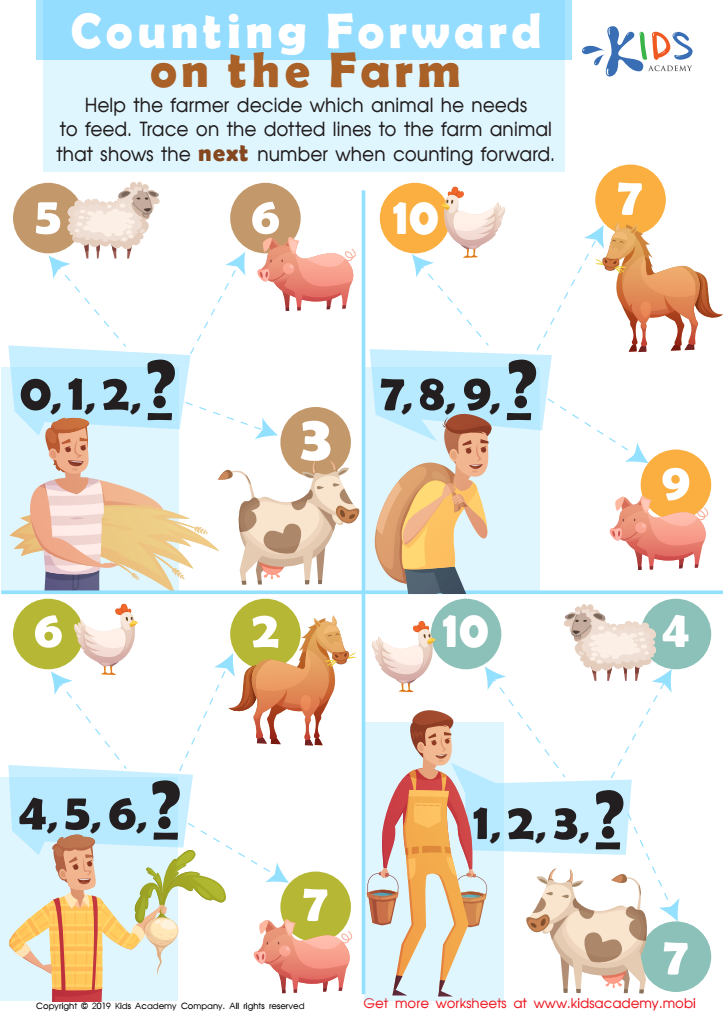
Counting Forward On the Farm Worksheet
 Assign to My Students
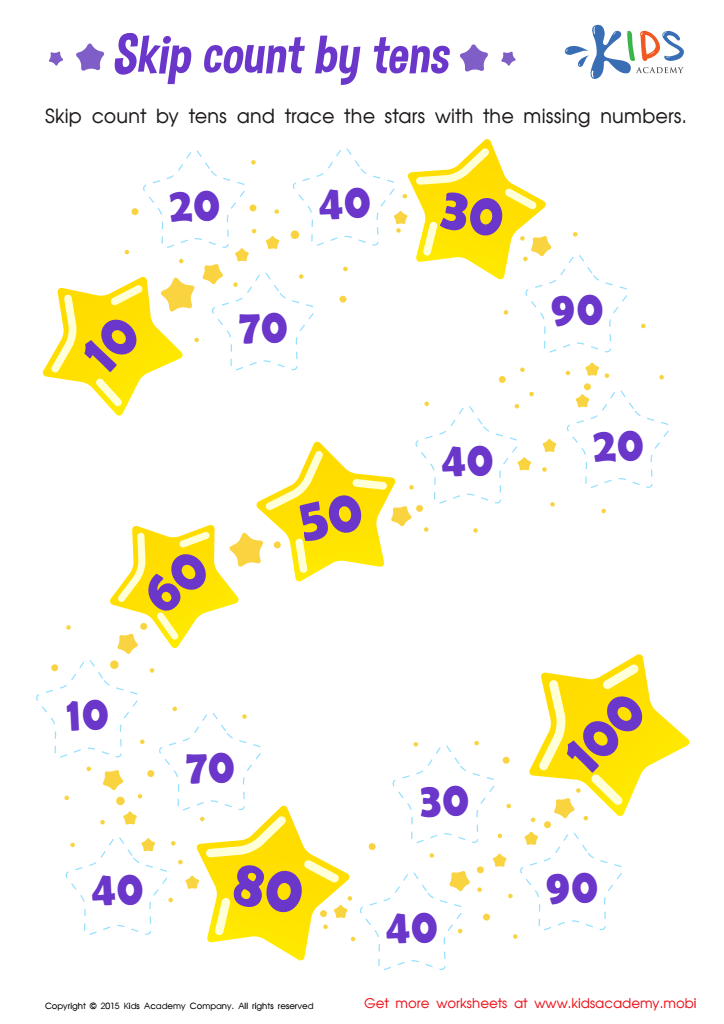
Learn dozens: Skip Count by Tens Printable
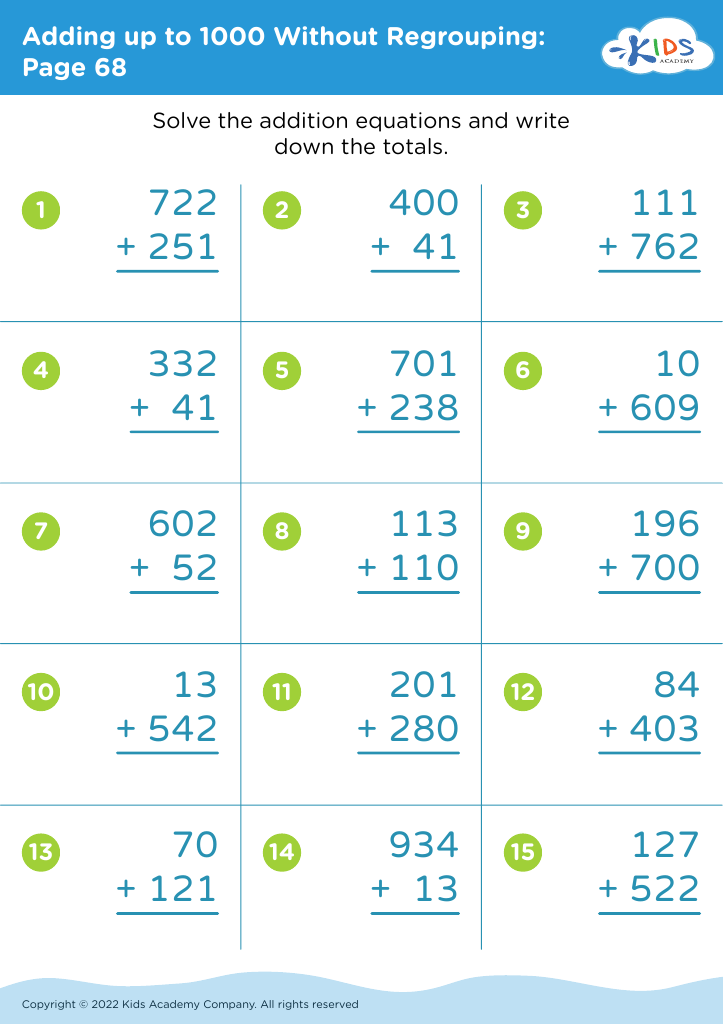
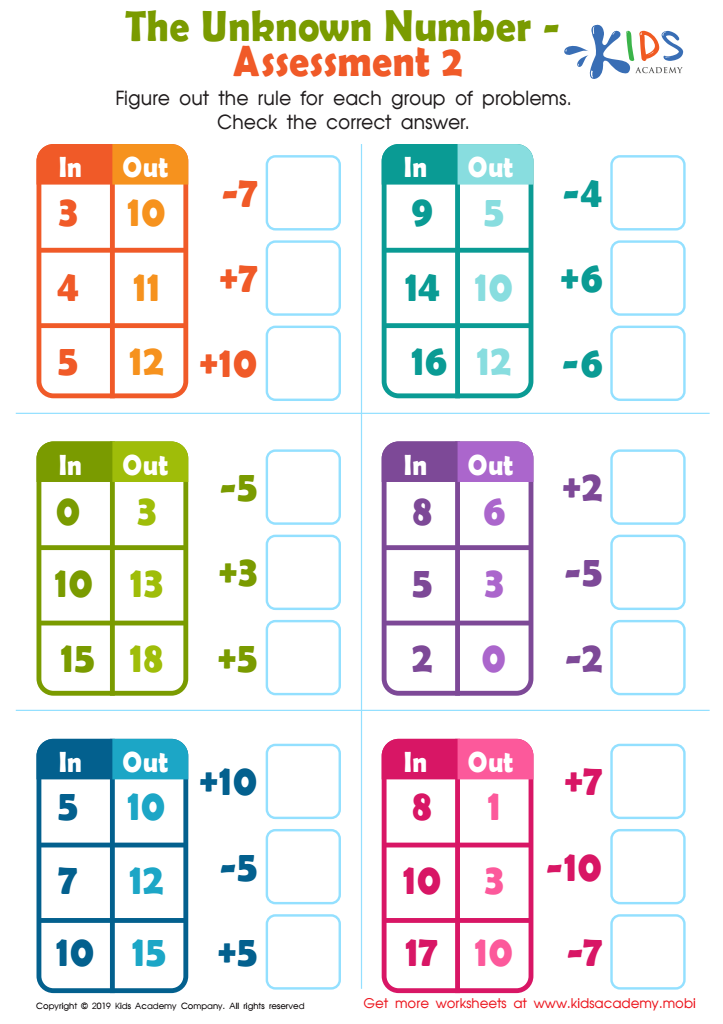
The Unknown Number - Assessment 2 Worksheet
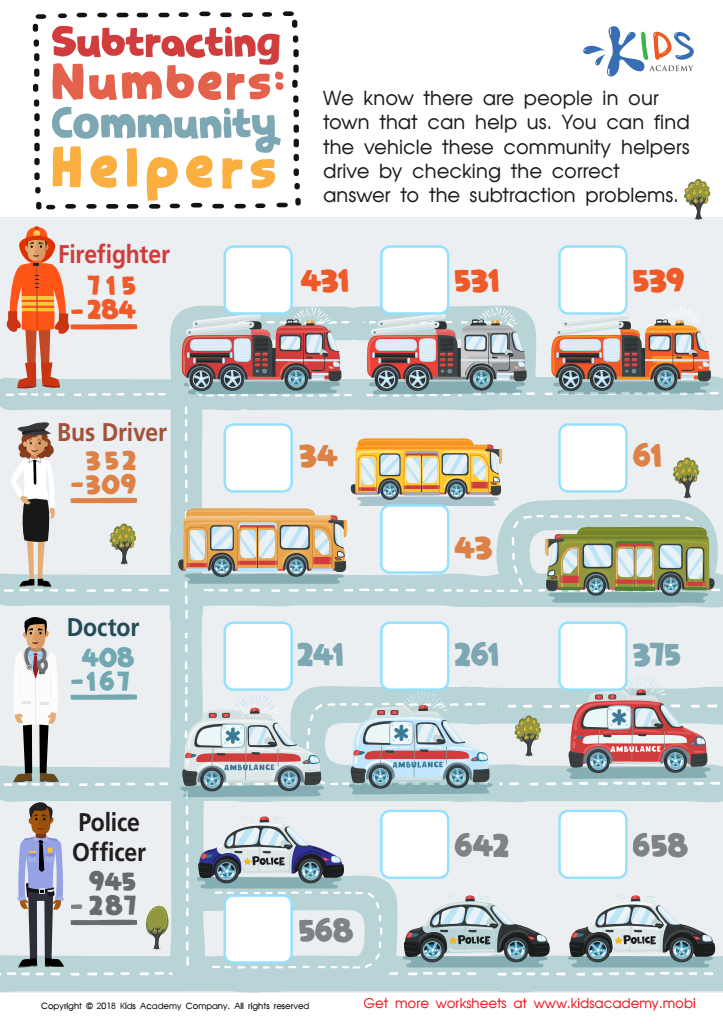
Subtracting Numbers: Community Helpers Worksheet








Understanding number sequences is a fundamental math skill for children ages 4-7, and it's crucial for parents and teachers to emphasize its importance. At this age, children begin to develop their mathematical foundation, and grasping number sequences promotes several key cognitive and academic skills.
Firstly, recognizing and working with number sequences aids in developing counting skills. It helps children understand the order of numbers, laying the groundwork for basic arithmetic operations such as addition and subtraction. These skills are essential for daily life tasks and future math learning.
Secondly, number sequences enhance critical thinking and problem-solving abilities. As children explore patterns in sequences, they learn to predict and logically deduce answers, essential skills in both math and everyday situations.
Lastly, number sequences foster a sense of confidence in young learners. Mastering this concept allows children to engage more freely with math, reducing anxiety associated with the subject as they progress to more complex topics.
In summary, investing time in understanding number sequences not only strengthens children’s foundational math skills but also boosts their cognitive development and confidence, ultimately better preparing them for future learning challenges. By supporting this learning, parents and teachers play a vital role in shaping positive attitudes toward math.








