
Understanding shapes Math Worksheets for Ages 4-7
5 filtered results
Difficulty Level
Grade
Age
-
From - To
Subject
Activity
Standards
Our "Understanding Shapes" Math Worksheets for Ages 4-7 are expertly crafted to introduce young learners to the world of geometry. These engaging and colorful activities help children identify, classify, and comprehend various shapes and their attributes. By incorporating patterns, puzzles, and matching games, these worksheets not only make learning fun but also strengthen critical thinking and spatial awareness. Perfect for home or classroom use, they provide a solid foundation for future math success. Boost your child's confidence and curiosity in math with our comprehensive and interactive shape-focused worksheets!
Favorites
With answer key
Interactive
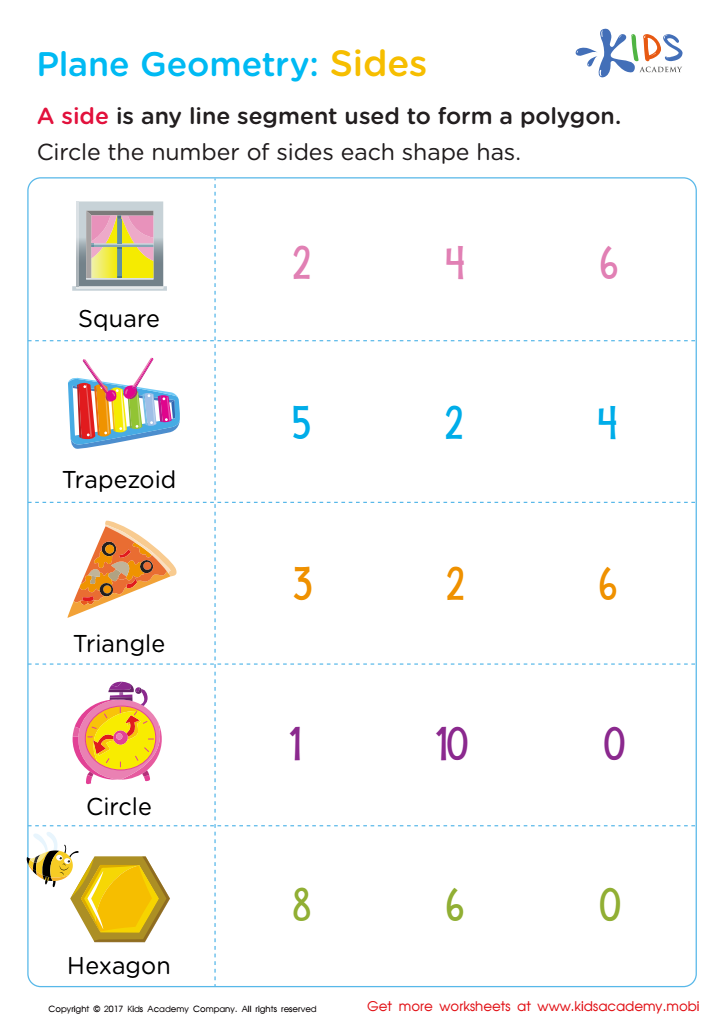
 Assign to My Students
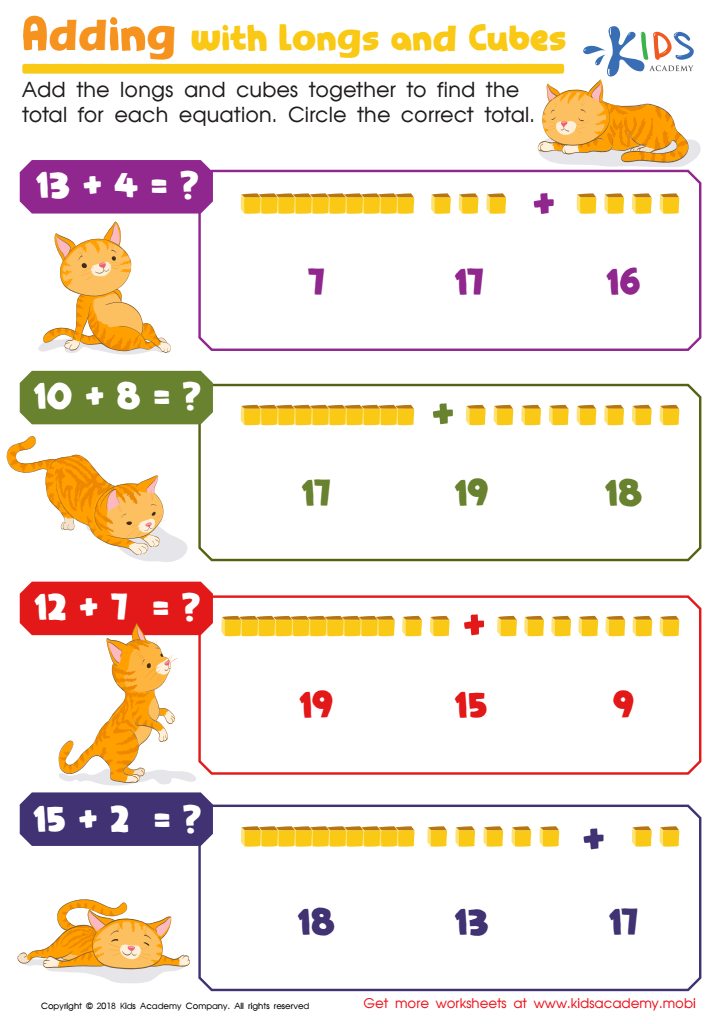
Adding With Longs and Cubes Worksheet
Math might not be your child's favorite, but they must master it to advance. If they're having difficulties or don't like it, use this worksheet to make it easier. Have them add longs and cubes together to find the total for each question, then circle the correct answer. This exercise can help make math experiences better.
Adding With Longs and Cubes Worksheet
Worksheet
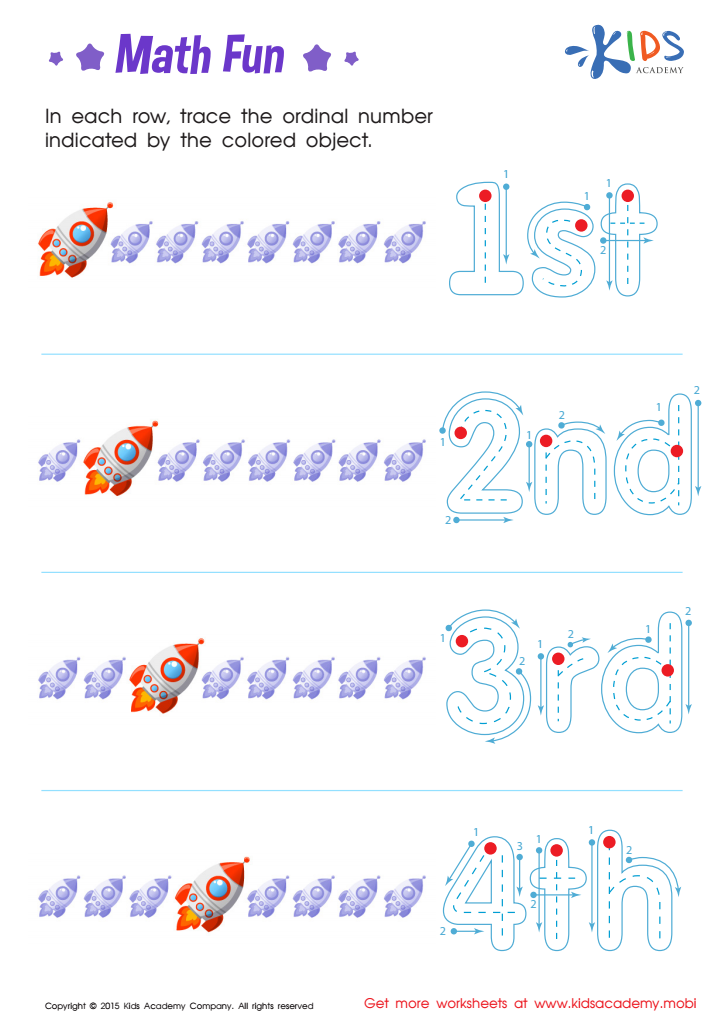
Ordinal Numbers: Math Fun Worksheet
Have fun learning ordinal numbers with our spaceship worksheet! Kids learn best while having fun and with repetition. Featuring vibrant spaceships, your child will understand placement, recognize and write ordinal numbers, and make connections. Understanding ordinal numbers leads to more advanced math concepts. Get your math whiz ready for preschool with our addition/subtraction worksheets! Have fun learning ordinal numbers and master them in no time!
Ordinal Numbers: Math Fun Worksheet
Worksheet
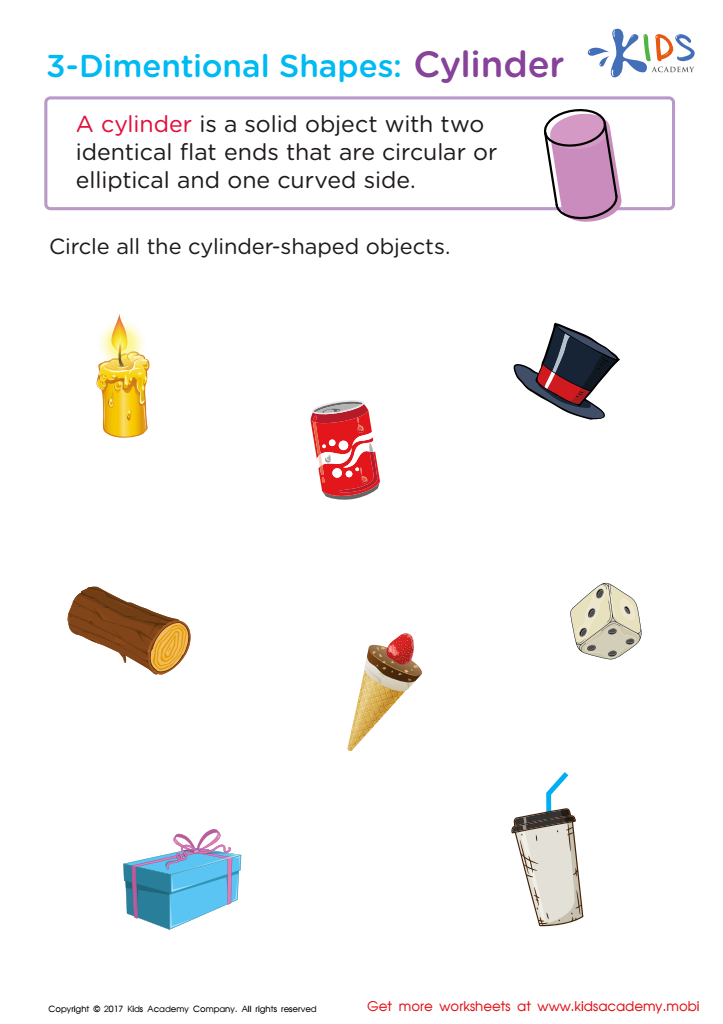
Three–Dimensional Shapes: Cylinder Worksheet
Introduce your toddler to geometry and 3D cylinders with this printable and watch their knowledge grow. It will help them recognize, define, and identify cylinders, as well as differentiate between 3D objects.
Three–Dimensional Shapes: Cylinder Worksheet
Worksheet
Join Kids Academy for Free
Who is primarily going to use this learning content?







Understanding shapes is a foundational skill in early childhood education, especially for children aged 4-7. Parents and teachers play a crucial role in nurturing this understanding for several reasons.
First, recognizing and understanding shapes enhances a child's spatial awareness and geometry skills, which are essential components of mathematical thinking. Children learn to differentiate between shapes by observing their properties—such as the number of sides and corners—which lay the groundwork for more complex math problems later on.
Second, shapes are everywhere in our daily lives. From identifying stop signs to understanding the layout of a room, recognizing shapes helps children make sense of the world around them. This practical knowledge assists them in interpreting visual information more effectively.
Moreover, learning about shapes improves fine motor skills and hand-eye coordination. Activities like drawing, cutting, and assembling shapes require precise movements, aiding physical development alongside cognitive growth.
Lastly, early shape recognition contributes to language development. When children describe shapes, they learn new vocabulary and practice their communication skills. This linguistic growth is intertwined with their overall learning process, reinforcing important concepts and fostering academic readiness.
In sum, understanding shapes is not just a math skill; it contributes to a well-rounded developmental foundation, equipping children with the critical thinking and practical skills they need for future academic success.








