Color recognition Matching Worksheets for Ages 4-7
3 filtered results
-
From - To
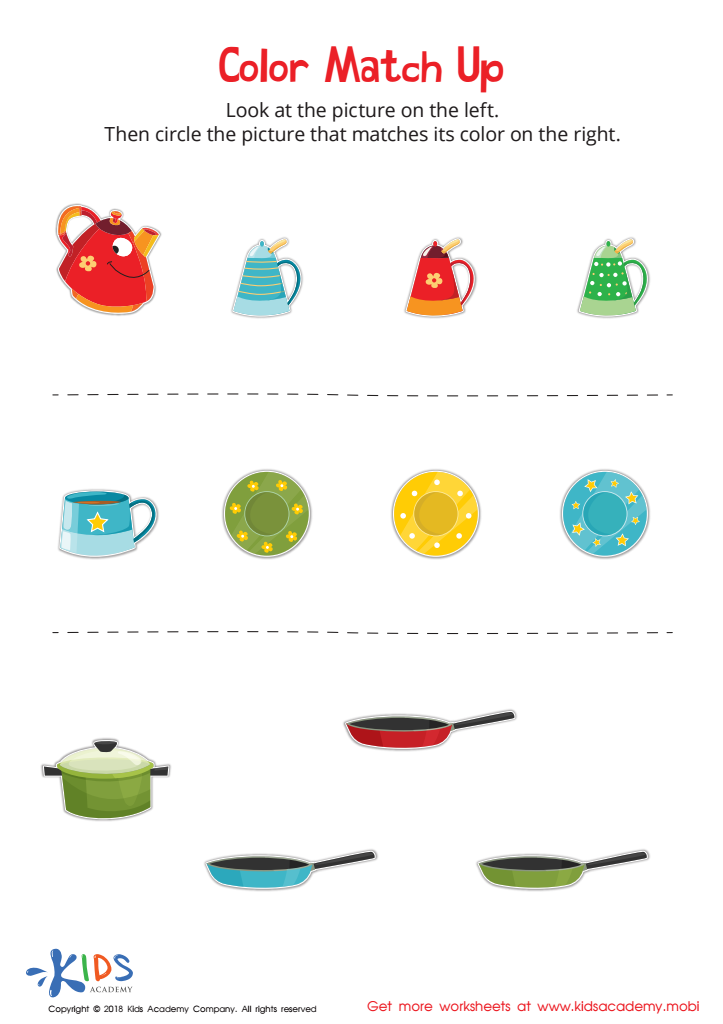
Discover our engaging Color Recognition Matching Worksheets designed specifically for children ages 4 to 7! These fun and interactive worksheets help young learners enhance their color recognition skills while promoting cognitive development. With vibrant illustrations and easy-to-follow activities, your child will practice matching colors, identifying shades, and developing a keen eye for detail. Ideal for both classroom and home learning, these worksheets encourage independent thinking and foster a love for learning. Perfect for early childhood educators and parents alike, our printable resources are an excellent way to make learning enjoyable and effective. Start exploring the colorful world of learning today!
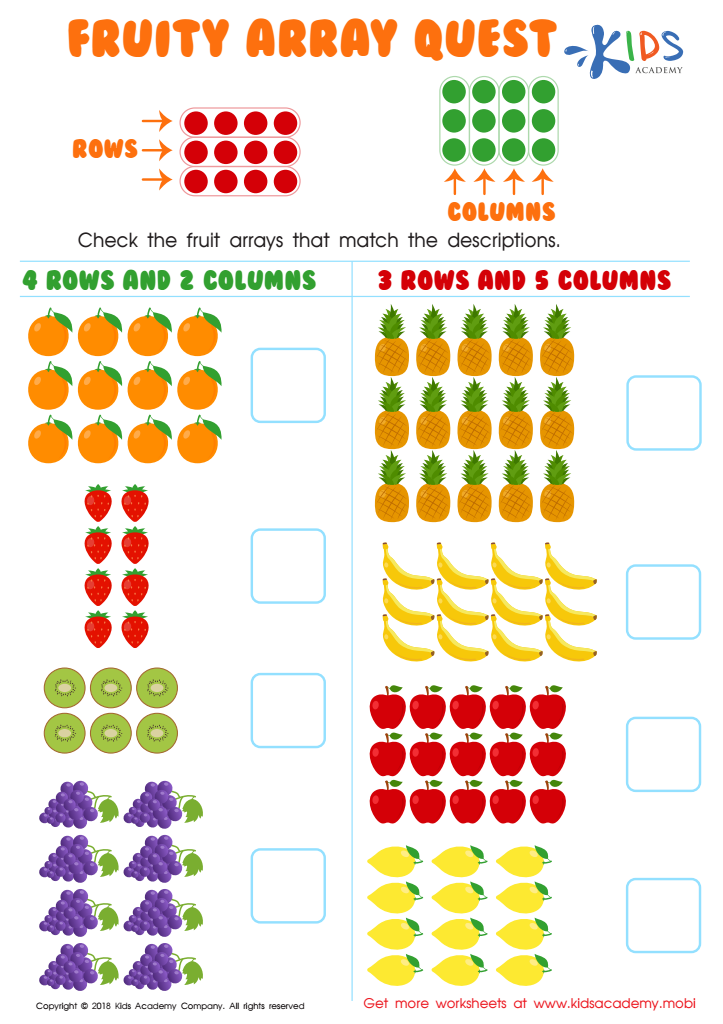
Fruity Array Quest Worksheet
 Assign to My Students
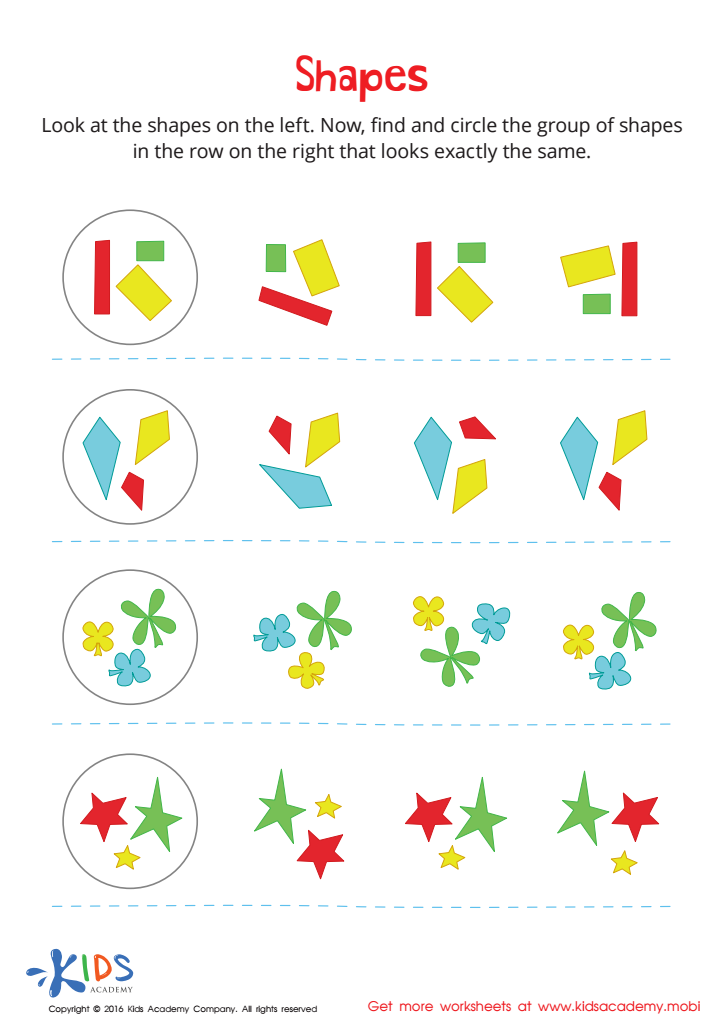
Shapes Worksheet







Color recognition and matching are vital skills for children aged 4-7, forming the foundation for various developmental areas. Firstly, recognizing colors enhances cognitive development. It fosters critical thinking as children learn to categorize objects by color, aiding in pattern recognition and memory. Understanding colors also enriches vocabulary, as children learn to articulate their observations, expanding language skills.
Moreover, mastering color recognition supports emotional and social development. It paves the way for expressive art, allowing children to communicate feelings and ideas through their choice of colors. This not only boosts creativity but also enhances self-esteem as they take pride in their artistic expressions.
Additionally, color matching plays an essential role in early math skills. Activities involving sorting and matching colors introduce concepts such as similarities and differences, promoting foundational comprehension needed for arithmetic and problem-solving in later years.
Finally, engaging in color-based activities can foster better parent-child and teacher-student interactions. Such playfulness creates opportunities for shared learning experiences and bonding. Ultimately, encouraging color recognition and matching in young children is vital for holistic development, enriching their cognitive, social, and emotional growth. Parents and teachers can guide these explorations, laying a strong groundwork for lifelong learning.








