Converting units Measurement Worksheets for Ages 4-7
4 filtered results
-
From - To
Enhance your child's understanding of measurement with our engaging "Converting Units Measurement Worksheets" designed specifically for ages 4-7. These interactive activities introduce young learners to the foundational concepts of unit conversion in a fun and accessible way. With colorful visuals and age-appropriate tasks, children will easily grasp the relationships between different units of measurement, building confidence in their math skills. Perfect for both classroom and home learning, these worksheets encourage early numeracy through hands-on practice. Get started today to spark your child’s interest in math and measurement! Visit our site to download and explore our comprehensive collection.
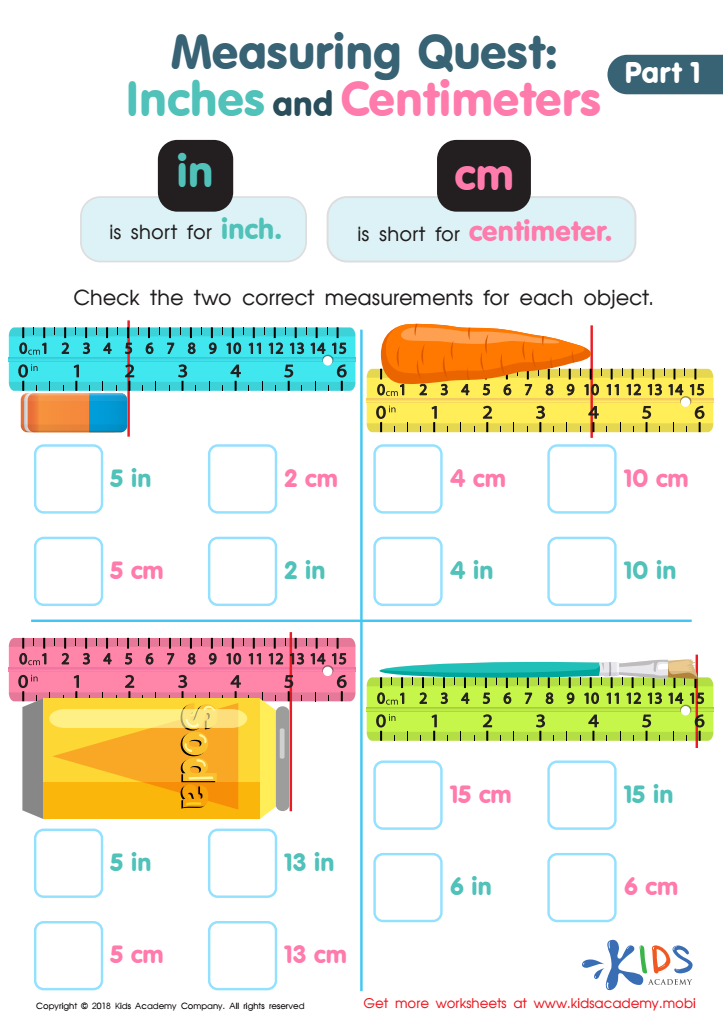
Measuring Quest: Inches and Centimeters Worksheet
 Assign to My Students
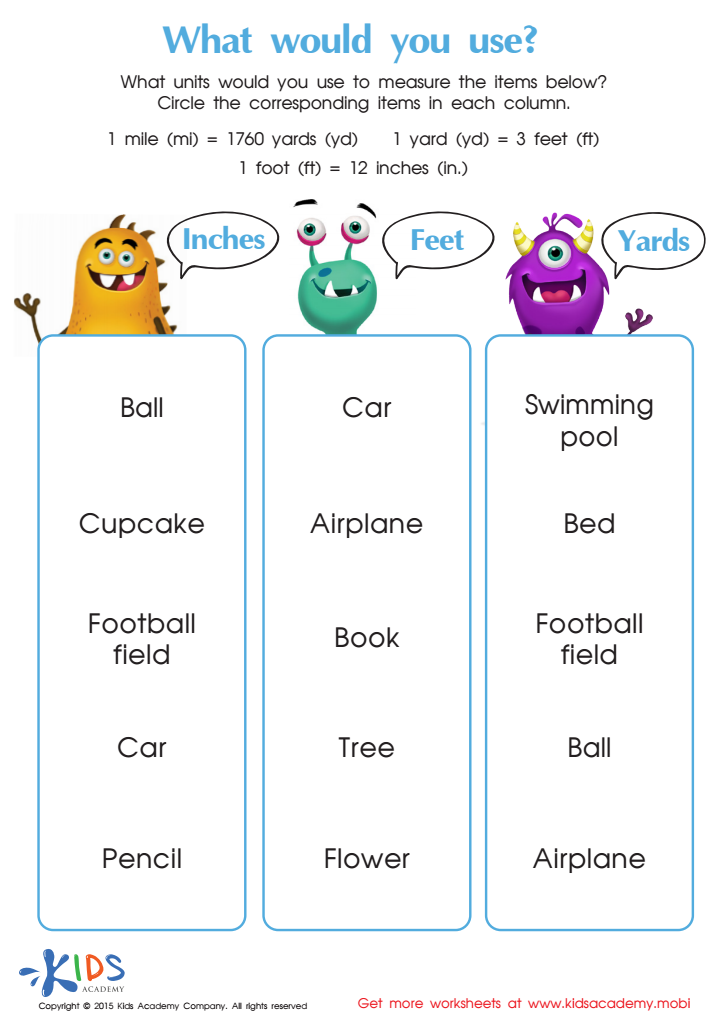
Learning about measuring objects in inches, feet and yards Worksheet
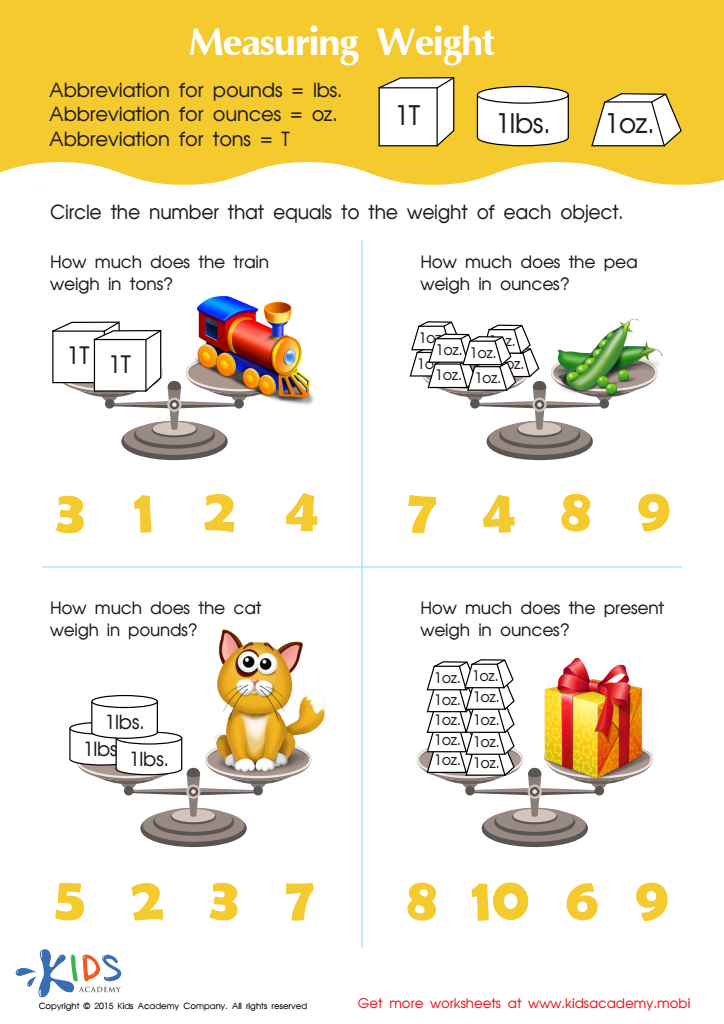
Measuring Weight in Ounces, Pounds and Tons Worksheet
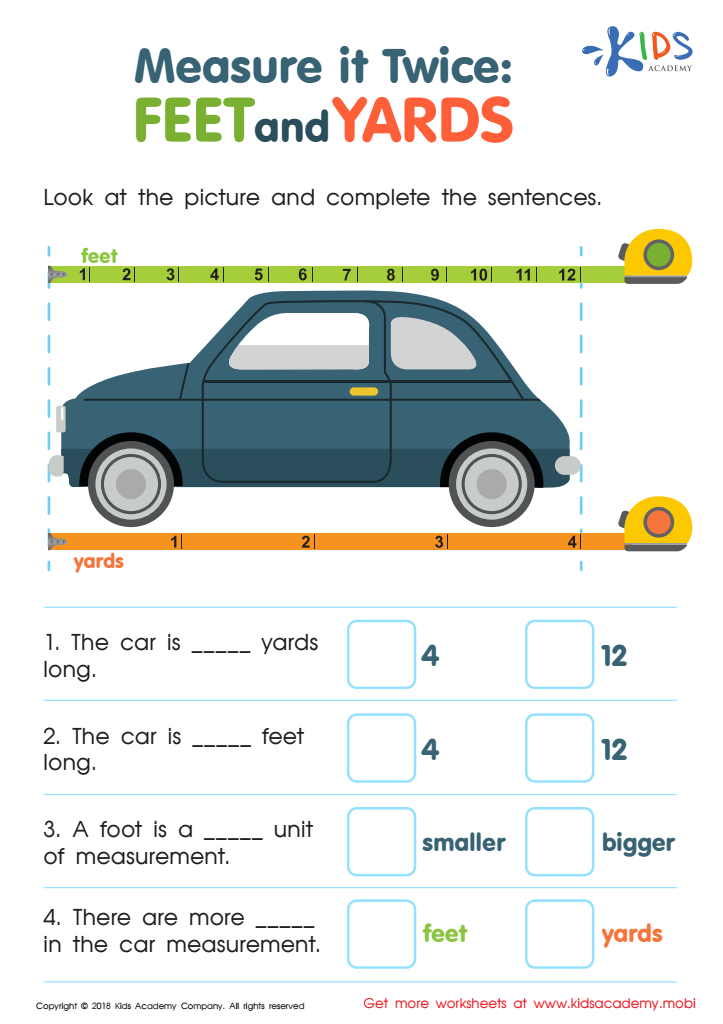
Measure It Twice: Feet and Yards Worksheet


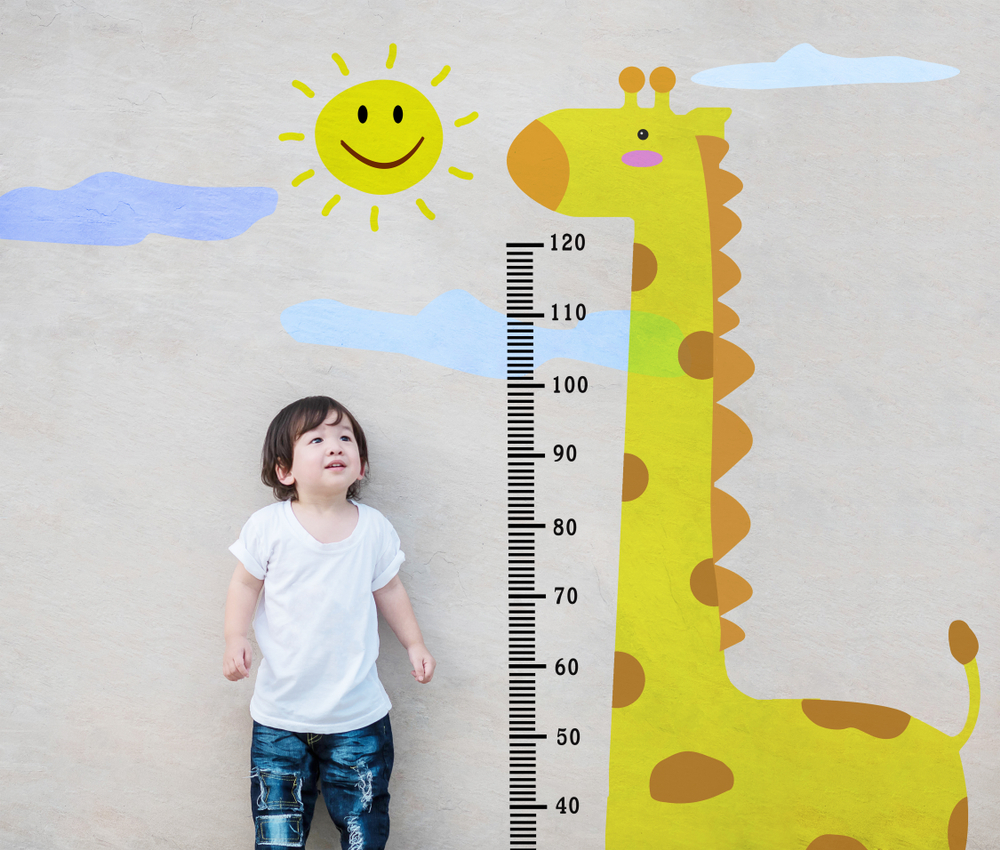





Understanding the concept of converting units of measurement is essential for young learners aged 4-7, as it lays the foundation for their mathematical and critical thinking skills. At this early stage in their education, children are naturally curious about the world around them, and introducing them to measurement helps them make sense of everyday experiences, such as comparing the height of plants, measuring ingredients for a recipe, or understanding distances.
Parents and teachers should prioritize teaching unit conversion because it enhances children's problem-solving abilities and boosts their confidence in handling practical tasks. As they learn to convert units—whether from inches to feet or milliliters to liters—they begin to grasp the relationships between different types of measurements, fostering a more profound understanding of mathematics in context.
Additionally, reinforcing measurement concepts supports the development of spatial awareness, which is crucial for later subjects, including science and engineering. Encouraging children to measure and convert units through fun activities helps engage them in learning, making it relevant and enjoyable. Ultimately, cultivating these foundational skills enriches children's cognitive abilities and prepares them for more complex mathematical concepts in the future.








