Vocabulary enhancement Measurement Worksheets for Ages 4-7
4 filtered results
-
From - To
Unlock your child's potential with our engaging Vocabulary Enhancement Measurement Worksheets designed for ages 4-7! These interactive worksheets seamlessly integrate math skills with language development to foster a love for learning. Young learners will explore fundamental measurement concepts, such as size, length, and weight, while enhancing their vocabulary through real-world applications. With colorful images and fun activities, these worksheets make education enjoyable and effective. Perfect for both classroom use and at-home practice, our worksheets are crafted to support early cognitive development, critical thinking, and a firm understanding of basic math terminology. Boost your child's literacy and numeracy skills today!
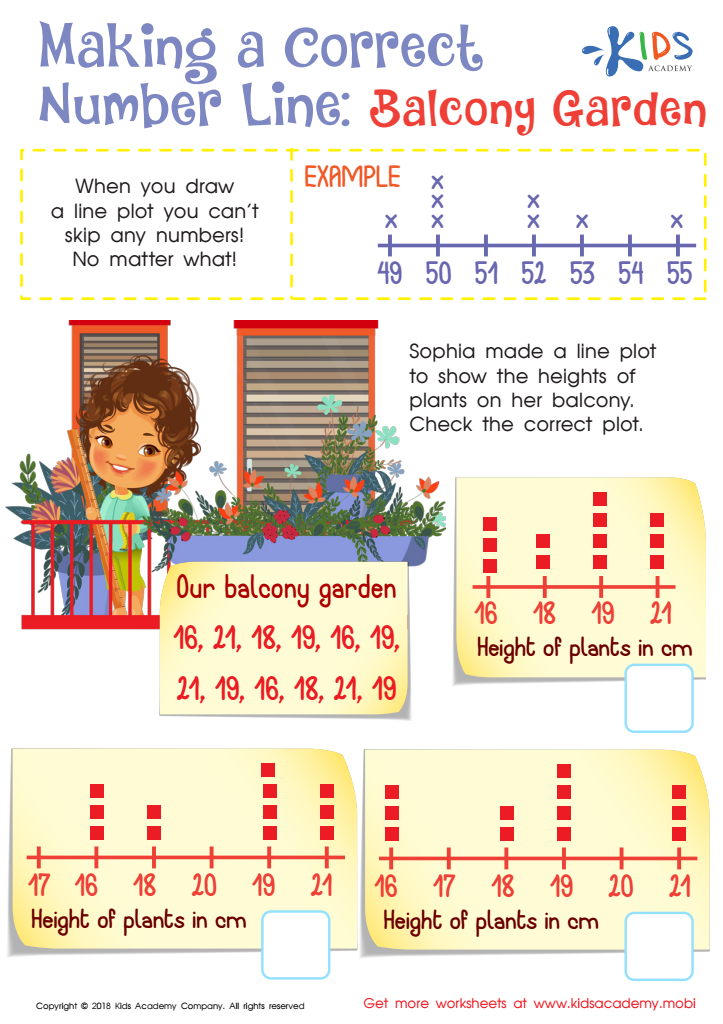
Making a Correct Number Line: Balcony Garden Worksheet
 Assign to My Students
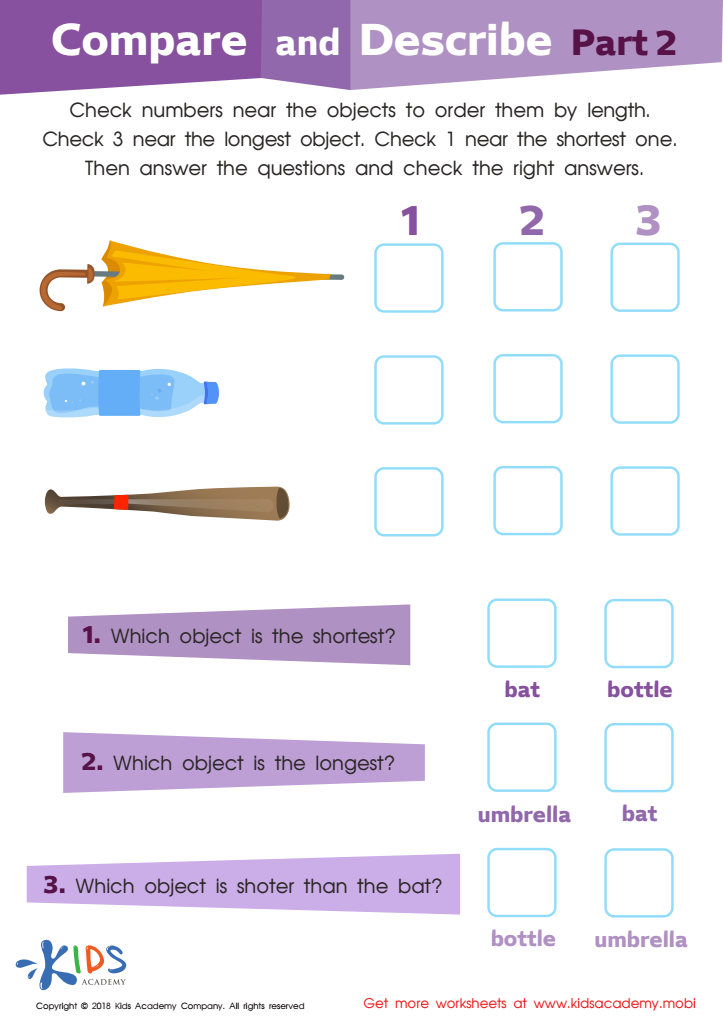
Compare and Describe: Part 2 Worksheet
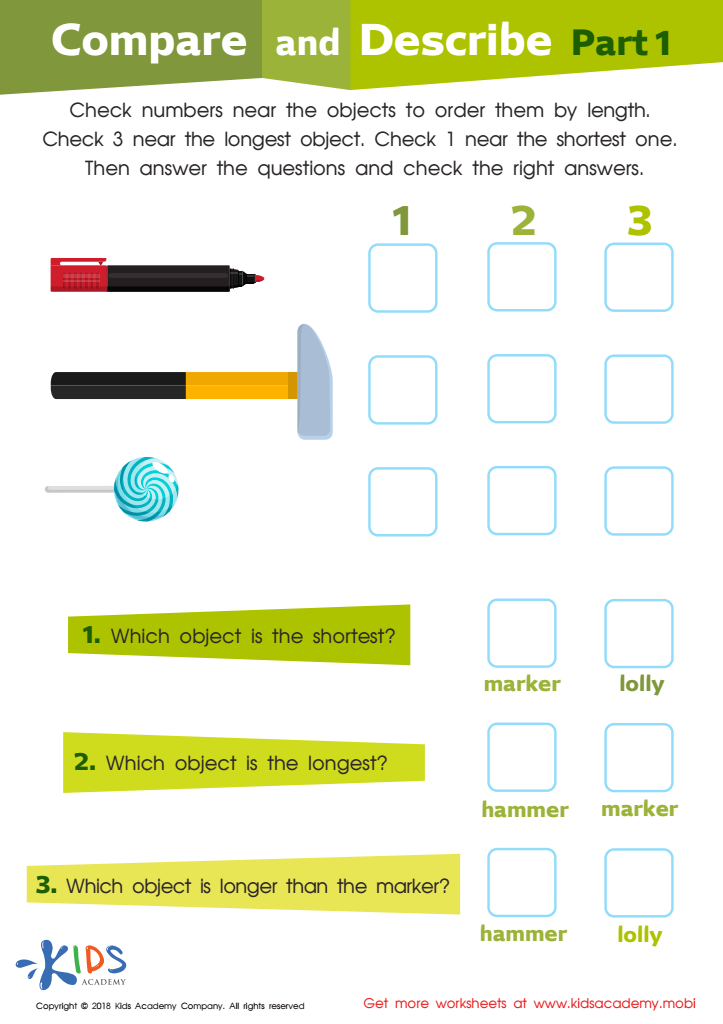
Compare and Describe: Part 1 Worksheet
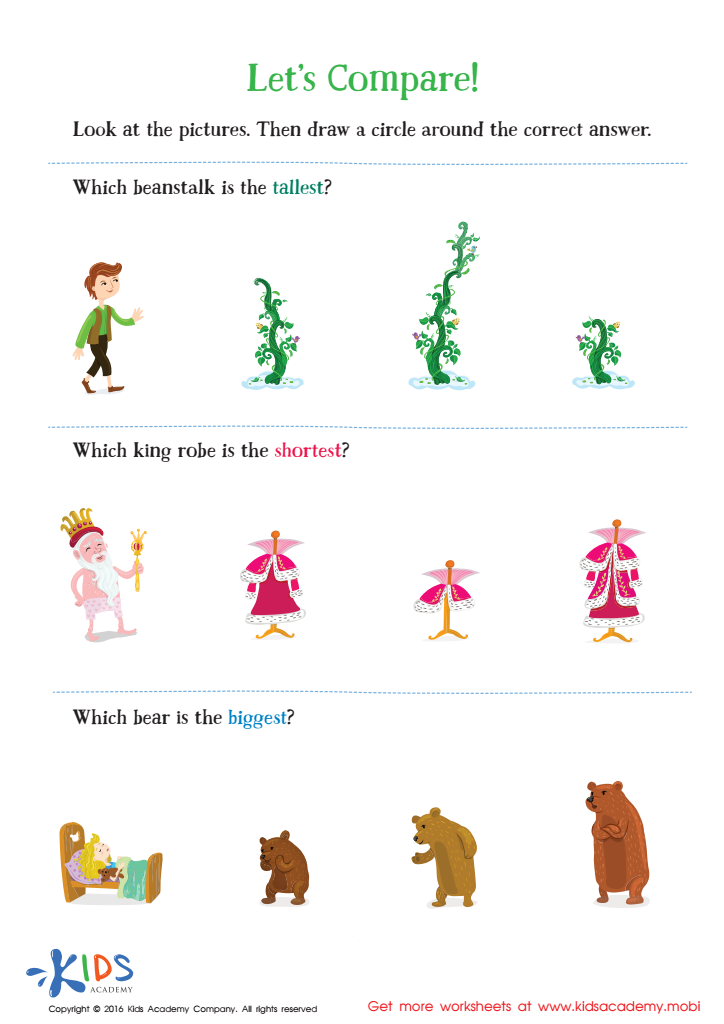
Fairy Tale Worksheet: Let's Compare








Vocabulary enhancement measurement for ages 4-7 is crucial for both parents and teachers due to its profound impact on a child's overall development. During these formative years, children’s brains are incredibly receptive to learning new words, which lays the foundation for effective communication, reading comprehension, and academic success.
A robust vocabulary enables children to express themselves more clearly and understand others better, fostering social interactions and emotional regulation. It also plays a pivotal role in developing reading skills. Studies have shown that children with a rich vocabulary are more proficient readers and have better comprehension skills, which are essential for learning across all subjects.
Measuring vocabulary at an early age helps identify gaps in language development, allowing parents and teachers to intervene early with targeted strategies tailored to each child's needs. This could include reading more books, engaging in conversations, or using educational games that expand word knowledge.
Moreover, early vocabulary skills are predictive of later academic achievement. By monitoring and enhancing a child’s vocabulary between ages 4-7, parents and educators set a strong linguistic foundation that supports lifelong learning and cognitive development. Therefore, prioritizing vocabulary measurement and enrichment during these critical years is an investment in a child’s future educational and social success.








