Pattern recognition Patterns Worksheets for Ages 4-7
5 filtered results
-
From - To
Unlock the joy of learning with our engaging Pattern Recognition Worksheets designed specifically for children ages 4-7. At Kids Academy, we focus on developing early math skills through delightful and colorful exercises that captivate young minds. These worksheets help children identify, predict, and create patterns, fostering critical thinking and problem-solving abilities. With various fun themes, our printable materials are perfect for both classroom and at-home practice. Lay a solid foundation for your child's academic success with engaging activities that make learning fun and effective. Visit our website and explore the treasure trove of resources for your little learner today.
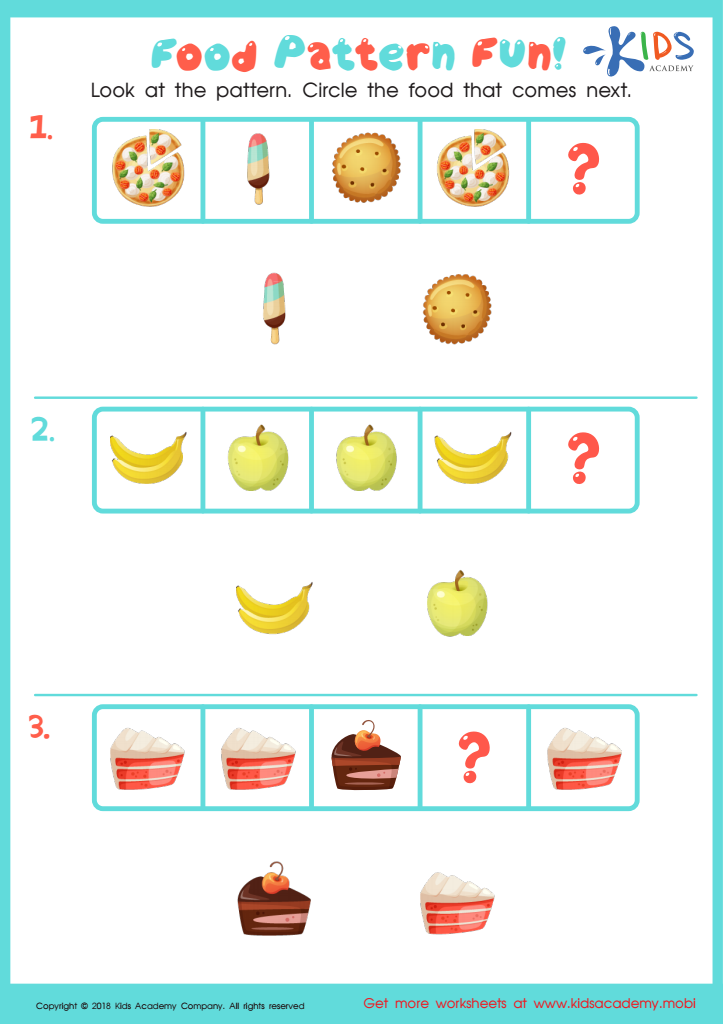
Food Pattern Fun Worksheet
 Assign to My Students
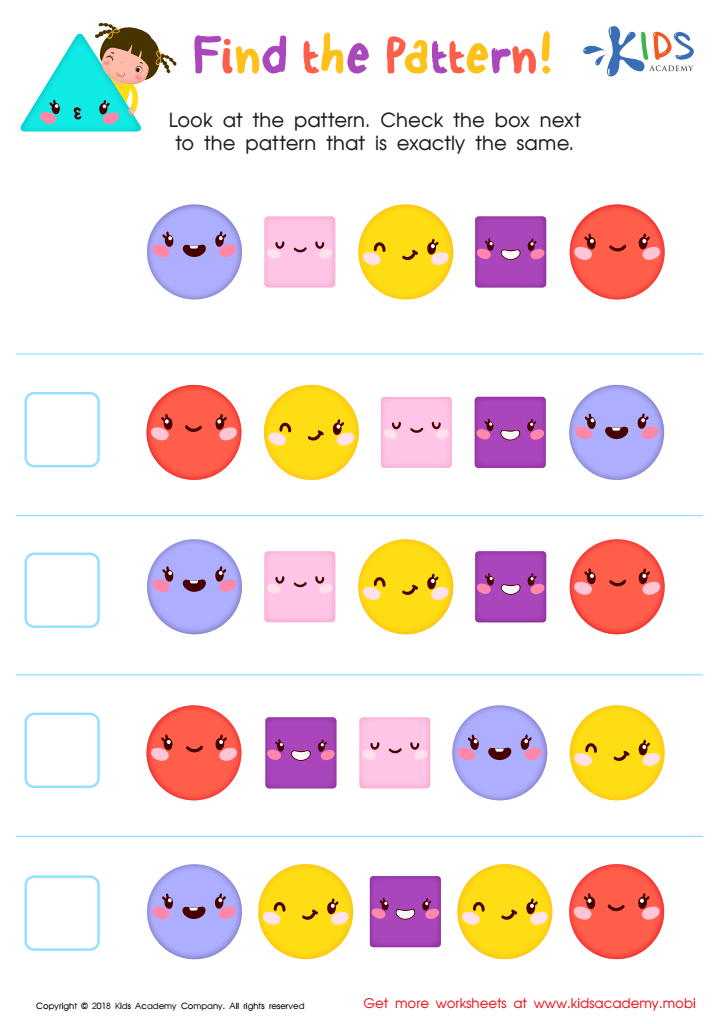
Find the Pattern Worksheet
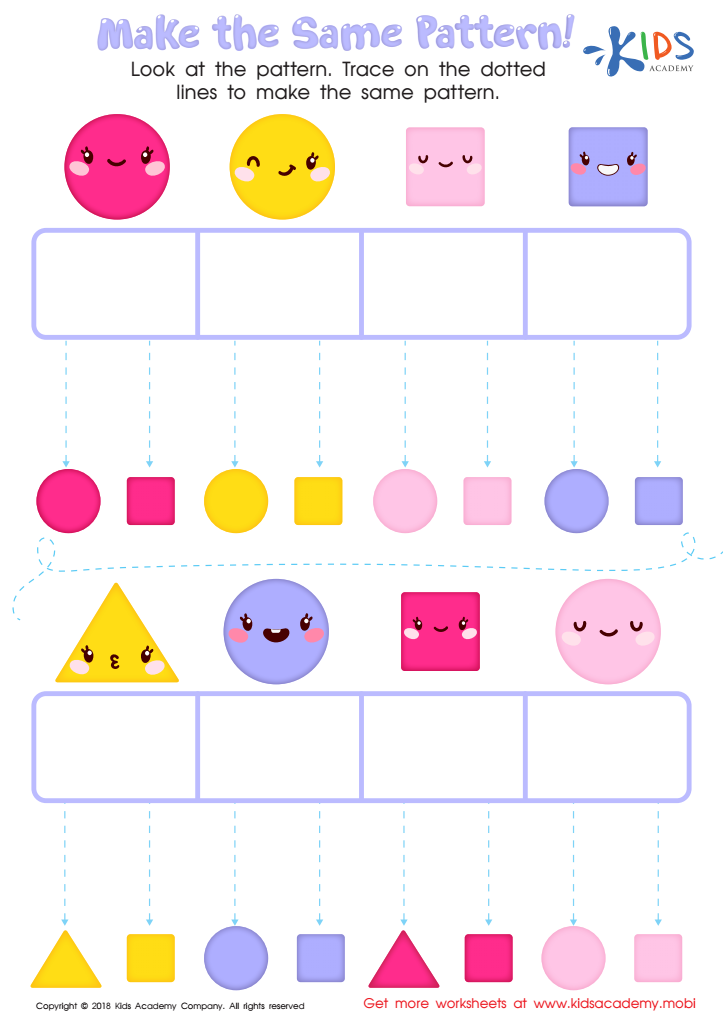
Make the Same Pattern Worksheet
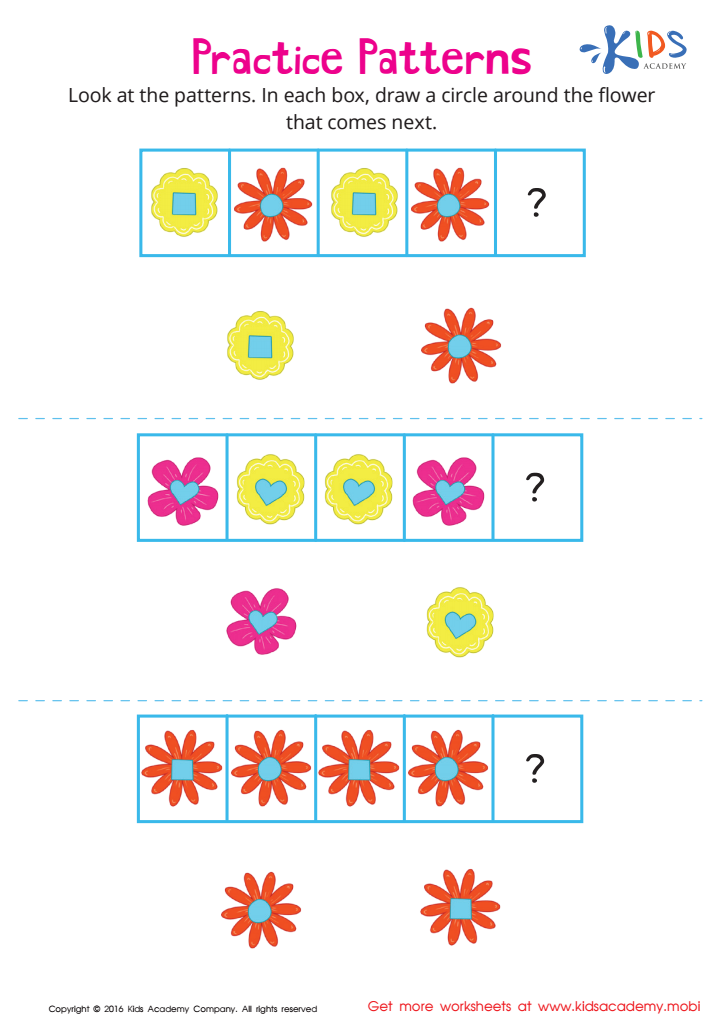
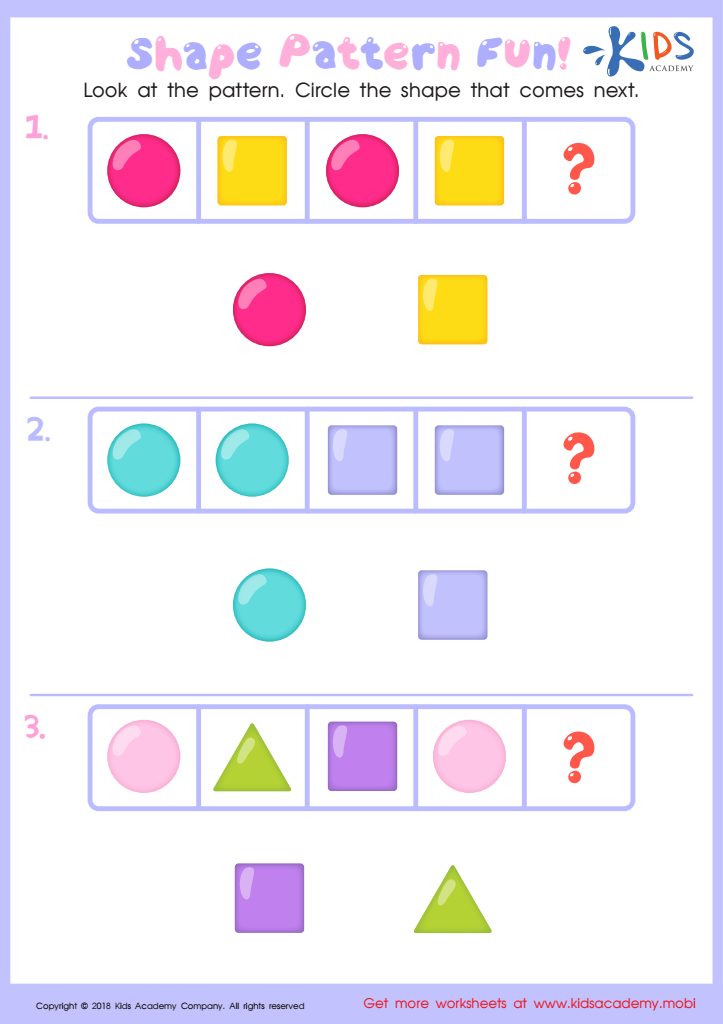
Shape Pattern Fun Worksheet







Parents and teachers should deeply care about pattern recognition for children ages 4-7 because this foundational skill plays a critical role in cognitive development and academic success. At this young age, children's brains are highly receptive to learning, and recognizing patterns helps them make sense of the world around them. It enhances their ability to predict and understand sequences, which is essential for reading, math, and problem-solving skills.
For instance, in literacy, understanding patterns in letters and sounds can lead to better phonemic awareness, which is crucial for reading proficiency. In mathematics, patterns form the basis of early number sense, aiding in the comprehension of concepts such as skip counting, addition, and place value. Furthermore, pattern recognition fosters logical thinking and creativity as children learn to observe, predict, and design their own patterns.
Moreover, this skill contributes to a child’s executive function, including skills like working memory and flexible thinking, which are vital for successful learning and daily activities. By integrating pattern recognition activities into everyday play and structured learning, parents and teachers can significantly enhance a child's intellectual growth, laying the groundwork for more complex skills in later stages of education. Therefore, focusing on patterns is not just about immediate learning outcomes but also about nurturing a versatile and adaptive mind.








