
Animal Classification Sorting Worksheets for Ages 4-7
3 filtered results
Difficulty Level
Grade
Age
-
From - To
Subject
Activity
Standards
Unlock the world of wildlife for children with our engaging "Animal Classification Sorting Worksheets for Ages 4-7" from Kids Academy. Perfect for young learners, these worksheets help kids categorize animals by different attributes, fostering essential sorting skills, critical thinking, and early science knowledge. Vibrant illustrations and child-friendly content make learning fun and interactive. Designed by education experts, these activities are ideal for classroom use or homeschooling. Encourage exploration and curiosity as your child discovers various animal groups, enhancing their understanding of the natural world. Start their learning adventure today!
Favorites
With answer key
Interactive
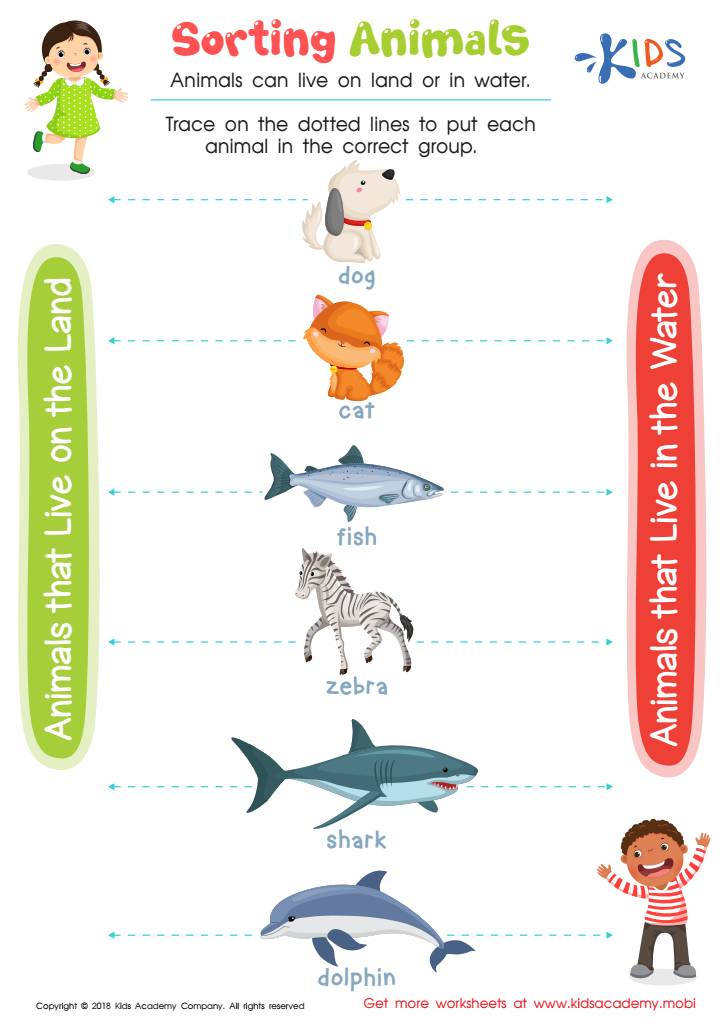
Sorting Animals Worksheet
Your kids will love this free, interactive worksheet! With image clues, they can read and trace the animal names, and then sort them into groups of land or water animals. It's an enjoyable way to boost their critical thinking, fine motor and prior knowledge skills.
 Assign to My Students
Sorting Animals Worksheet
Worksheet
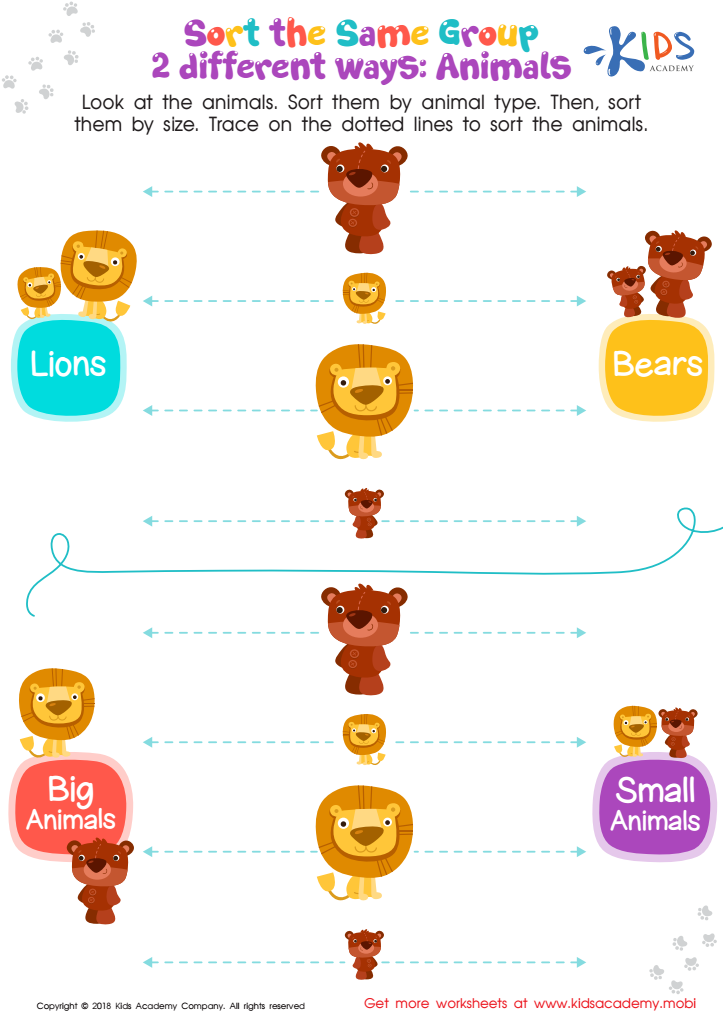
Sort the Same Group 2 Different Ways: Animals Worksheet
Look at the animals with your child. Ask them to name them, then sort them by type (e.g. lions and bears). Next, help them sort by size, tracing the dotted lines. This will teach them sorting skills.
Sort the Same Group 2 Different Ways: Animals Worksheet
Worksheet
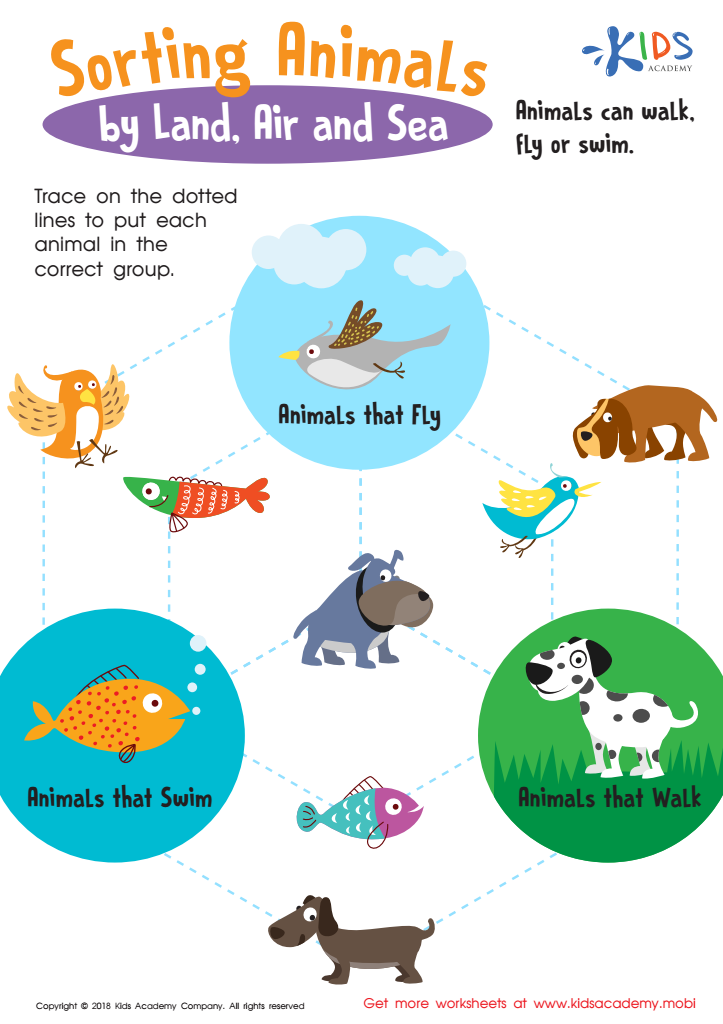
Sorting Animals by Land, Air and Sea Worksheet
Kids will use critical thinking and fine motor skills with this worksheet! They'll analyze animal traits and draw lines to sort them into groups of those that fly, swim, or walk. It's a fun way to hone skills and have a great time!
Sorting Animals by Land, Air and Sea Worksheet
Worksheet
Join Kids Academy for Free
Who is primarily going to use this learning content?







Animal Classification Sorting activities for children aged 4-7 hold significant educational value and should be embraced by both parents and teachers. These activities introduce young children to the foundational principles of science and biology in a fun, engaging way. By categorizing animals based on characteristics such as habitat, type, and physiological traits, children develop critical thinking and observation skills early on.
Engagement in sorting activities supports cognitive development; children learn to compare, contrast, and categorize information – key processes in both math and literacy. The activity enhances vocabulary and language skills as youngsters learn specific terminology related to animal species and their environments. This early exposure can ignite an interest in the natural world, fostering a lifelong love for learning and curiosity about living organisms.
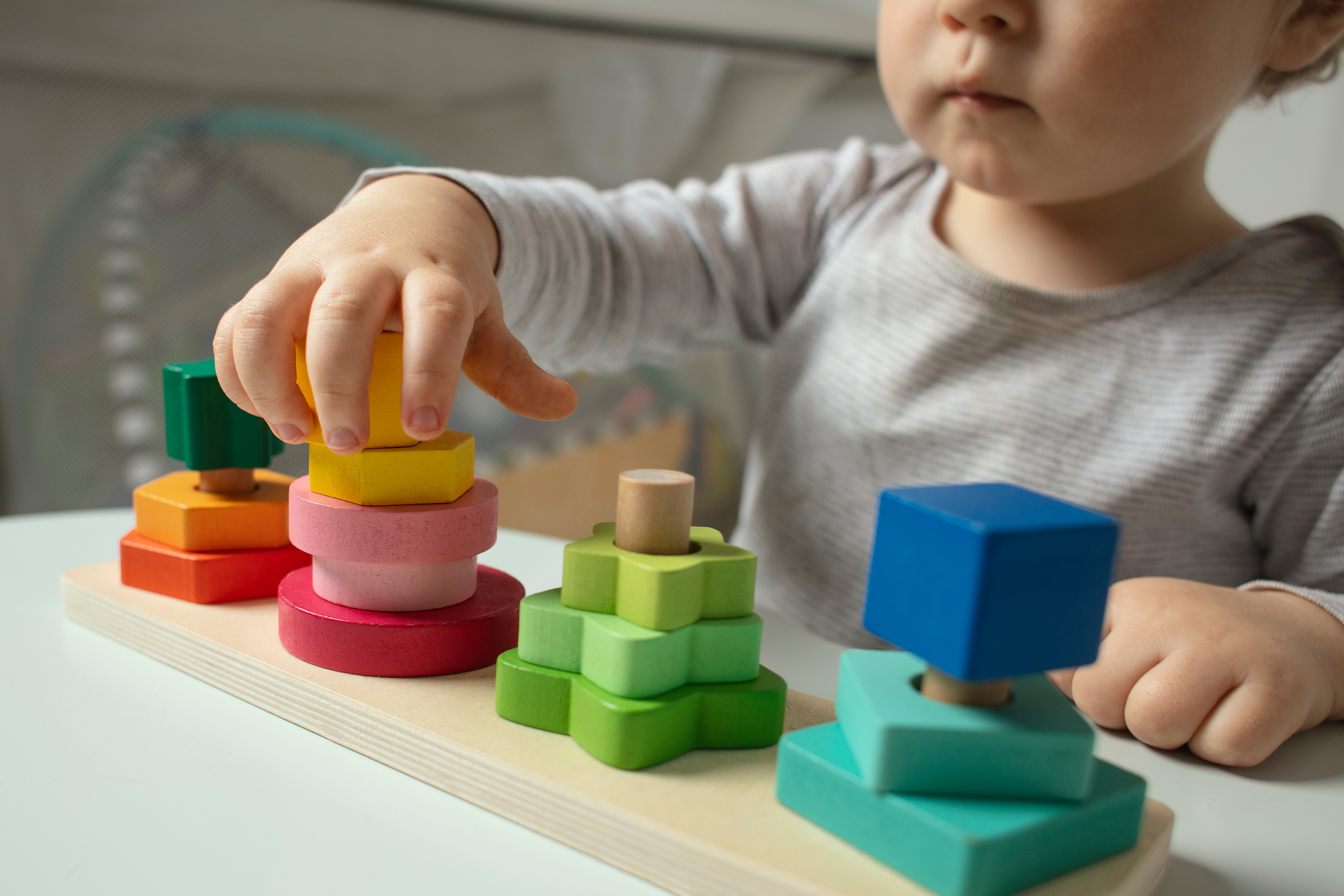
Moreover, these activities encourage fine motor skills and hand-eye coordination as kids physically handle sorting materials. It also promotes social skills and cooperative play when done in group settings, teaching children the value of teamwork and communication.
In an increasingly digital world, hands-on activities like animal sorting provide a necessary balance, merging screen-free time with meaningful educational content. By participating in these activities, both parents and teachers can support holistic, well-rounded development that prepares children for more advanced scientific concepts in future schooling.








