Subtraction practice Subtraction Worksheets for Ages 4-7 - Page 2
35 filtered results
-
From - To
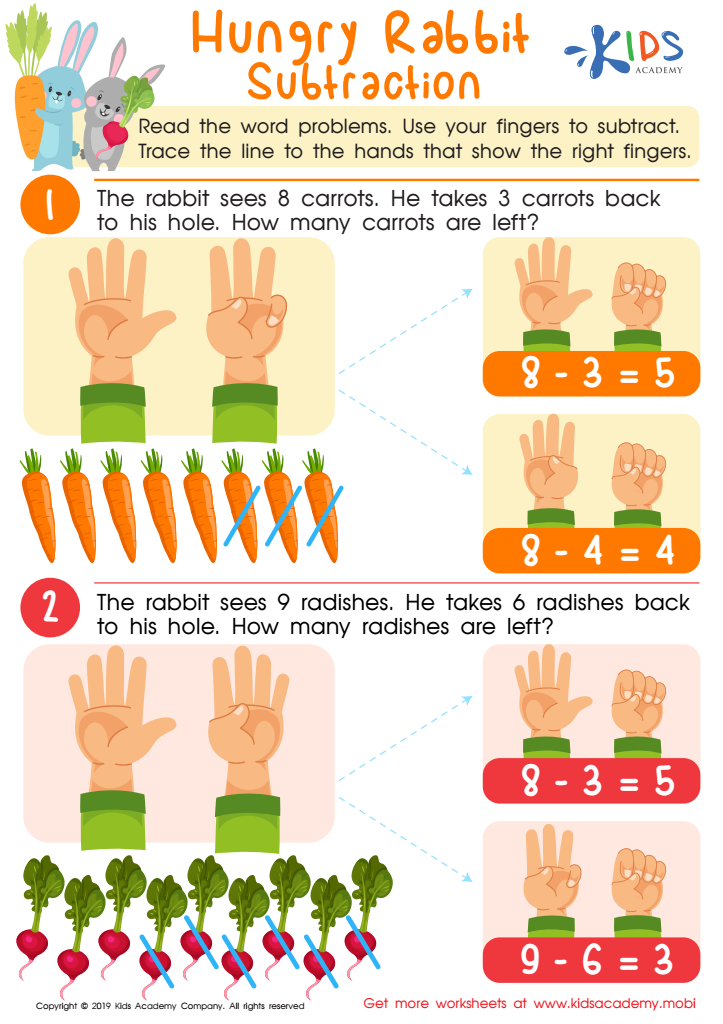
Hungry Rabbit Subtraction Worksheet
 Assign to My Students
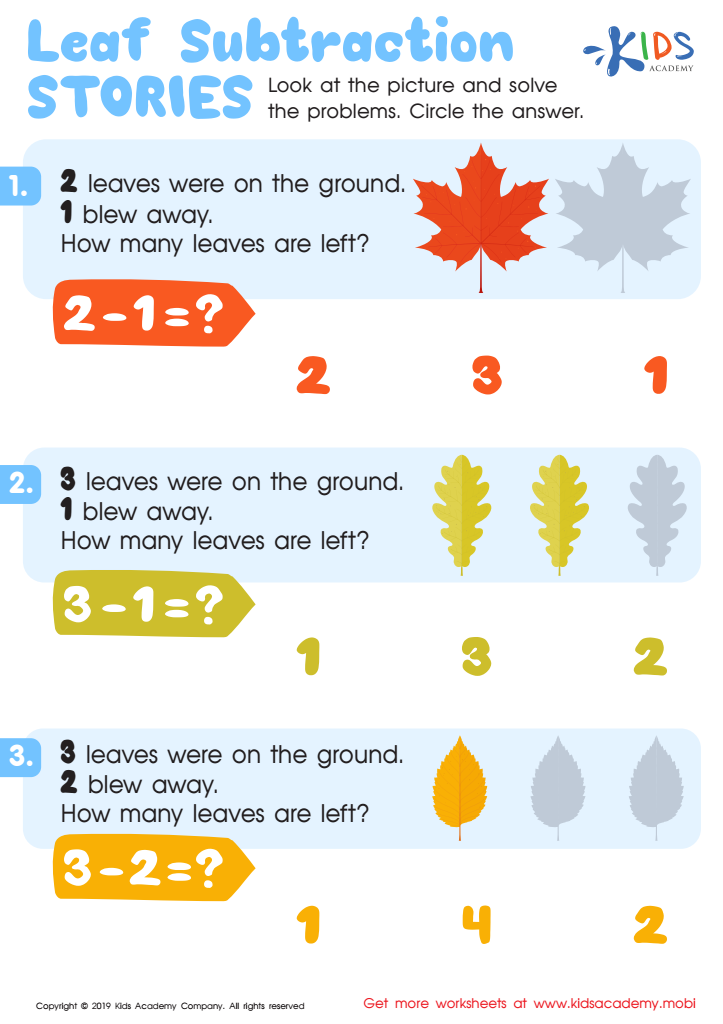
Leaf Subtraction Stories Worksheet
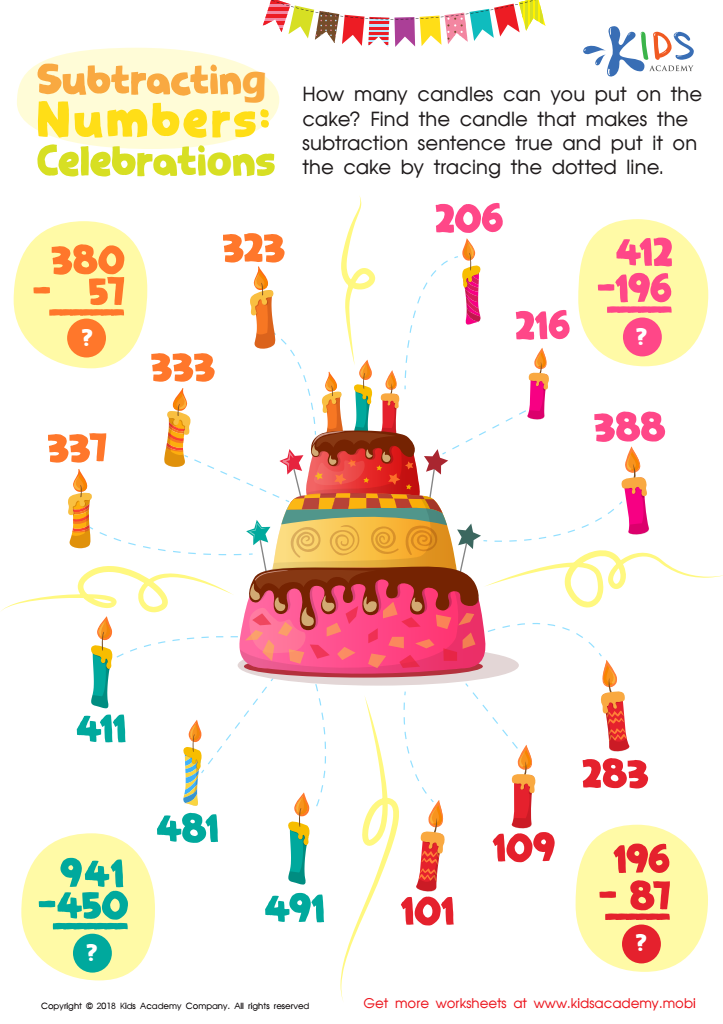
Subtracting Numbers: Celebrations Worksheet
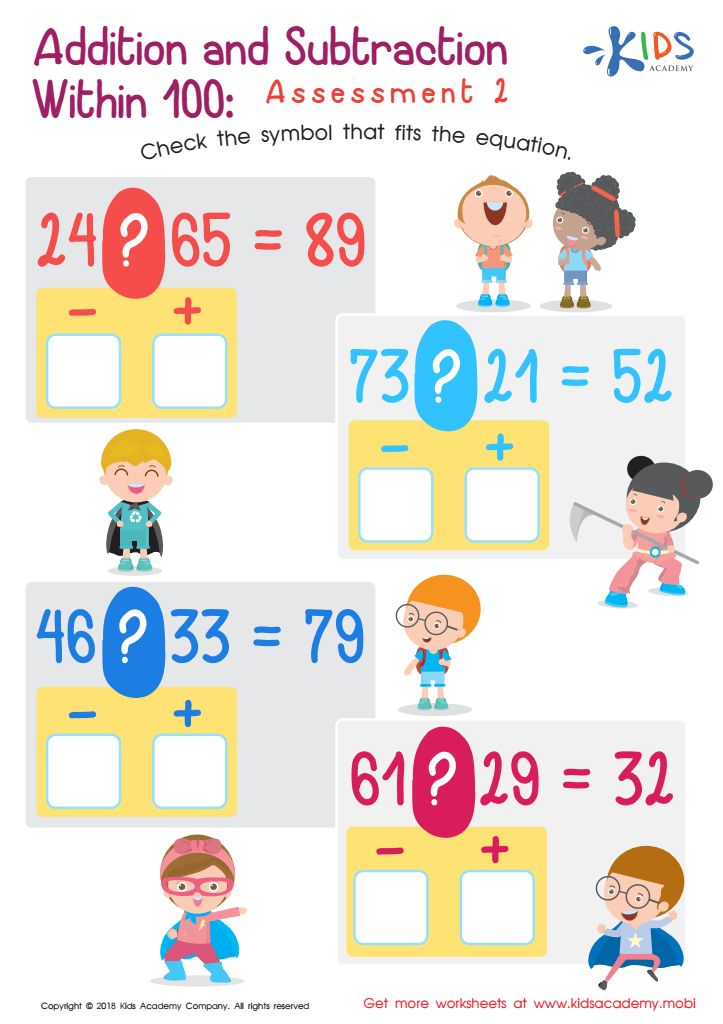
Addition and Subtraction Within 1: Assessment 2 Worksheet
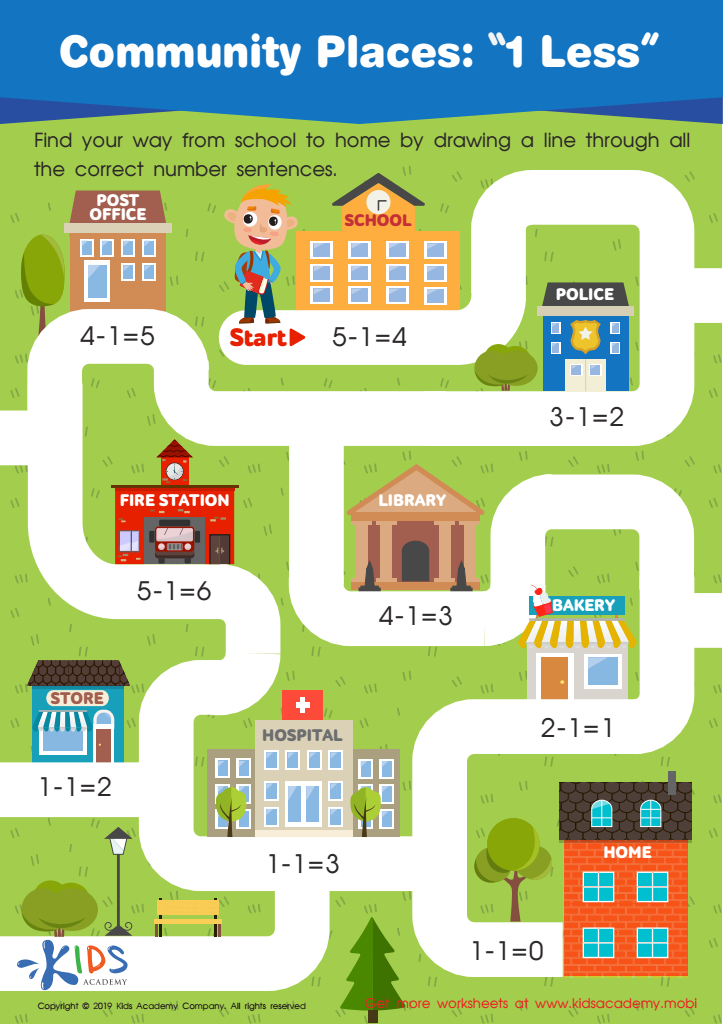
Community Places: 1 Less Worksheet
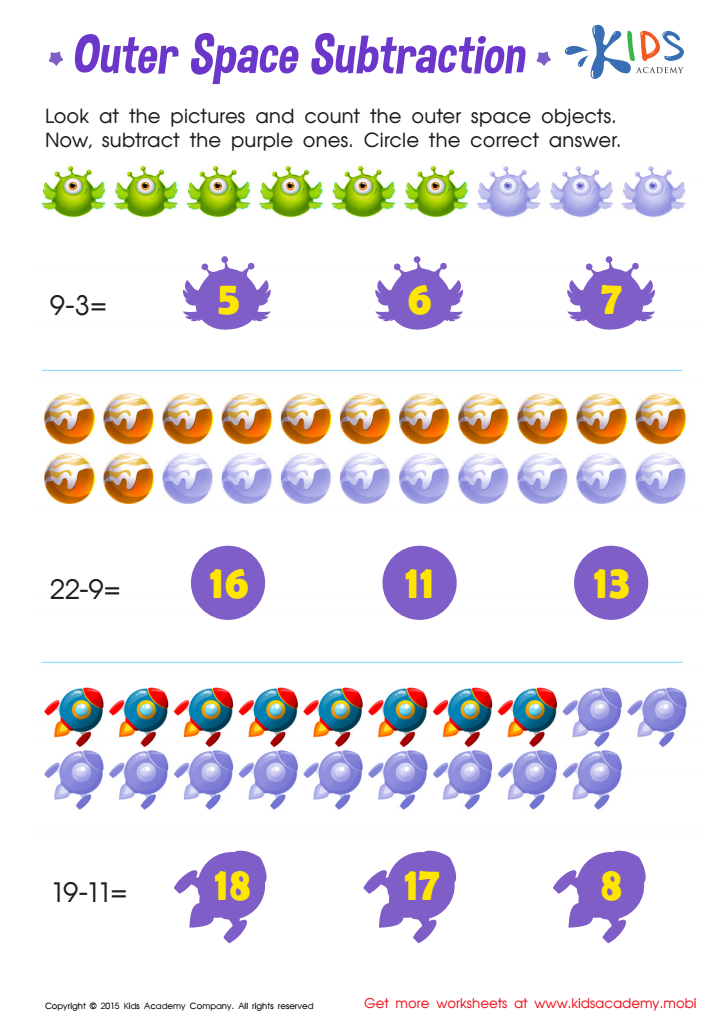
Outer Space Substraction Worksheet
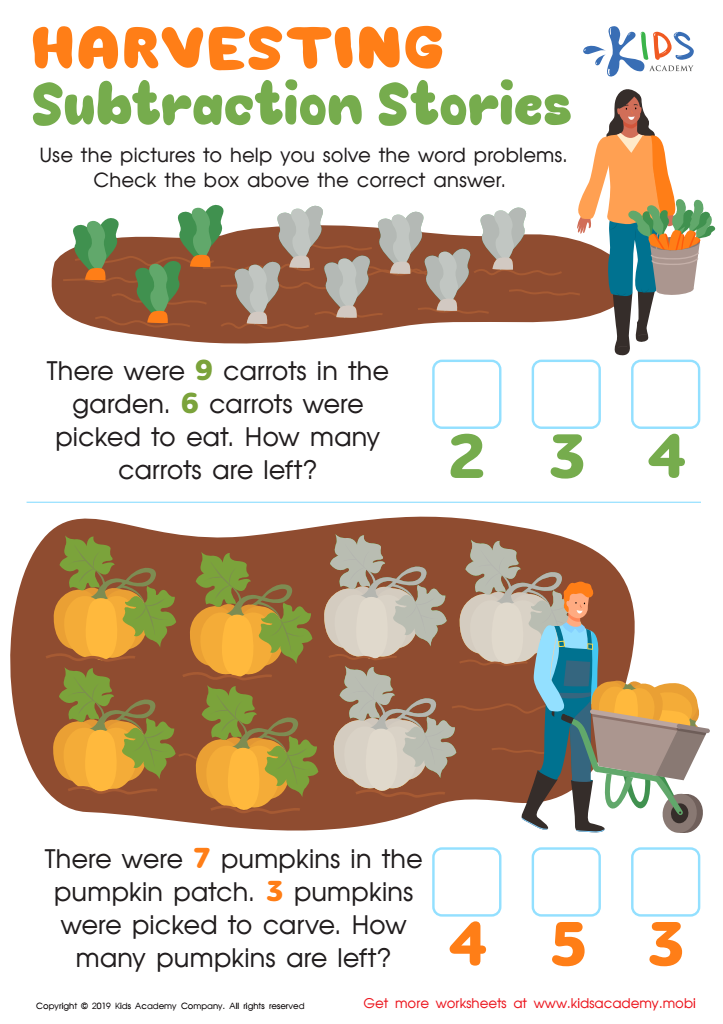
Harvesting Subtraction Stories Worksheet
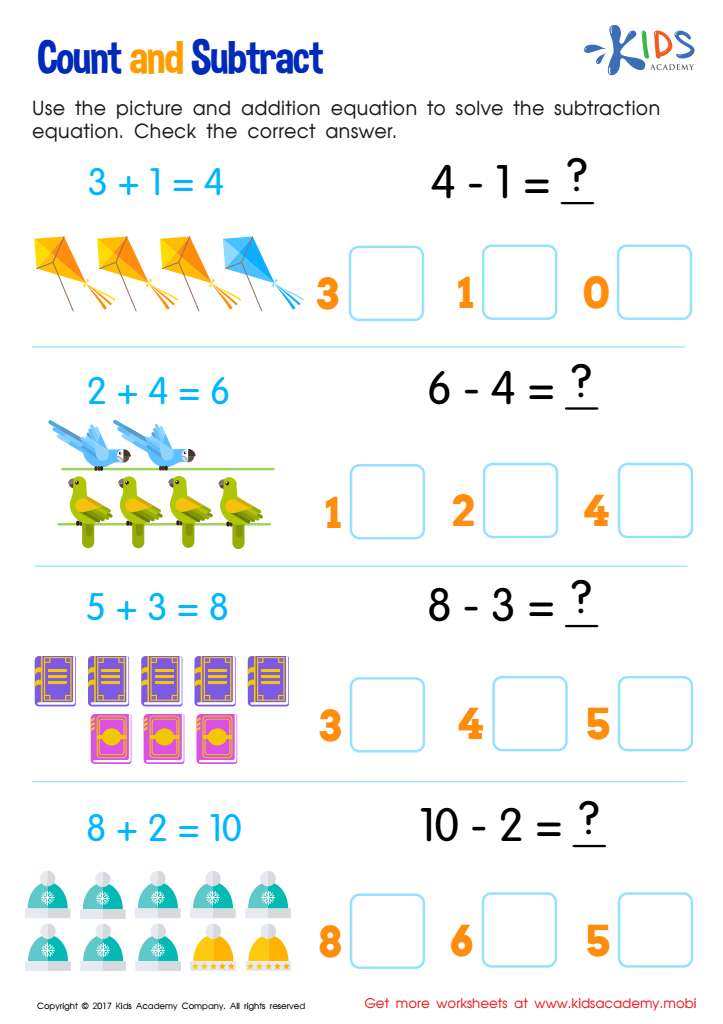
Count and Subtract Worksheet
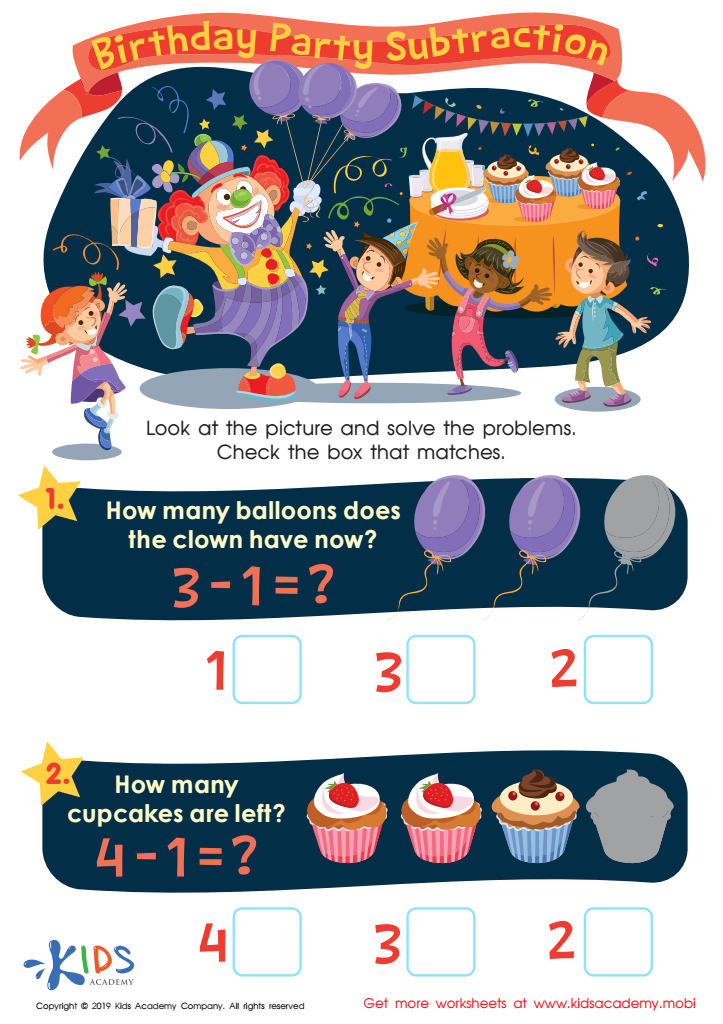
Birthday Party Subtraction Worksheet
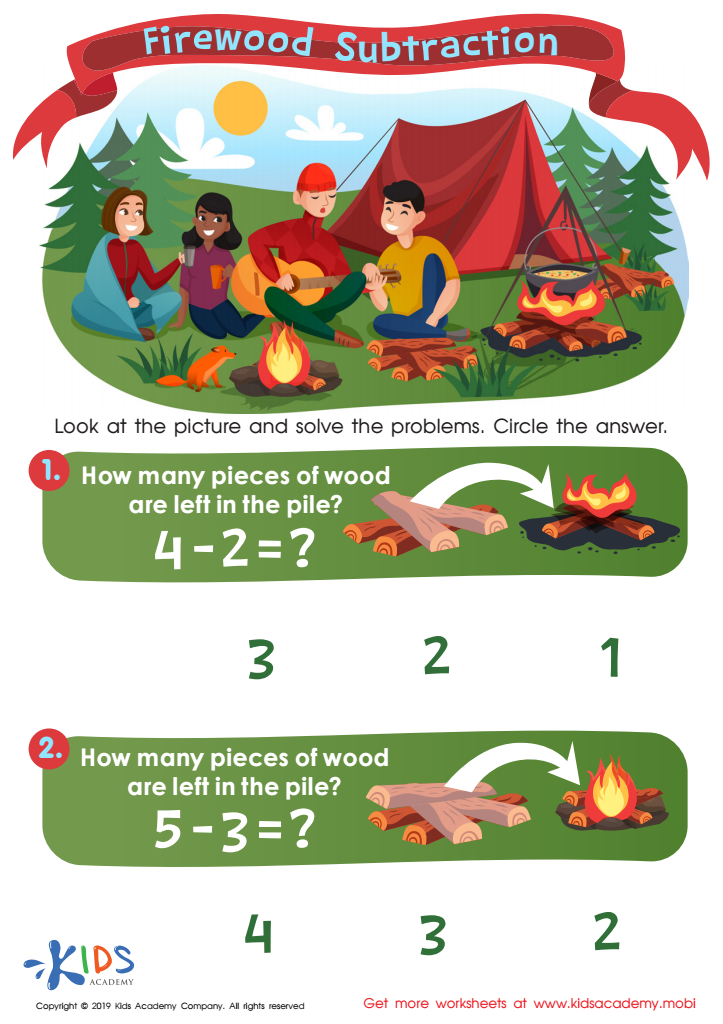
Firewood Subtraction Worksheet
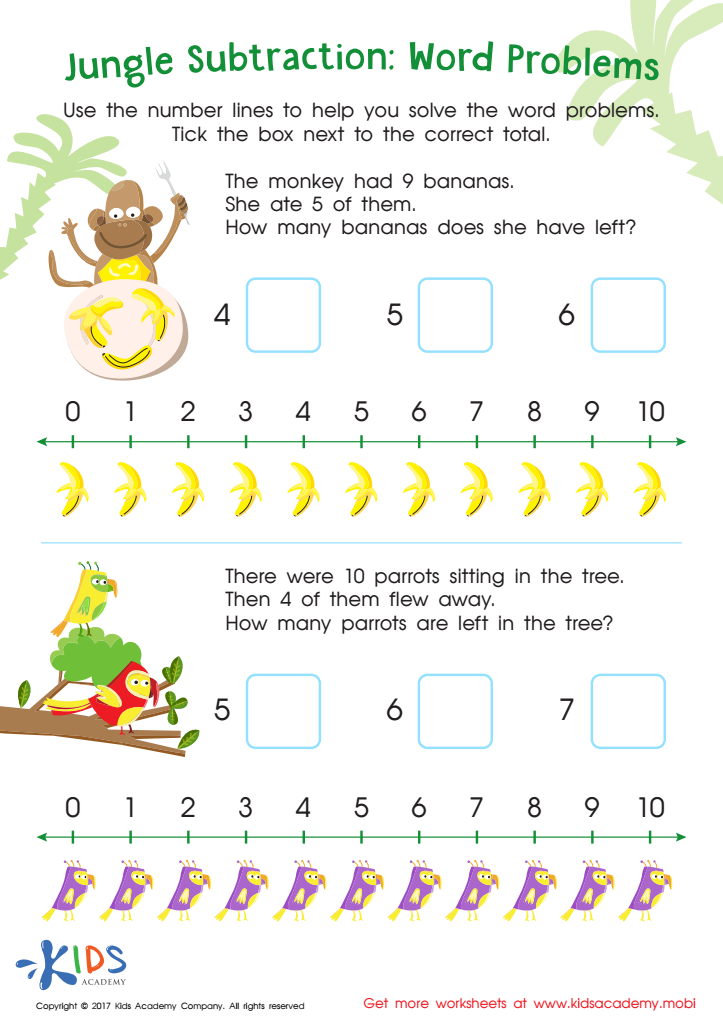
Jungle Subtraction Word Problems Substraction Worksheet








Subtraction practice for children aged 4-7 is a crucial foundational skill essential for their mathematical development. During this formative period, their brains are incredibly malleable and receptive to learning new concepts. Subtraction skills play a critical role in not only fostering a solid mathematical foundation but also in enhancing problem-solving abilities and logical reasoning.
At this stage, children are beginning to understand the world through patterns and relationships. Grasping subtraction helps them comprehend these relationships, especially the concept of taking away and the differences between quantities. This understanding is fundamental for progressing to more complex mathematical operations later in their academic journey.
Incorporating subtraction practice into daily routines, games, and classroom activities makes learning enjoyable and relatable. It promotes confidence as students discover they can solve problems with decreasing difficulty. This positive reinforcement boosts their overall academic self-esteem.
Moreover, early proficiency in subtraction can help identify and address learning difficulties before they become entrenched, allowing for timely intervention. Parents and teachers play a pivotal role, offering encouragement and creating an enriched learning environment. By prioritizing subtraction practice, they set the stage for a lifelong appreciation and competency in mathematics, essential for both academic and real-world success.








