Reading clocks Time Worksheets for Ages 4-7
3 filtered results
-
From - To
Explore our engaging "Reading Clocks Time Worksheets" designed specifically for children ages 4-7! These interactive worksheets make learning about time fun and accessible. With vibrant visuals and simple activities, kids will learn to read both digital and analog clocks, understand concepts of AM and PM, and practice counting minutes and hours. Each worksheet promotes essential time-telling skills through enjoyable exercises that build confidence and mastery. Ideal for parents and teachers, our resources support early math learning and provide a solid foundation for lifelong time-management skills. Download our printables today and watch your child's understanding of time flourish!
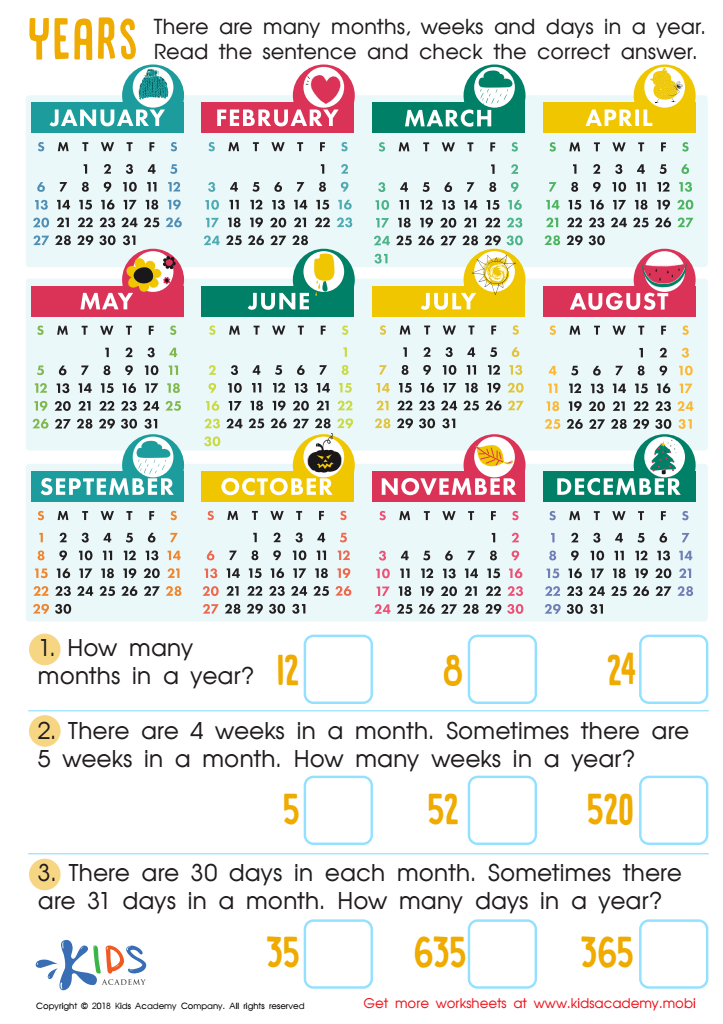
Years Worksheet
 Assign to My Students
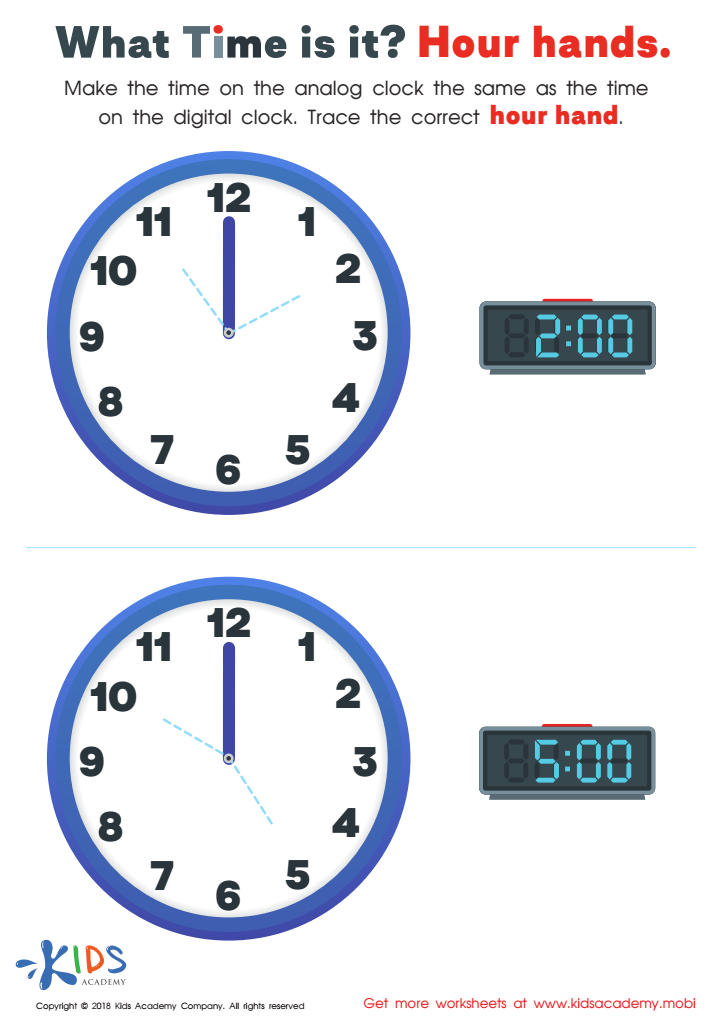
What Time Is it? Hour Hands Worksheet
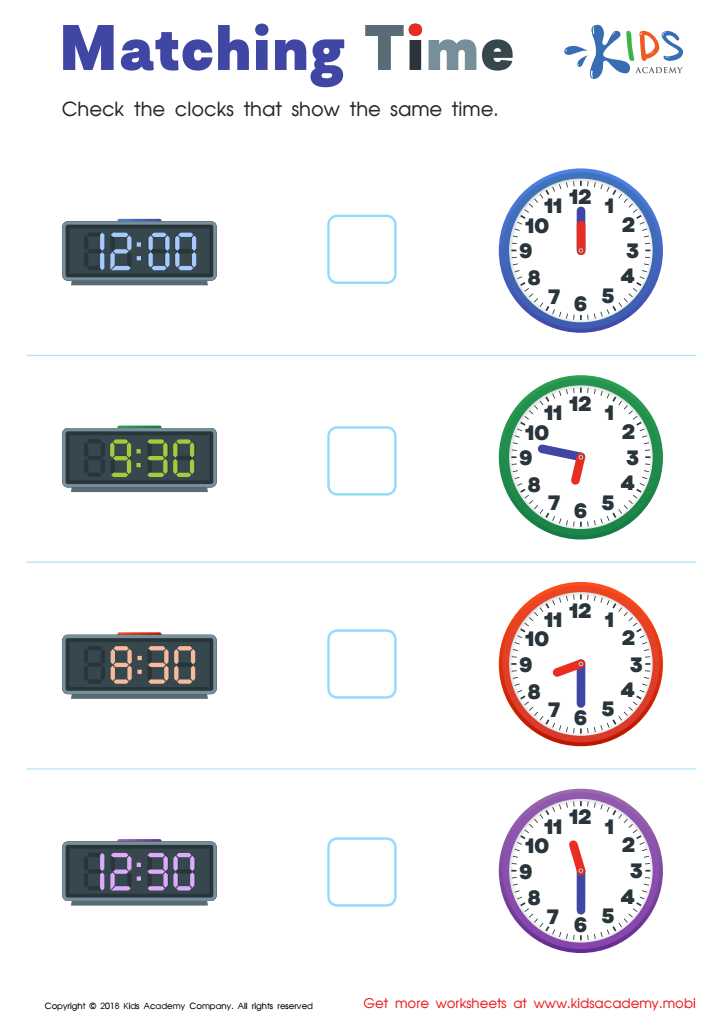
Matching Time Worksheet







Teaching children to read clocks and understand time is crucial for their overall development and daily functioning. For parents and teachers of children aged 4-7, grasping this skill supports not only cognitive growth but also fosters independence.
Firstly, reading clocks instills a basic understanding of numeracy and spatial concepts. It helps children recognize numbers and their placement on the face of a clock—a foundational aspect of mathematics. This early exposure to time aids in developing counting skills and number recognition.
Moreover, understanding time management is vital for fostering responsibility. Children who learn to tell time can better comprehend the concepts of routine and punctuality. This awareness promotes essential life skills, such as being prepared for school or other activities, and helps them develop a sense of responsibility.
Additionally, the ability to read clocks helps in social interactions and navigating daily life, whether it's knowing when to eat, play, or sleep. Engaging children with fun, time-related activities makes learning enjoyable, increasing their motivation. Therefore, teaching young children to read clocks lays a foundation for math skills, encourages responsibility, and prepares them for everyday interactions, making it a significant focus for parents and educators alike.








