Animal knowledge Reading Worksheets for Ages 4-7
4 filtered results
-
From - To
Discover the joy of learning with our "Animal Knowledge Reading Worksheets for Ages 4-7" at Kids Academy. Perfectly designed for young readers, these worksheets combine engaging stories and fun facts about animals to enhance reading skills and expand knowledge. Each worksheet offers interactive activities that foster comprehension, vocabulary, and critical thinking. Ideal for at-home practice or classroom use, they transform reading into an exciting adventure, helping children develop a love for wildlife and literacy. Download our free printable worksheets today and give your child a head start in reading and understanding the animal kingdom!
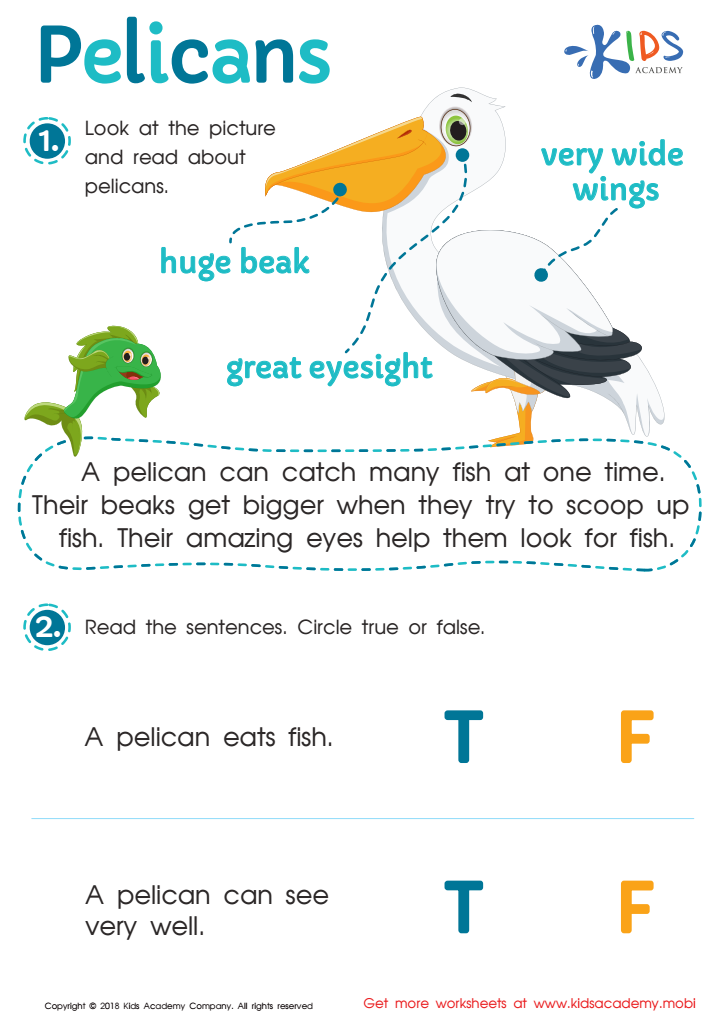
Pelicans Worksheet
 Assign to My Students
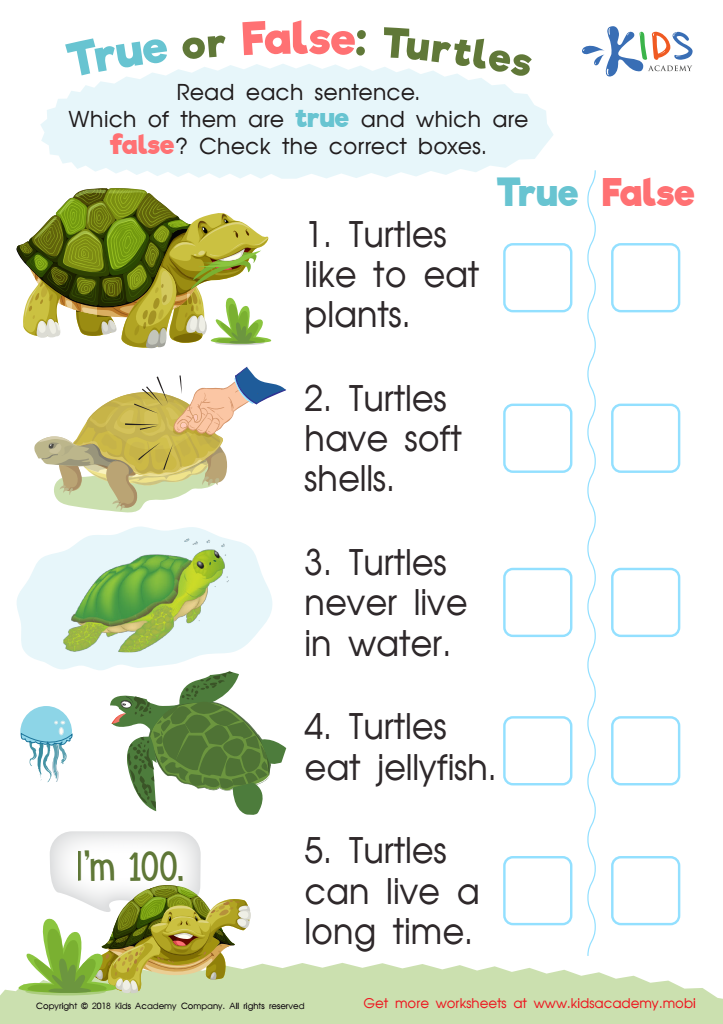
True or False: Turtles Worksheet
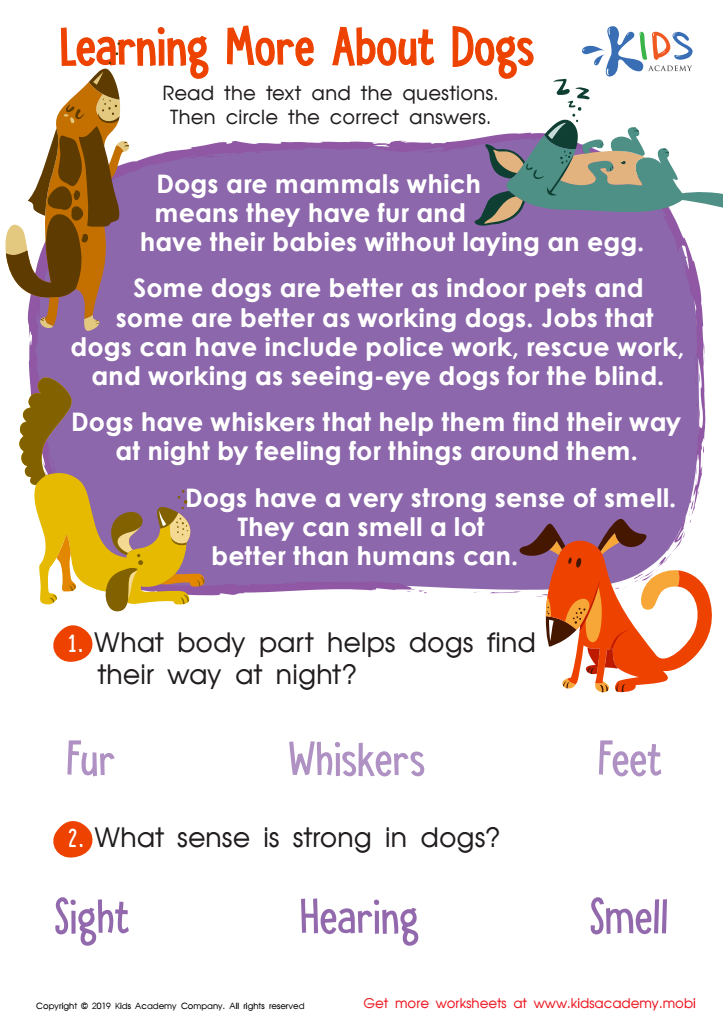
Learning More About Dogs Worksheet
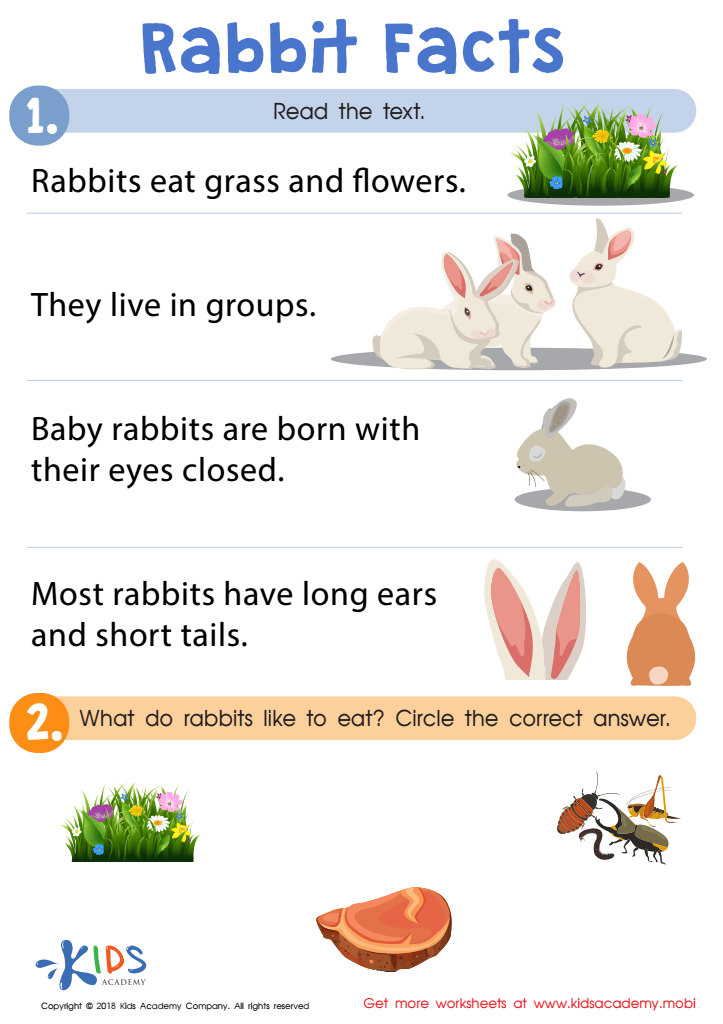
Rabbit Facts Worksheet


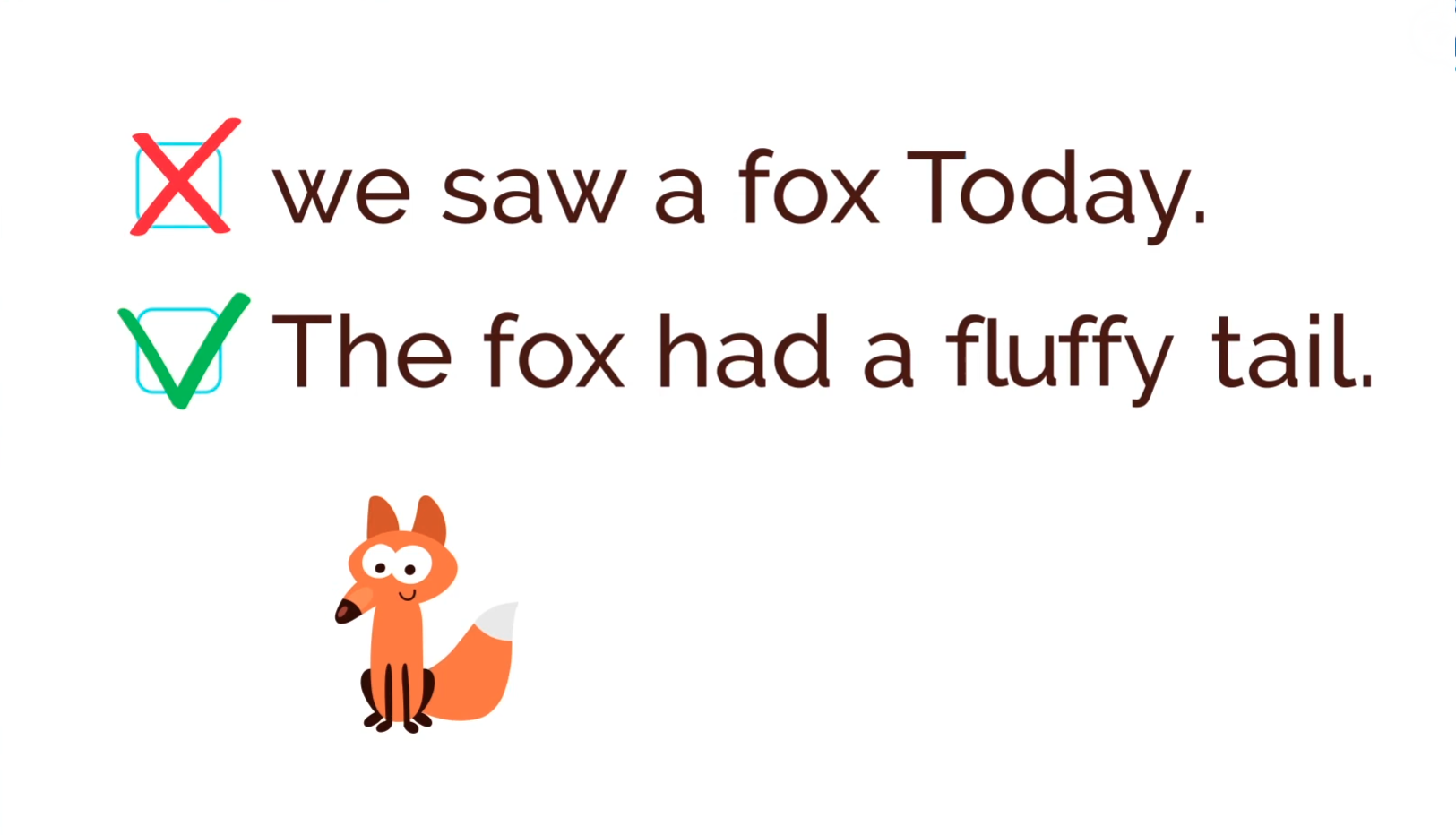





Fostering a love for reading and a curiosity about animals in children ages 4-7 is essential for their overall development. At these early stages, children's brains are like sponges, absorbing information quickly. Introducing them to animal knowledge through reading enhances their language and comprehension skills, which are critical for their academic success.
Animal-themed reading material captivates young minds with fascinating stories and vivid pictures, making learning enjoyable and engaging. It helps develop their vocabulary, exposing them to new words and concepts in a memorable context. Furthermore, through stories about different animals and their habitats, children gain an understanding of the natural world and the importance of biodiversity and conservation.
Teaching animal knowledge also fosters empathy and responsibility. When children learn about animals' habitats, behaviors, and needs, they develop a sense of caring and compassion. This connection prompts them to be more considerate of animals, fostering a sense of stewardship for the environment.
On a practical level, involving parents or teachers in such educational activities strengthens the bond between children and these role models, creating a supportive learning environment. Ultimately, nurturing a child's interest in animals and reading at an early age builds a foundation for lifelong learning, critical thinking, and social responsibility.








