Attention to Detail Reading Worksheets for Ages 4-7
6 filtered results
-
From - To
Enhance your child's reading skills with our "Attention to Detail Reading Worksheets" designed for ages 4-7. These engaging worksheets focus on developing critical observation and comprehension skills through fun and interactive activities. Your little learners will enjoy colorful illustrations and exciting exercises that encourage them to identify differences, match visuals, and answer questions based on texts. Our worksheets foster a love for reading while promoting essential cognitive skills. Perfect for home or classroom use, these resources will help young readers build confidence and learn to pay meticulous attention to details, a vital skill for their academic journey. Start making reading fun today!
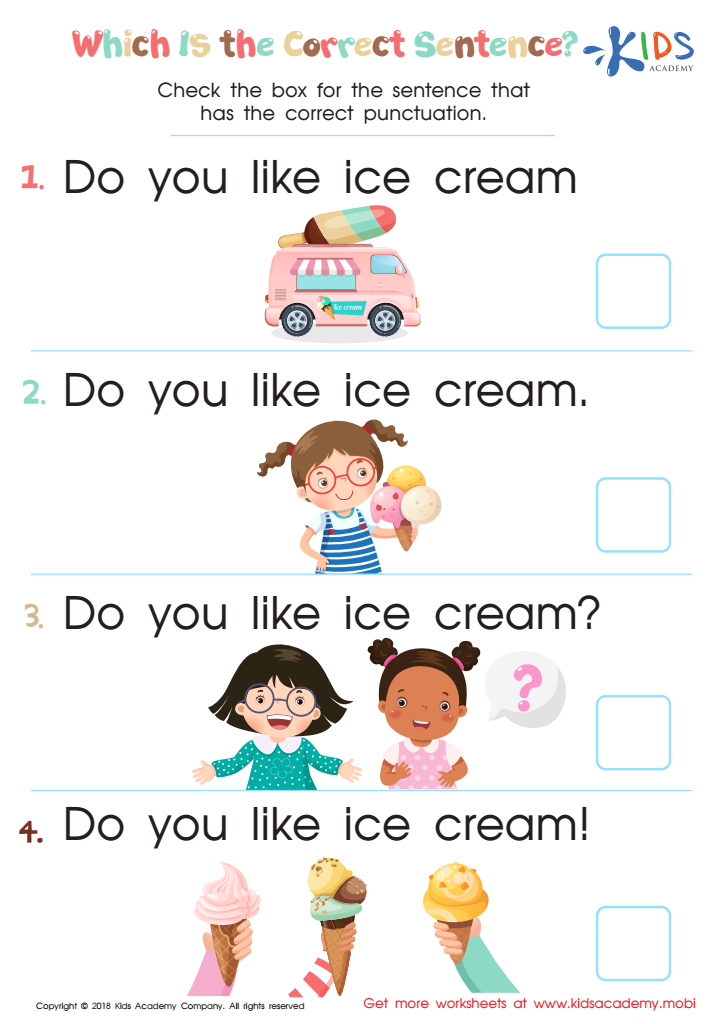
Which is the Correct Sentence? Worksheet
 Assign to My Students
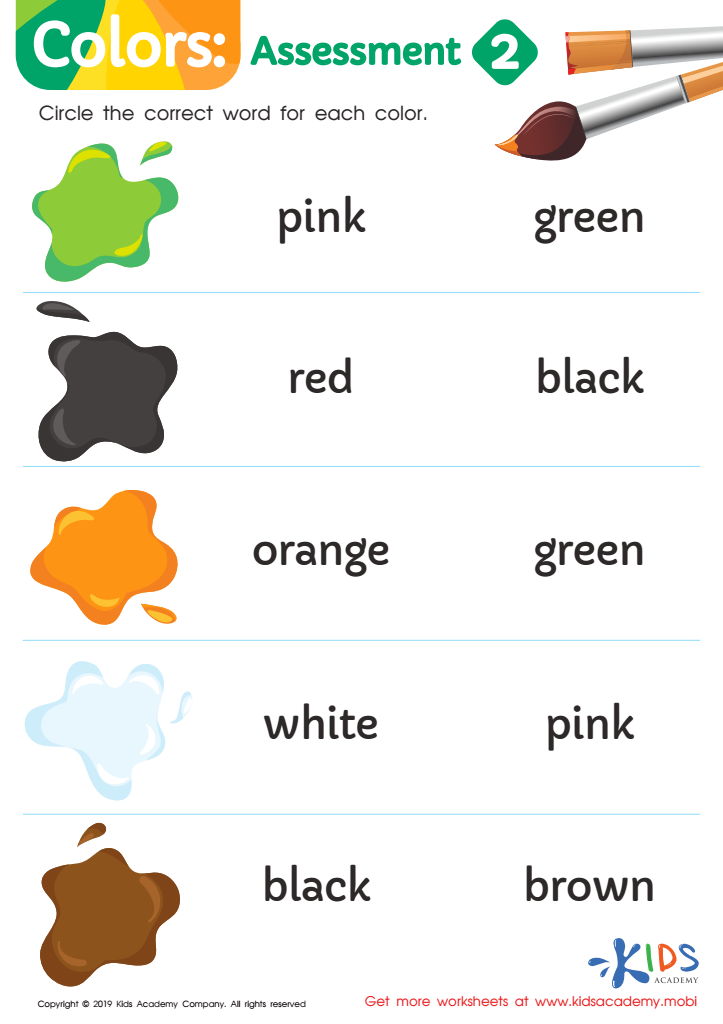
Colors: Assessment 2 Worksheet
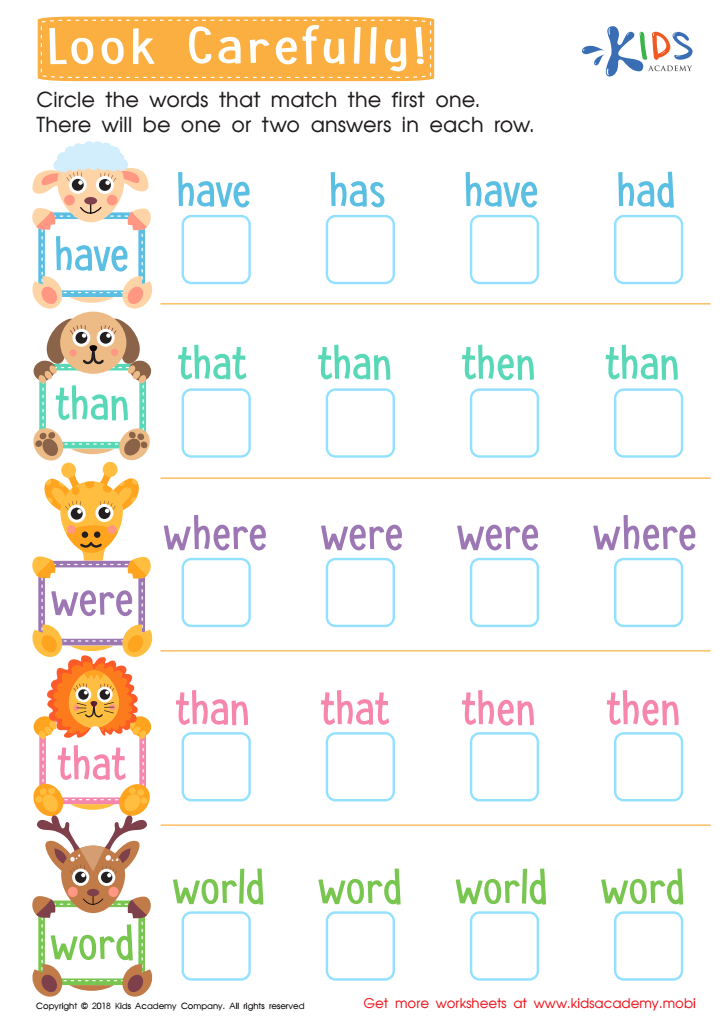
Look Carefully Worksheet
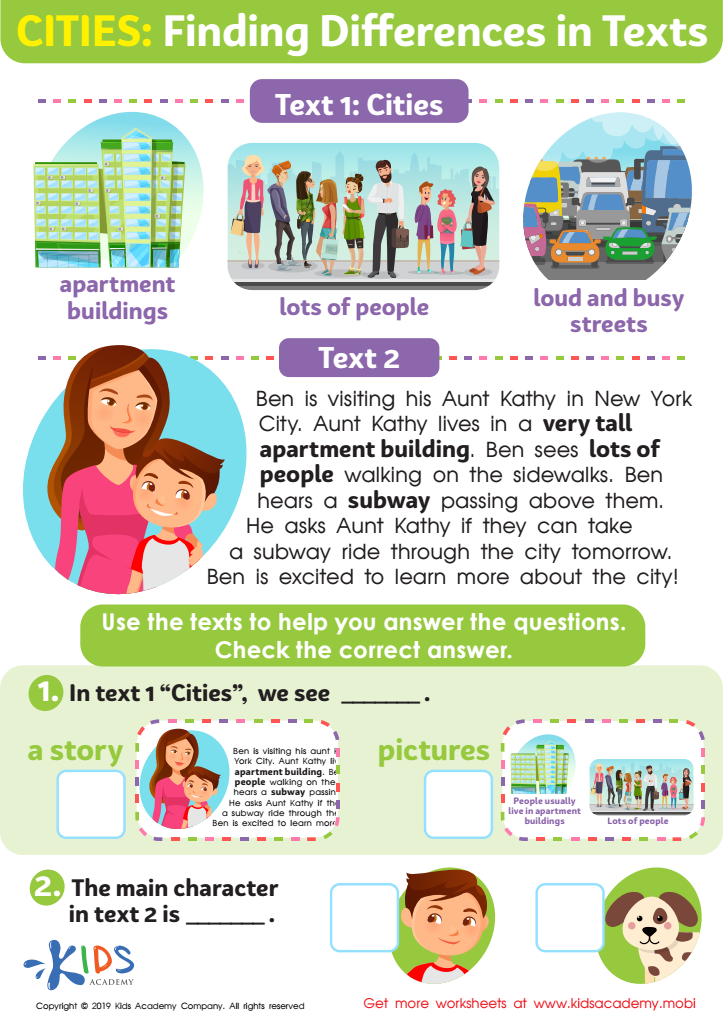
Cities: Finding Differences Worksheet
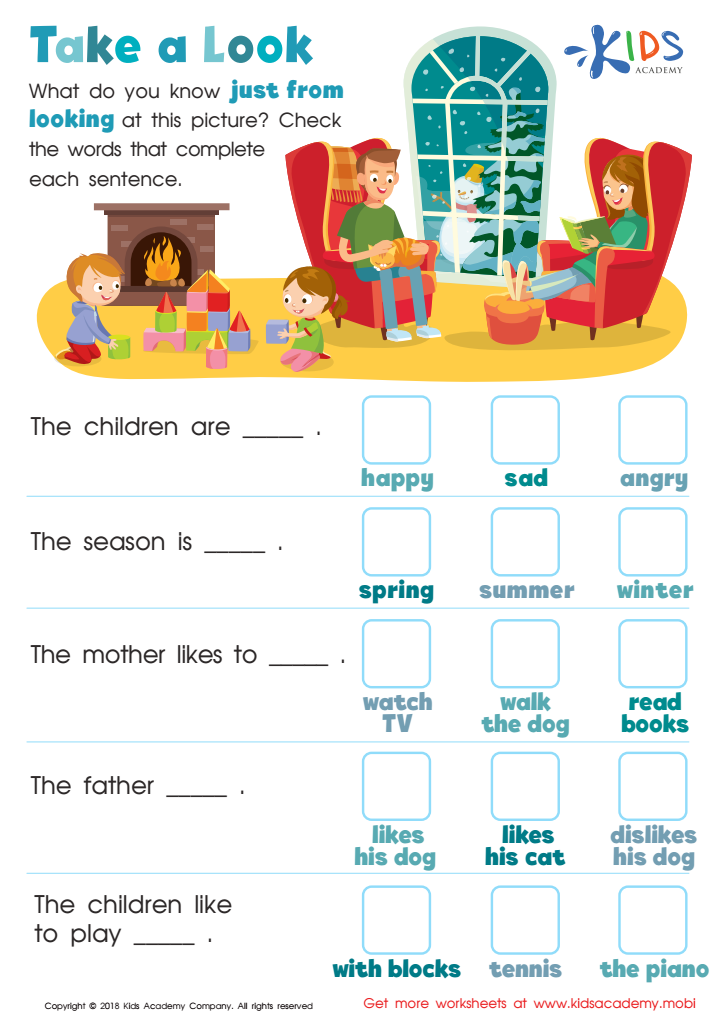
Take a Look - Part 1 Worksheet



.jpg)




Attention to Detail Reading for ages 4-7 is critical for a child's overall development and success in future learning. During these formative years, children are like sponges, absorbing information and skills that lay the foundation for literacy and critical thinking. Developing attention to detail enhances their ability to recognize letters, words, and punctuation, which are vital components of reading. Teachers and parents should focus on this aspect to foster effective reading habits and improve comprehension skills.
Furthermore, nurturing attention to detail helps children build their observational skills, encouraging them to notice patterns, sequences, and relationships in text. This skill translates into better problem-solving abilities and promotes creativity, as children learn to analyze and synthesize information more effectively.
Moreover, when children are guided in paying attention to detail, they develop patience and perseverance, qualities essential for learning throughout life. These skills also contribute to their social interactions, helping them understand nuances in communication. Thus, highlighting Attention to Detail Reading not only supports literacy development but also equips children with critical life skills, making it a crucial focus for both parents and teachers in fostering well-rounded, engaged learners.








