Critical thinking development Reading Worksheets for Ages 4-7
4 filtered results
-
From - To
Enhance your child's critical thinking skills with our engaging reading worksheets designed for ages 4-7. Tailored to stimulate young minds, these worksheets encourage children to analyze, interpret, and evaluate information while they explore various reading activities. Each worksheet offers age-appropriate content that fosters curiosity, creativity, and problem-solving abilities, paving the way for academic success. From interactive exercises to fun storytelling prompts, our resources are perfect for use at home or in the classroom. Foster a love for reading while developing essential critical thinking skills in your child. Dive into the world of learning with our thoughtfully designed worksheets today!
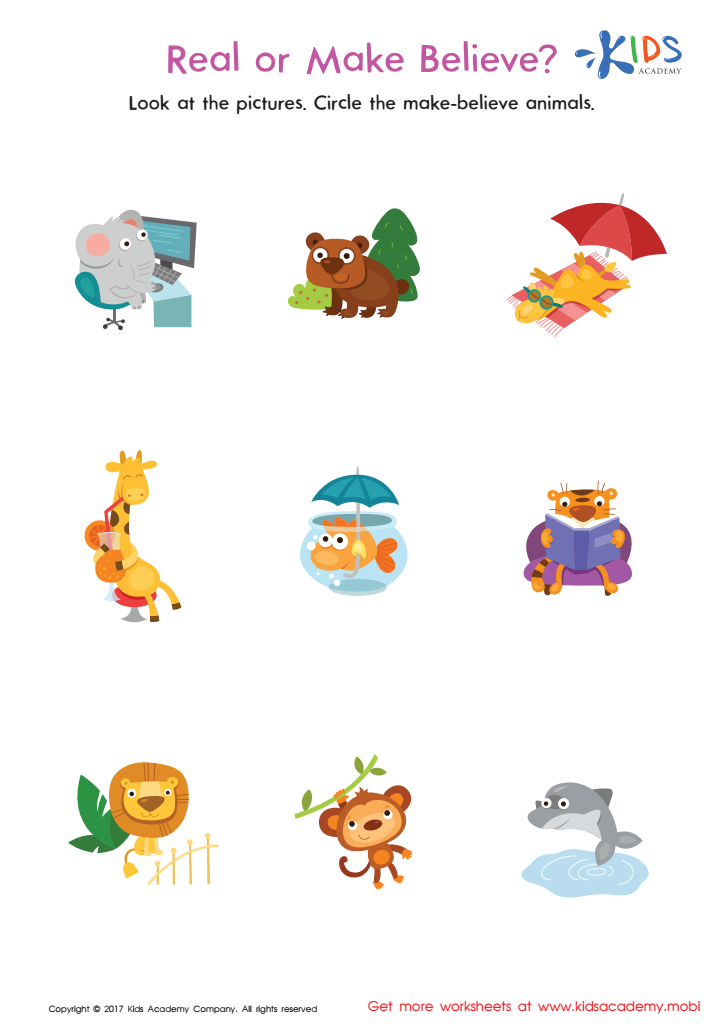
Fact or Make Believe Worksheet
 Assign to My Students
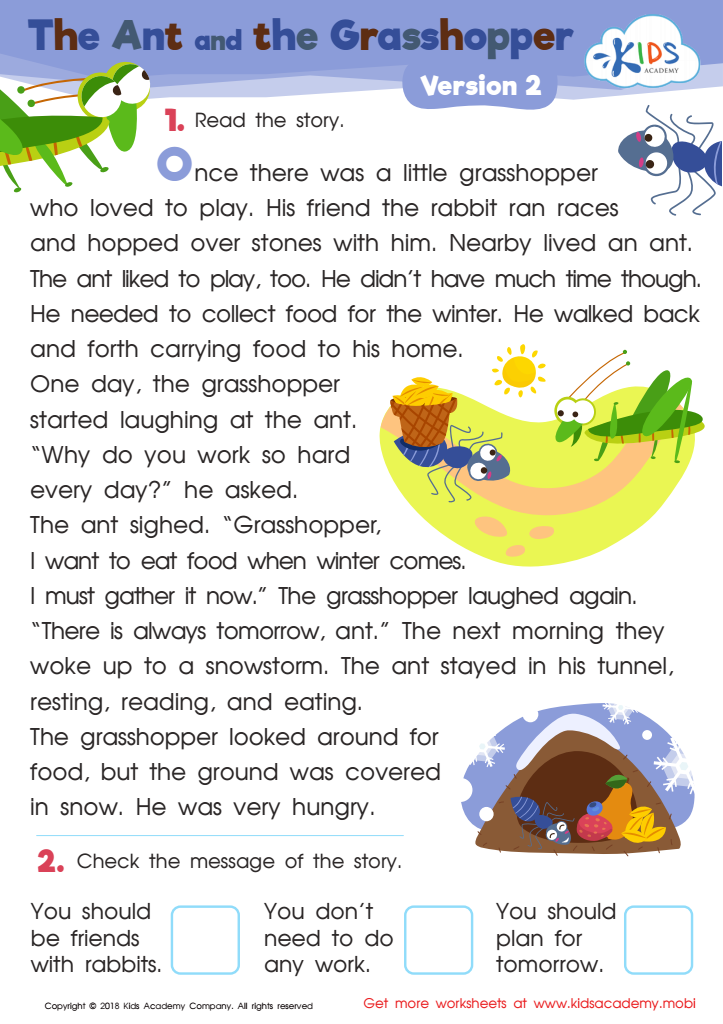
The Ant and The Grasshopper Version 2 Worksheet
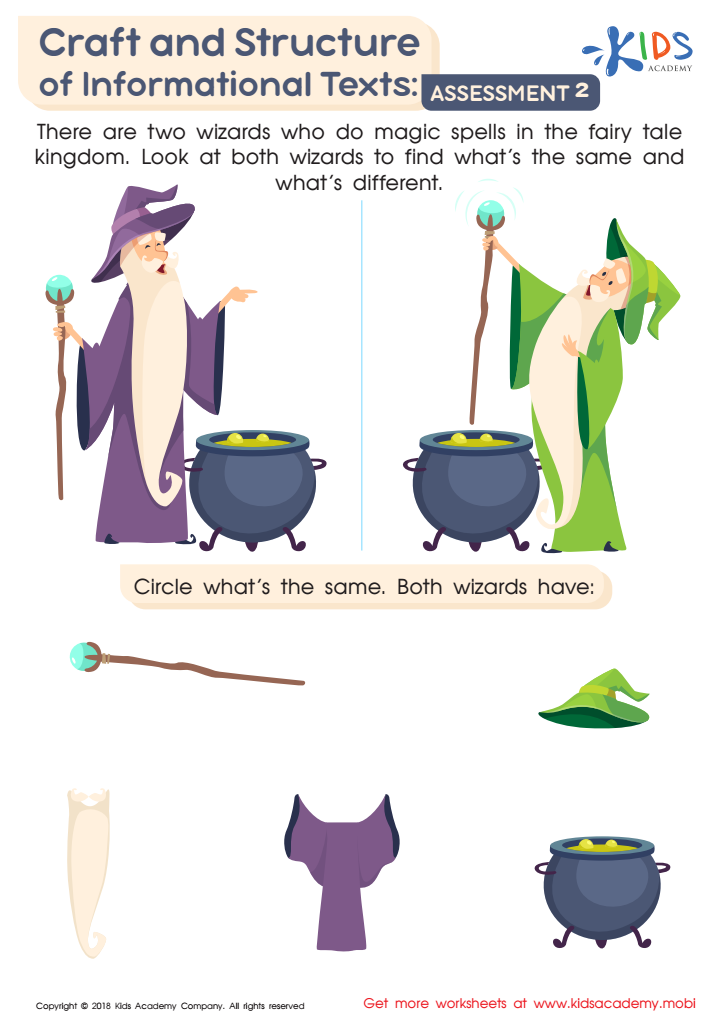
Craft and Structure of Informational Texts: Assessment 2 Worksheet
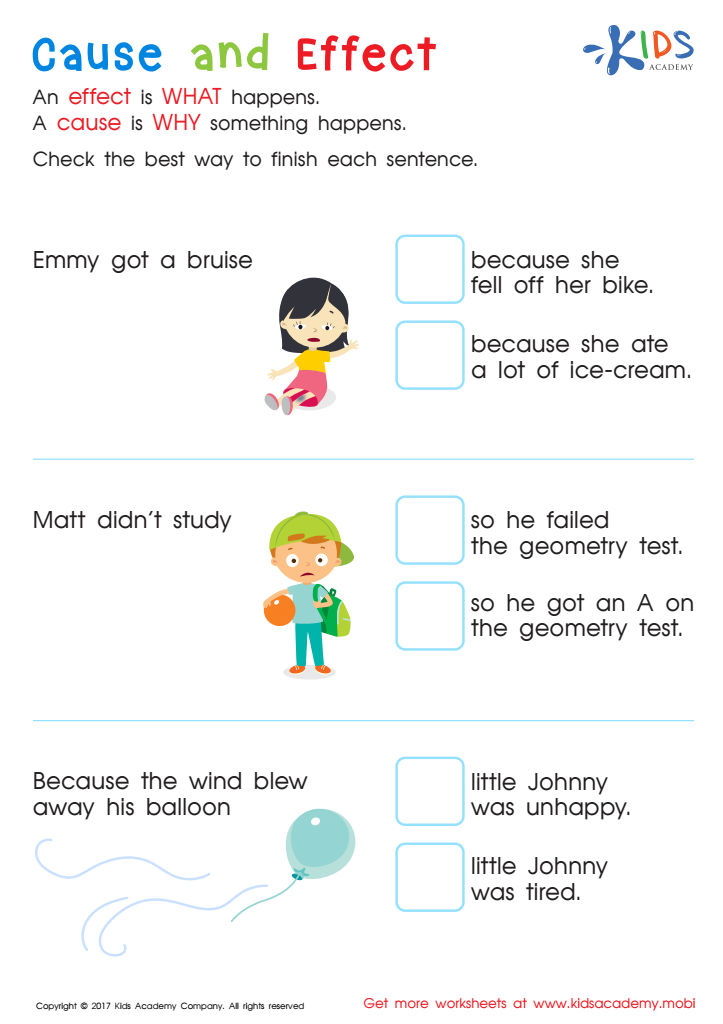
Cause and Effect Worksheet






Critical thinking development is essential for children aged 4-7 as it lays the groundwork for lifelong learning and problem-solving skills. During these formative years, children are naturally curious and eager to explore the world around them. This curiosity can be nurtured through reading, which not only exposes them to new ideas but also encourages them to ask questions, analyze information, and make connections between concepts.
Parents and teachers play a pivotal role in fostering critical thinking through reading by choosing diverse and stimulating materials. Engaging with books allows children to interpret characters' motivations, predict outcomes, and discuss different viewpoints. This process sharpens their ability to reason and think logically.
Furthermore, critical thinking in reading helps children develop empathy and social awareness as they encounter various perspectives and experiences within stories. It lays the groundwork for academic success, as strong critical thinking skills enhance comprehension and retention of information across subjects.
In addition, promoting critical thinking early encourages children to become independent thinkers who can navigate challenges and make informed decisions. Investing in this skill set at a young age equips them for thoughtful citizenship and fosters a lifelong love for learning. Therefore, parents and teachers should prioritize critical thinking development through reading in these crucial years.








