Moral understanding Reading Worksheets for Ages 4-7
5 filtered results
-
From - To
Discover engaging "Moral Understanding Reading Worksheets for Ages 4-7" that foster essential virtues and social skills in young learners. These thoughtfully crafted worksheets by Kids Academy feature age-appropriate stories and activities designed to teach children the importance of honesty, kindness, sharing, and empathy. Each printable worksheet encourages kids to read, reflect, and discuss real-life scenarios, promoting critical thinking and ethical reasoning. Perfect for parents and educators, these resources make learning about morals fun and interactive, helping children develop a strong moral foundation during their formative years. Give your child the tools for a brighter, more conscientious future.
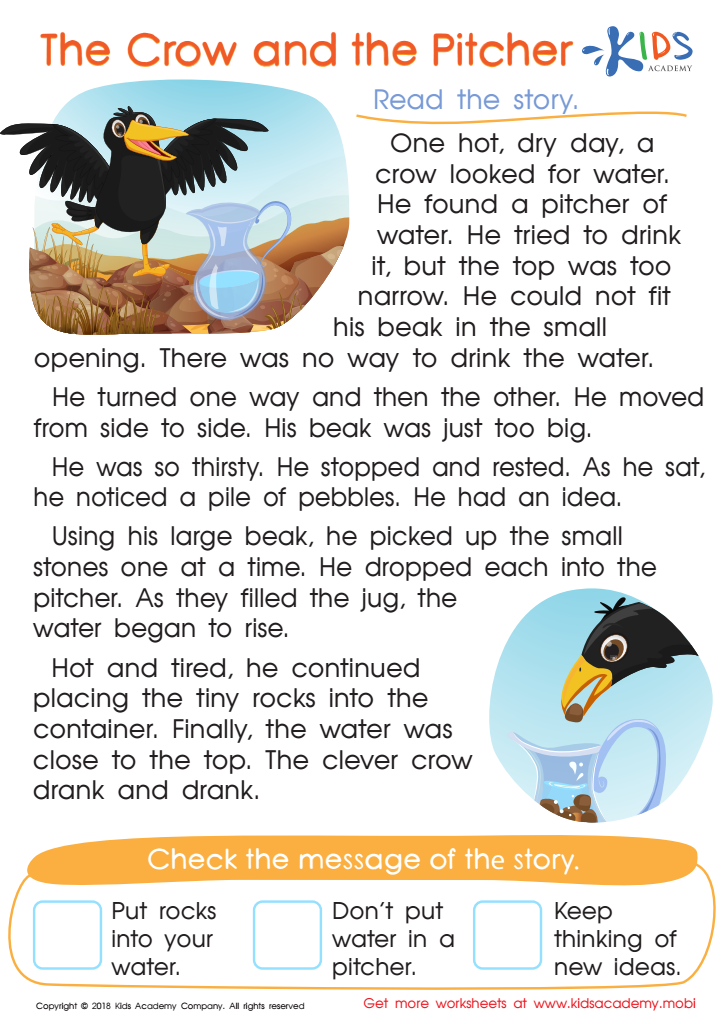
The Crow and the Pitcher Worksheet
 Assign to My Students
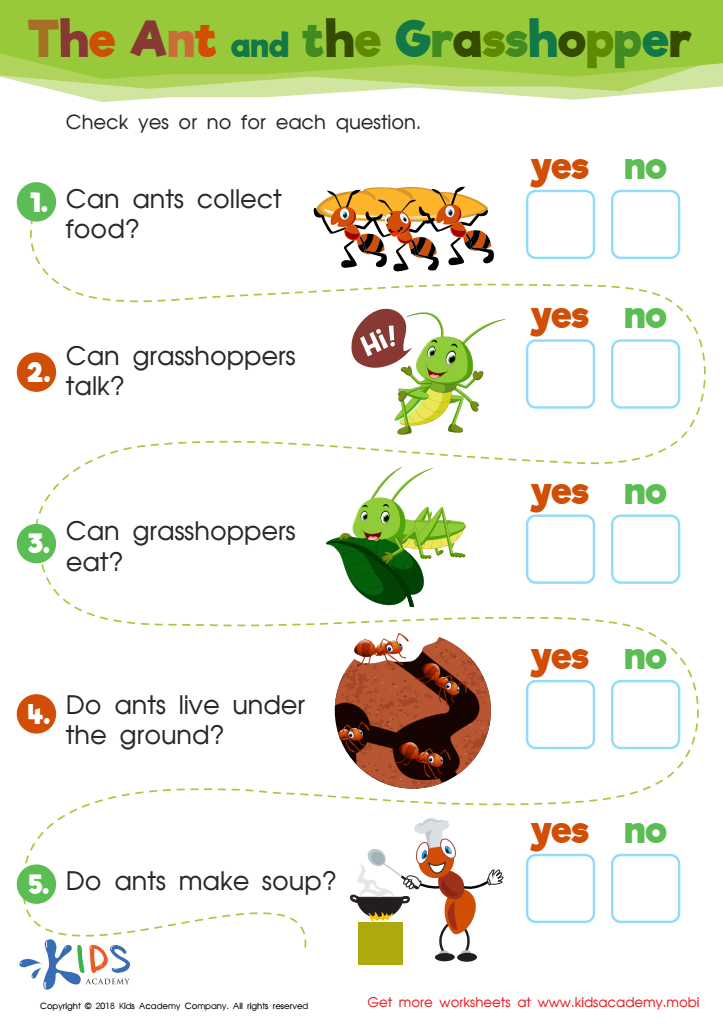
The Ant and The Grasshopper Worksheet
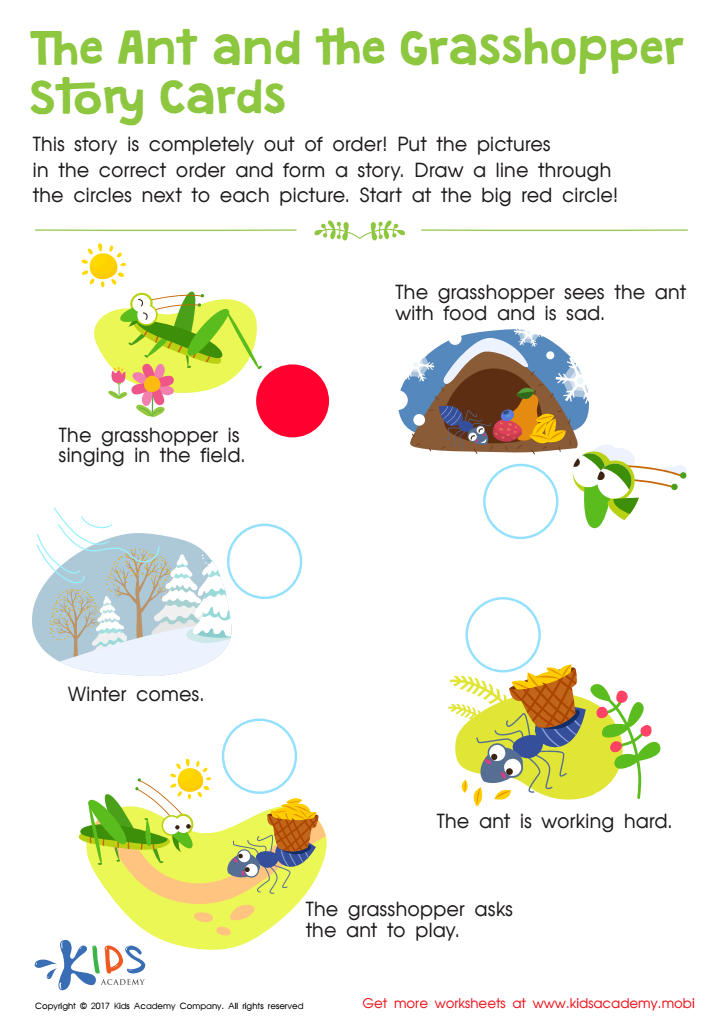
The Ant and The Grasshopper Worksheet
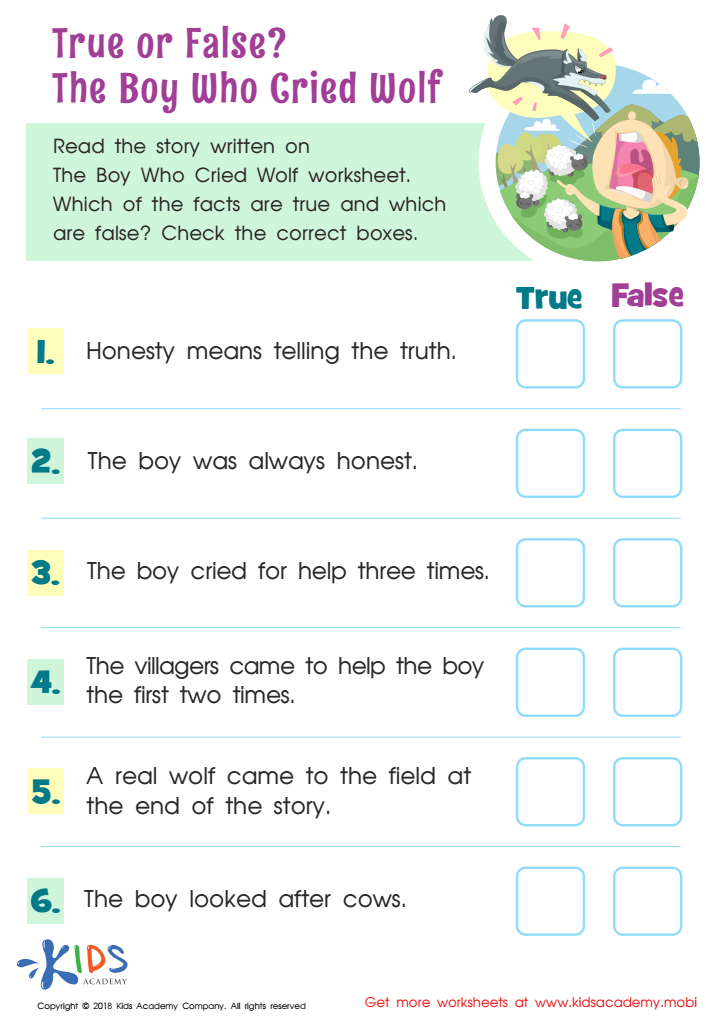
True or False? The Boy Who Cried Wolf Worksheet
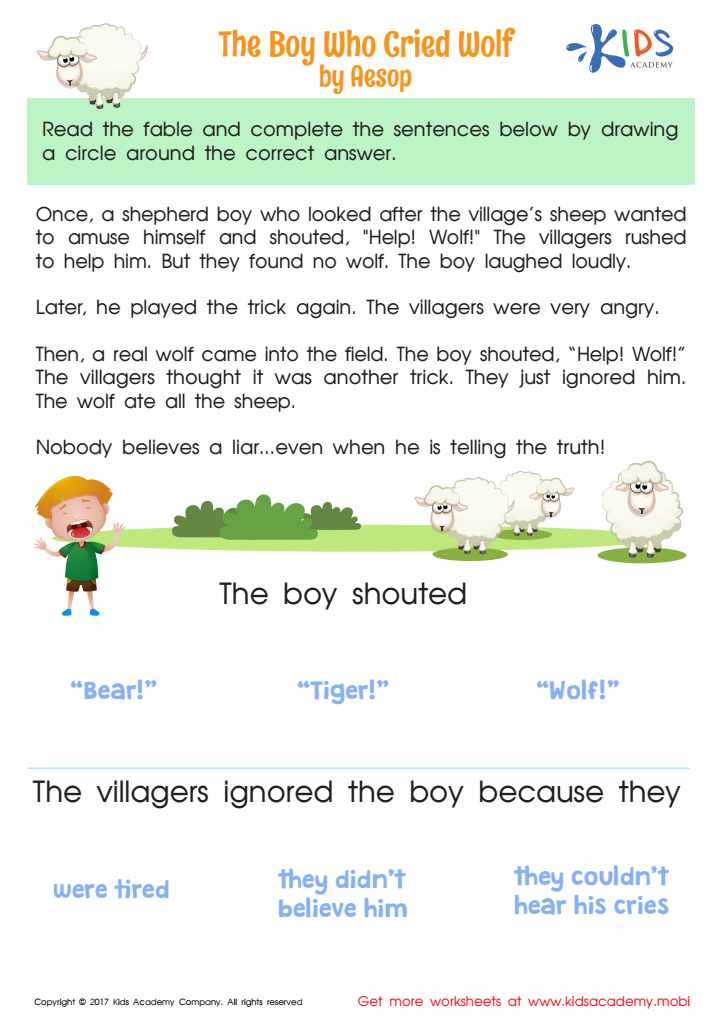
The Boy Who Cried Wolf Worksheet








Parents and teachers should care about moral understanding and reading for children aged 4-7 because these early years are critical for setting the foundation for lifelong values and decision-making skills. Children at this age are highly impressionable and begin to form the basic building blocks of empathy, fairness, and ethics. Introducing them to stories with moral lessons helps them understand concepts such as kindness, honesty, and respect in a relatable and engaging way.
Reading stories with moral undertones allows kids to see the consequences of different behaviors, fostering cognitive and emotional development. They learn the importance of positive actions through characters they can identify with, which can help shape their own behavior and social interactions. Moreover, moral reading can spark important conversations between children and adults, providing opportunities for guidance and clarification of complex ideas.
Nurturing moral understanding through reading at a young age also promotes critical thinking by encouraging kids to ask questions and think about different perspectives. This enhances their ability to make informed decisions in challenging situations as they grow. In a rapidly changing and often ethically complex world, equipping children with a strong moral compass from a young age prepares them to navigate future challenges with integrity and thoughtfulness.








