
Understanding habitats Reading Worksheets for Ages 4-7
3 filtered results
Difficulty Level
Grade
Age
-
From - To
Subject
Activity
Standards
Discover our "Understanding Habitats Reading Worksheets," specially designed for children aged 4 to 7. These engaging worksheets introduce young learners to various habitats through imaginative stories and colorful illustrations. With fun facts about ecosystems like forests, deserts, and oceans, kids will explore the diverse environments around them, enhancing their reading and comprehension skills. Our worksheets include a variety of activities such as matching, coloring, and fill-in-the-blank exercises, ensuring an interactive learning experience. Perfect for home or classroom use, these resources will foster curiosity about nature while developing early literacy skills. Start your child's adventure in learning with us today!
Favorites
With answer key
Interactive
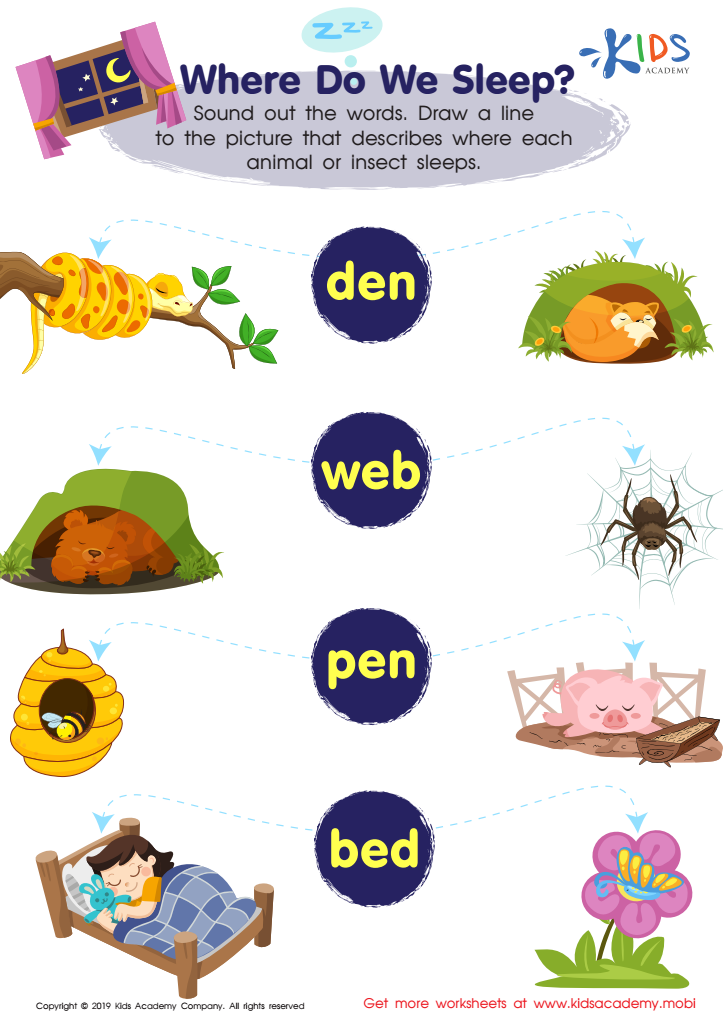
Where Do We Sleep Worksheet
Help your kids understand the importance of a safe space with this activity: Ask them to draw a line connecting the different animals and insects to the words that describe where they sleep. Remind them that everyone needs a sanctuary to rest – like the animals and insects in this printout.
 Assign to My Students
Where Do We Sleep Worksheet
Worksheet
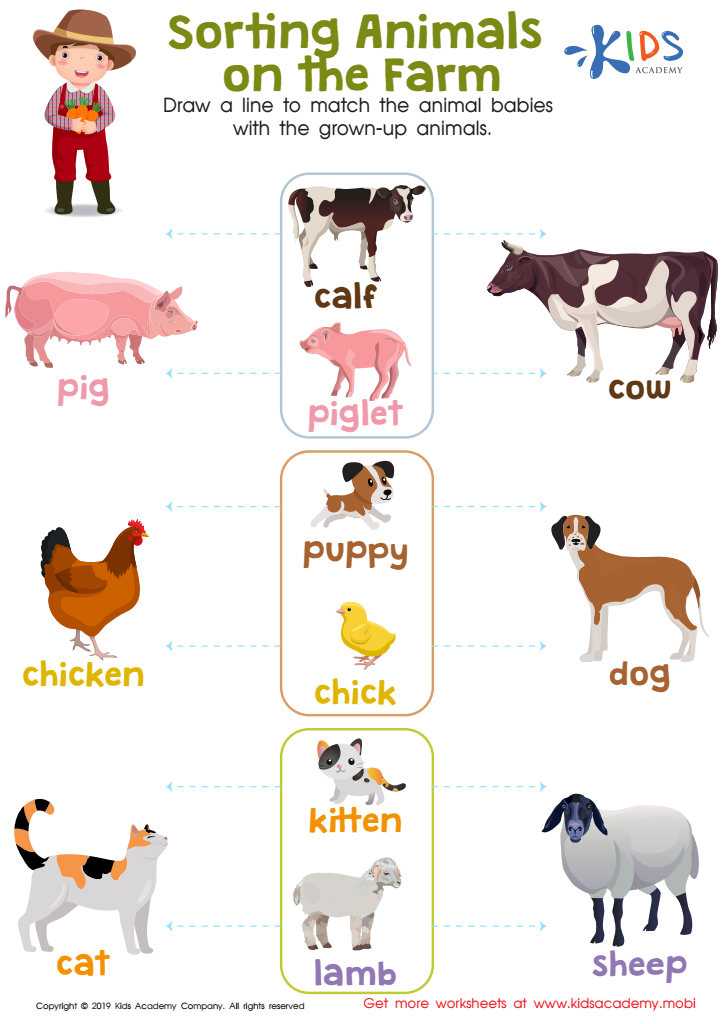
Sorting Animals on the Farm Worksheet
This PDF worksheet engages preschoolers in a fun activity to match Mama farm animals with their babies, strengthening their sorting and patterning skills. They'll learn to recognize rules and relationships, while gaining familiarity with animal-related words.
Sorting Animals on the Farm Worksheet
Worksheet
Join Kids Academy for Free
Who is primarily going to use this learning content?








Understanding habitats is crucial for children aged 4-7 as it lays the foundation for their awareness of the natural world. During these formative years, children are naturally curious, eager to explore their surroundings, and develop an appreciation for nature. Engaging with reading materials about habitats not only fuels this curiosity but also fosters a love for learning.
Parents and teachers play a vital role in nurturing this interest. Introducing age-appropriate reading about different ecosystems—such as forests, oceans, or deserts—helps children comprehend the diversity of life and the importance of environmental stewardship. These readings often highlight relationships between organisms, showcasing how they depend on each other for survival. This knowledge cultivates empathy and responsibility early on.
Additionally, understanding habitats encourages critical thinking, enabling children to ask questions about their environment, such as how climates affect wildlife or what happens when habitats are threatened. Such discussions can easily be held during storytime, making learning interactive and engaging. By prioritizing comprehension of habitats, parents and teachers not only enhance literacy skills but also promote ecological awareness, creativity, and problem-solving among young learners, ensuring they grow up as informed caretakers of the planet.








