Visual Perception Skills Reading Worksheets for Ages 4-7
4 filtered results
-
From - To
Enhance your child's reading journey with our Visual Perception Skills Reading Worksheets, designed specifically for ages 4-7. These engaging worksheets help develop essential visual perception abilities, including shape recognition, pattern matching, and visual discrimination. By incorporating fun activities, kids will improve their reading readiness and critical thinking skills while enjoying the learning process. Perfect for home or classroom use, our worksheets offer a variety of exercises to cater to diverse learning styles. Foster a love for reading and strengthen your child's foundational skills with these valuable resources, ensuring they embark on a successful educational adventure. Let reading come alive today!
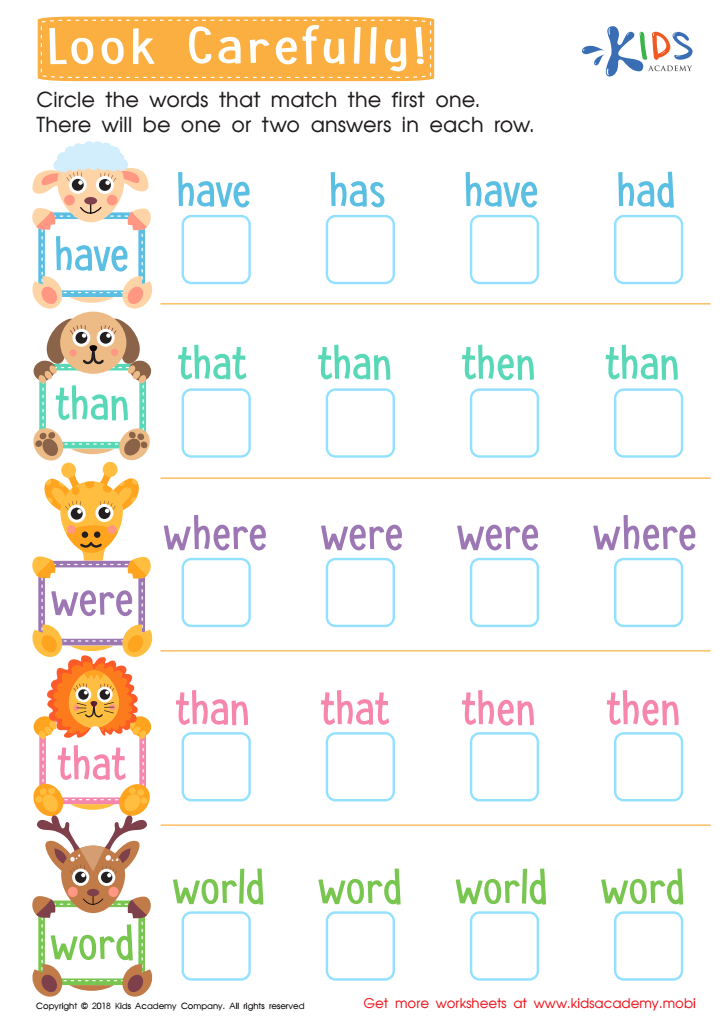
Look Carefully Worksheet
 Assign to My Students
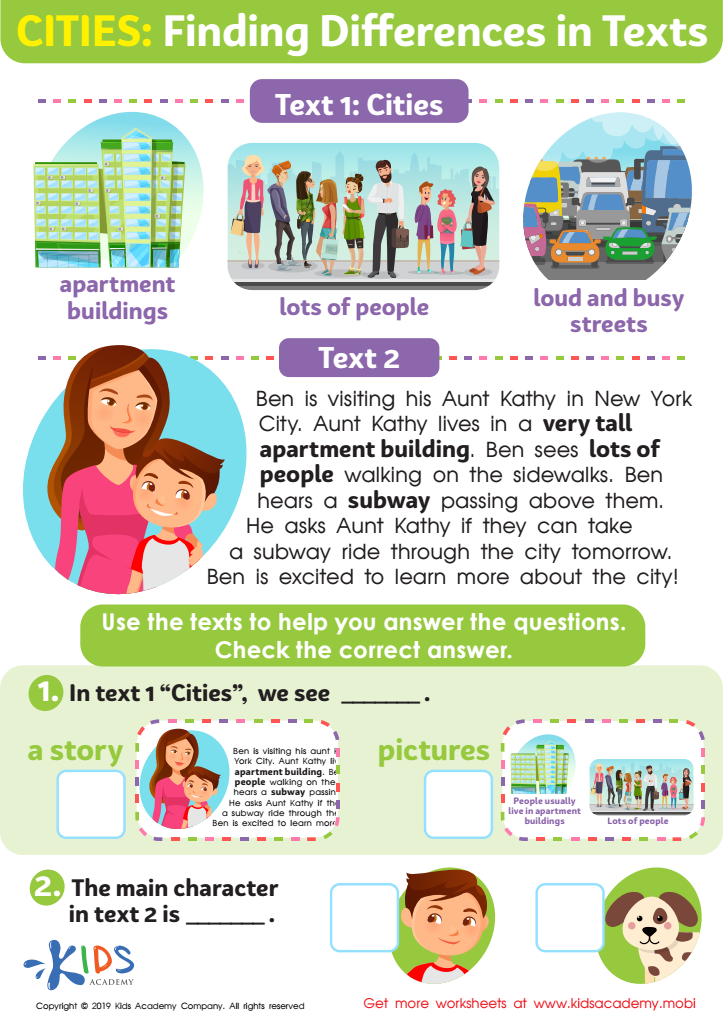
Cities: Finding Differences Worksheet
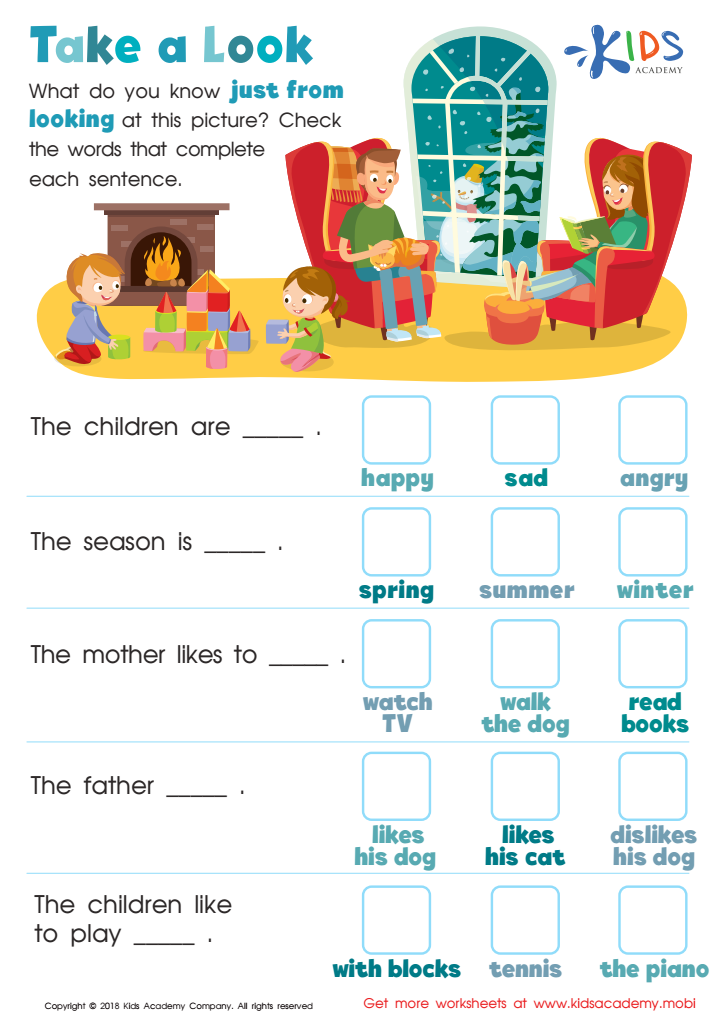
Take a Look - Part 1 Worksheet
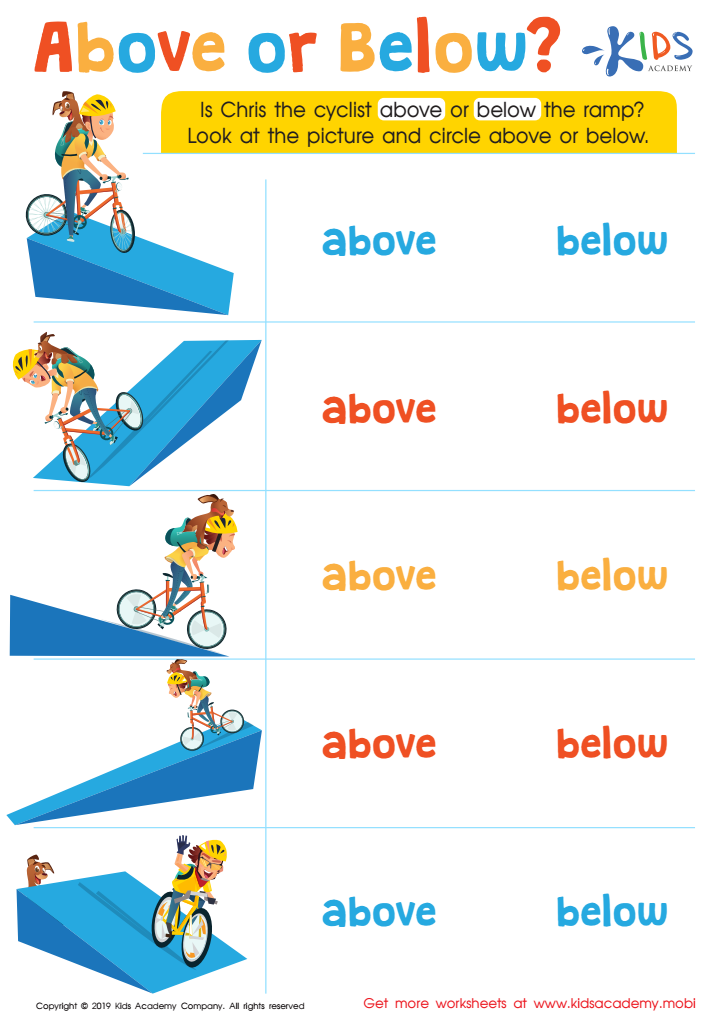
Above or Below? Worksheet








Visual perception skills are crucial for children aged 4-7, especially in relation to reading development. These skills encompass the ability to interpret and understand visual information, an essential component of learning to read. At this age, children are developing the foundational skills that will support their literacy and overall academic success.
When children engage with printed words, they need to discern letters, identify shapes, and recognize patterns rapidly. Strong visual perception skills enable them to differentiate between similar letters (such as 'b' and 'd') and to understand spacing between words, which are pivotal for fluent reading. Conversely, deficits in these skills can lead to misinterpretation of written material, resulting in frustration and reduced motivation to read.
Parents and teachers should prioritize enhancing visual perception skills through targeted activities, such as puzzles, matching games, and visual discrimination exercises. By fostering these abilities, they not only improve a child’s reading capability but also build their confidence and enjoyment of reading. Ultimately, these early interventions lay a strong foundation for lifelong literacy and learning, setting children up for academic achievement as they progress through school. Investing in visual perception skills today can yield significant benefits for children’s future educational success.








