Historical Knowledge Reading Comprehension Worksheets for Ages 4-7
5 filtered results
-
From - To
Unlock a world of knowledge with our engaging Historical Knowledge Reading Comprehension Worksheets for Ages 4-7! Specially designed to spark curiosity and boost early reading skills, these worksheets dive into significant historical moments through age-appropriate texts. Each worksheet blends fun illustrations and simple narratives to help young readers understand and retain vital historic facts. Ideal for classroom or homeschool environments, these worksheets foster a love for learning while enhancing comprehension, critical thinking, and fluency. Embark on a delightful educational journey with your child today by introducing them to the past through our thoughtfully crafted materials!
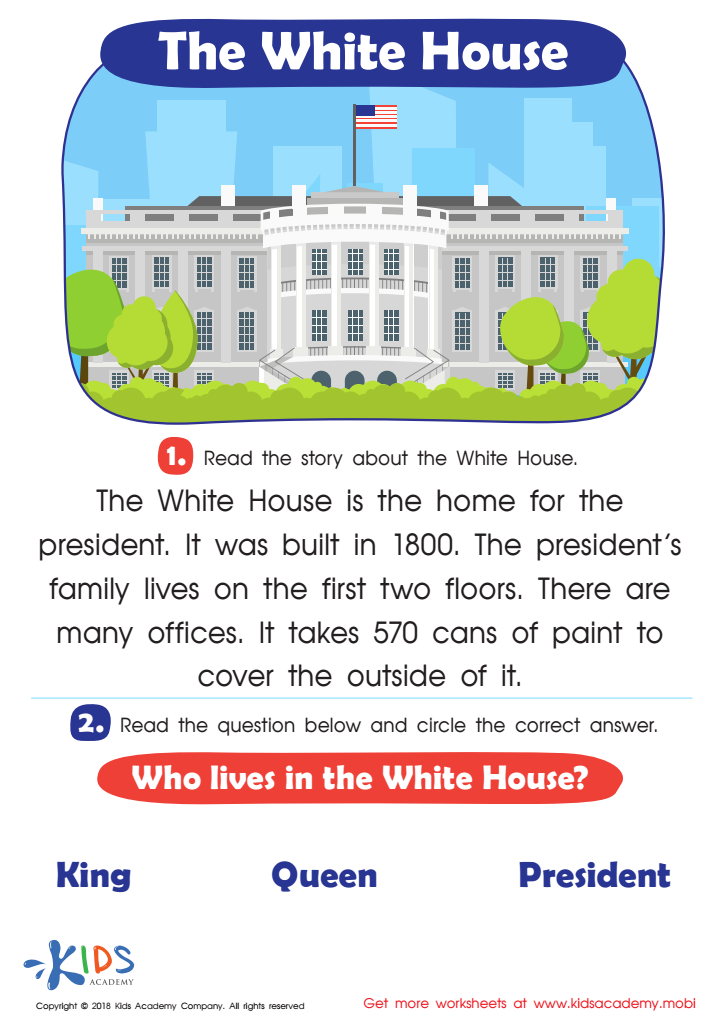
White House Worksheet
 Assign to My Students
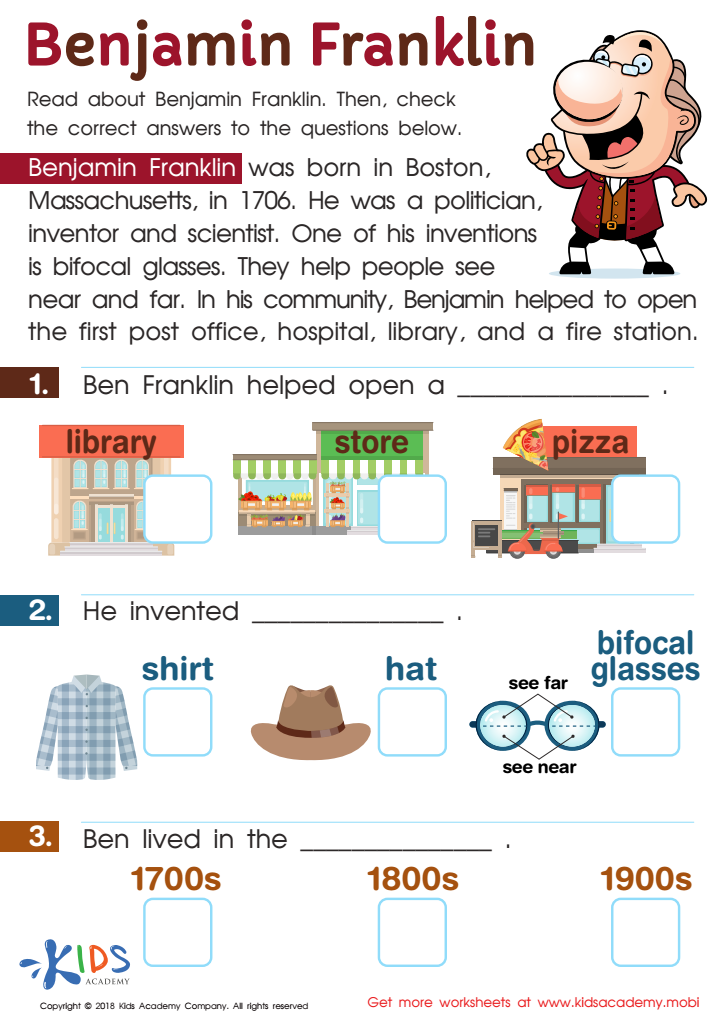
Benjamin Franklin Worksheet
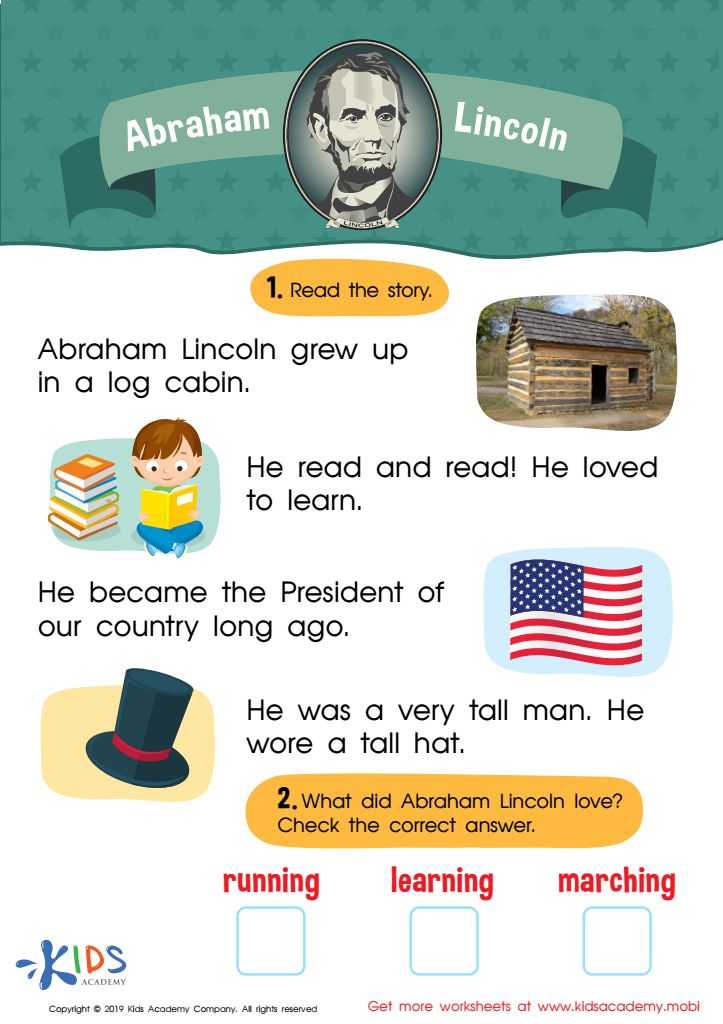
Abraham Lincoln Worksheet
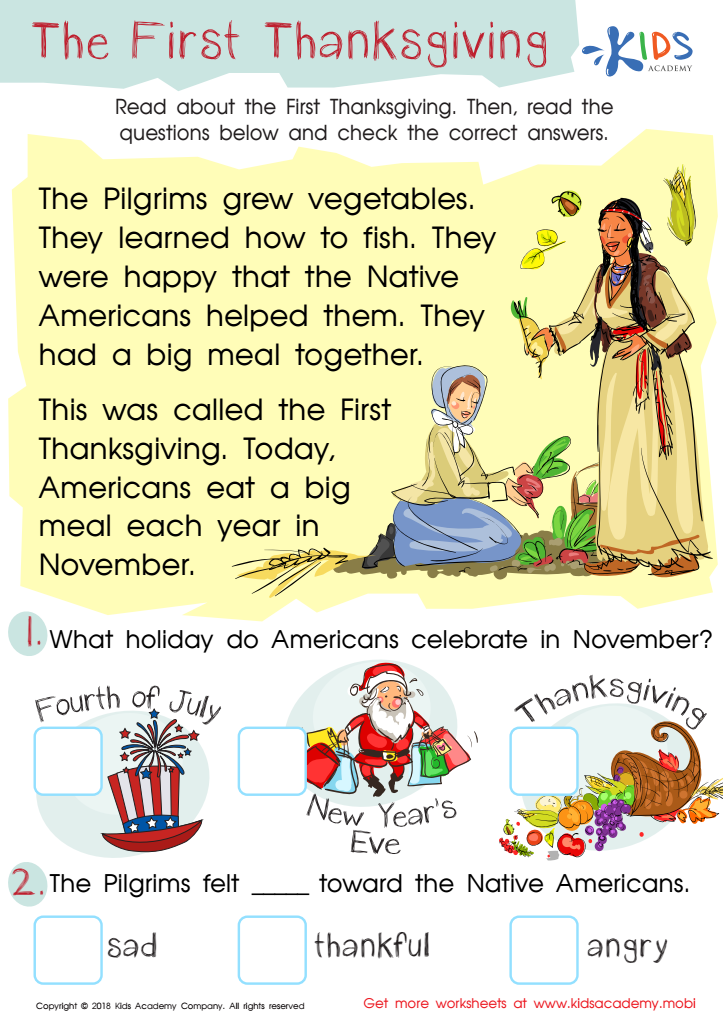
Assessment: First Thanksgiving Worksheet
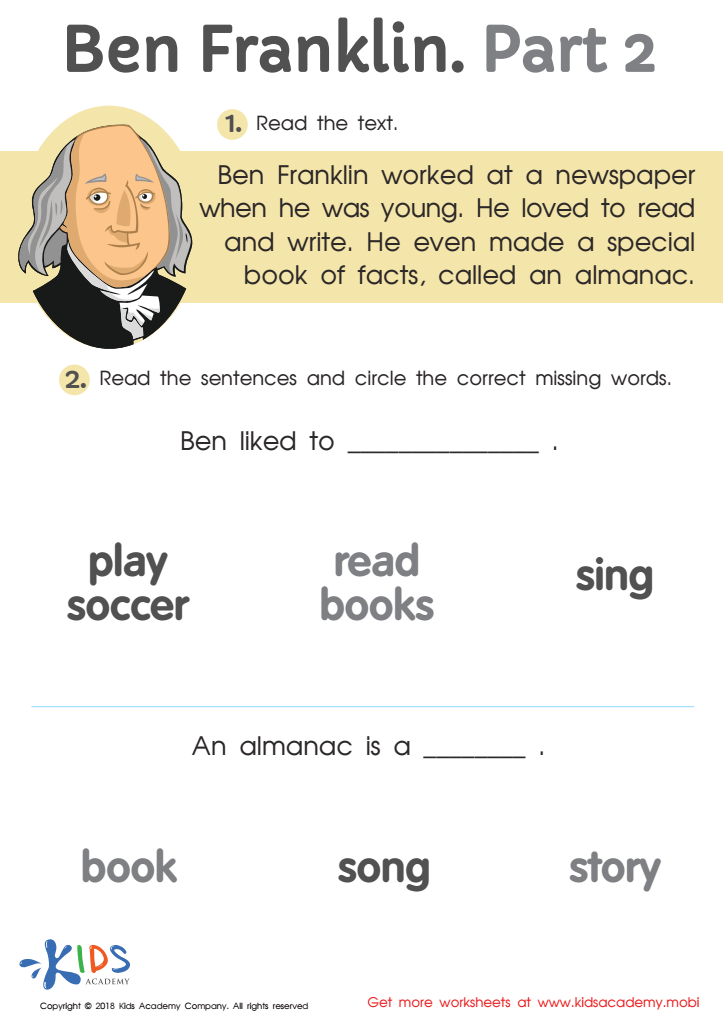
Ben Franklin Part 2 Worksheet








Historical Knowledge Reading Comprehension is crucial for children ages 4-7, as it lays the groundwork for developing critical thinking skills and a well-rounded understanding of the world. At this formative age, children are highly receptive and curious, making it an ideal time for them to start learning about historical events, figures, and cultures. Introducing these concepts early helps build a strong foundational knowledge that fosters empathy, cultural awareness, and a sense of identity.
Engaging with historical stories and texts enhances reading comprehension by expanding vocabulary and improving the ability to make connections between different pieces of information. It also strengthens cognitive skills like memory and reasoning. Understanding history helps children grasp complex ideas about change, cause and effect, and the perspective of others, nurturing their analytical abilities.
For parents and teachers, emphasizing Historical Knowledge Reading Comprehension means preparing children for future academic success and enabling them to participate thoughtfully in a diverse society. It encourages curiosity about the past, helping them appreciate the achievements and struggles of people from different backgrounds. This awareness, fostered through stories and discussions, promotes a lifelong interest in learning and helps children become informed, compassionate individuals. Investing in historical education at an early age ultimately supports the overall intellectual and social development of young learners.








