Rhyme recognition Reading Comprehension Worksheets for Ages 4-7
3 filtered results
-
From - To
Enhance your child’s reading skills with our engaging Rhyme Recognition Worksheets designed for ages 4-7! These worksheets focus on developing phonemic awareness and reading comprehension through fun rhyming activities. Each sheet encourages young learners to identify and match rhyming words, fostering vocabulary growth while boosting their confidence in reading. Our curriculum-aligned materials are crafted to cater to early grade learners, ensuring they have a solid foundation in literacy. By integrating enjoyable themes and colorful illustrations, these worksheets make learning a delightful experience. Perfect for both classroom and at-home use, explore our Rhyme Recognition Worksheets and watch your child's reading skills soar!
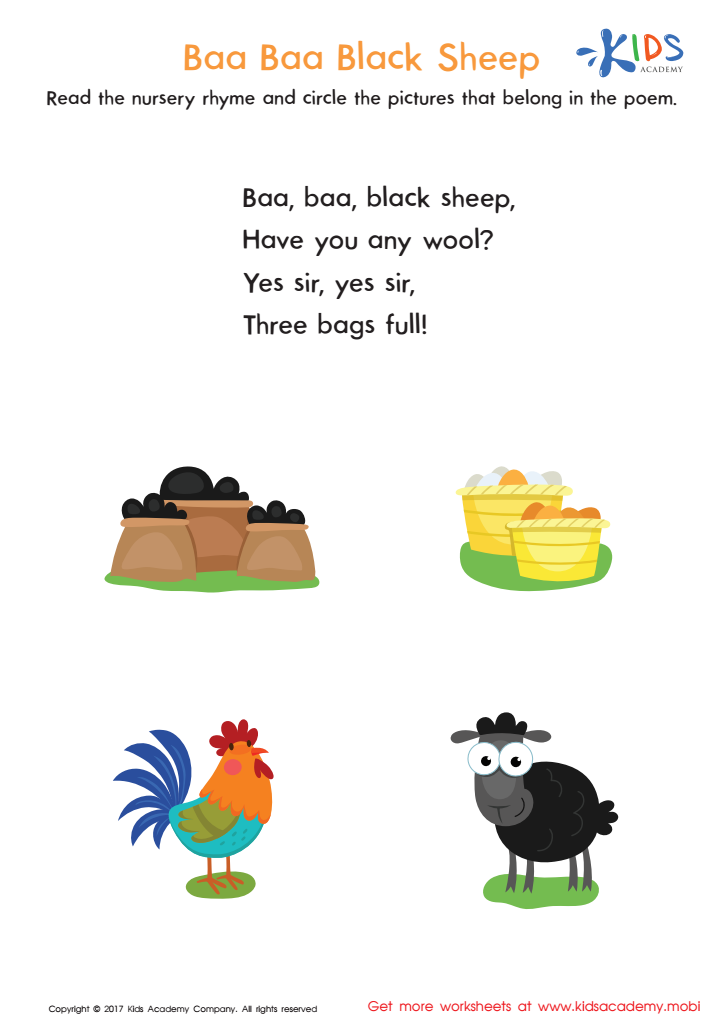
Baa Baa Black Sheep Printable
 Assign to My Students
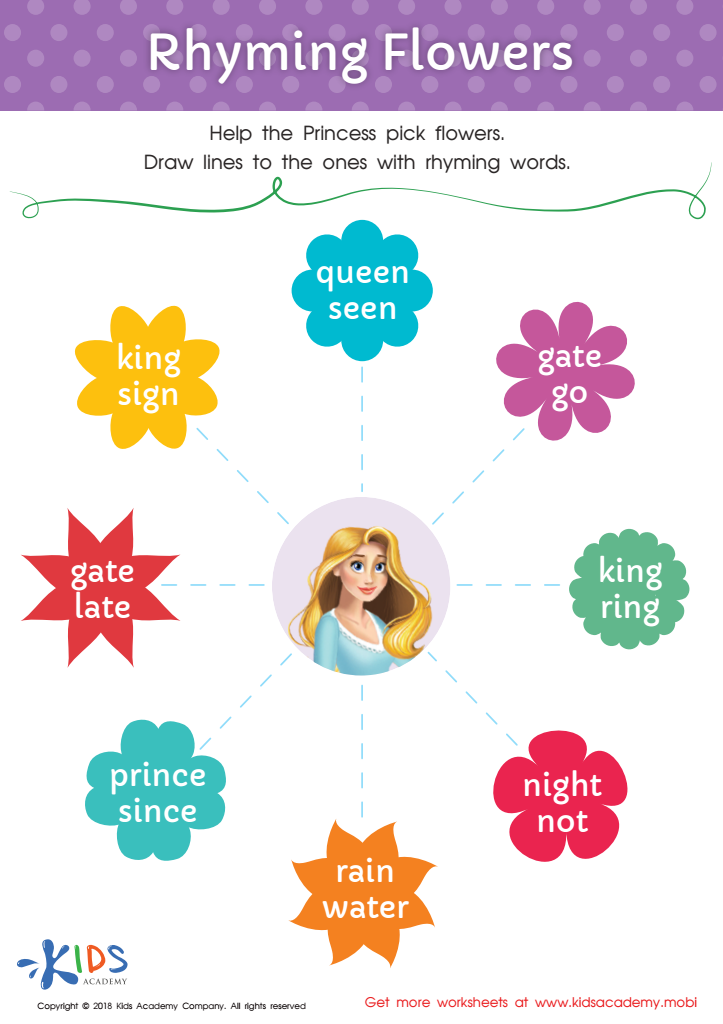
Rhyming Flowers Worksheet
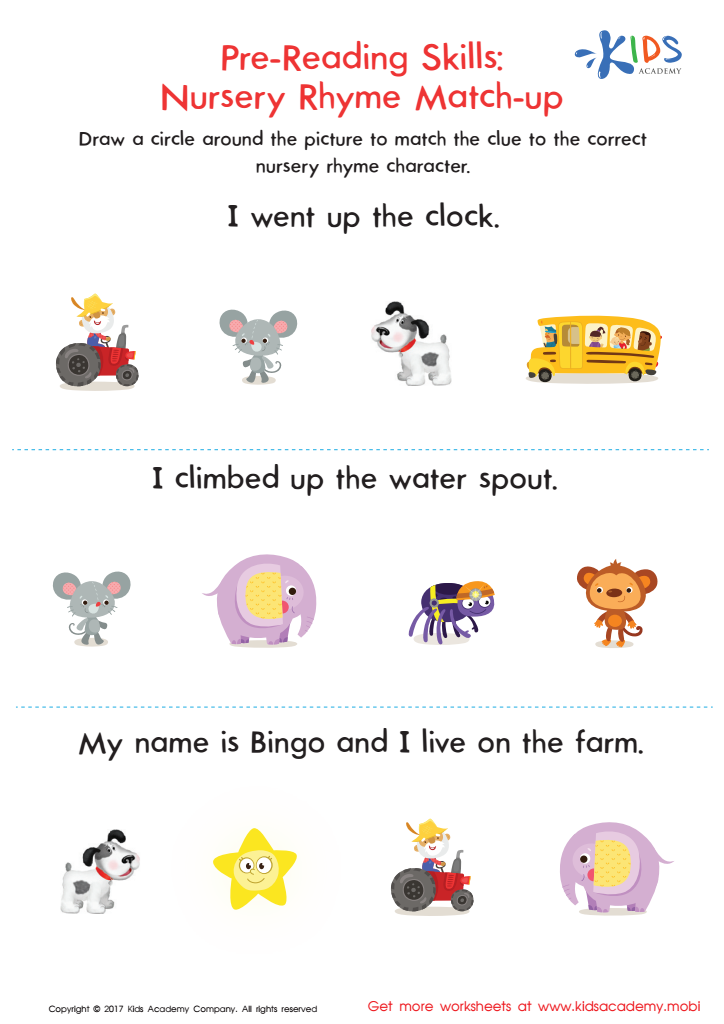
Nursery Rhyme Match–Up Worksheet



.jpg)




Rhyme recognition is an essential element of early literacy for children aged 4-7, playing a pivotal role in reading comprehension. Understanding and identifying rhymes helps children develop phonemic awareness, the ability to hear and manipulate sounds in words. This foundational skill is critical for decoding words, which is necessary for reading proficiency.
When children engage with rhyming texts, they enhance their literacy skills through wordplay and auditory discrimination. Recognizing and creating rhymes also fosters vocabulary development, making it easier for young learners to connect new words to existing knowledge. For teachers and parents, promoting rhyme recognition can lead to stronger reading comprehension as children expand their understanding of language patterns and structures.
Moreover, rhymes ignite children's creativity and imagination, making learning enjoyable and interactive. These playful experiences with language build positive associations with reading, fostering a lifelong love for books. Engaging with rhymes encourages dialogue between caregivers and children, strengthening bonds and facilitating communication skills.
Overall, rhyme recognition is not just a fun exercise; it's a vital stepping stone that supports the cognitive and linguistic development needed for reading success, ultimately enriching a child’s educational journey. Thus, educators and parents should prioritize this aspect of literacy in early childhood learning.








