Shape Recognition Reading Comprehension Worksheets for Ages 4-7
4 filtered results
-
From - To
Enhance your child's reading comprehension skills with our engaging Shape Recognition Reading Comprehension Worksheets, designed specifically for ages 4-7. These interactive printables combine early literacy with shape recognition, helping young learners identify and understand different shapes within fun stories. Each worksheet encourages critical thinking and boosts comprehension through vibrant illustrations and relatable content. Perfect for parents and teachers, these resources provide a playful approach to learning, fostering both academic and cognitive development. Encourage your child’s love for reading and mathematics while building confidence. Explore our printable worksheets today and watch your young learner excel in shape recognition and comprehension!
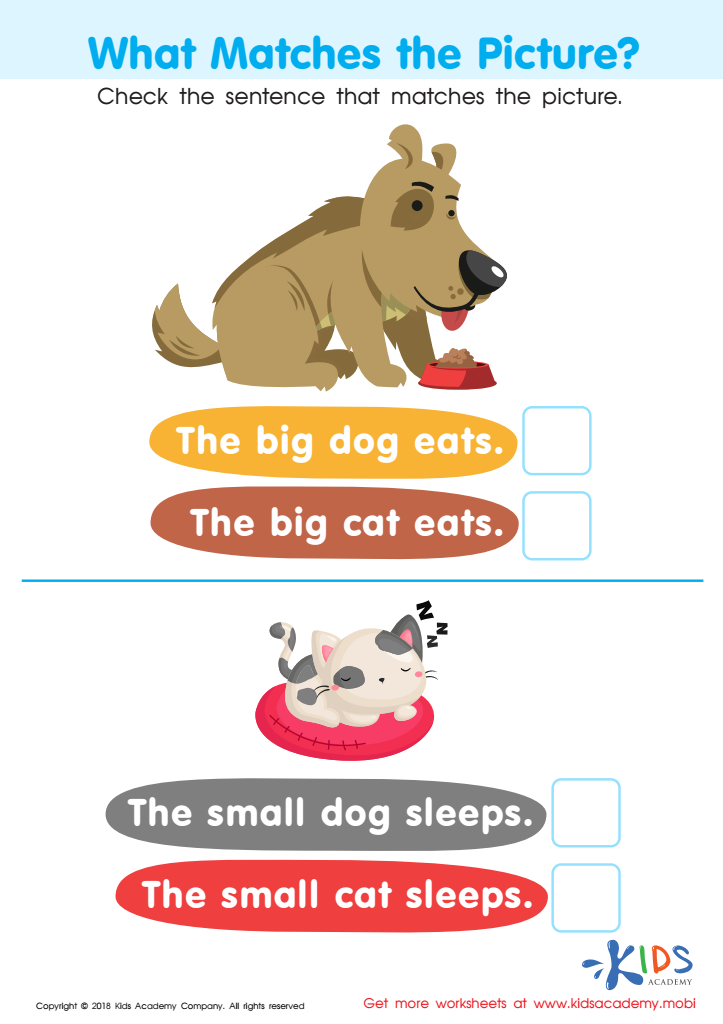
What Matches the Picture? Worksheet
 Assign to My Students
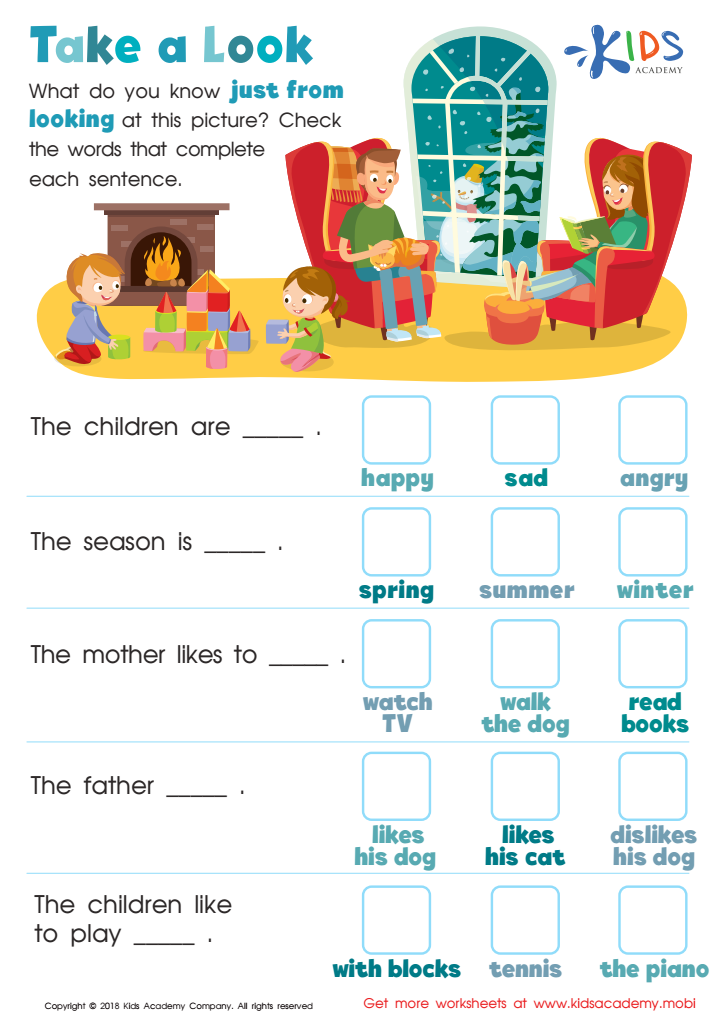
Take a Look - Part 1 Worksheet
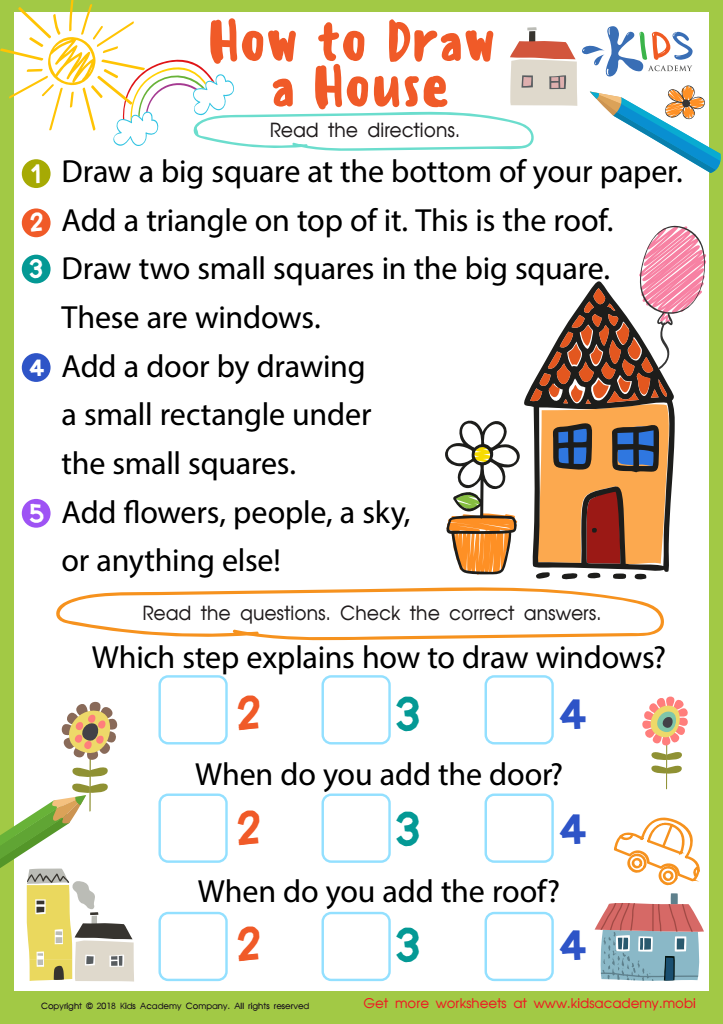
How to Draw House Worksheet
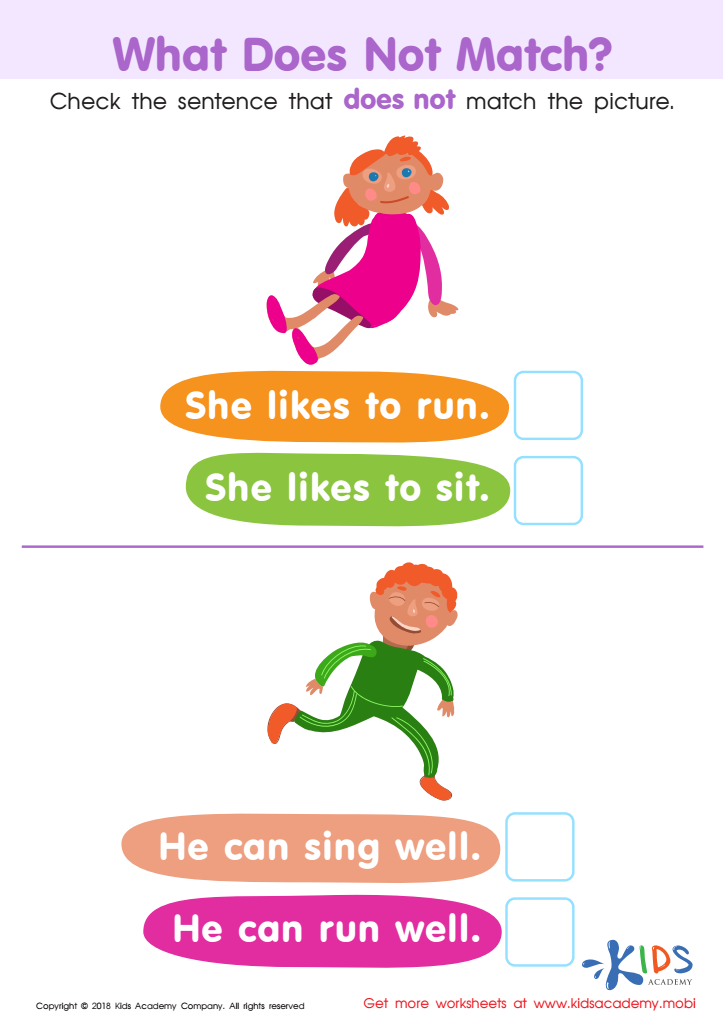
What Does Not Match? Worksheet








Shape recognition is a fundamental skill that serves as an integral foundation for both reading comprehension and overall cognitive development in children aged 4-7. Parents and teachers should prioritize this skill because it enhances a child's ability to make connections between visuals and text. Recognizing shapes aids in decoding letters and words, as children learn to identify the unique forms of letters, which is crucial for early literacy.
Beyond reading, shape recognition fosters critical thinking and problem-solving skills. As children differentiate between various shapes, they develop categorization abilities and spatial awareness. These skills are essential not only for literacy but also for math, as children learn to understand geometry and geometry-related concepts by recognizing shapes.
Moreover, engaging in shape recognition activities, such as through games or art projects, makes learning enjoyable. This engagement helps instill a love for learning, creating a positive association with education from an early age. Parents and teachers collaborating on shape recognition strategies ultimately build a strong foundational skill set that supports a child's reading journey and enhances their confidence in both academic and everyday situations. By focusing on this vital area, adults set children on a path towards successful learning experiences.








