
Sentence construction Reading Fiction Worksheets for Ages 4-7
6 filtered results
Difficulty Level
Grade
Age
-
From - To
Subject
Activity
Standards
Enhance your young learner’s reading and writing skills with our Sentence Construction Reading Fiction Worksheets designed for ages 4-7. These engaging, age-appropriate worksheets help children craft sentences while diving into captivating stories. Each activity targets crucial language skills: recognizing sentence structures, improving vocabulary, and understanding grammar. Perfect for both classroom use and home practice, our worksheets make learning fun and interactive, encouraging creative expression and critical thinking. Ideal for early readers, these printables are a valuable resource for parents and teachers looking to boost their children's literacy development through the enchanting world of reading fiction.
Favorites
With answer key
Interactive
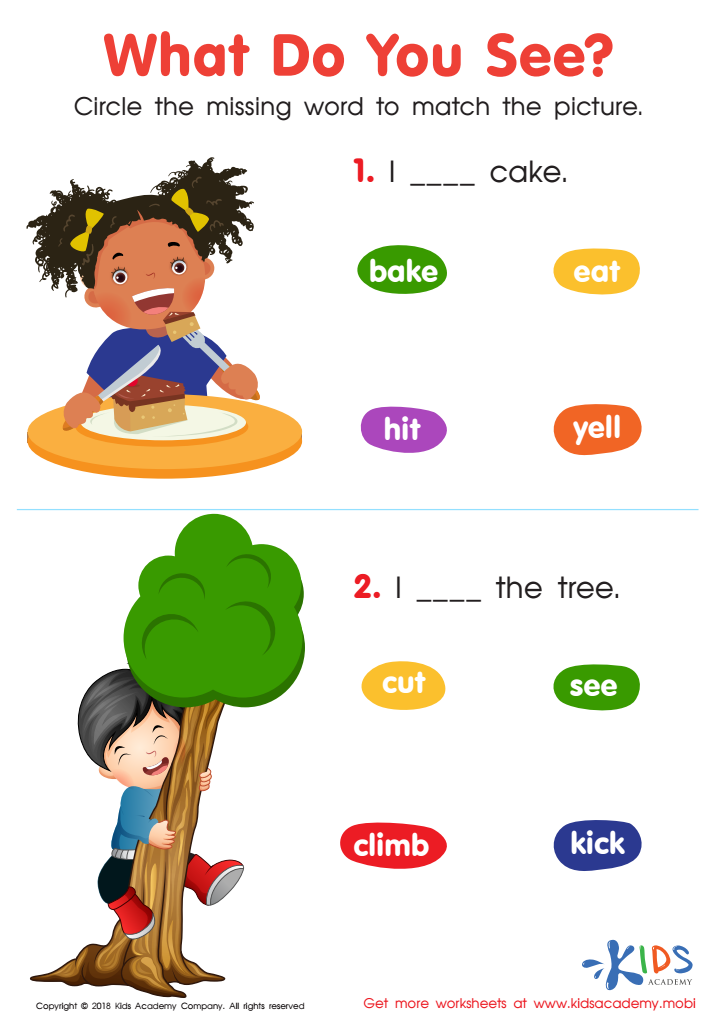
What Do You See? Reading Worksheet
New readers can use the attractive pictures and high-frequency words on this worksheet to practice expressive language skills and decode as they fill in the blanks. As they circle the correct words, they'll feel like reading superstars!
 Assign to My Students
What Do You See? Reading Worksheet
Worksheet
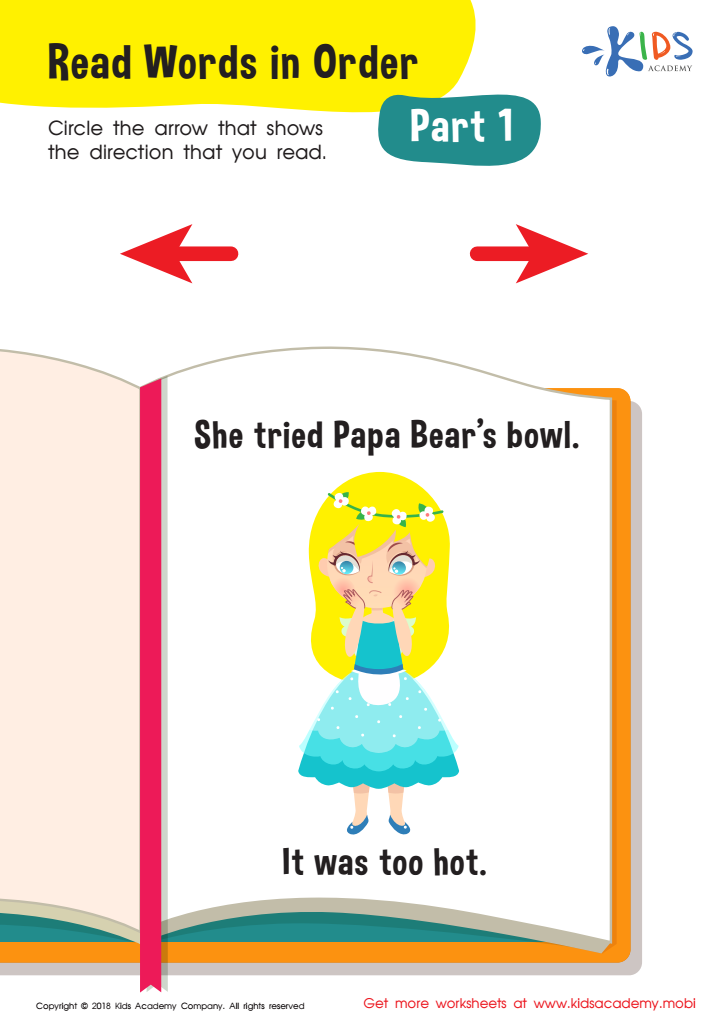
Read Words Order Part 1 Worksheet
Is your child just starting out with reading or having trouble? This worksheet is perfect! It'll help them learn the right way to read. Ask them to circle the arrow that shows the right direction to read. With this exercise, your child can overcome some of their reading challenges.
Read Words Order Part 1 Worksheet
Worksheet
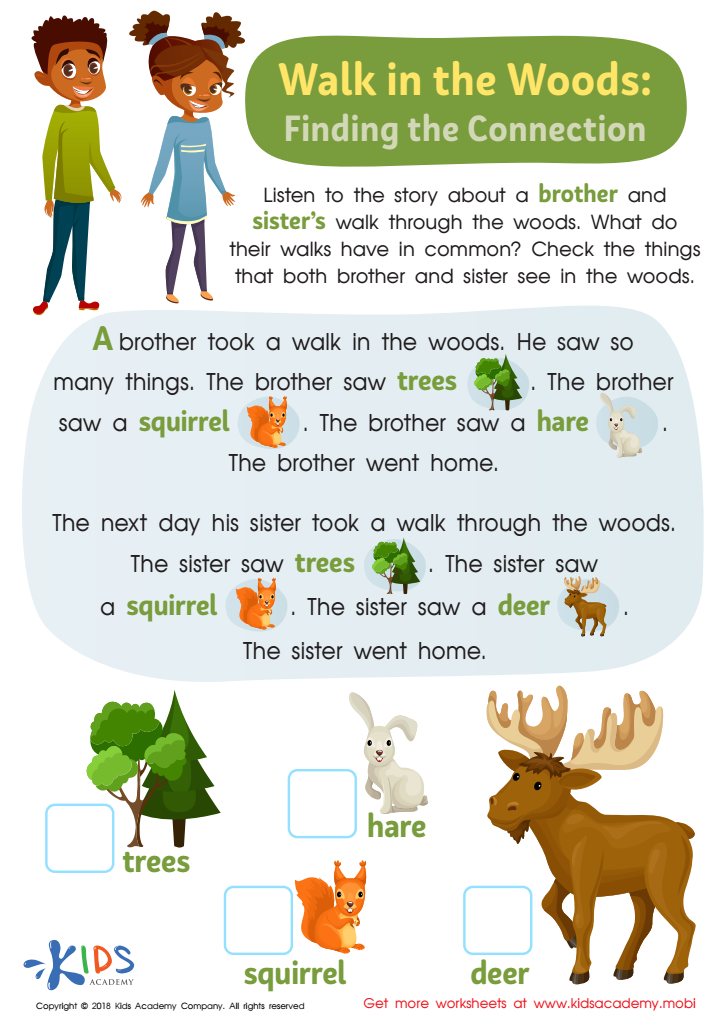
Walk In the Woods: Finding Connections Worksheet
Brother and sister took a walk in the woods to connect with nature and get some exercise. As they went, they noted different things like birds and plants, which they share in this story. Read it to your little ones, and help them check off the items the two saw. It's a great way to learn about nature and enjoy the outdoors.
Walk In the Woods: Finding Connections Worksheet
Worksheet
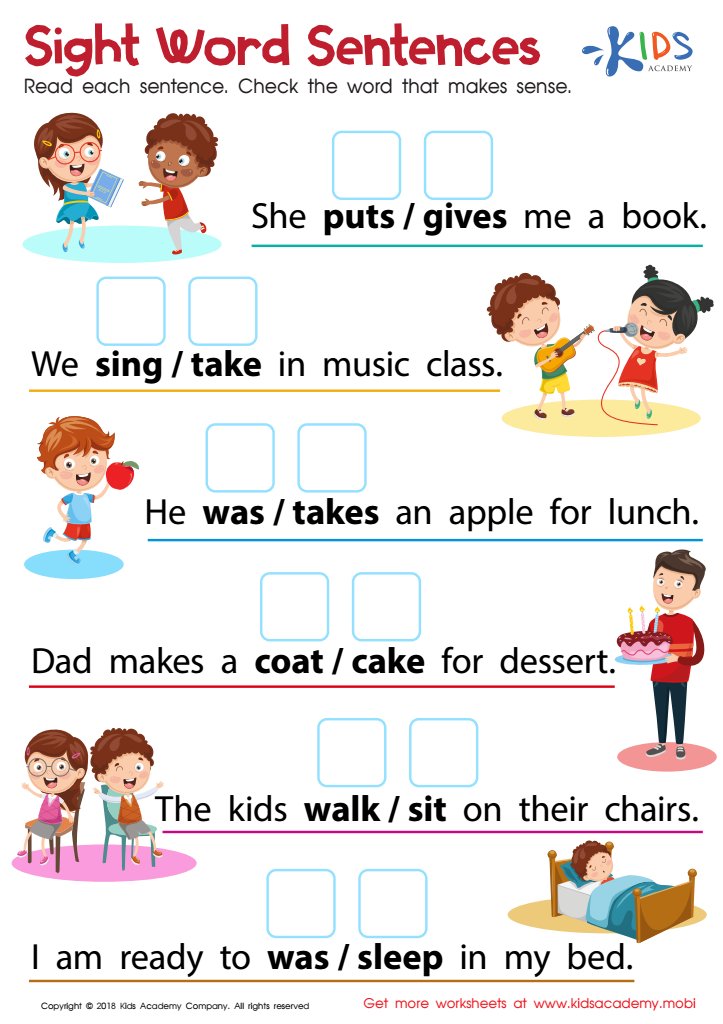
Sight Words Sentences Worksheet
It's important for kids to practice recognizing sight words in print. This PDF provides fun practice with sentences and engaging picture clues. As they work with sight words, they'll become more familiar and automatic. Help your kids build literacy skills!
Sight Words Sentences Worksheet
Worksheet
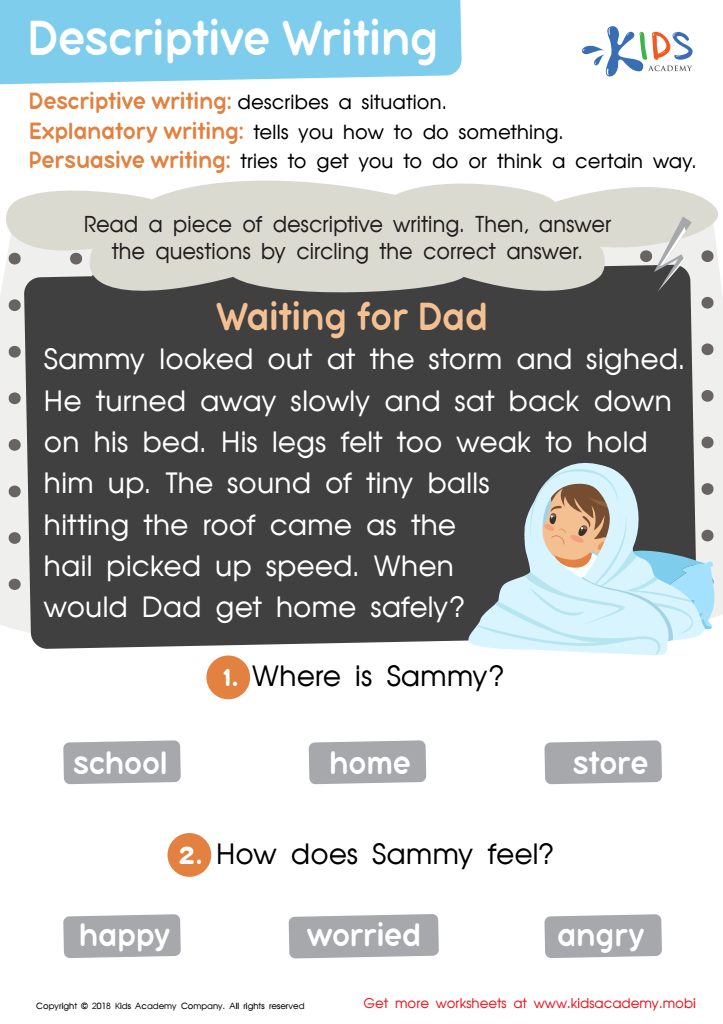
Descriptive Writing Worksheet: Part 2
In this worksheet, your kids will explore writing styles like descriptive, explanatory and persuasive. Read them the descriptive text, then have them answer the questions. Writing is an art – it's a way to express emotions, tell stories and share information.
Descriptive Writing Worksheet: Part 2
Worksheet
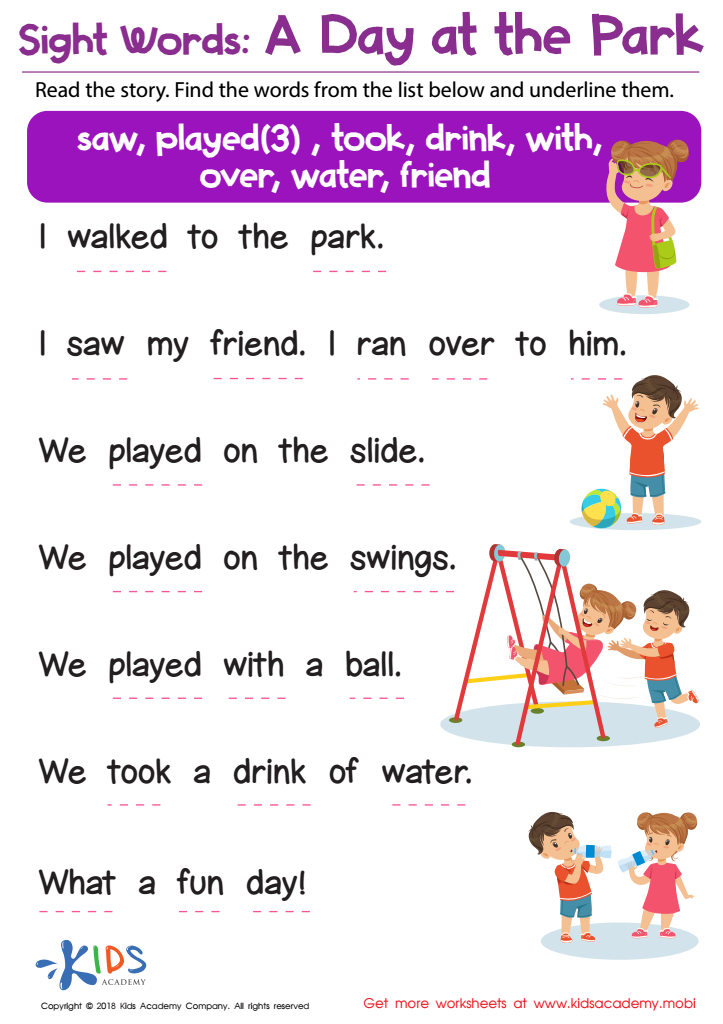
Sight Words: A Day at the Park Worksheet
This worksheet offers kids practice reading sight words in a story. With picture clues and repetitive wording, they'll work with words that can't be sounded out to reinforce their learning. This is an important step in the reading process that helps kids become more confident readers.
Sight Words: A Day at the Park Worksheet
Worksheet
Join Kids Academy for Free
Who is primarily going to use this learning content?






.jpg)
Parents and teachers should prioritize sentence construction and reading fiction for children aged 4-7 due to their developmental benefits during these critical formative years. Understanding sentence structure is fundamental in mastering language skills, offers academic advantages, and aids effective communication. When children learn how sentences are constructed, they enhance their ability to convey thoughts coherently and comprehend complex information.
Children engaging with fiction stories immerse themselves in varied sentence patterns, vocabularies, and storytelling techniques. This exposure facilitates cognitive development, including memory, empathy, and imaginative thinking. Through story-driven context, children grasp grammar and syntax intuitively, boosting their writing and verbal capabilities.
Additionally, fiction fosters emotional development by exposing children to different experiences and feelings. Characters' diverse situations teach lessons in empathy, problem-solving, and moral reasoning, which are crucial for emotional and social growth.
Furthermore, reading at an early age establishes lifelong learning and creates positive associations with books, enhancing focus and patience over time. Comprehension of narratives aids children in understanding and organizing thoughts, which is beneficial for interdisciplinary learning.
In summary, emphasizing sentence construction and reading fiction for young children enriches their cognitive, linguistic, emotional, and social capabilities, laying a robust foundation for future educational success and personal growth.








