Filters

11 filtered results

Clear all filters
Favorites
With answer key
Interactive

11 filtered results

Difficulty Level

Grade


Unlock your child's linguistic potential with our engaging Vocabulary Expansion Reading Fiction Worksheets, specially designed for ages 4-7. These worksheets introduce young learners to a world of new words through captivating, age-appropriate stories. By immersing children in rich narratives, they enhance their understanding and application of varied vocabulary. With a mix of fun activities and thought-provoking questions, our worksheets effortlessly blend education and imagination, fostering a love for reading and language development. Perfect for building a strong foundation in reading and comprehension, these resources support both at-home and classroom learning. Expand their word knowledge today with Kid's Academy!

Check out this FREE Trial Lesson on Reading Fiction for age 4-7!

Identify Text Features

Favorites
With answer key
Interactive
  • 4-7
  • Vocabulary expansion
  • Reading Fiction
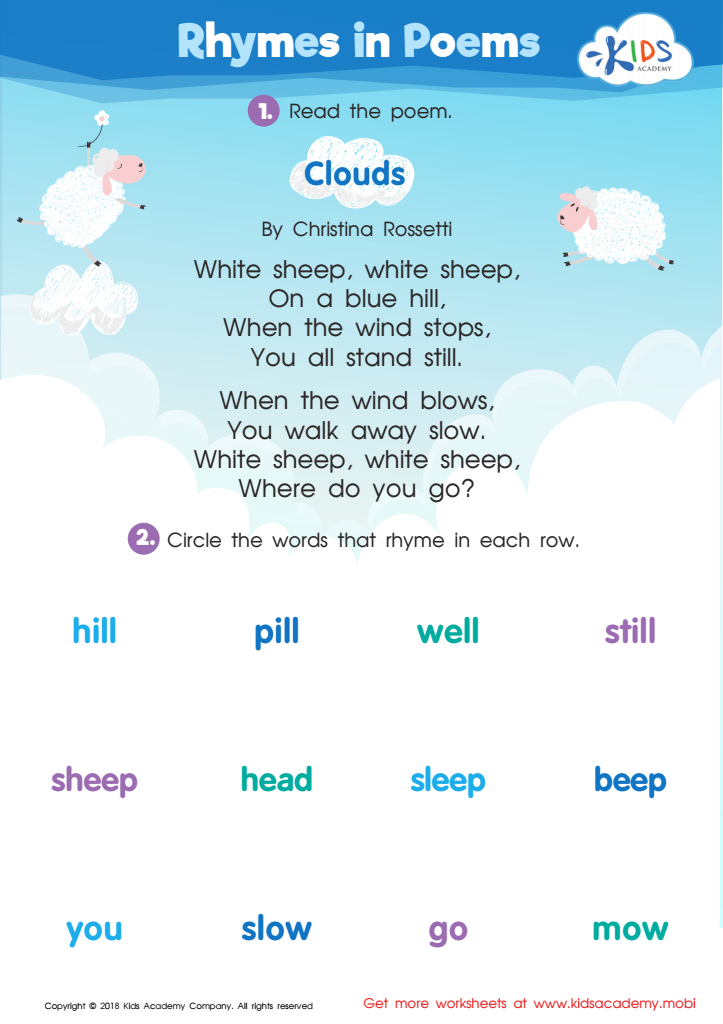
Rhymes in Poems Worksheet

Rhymes in Poems Worksheet

Poems are lovely works of literature; some with rhymes, and some without. This poem for kids is full of rhymes and tells the tale of a sheep. Read it aloud to your kids, then help them circle the rhyming words.
Rhymes in Poems Worksheet
Worksheet
Book Bingo Worksheet

Book Bingo Worksheet

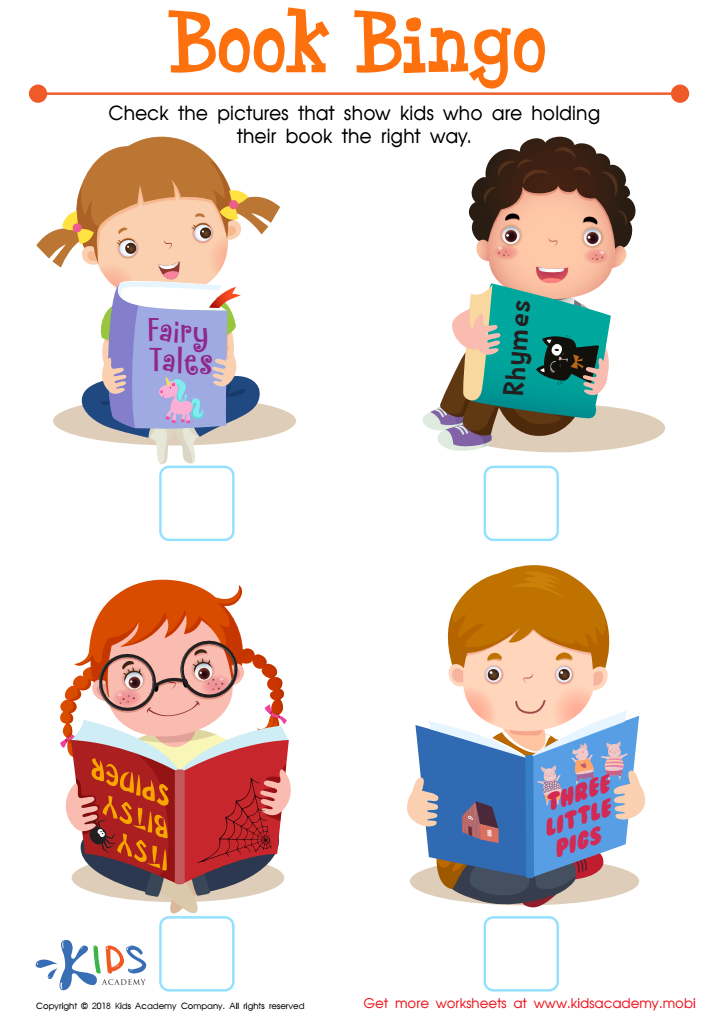
Help your kids spot which of the kids in the worksheet are reading correctly. Early instruction in reading helps ensure kids won't face problems later on, plus any impairments can be identified and corrected quickly. Can your child read? Have them check the pictures of kids holding books the right way.
Book Bingo Worksheet
Worksheet
The New Teacher Worksheet

The New Teacher Worksheet

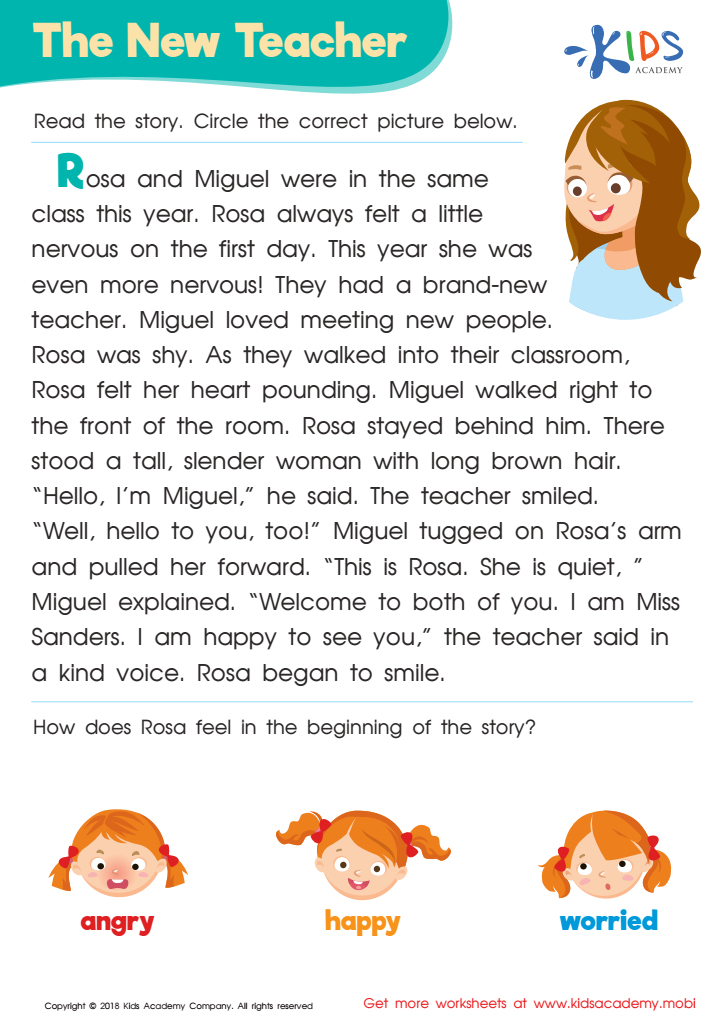
Encourage your kids to write their own short story before doing this exercise. It's about Rosa and Miguel on their first day of school, meeting their teacher. Read the story aloud and ask them to focus on Rosa's feelings. Then, help them circle the correct picture for the question.
The New Teacher Worksheet
Worksheet
Changing Feelings Worksheet

Changing Feelings Worksheet

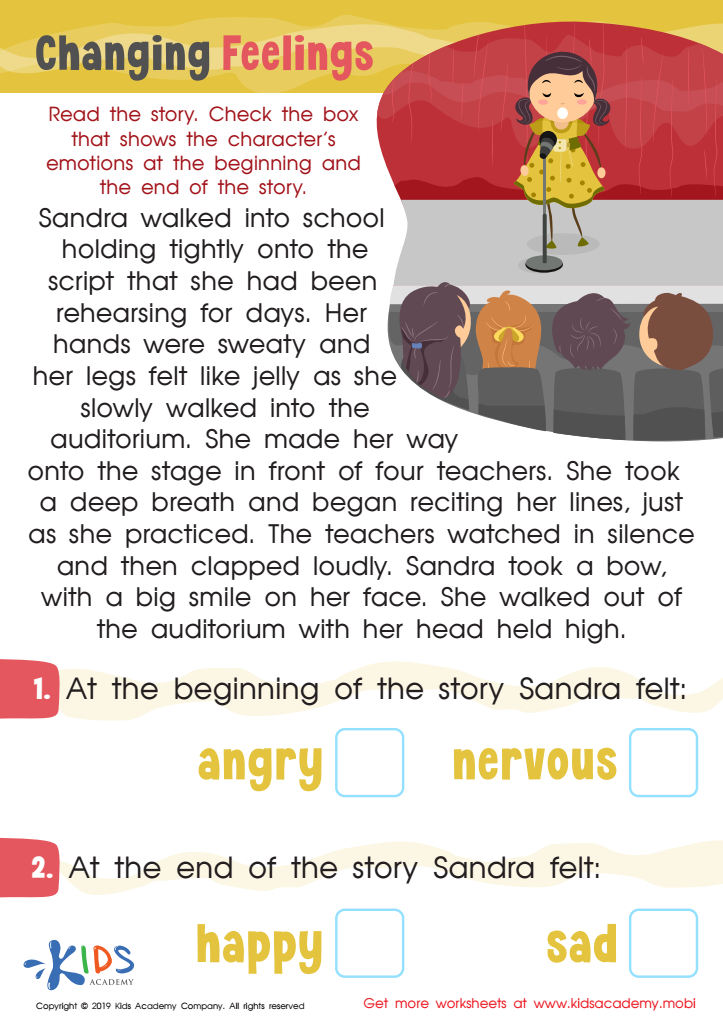
Help your kids practice reading skills with this exercise. Ask them to read the short passage, then check the boxes showing the character's emotions at the start and end. This will help them improve their reading and understanding.
Changing Feelings Worksheet
Worksheet
Word Sense Worksheet

Word Sense Worksheet

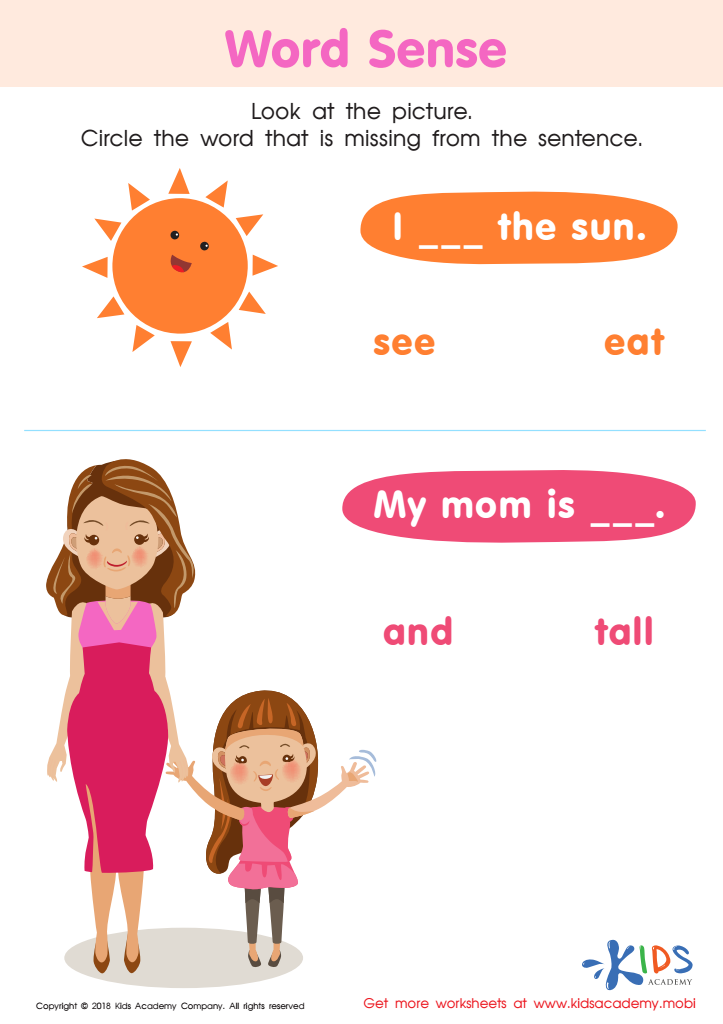
Expose your child to common high-frequency words with this free and colorful worksheet. It will help them use picture clues to choose the correct word for each phrase. The more they're exposed, the stronger their fluency will become when reading. This process is an important part of the emerging reader's learning-to-read journey.
Word Sense Worksheet
Worksheet
Descriptive Writing Worksheet: Part 2

Descriptive Writing Worksheet: Part 2

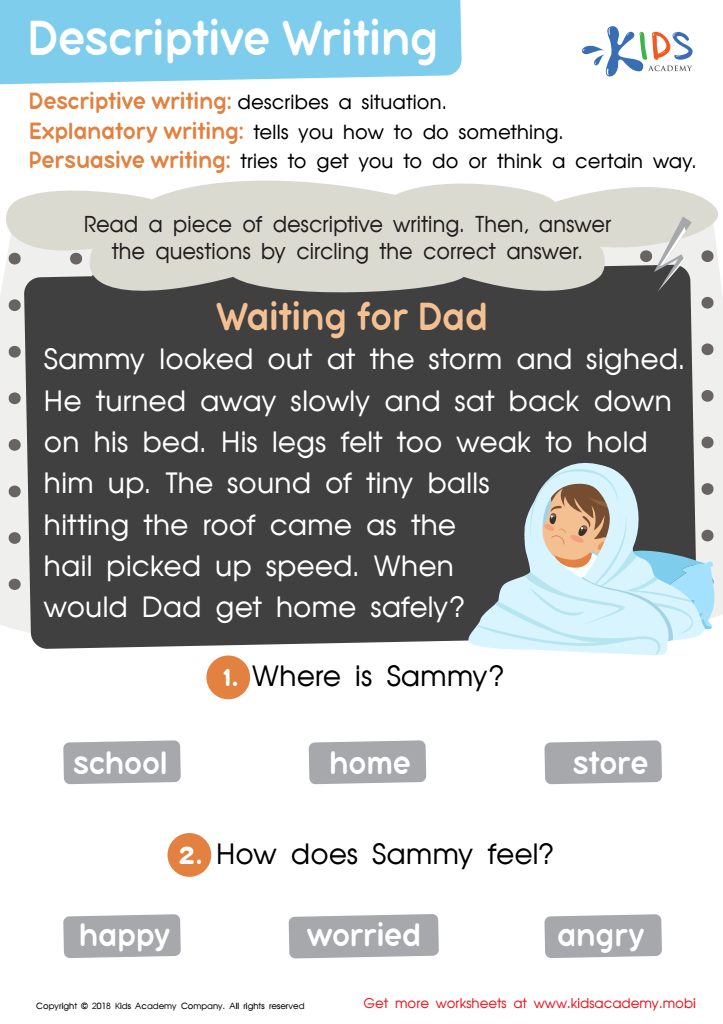
In this worksheet, your kids will explore writing styles like descriptive, explanatory and persuasive. Read them the descriptive text, then have them answer the questions. Writing is an art – it's a way to express emotions, tell stories and share information.
Descriptive Writing Worksheet: Part 2
Worksheet
Printable nursery rhyme: Rub a Dub Dub

Rub a Dub Dub Printable

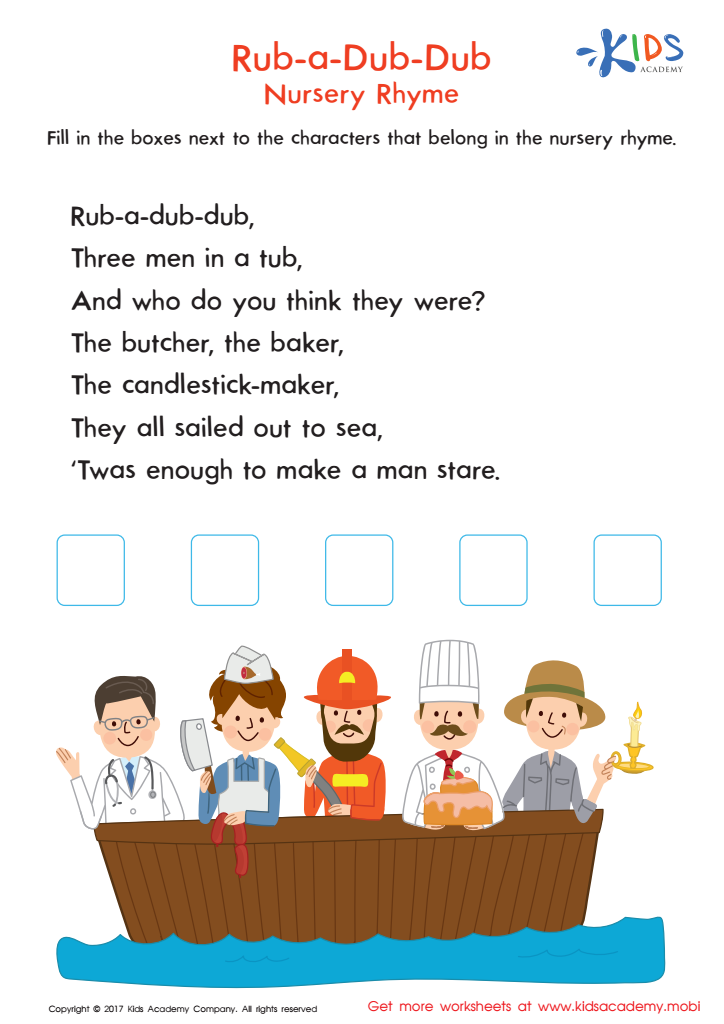
Delight your child and foster early reading skills with this printable nursery rhyme, Rub a Dub Dub! Let your little reader select the three men in the tub and practice important reading comprehension skills.
Rub a Dub Dub Printable
Worksheet
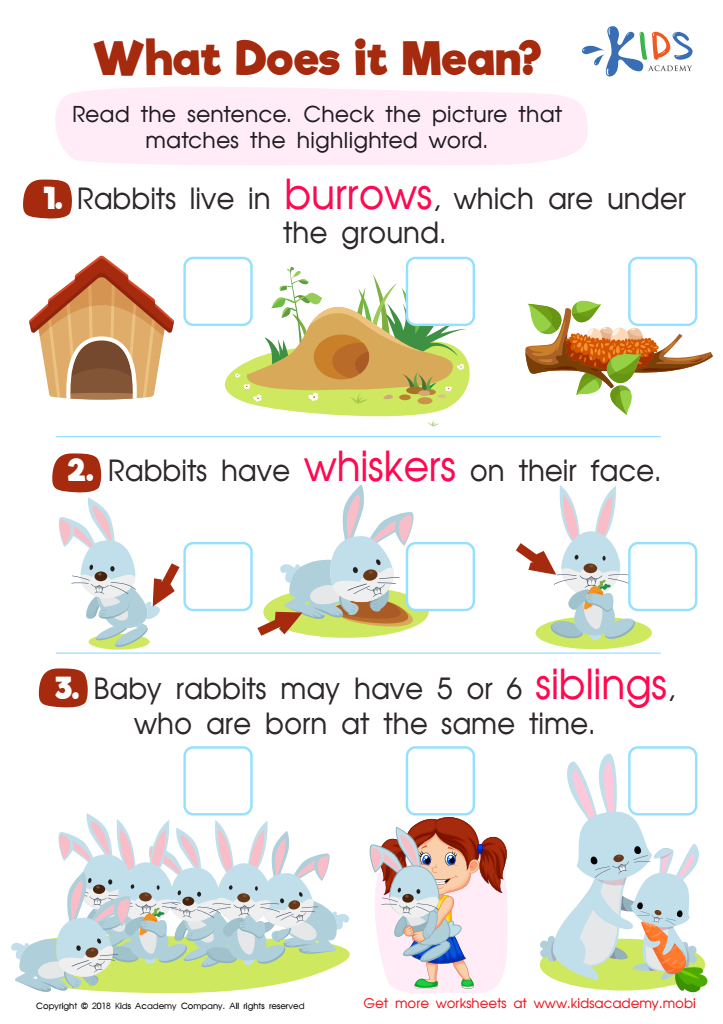
What Does It Mean? Worksheet

What Does It Mean? Worksheet

Teach your child to use context clues with this engaging Kids Academy worksheet. Read the sentences and find the pink-highlighted word. Use the other words in the sentence to figure out the meaning, then check the box next to the picture that represents it.
What Does It Mean? Worksheet
Worksheet
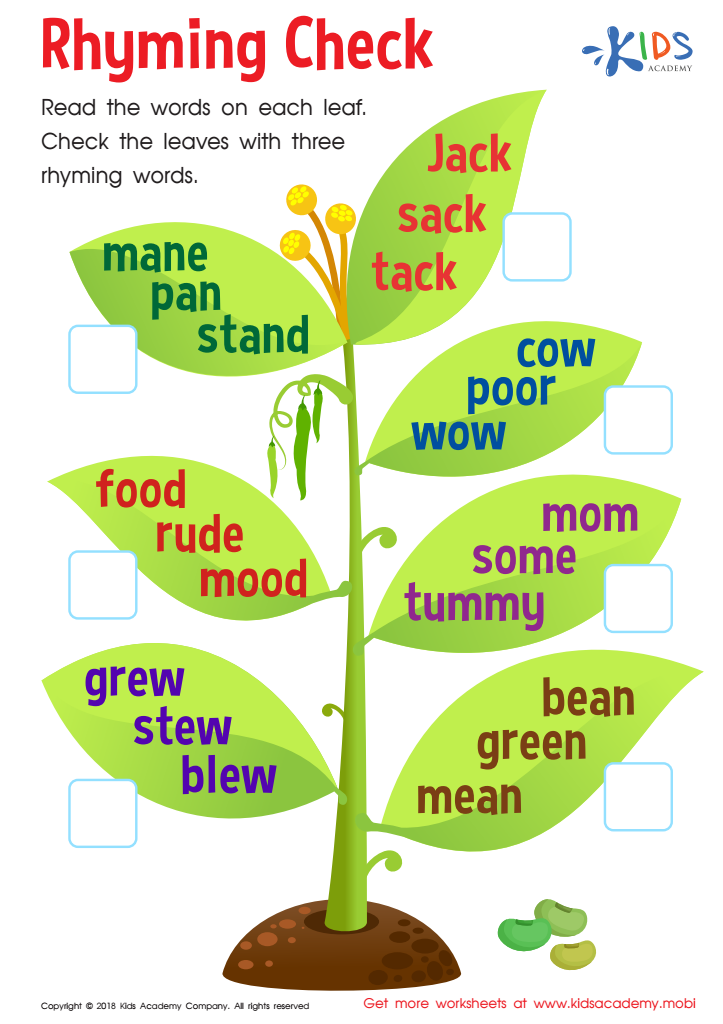
Rhyming Check Worksheet

Rhyming Check Worksheet

Help your child read the words on each leaf of a worksheet. Make sure they know that spellings can be misleading and tricky. When finished, ask them to identify the leaves with three rhyming words. This exercise helps their pronunciation skills and encourages critical thinking.
Rhyming Check Worksheet
Worksheet
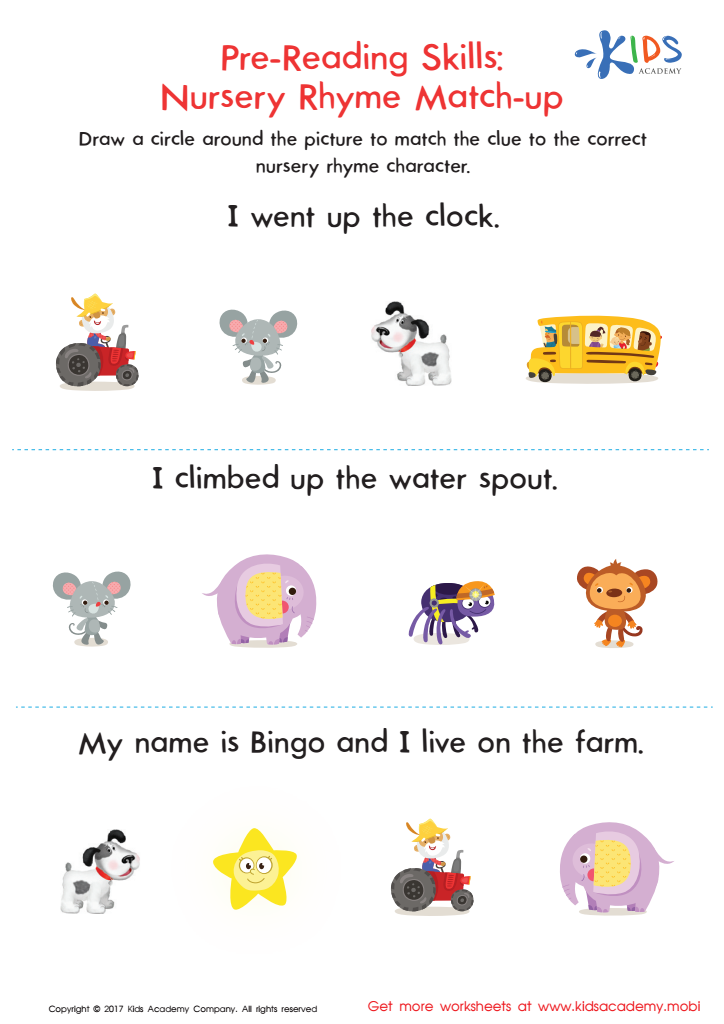
Nursery rhyme match-up worksheet

Nursery Rhyme Match–Up Worksheet
This worksheet helps kids build pre-reading skills using stories they know and love! By connecting with prior knowledge, kids can develop ideas about characters and set the stage for reading strategies.
Nursery Rhyme Match–Up Worksheet
Worksheet
Puss in Boots Vocabulary Worksheet


Puss in Boots Vocabulary Worksheet

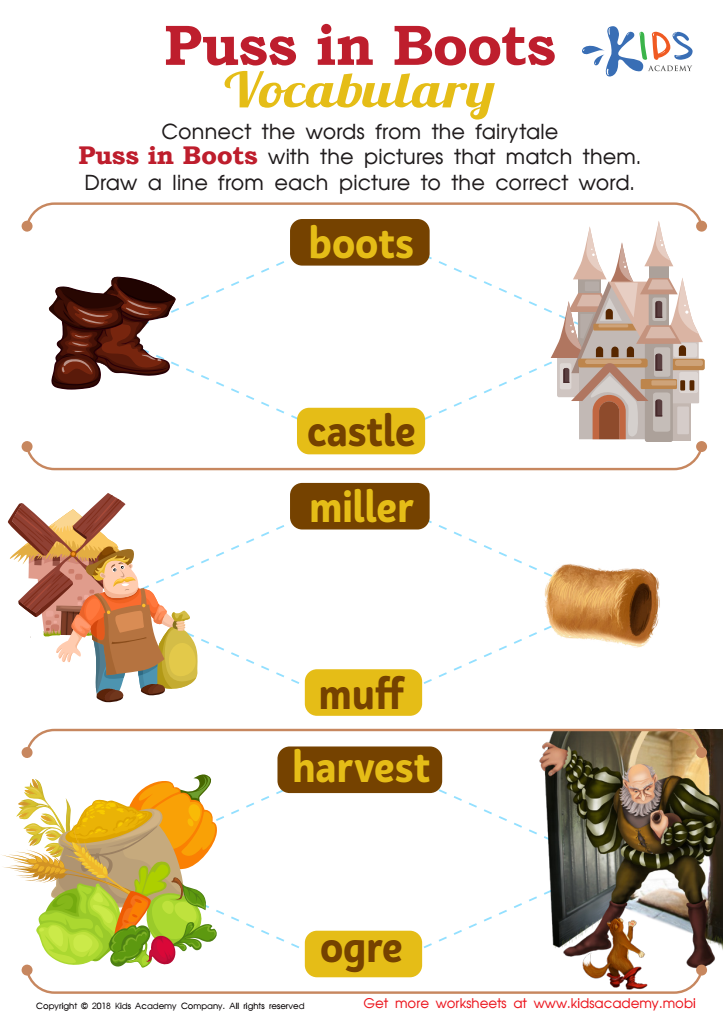
Let your kids enjoy story-telling while learning at the same time. Help them learn from the fairytale, Puss in Boots, by connecting words from the worksheet with the matching pictures. Ask them to draw a line between each picture and corresponding word to build their vocabulary.
Puss in Boots Vocabulary Worksheet

Worksheet


Vocabulary expansion is a pivotal part of children's early development, forming the foundation for future academic success and effective communication. For children ages 4 to 7, reading fiction plays a crucial role in this aspect. Firstly, fiction introduces young readers to a richer array of words compared to everyday conversational language. Storybooks often incorporate varied vocabulary—describing characters, settings, and emotions—which helps children learn new words in context, improving comprehension and retention.

Moreover, the imaginative themes and narratives in fiction pique children's curiosity and engagement. As they immerse themselves in stories, they naturally encounter and absorb new vocabulary, enhancing their linguistic and cognitive skills. Vocabulary acquired through stories also aids in articulate self-expression, enabling children to convey their thoughts and feelings more effectively.

Teachers and parents play a significant role by encouraging regular reading habits, fostering a love for stories, and discussing vocabulary encountered in books. This practice not only supports language development but also builds listening skills, creativity, and empathy as children relate to diverse characters and scenarios. Hence, investing time in reading fiction can provide lifelong benefits, empowering children with the verbal tools they need to excel in school and beyond.