Reading Non-Fiction Worksheets for Ages 4-7 - Page 4
74 filtered results
-
From - To
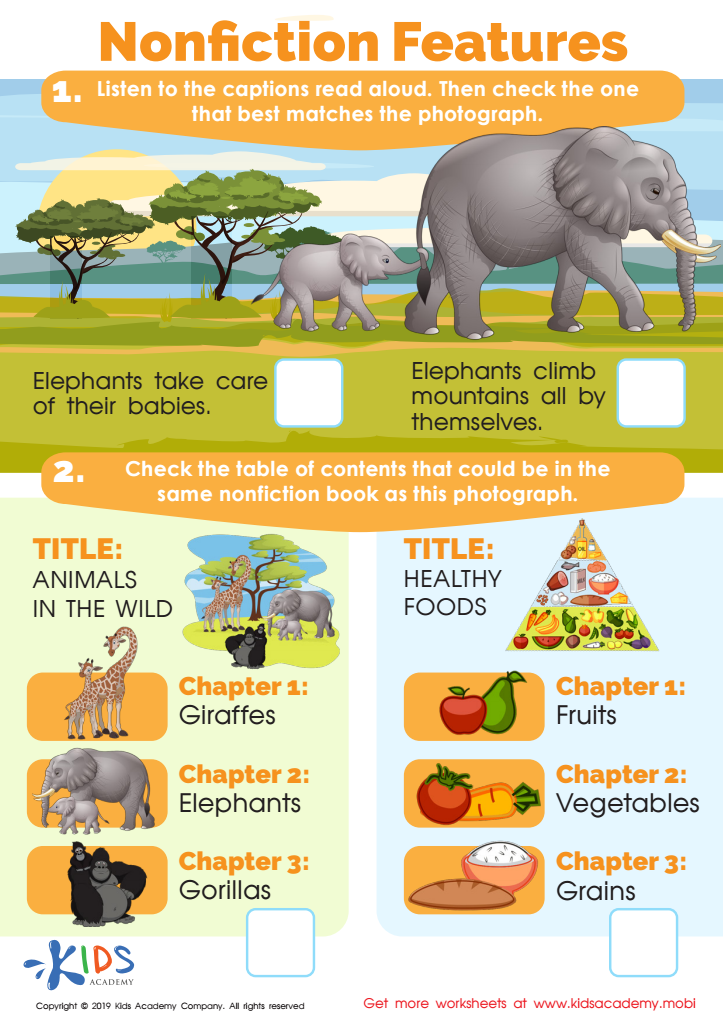
Nonfiction Features Worksheet
 Assign to My Students
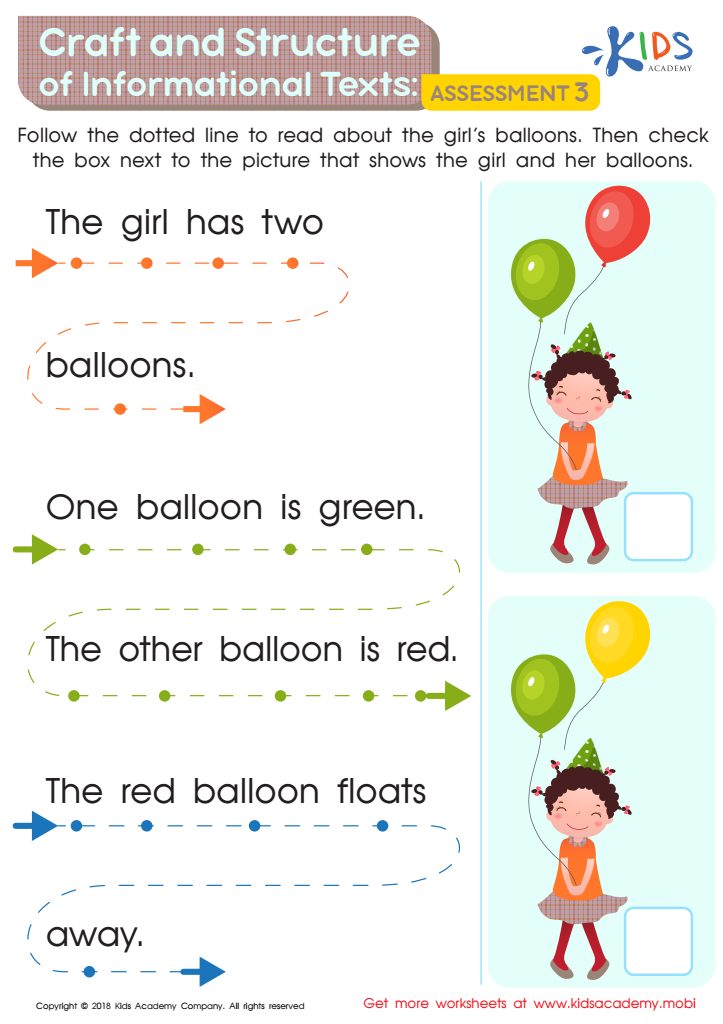
Craft and Structure of Informational Texts: Assessment 3 Worksheet







Reading non-fiction to children aged 4-7 is crucial due to its numerous developmental benefits. First, non-fiction books introduce young learners to a world of real-life concepts, enhancing their general knowledge about the environment, animals, professions, cultures, and more. They're naturally curious at this age, and non-fiction can quench their thirst for factual information while promoting a habit of inquiry and learning.
Moreover, non-fiction reading hones critical thinking skills. As children differentiate between fiction and reality, they start to appreciate facts and evidence, leading to a mindset that values truth and logical reasoning. This skill is fundamental for problem-solving and decision-making throughout life.
Additionally, early exposure to non-fiction aids language development. Rich vocabulary specific to various fields presented in non-fiction texts helps enrich a child’s lexicon. They learn complex vocabulary and concepts which prepare them for academic success.
Non-fiction also cultivates empathy and social awareness. Stories of real people's experiences and biographies can help children relate to others and understand diverse perspectives, fostering a sense of global citizenship from a young age.
Overall, embracing non-fiction in early reading lays a strong foundation for lifelong learning and develops well-rounded, knowledgeable, and empathetic individuals.








