Rhyming skills development Rhyming Words Worksheets for Ages 4-7
3 filtered results
-
From - To
Enhance your child's language skills with our engaging Rhyming Words Worksheets designed for ages 4-7. Perfectly crafted to develop phonetic awareness, these worksheets provide fun activities to help young learners identify and create rhyming pairs. Through interactive exercises and colorful visuals, children will improve their vocabulary, pronunciation, and reading comprehension. Start with simple rhyming tasks and progressively build their confidence in understanding sound patterns. Ideal for both classroom and at-home learning, these worksheets offer a delightful way to make language learning enjoyable and effective. Let your child discover the joy of rhyming today!
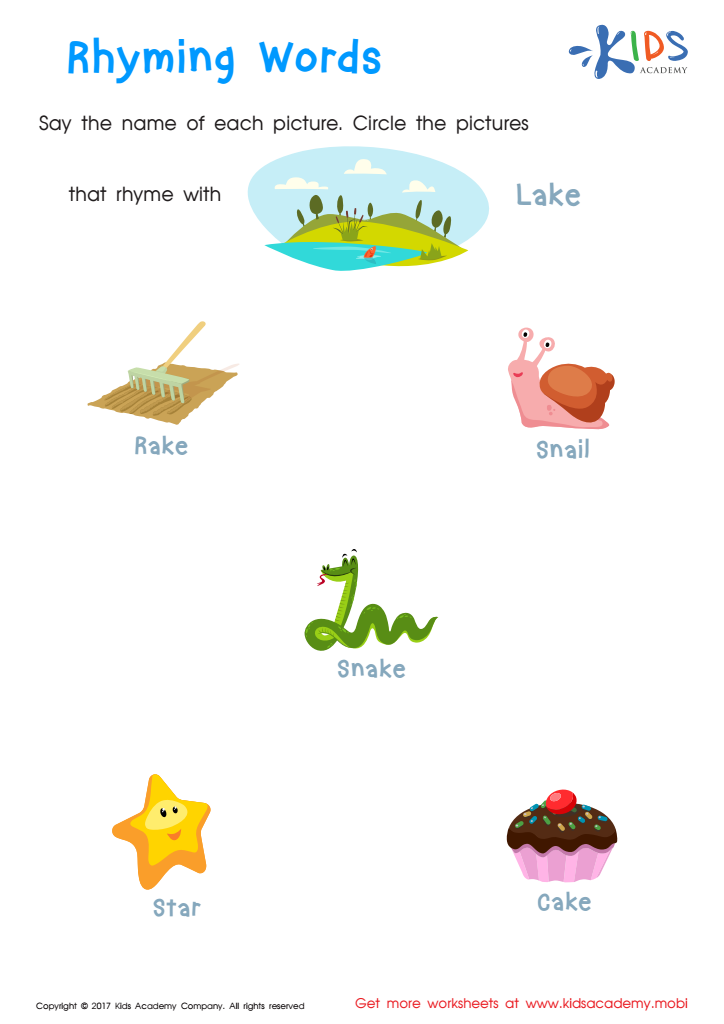
Rhyming Words Rhyming Worksheet
 Assign to My Students
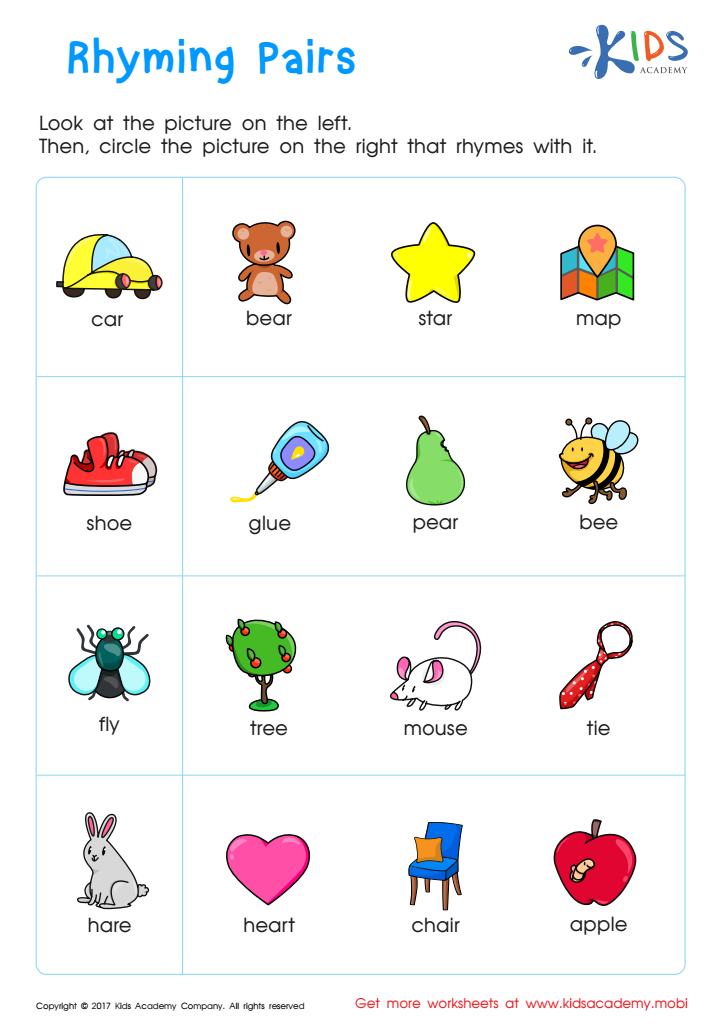
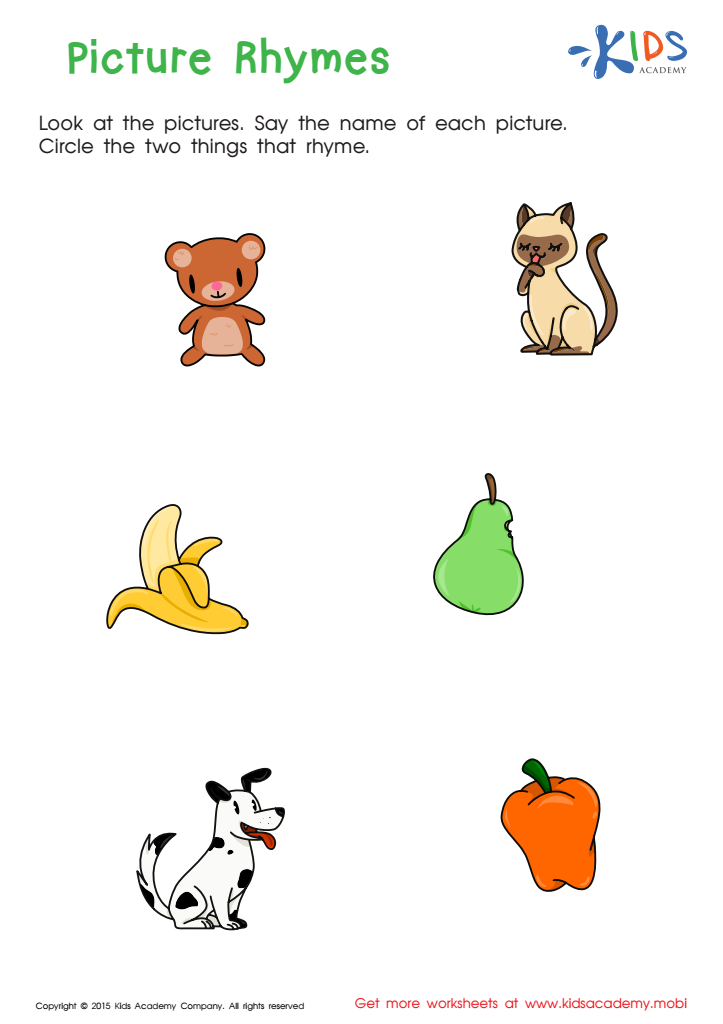
First Words: Picture Rhymes Worksheet








The development of rhyming skills in children aged 4-7 is a fundamental part of early literacy and language acquisition, playing a crucial role in their overall cognitive development. Rhyming helps children recognize and predict sound patterns, which enhances their phonemic awareness—a critical listening skill essential for reading proficiency. When children can identify rhyming words, they improve their ability to decode unfamiliar words by understanding common sound structures, which directly supports their reading skills.
Moreover, rhyming activities engage children in playful and memorable learning, making language fun and accessible. This fosters an enjoyment of reading and word play, encouraging a lifelong interest in literacy. Rhyming is also closely linked with other aspects of language development, including vocabulary building and understanding word relationships. When kids explore different rhymes, they naturally expand their lexicon, grasp words' multiple meanings, and see how they relate contextually.
Socially and emotionally, rhyming songs and games often involve group participation, which enhances communication skills, cooperation, and self-confidence. Rhyming thus offers a multi-sensory learning experience—incorporating visual, auditory, and kinesthetic elements—that supports diverse learning styles.
Parents and teachers who invest in rhyming don't just boost a child's reading abilities; they lay a robust foundation for lifelong learning and intellectual growth.








