Vocabulary expansion Rhyming Words Worksheets for Ages 4-7
4 filtered results
-
From - To
Enhance your child's language skills with our Vocabulary Expansion Rhyming Words Worksheets designed specifically for ages 4-7. These engaging resources help children explore and understand the beauty of rhymes while building their vocabulary. Each worksheet features colorful images and playful activities to capture young learners' attention, making learning fun and effective. By practicing rhyming words, kids will develop phonemic awareness, improve pronunciation, and boost their overall reading readiness. Ideal for both classroom settings and home learning, our worksheets support early literacy and provide essential skills for lifelong learning. Explore our collection today and watch your child’s vocabulary blossom through the joy of rhyming!
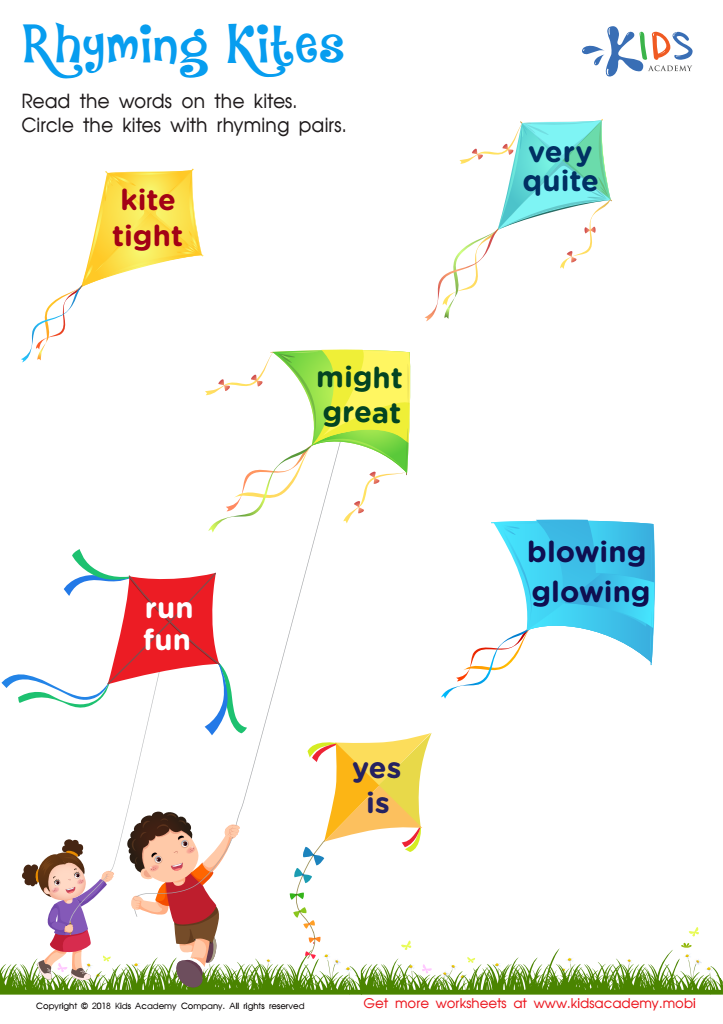
Rhyming Kites Worksheet
 Assign to My Students
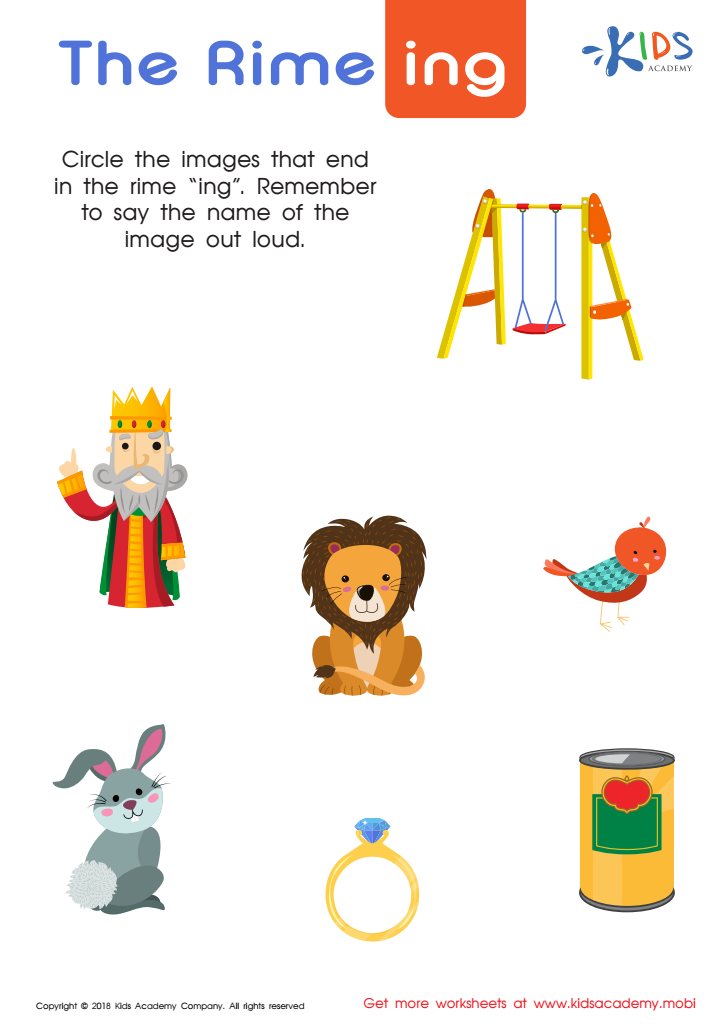
The Rime "ing" Worksheet
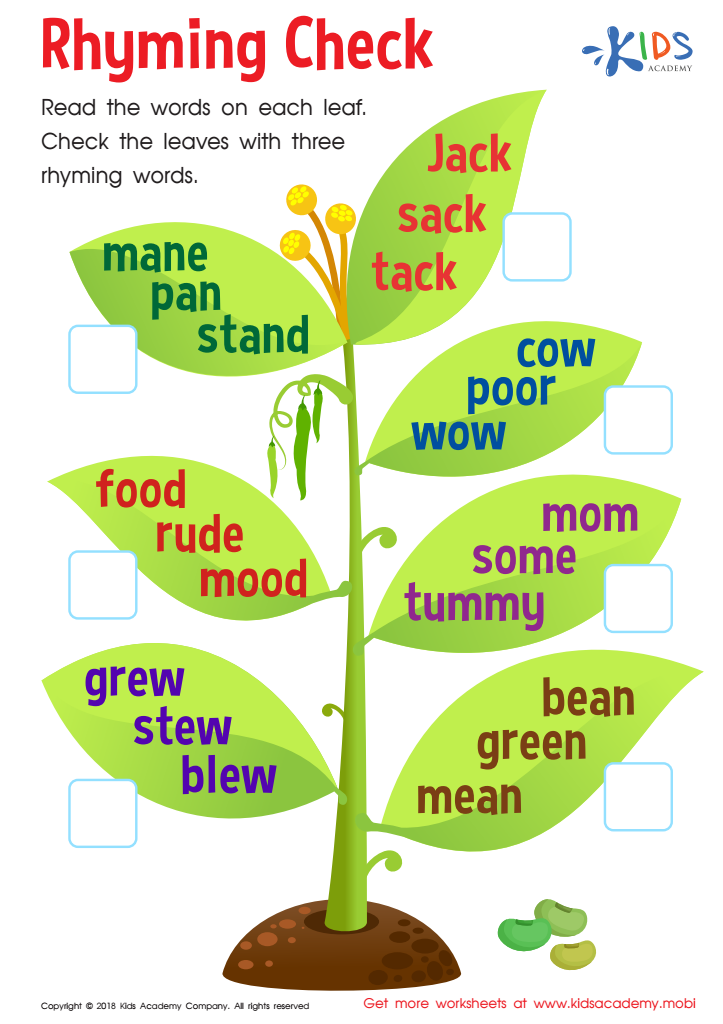
Rhyming Check Worksheet
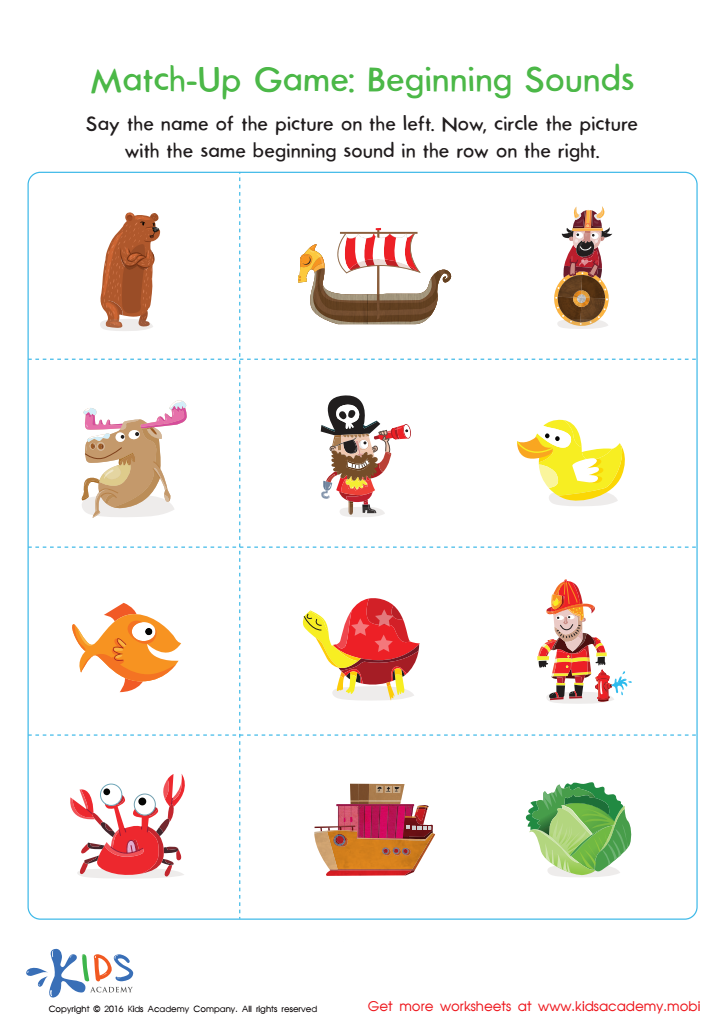
Match–Up Game: Beginning Sounds Worksheet




.jpg)


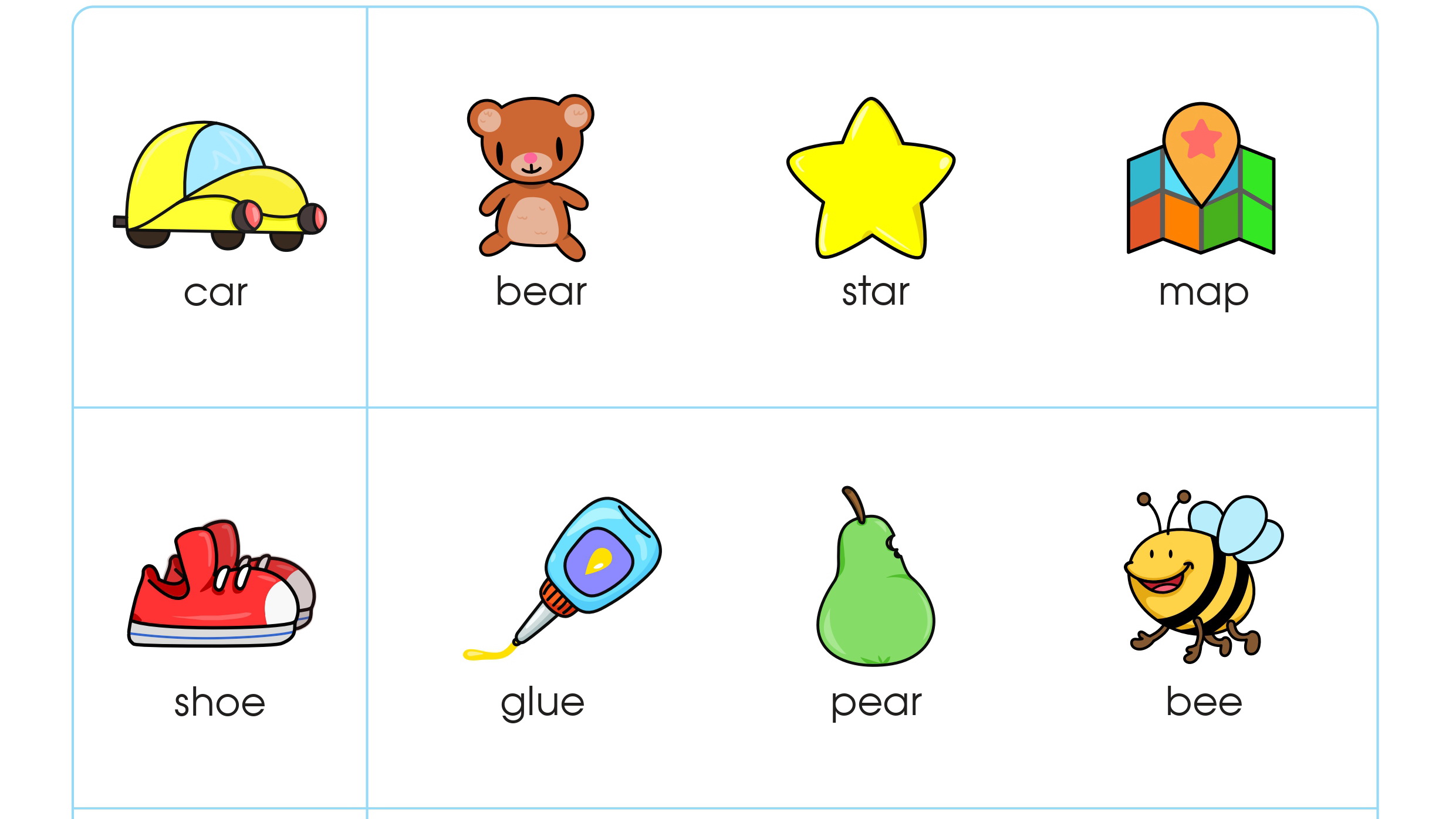
Vocabulary expansion, particularly through activities involving rhyming words, is essential for children's language development between ages 4 and 7. Rhyming enhances phonemic awareness—the ability to hear, recognize, and manipulate sounds in spoken language—an essential skill for reading success. When children engage with rhyming words, they become more attuned to the sounds of language, helping them build critical early literacy skills.
Additionally, rhyming can make learning more enjoyable and memorable. Songs, poems, and nursery rhymes that incorporate rhythmic and rhyming elements capture children's attention and promote engagement, fostering a love for language. This playful aspect of learning not only makes vocabulary acquisition fun but also encourages children to experiment with words and sounds, boosting their creative thinking.
Moreover, understanding vocabulary builds foundational skills for reading comprehension and effective communication. When children expand their vocabulary through rhyming, they gain a richer understanding of language nuances and improve their ability to express thoughts and emotions clearly. This foundation ultimately supports academic success later in life. Therefore, both parents and teachers should prioritize vocabulary expansion through rhyming strategies to nurture confident, capable readers and communicators.








