Categorization skills Science Worksheets for Ages 4-7
5 filtered results
-
From - To
Unlock your child's potential with our captivating Categorization Skills Science Worksheets for ages 4-7! These engaging worksheets are designed to enhance your child's ability to sort, classify, and group various scientific objects and concepts. Tailored to young learners, our activities nurture critical thinking, problem-solving, and cognitive development while seamlessly integrating fun. Perfect for the budding scientist, these worksheets lay the foundation for lifelong learning through hands-on exploration and discovery. Start your child's educational journey today with our expertly crafted resources, and watch them thrive in their understanding of the world around them!
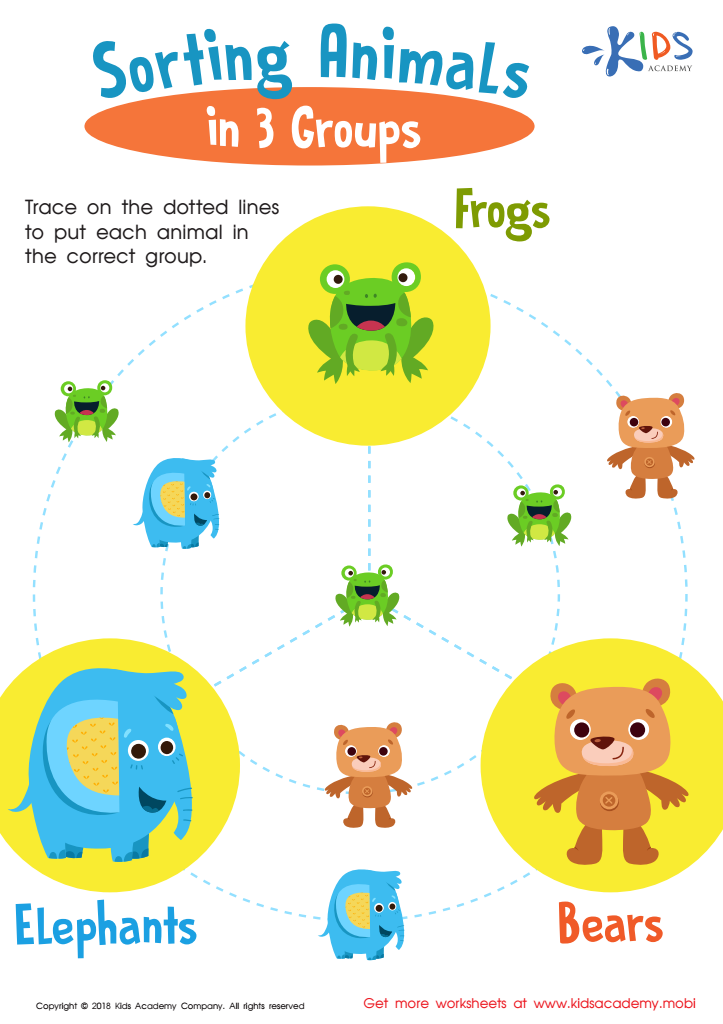
Sorting Animals in 3 Groups Worksheet
 Assign to My Students
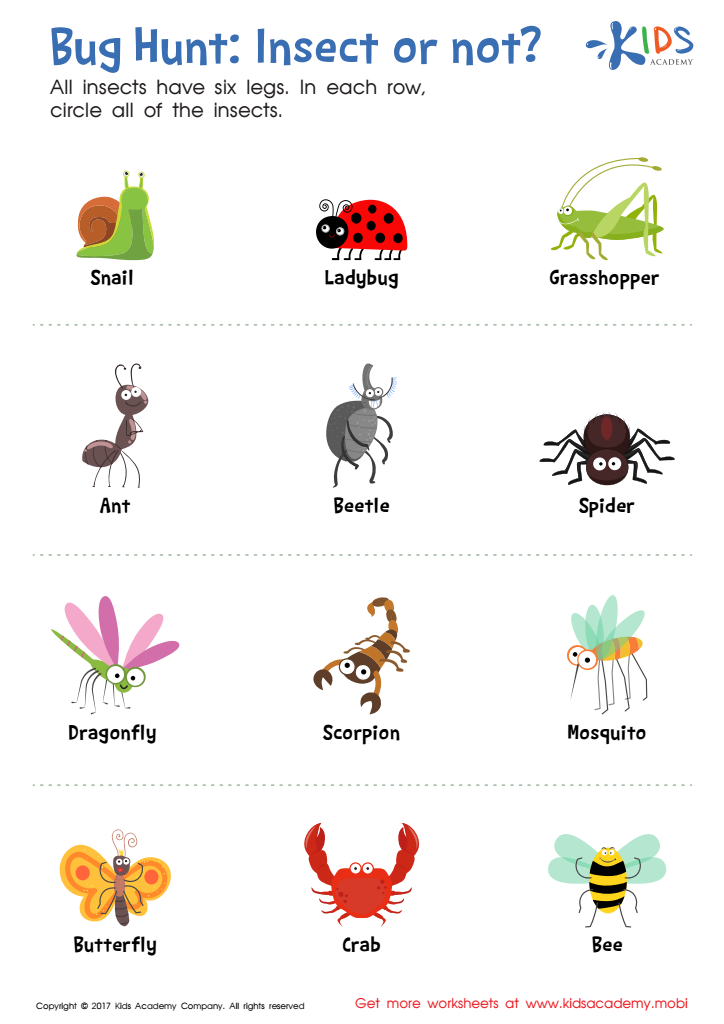
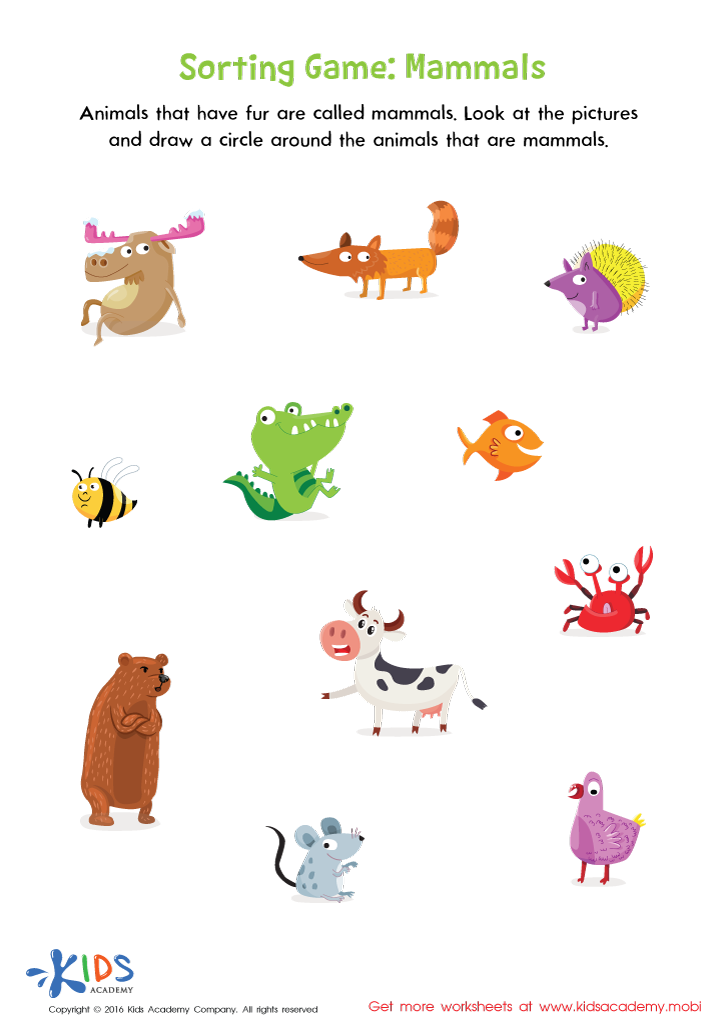
Mammals Sorting Worksheet
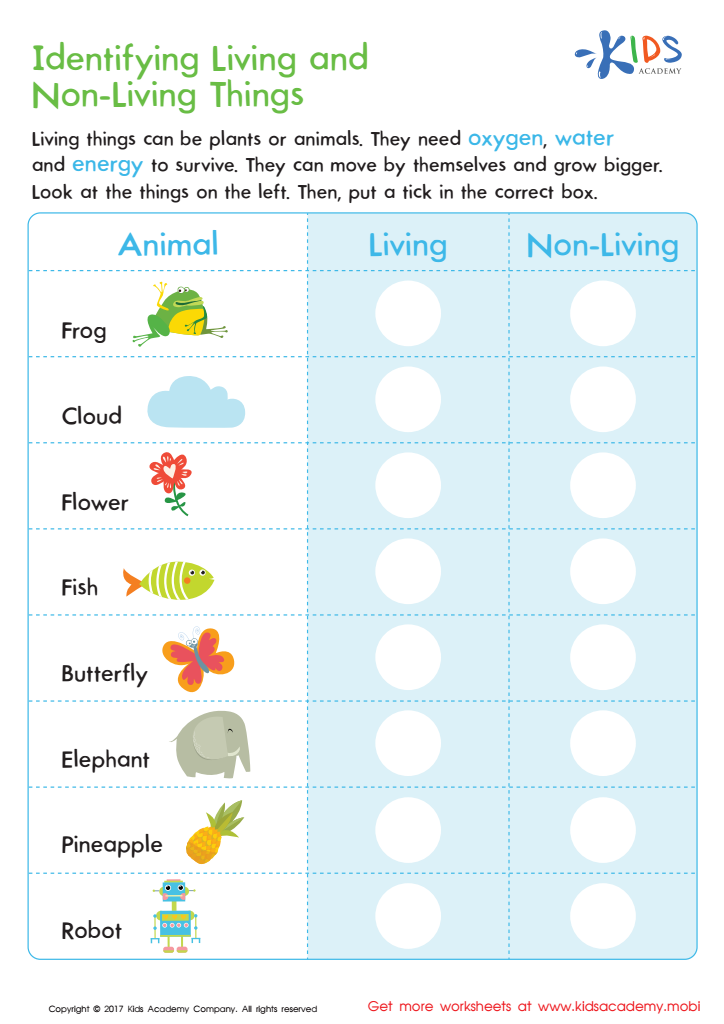
Identifying Living or Non–living Worksheet
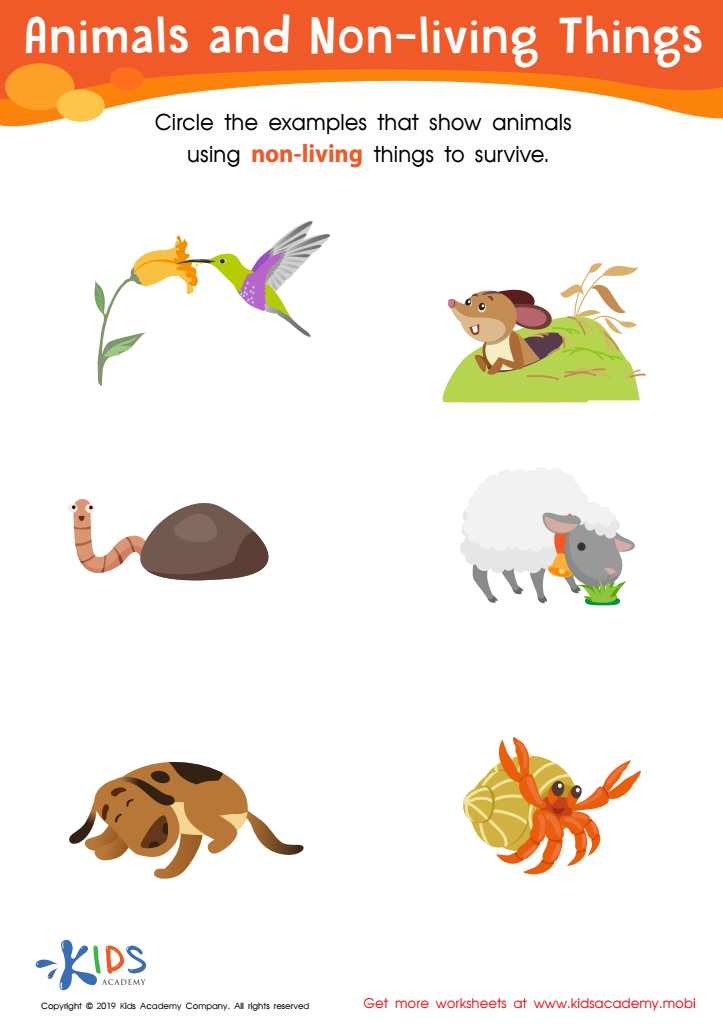
Animals and Non-Living Things Worksheet








Categorization skills are essential for young children, and both parents and teachers have a key role in nurturing them, especially through the lens of science. During the ages of 4-7, children's brains are rapidly developing, and the ability to categorize helps them make sense of the world by organizing information into meaningful groups. In science, this skill strengthens their observation, analysis, and critical thinking abilities.
For example, when children learn to categorize objects—like sorting living things into plants and animals—they begin to understand basic biological concepts. This foundational knowledge paves the way for more complex scientific learning, such as understanding ecosystems or the diversity of life forms. Furthermore, categorization improves language development, as children learn new vocabulary associated with the categories they discover.
Parents and teachers should care about nurturing these skills because they lay the groundwork for academic success. Effective categorization enhances memory and recall, which are crucial for all areas of learning, from mathematics to reading comprehension. Engaging children in sorting and classifying activities, both at school and home, fosters curiosity and encourages lifelong learning habits. By actively supporting the development of categorization skills in young children, parents and teachers empower them with tools to better understand, navigate, and appreciate the intricacies of the natural world.







