Understanding life cycles Life Science Worksheets for Ages 4-7
3 filtered results
-
From - To
Explore the fascinating world of life cycles with our engaging worksheets designed for children ages 4-7. These Life Science resources help young learners understand the stages of development in various living organisms, from frogs to butterflies. Each worksheet is crafted to promote creativity and critical thinking through interactive activities, including drawing, matching, and coloring. Our materials align with early educational standards, making them perfect for both classroom use and at-home learning. Foster a love for science and support your child's understanding of nature's wonders with our fun and informative worksheets that encourage exploration and discovery in life cycles!
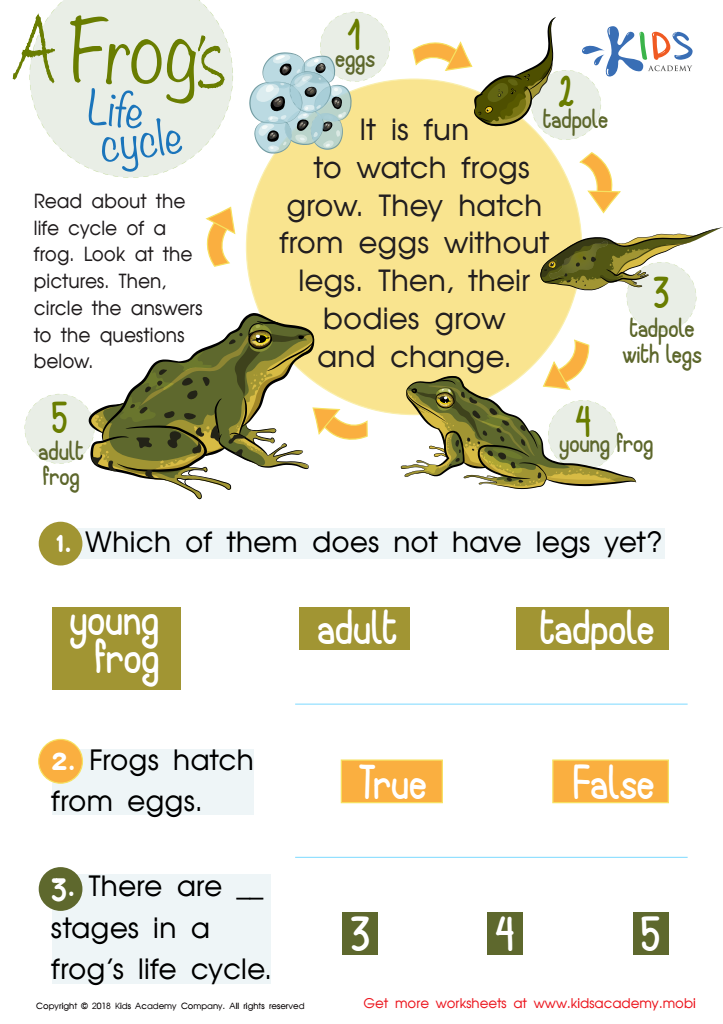
A Frog’s Life Cycle Worksheet
 Assign to My Students
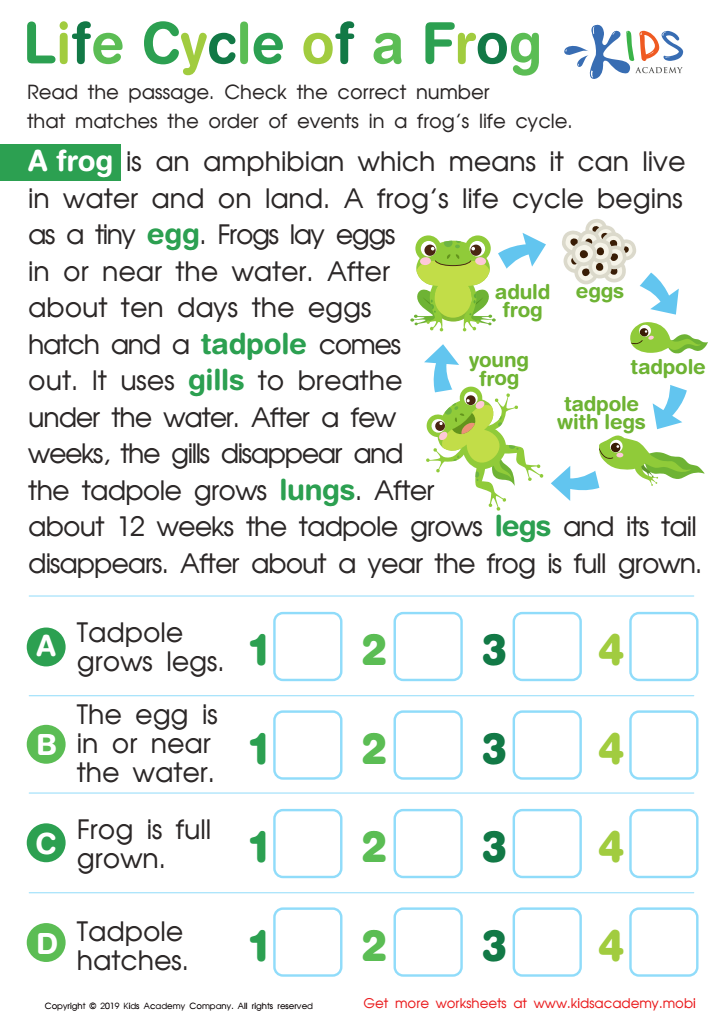
Life Cycle of a Frog Worksheet
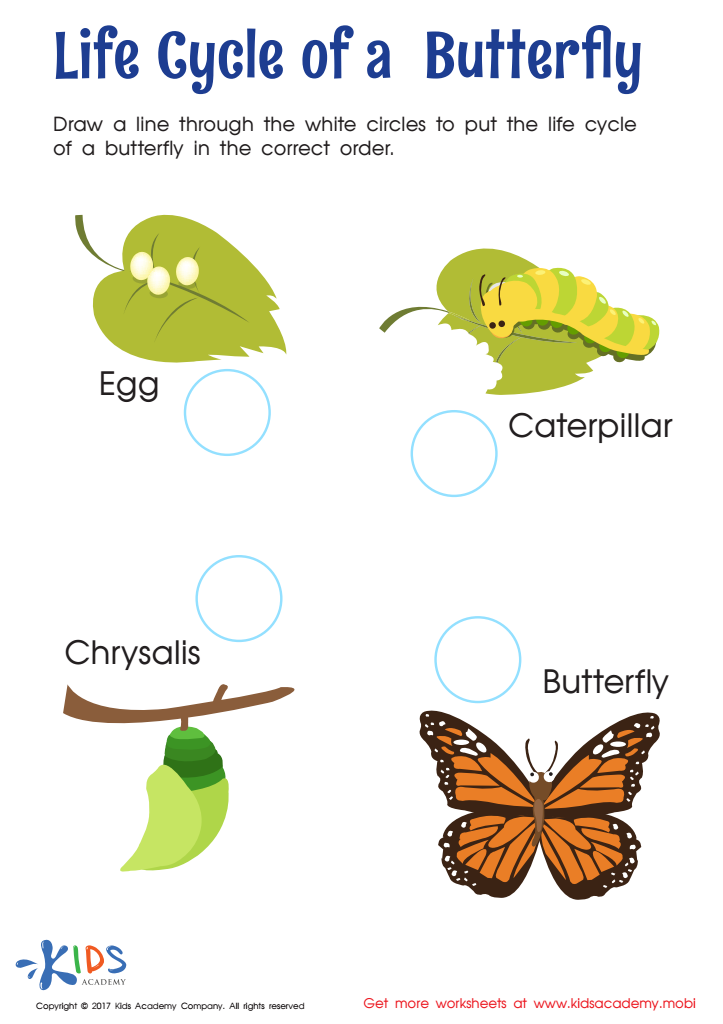
Life Cycle of Butterfly Worksheet




%20(1).jpg)


Understanding life cycles is fundamental for young children as it lays the groundwork for crucial scientific knowledge and appreciation of the natural world. For parents and teachers of children aged 4 to 7, engaging with life science concepts fosters curiosity, observation skills, and a love for learning.
During these formative years, children are naturally inquisitive, and life cycles provide endless opportunities to explore how living organisms grow, develop, and interact with their environments. By learning about the life cycles of plants, animals, and insects, children can connect to real-life experiences, deepening their understanding of nature’s processes.
Incorporating life cycle education supports critical thinking, as children draw connections between stages observed in various organisms. It promotes discussions about ecosystems, habitats, and the importance of environmental stewardship. Additionally, these foundational lessons strengthen social skills as kids engage in collaborative activities, share observations, and participate in hands-on learning.
Ultimately, instilling knowledge about life cycles encourages children to respect and appreciate biodiversity, preparing them to become informed, responsible adults in an increasingly interconnected world. For parents and teachers, fostering this understanding cultivates a sense of wonder and responsibility towards nature, nurturing future generations of environmentally aware individuals.








