Understanding forces Physical Science Worksheets for Ages 4-7
3 filtered results
-
From - To
Explore the world of forces with our engaging Physical Science Worksheets designed for children ages 4-7! These interactive worksheets simplify complex concepts, helping young learners grasp essential ideas about pushes, pulls, and the impact of gravity in their everyday lives. Through fun activities and colorful illustrations, kids will develop critical thinking skills while enjoying hands-on learning experiences. Perfect for home or classroom use, these worksheets cater to various learning styles and encourage curiosity about the world around them. Start your child’s scientific journey today by diving into the fascinating realm of forces with our tailored resources!
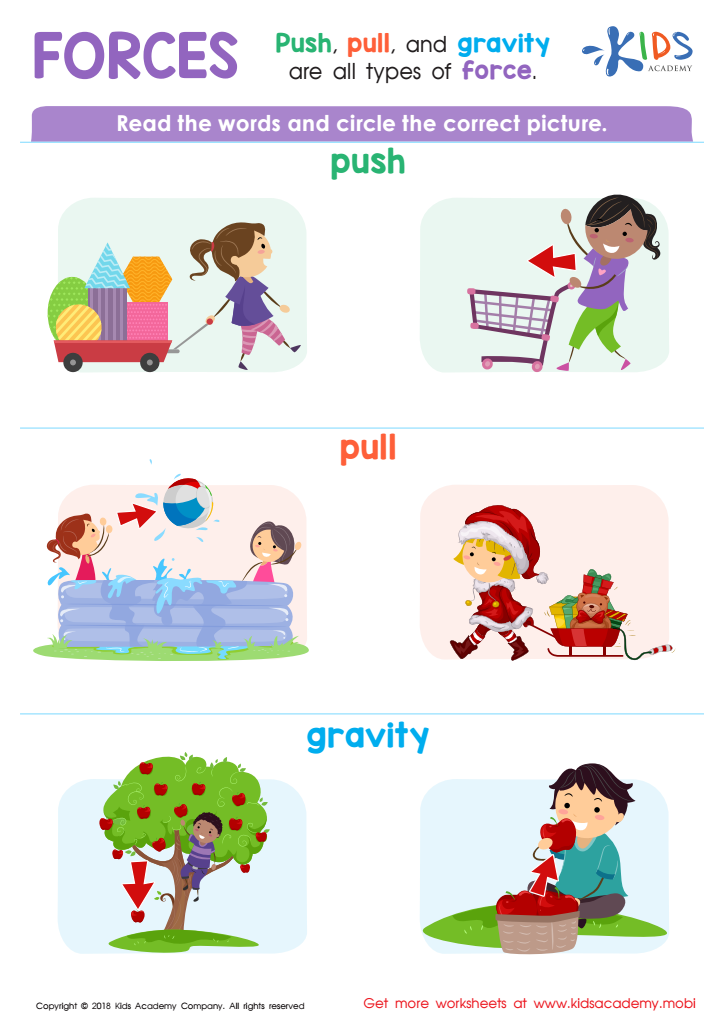
Forces Worksheet
 Assign to My Students
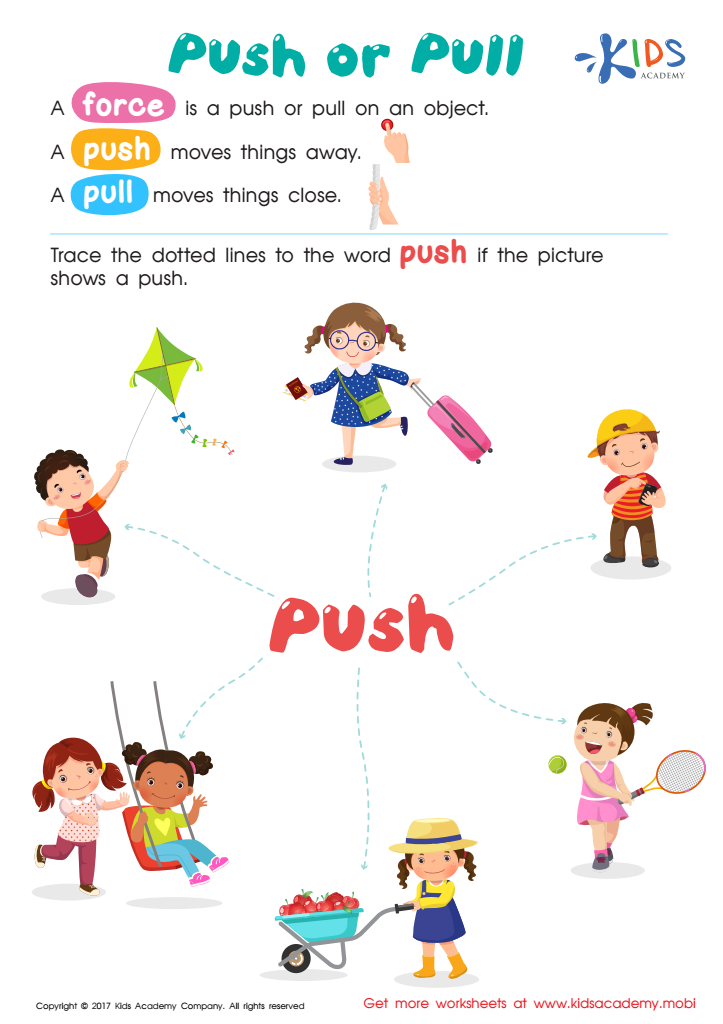
Push or Pull Worksheet
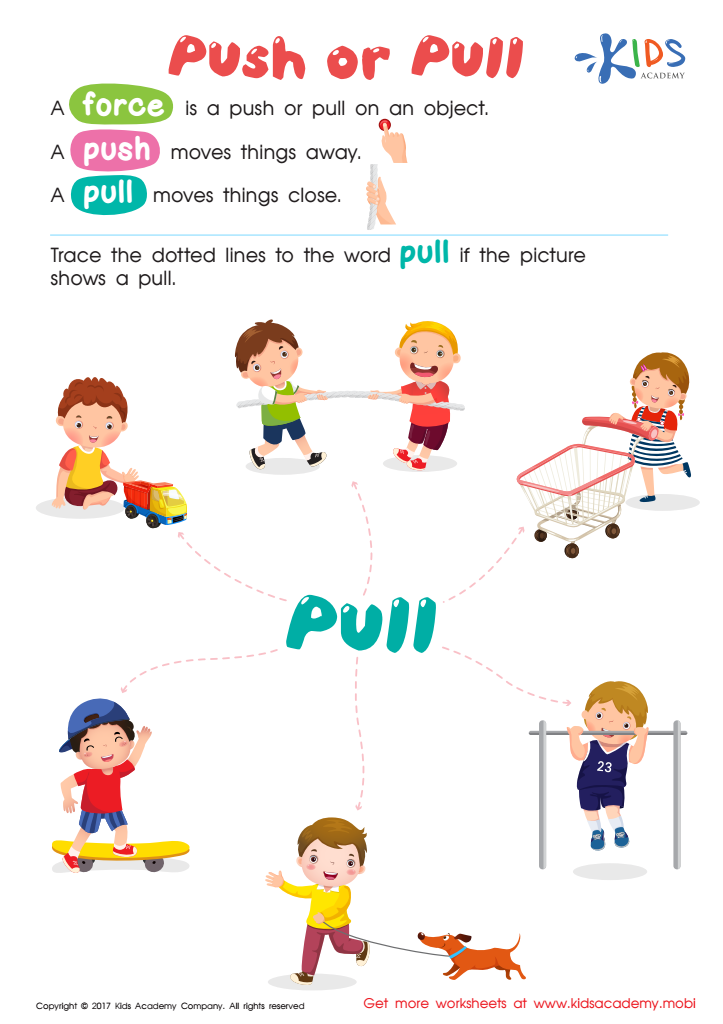
Pull or Push Worksheet





.jpg)
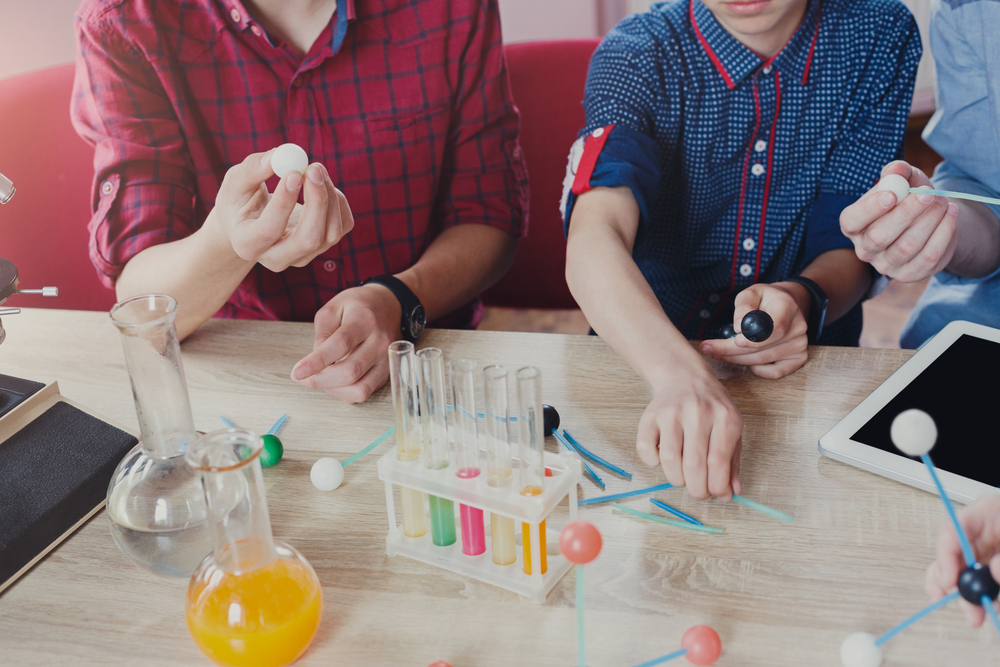
Understanding forces in physical science is crucial for children aged 4-7 as it lays the foundation for scientific literacy and critical thinking. At this age, children are naturally curious about the world around them; they often observe how objects move, fall, or stay still. Teaching them about forces—such as push and pull—encourages hands-on exploration, enabling them to make connections between concepts and their everyday experiences.
When parents and teachers engage children in discussions about forces, they nurture problem-solving skills and boost cognitive development. For example, simple activities like rolling a ball down a ramp or constructing towers with blocks help children infer the effects of gravity and friction. Additionally, encouraging inquiry-based learning fosters a sense of wonder and instills a lifelong passion for science.
Moreover, understanding these basic principles not only enhances physical literacy but also aids in social and emotional development. Through collaborative activities, children learn patience, teamwork, and resilience. Ultimately, by emphasizing the significance of understanding forces, parents and teachers equip children with essential skills for their future education, empowering them to think critically about the world around them.







