Map reading skills Community Worksheets for Ages 4-7
3 filtered results
-
From - To
Unlock your child's spatial awareness and exploration abilities with our "Map Reading Skills Community Worksheets for Ages 4-7." Tailored for young learners, these engaging worksheets introduce basic map concepts, symbols, and directions in a fun and interactive way. Perfect for building foundational geography skills, our resources are designed to enhance your child’s understanding of their community and the world beyond. With colorful illustrations and easy-to-follow instructions, these worksheets make learning to read maps an enjoyable experience. Ideal for classrooms and homeschooling, these worksheets foster critical thinking and navigational skills essential for young explorers.
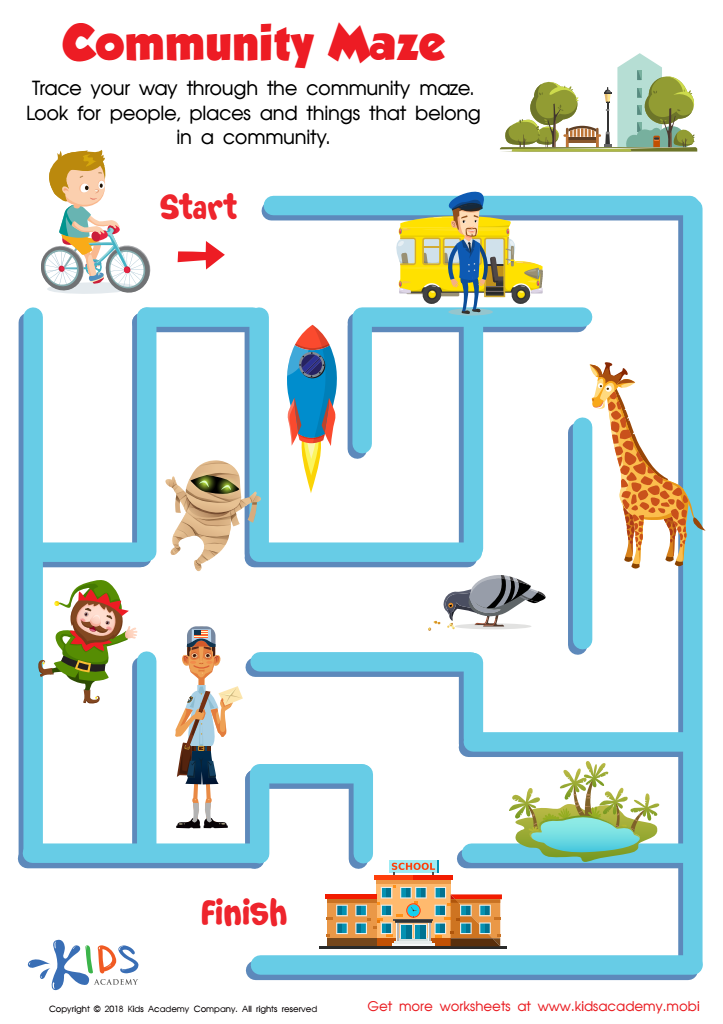
Community Maze Worksheet
 Assign to My Students
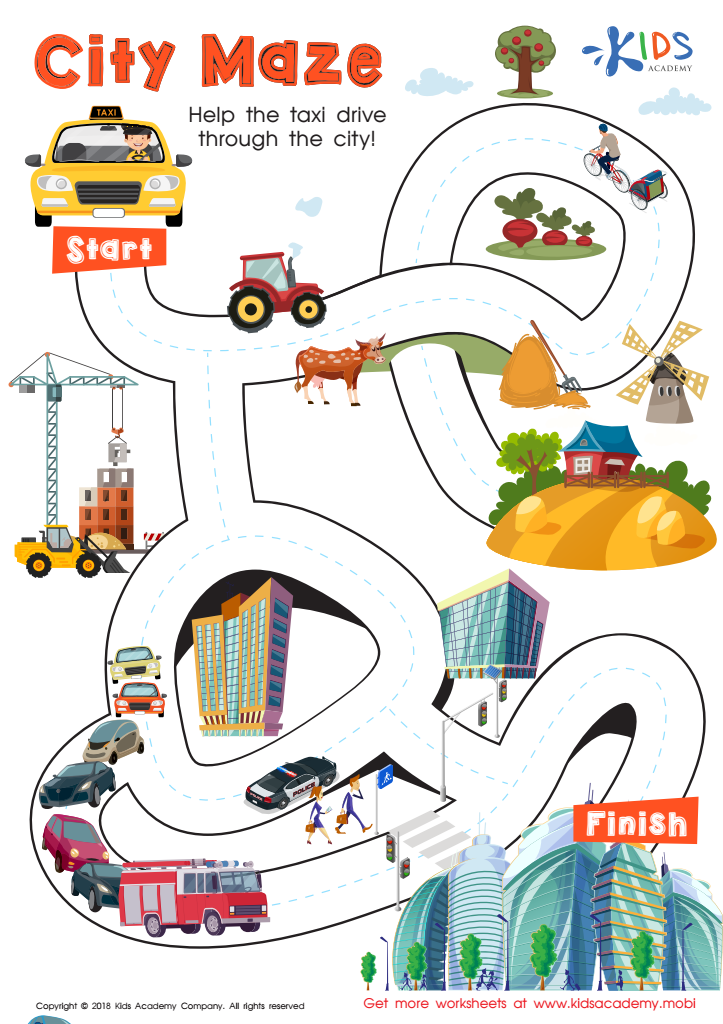
City Maze Worksheet

Towns Worksheet







Map reading skills are essential for young children for several compelling reasons. Firstly, maps are a foundational tool for understanding geography and spatial awareness, crucial for later success in subjects like science and social studies. By gaining familiarity with concepts like direction, scale, and symbols at an early age, children enhance their cognitive abilities, which supports overall academic development.
Secondly, encouraging map reading fosters problem-solving and critical thinking. Planning routes or identifying landmarks on a map helps children learn to make decisions and draw conclusions. These skills contribute to their general intellectual growth and practical life skills, empowering them to navigate various environments confidently.
Moreover, map reading can improve self-esteem and independence. When children successfully read and understand maps, they feel a sense of achievement and empowerment. This confidence can translate into other life areas, promoting a positive and proactive approach to learning and exploring.
Lastly, maps connect people to their communities. By learning more about their immediate surroundings, children develop a sense of belonging and social responsibility. Understanding where they live and the broader world helps them appreciate cultural and environmental diversity.
For these reasons, parents and teachers should prioritize map reading skills for young children, setting a solid foundation for lifelong learning and competence.








