Visual recognition Community Worksheets for Ages 4-7
4 filtered results
-
From - To
Discover our engaging "Visual Recognition Community Worksheets" designed specifically for children aged 4-7! These worksheets aim to enhance visual recognition skills through fun and interactive activities centered around community themes. Young learners will explore various visual elements, such as local landmarks, community helpers, and everyday objects, helping them to identify and understand their surroundings better. With colorful illustrations and age-appropriate exercises, these worksheets not only foster learning and cognitive development but also encourage creativity and imagination. Perfect for both classroom and home use, these resources provide a valuable tool for parents and educators to support early childhood education effectively.
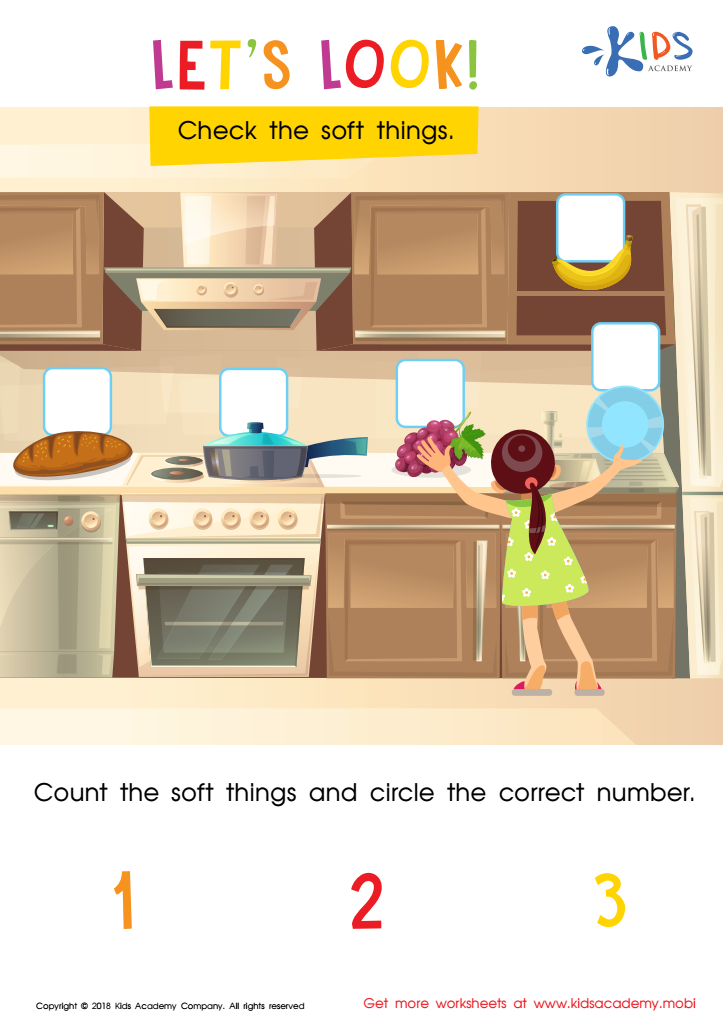
Let's Look! Assessment Worksheet
 Assign to My Students
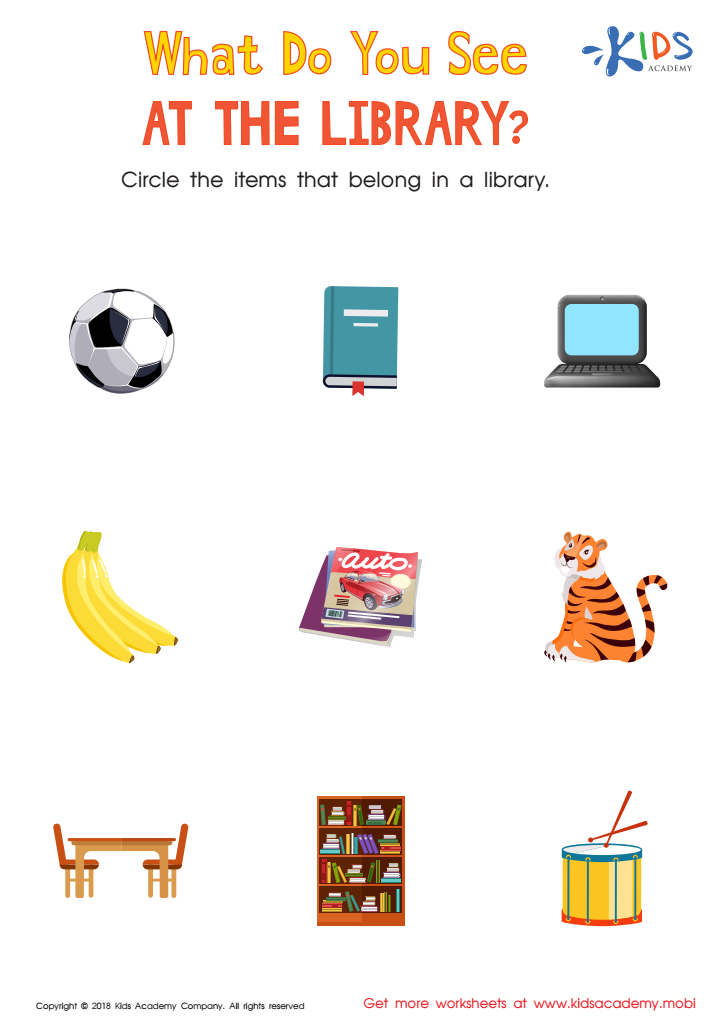
What Do you See at the Library? Worksheet
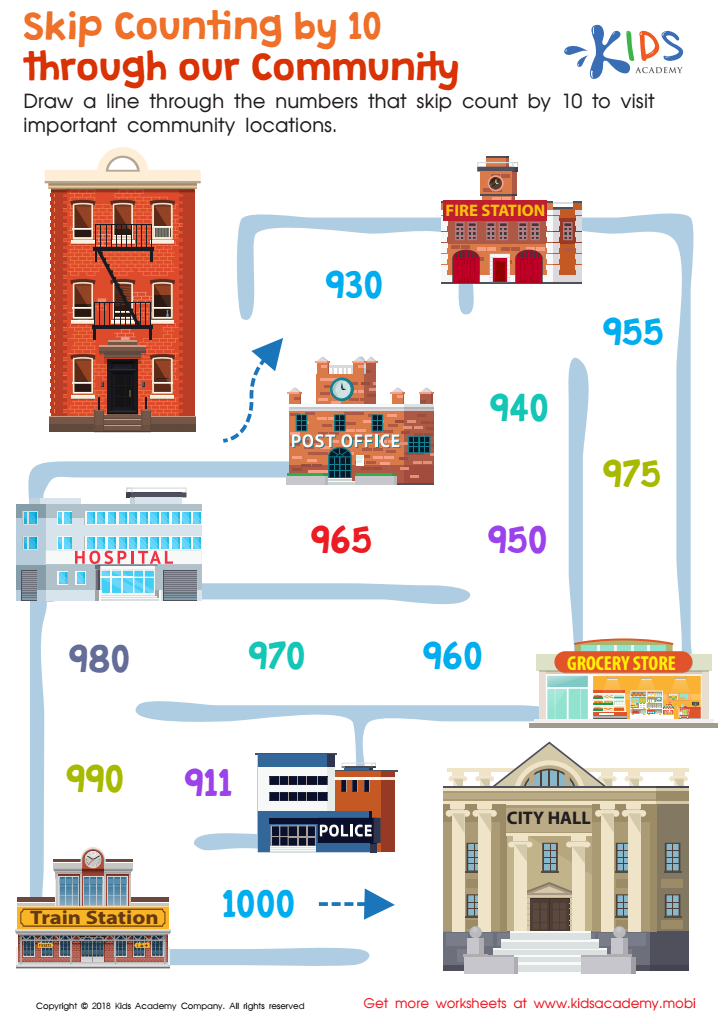
Skip Counting by 10 Through Our Community Worksheet
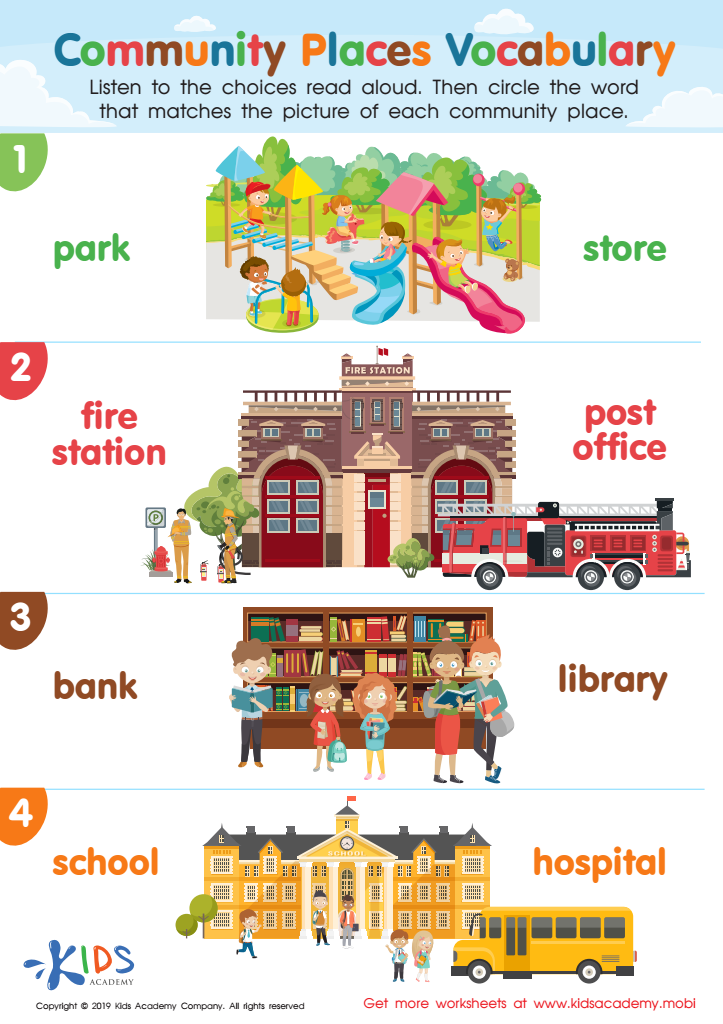
Community Places Vocabulary Worksheet








Parents and teachers should care about the Visual Recognition Community for Ages 4-7 because it significantly enhances children's learning and cognitive development. At this age, children are naturally curious and eager to explore their surroundings. Visual recognition skills empower them to identify, categorize, and interpret visual information, which boosts their overall understanding of the world.
Engaging in activities that foster visual recognition helps develop critical thinking and problem-solving skills. It encourages creativity and imagination, as children learn to observe and analyze their environment. Additionally, strong visual recognition is crucial for literacy, as it supports word recognition, reading comprehension, and vocabulary development.
Moreover, the community provides a supportive environment for sharing resources, ideas, and strategies among parents and educators. By collaborating, they can create engaging activities that cater to various learning styles, ensuring inclusivity for all children.
Finally, as technology increasingly influences education, building visual recognition skills prepares children for future learning experiences, fostering digital literacy. By prioritizing visual recognition development, parents and teachers can lay a strong foundation for lifelong learning, curiosity, and adaptability in young learners.