Word Recognition Community Worksheets for Ages 4-7
3 filtered results
Difficulty Level
Grade
Age
-
From - To
Subject
Activity
Standards
Welcome to our Word Recognition Community Worksheets for Ages 4-7! Designed to engage young learners, our worksheets help children master essential word recognition skills through fun and interactive activities. Tailored for early literacy, these resources incorporate community-themed vocabulary to promote reading comprehension and language development. Kids will enjoy activities such as matching words with images, tracing, and simple sentence construction. Perfect for parents and educators seeking to enhance learning in a playful way, our worksheets make word recognition enjoyable and accessible. Join us in fostering a love for reading and building foundational literacy skills for future academic success!
Favorites
With answer key
Interactive
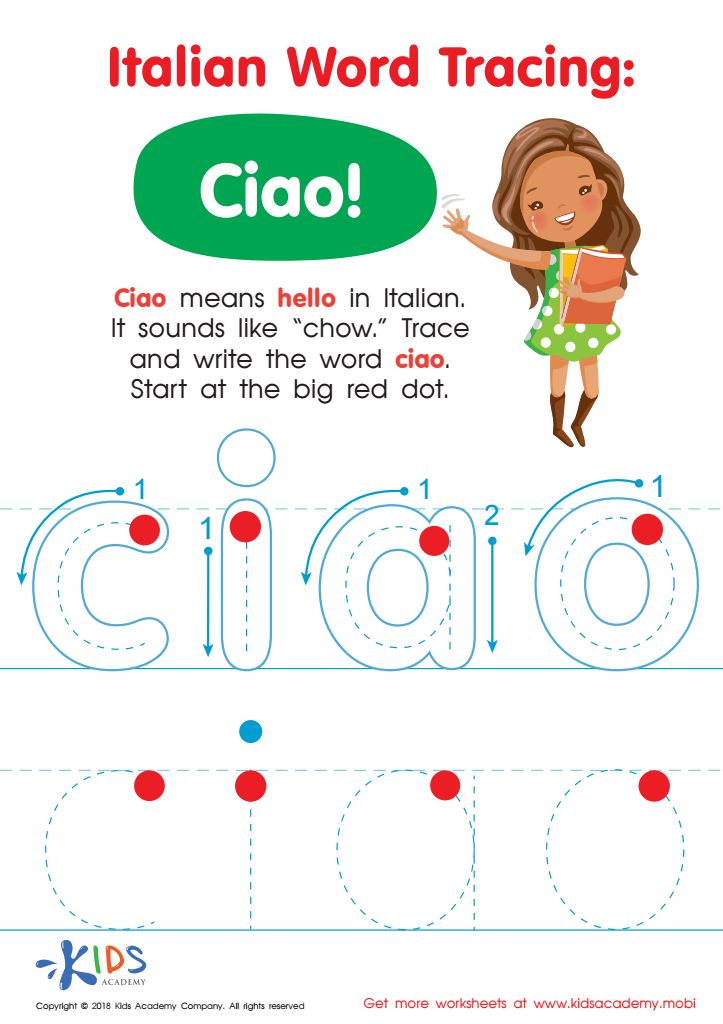
Italian Word Tracing: Ciao Worksheet
Help kids learn to greet people in different languages with this fun worksheet! Featuring the Italian word 'Ciao', it helps kids trace and learn the pronunciation. Plus, it teaches hand-eye coordination and fine-motor skills. Global connectivity can start with this activity!
 Assign to My Students
Italian Word Tracing: Ciao Worksheet
Worksheet
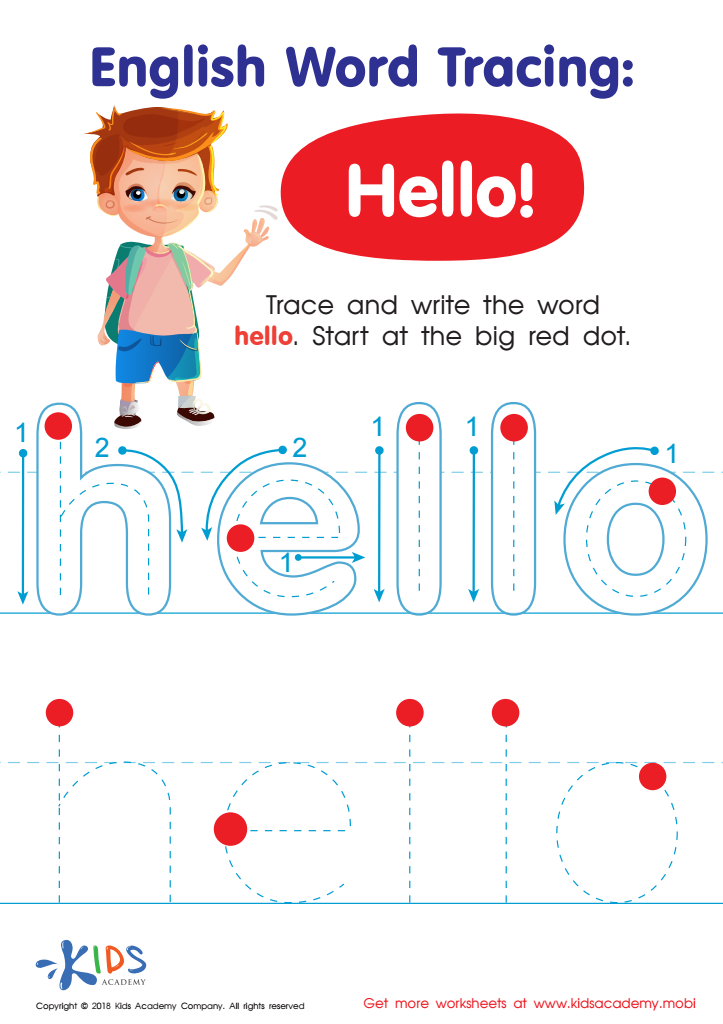
English Word Tracing: Hello Worksheet
Searching for free worksheets to help your kids refine their motor skills, handwriting and English word knowledge? Get this cheerful PDF! It offers your children the chance to practice tracing words like Hello, while following a top-to-bottom, left-to-right patterning.
English Word Tracing: Hello Worksheet
Worksheet
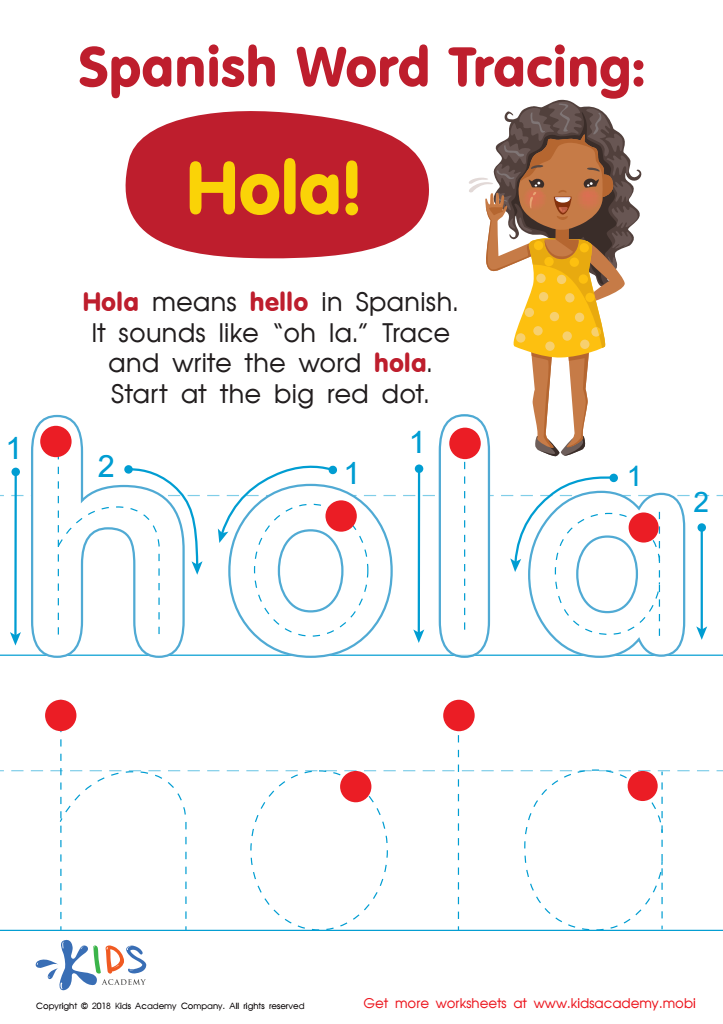
Spanish Word Tracing: Hola Worksheet
This PDF provides a fun way for students to learn "Hola" (Hello) in Spanish! Kids can practice fine motor and handwriting skills while they trace the letters. They'll get the hang of top-to-bottom, left-to-right patterning while they learn how to say and write in Spanish. With practice, they'll soon feel confident speaking and writing Spanish!
Spanish Word Tracing: Hola Worksheet
Worksheet
Join Kids Academy for Free
Who is primarily going to use this learning content?







Word Recognition Community for Ages 4-7 is crucial for parents and teachers as it plays a fundamental role in early literacy development. At this age, children are laying the groundwork for their reading skills, which are essential for academic success. By participating in communities focused on word recognition, both parents and teachers can share strategies, resources, and best practices that enhance children’s ability to recognize and understand words.
Engaging with this community encourages collaboration, allowing educators and parents to align their approaches for consistent literacy practices both at home and in the classroom. This consistency not only helps children gain confidence in their reading skills but also fosters a love for books and learning.
Moreover, by being part of a supportive network, families and educators can stay informed about the latest research and tools in word recognition, including phonics, vocabulary development, and comprehension strategies. The early years are critical; children exposed to positive literacy environments are more likely to become proficient readers. Ultimately, the Word Recognition Community empowers those involved to support children’s literacy journeys, addressing challenges, sharing triumphs, and cultivating a strong foundation for lifelong learning.