Critical Thinking Governance and Civics Worksheets for Ages 4-7
3 filtered results
-
From - To
Enhance your child’s understanding of governance and civics with our engaging Critical Thinking Worksheets for ages 4-7. These thoughtfully designed resources are perfect for developing young minds, encouraging them to explore concepts of leadership, community roles, and responsible citizenship. Our printable worksheets promote critical thinking and problem-solving skills, fostering meaningful learning experiences through fun activities and hands-on exercises. Whether at home or in the classroom, these worksheets provide an excellent foundation in social studies, ensuring young learners grasp essential civics concepts while enjoying interactive lessons. Help your child build a solid foundation in civics with these essential educational tools.
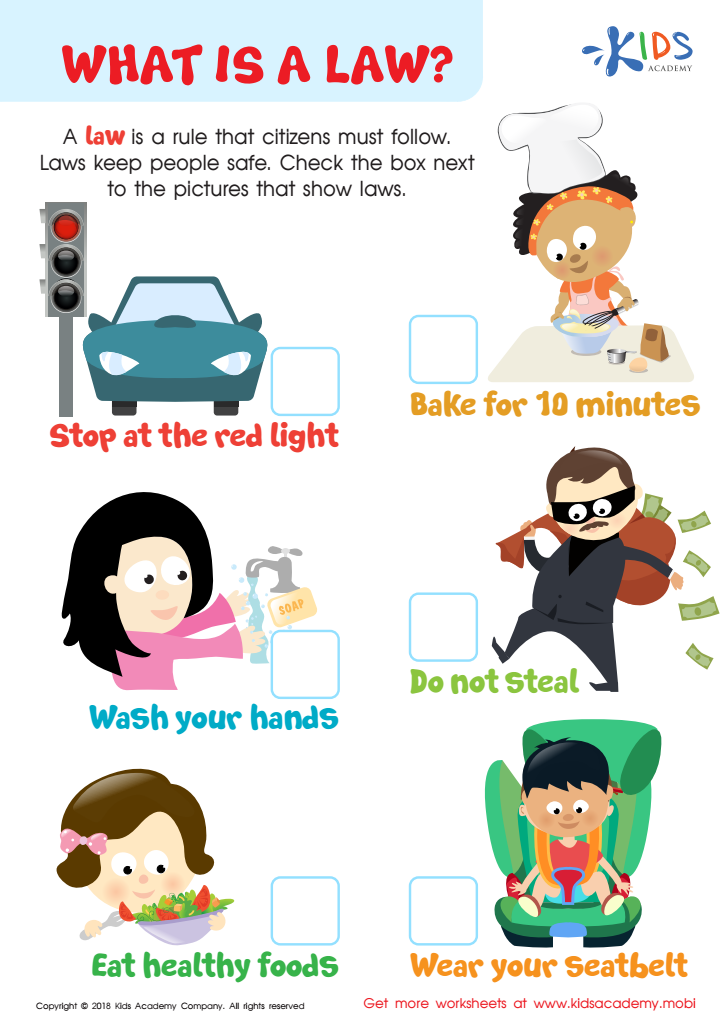
What is a Law? Worksheet
 Assign to My Students
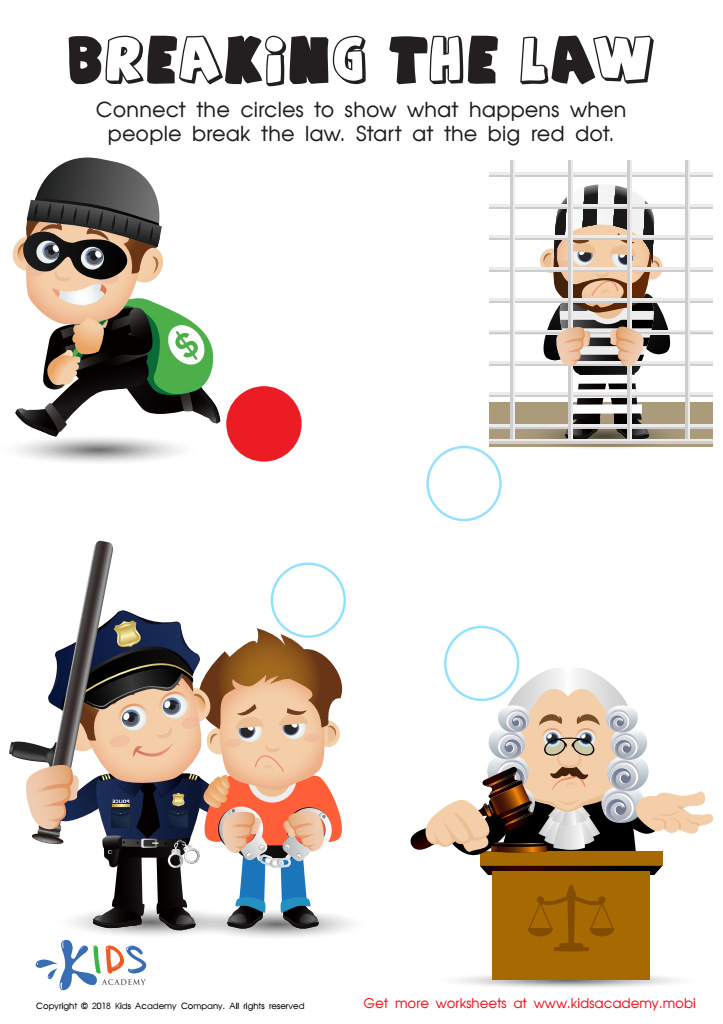
Breaking the Law Worksheet
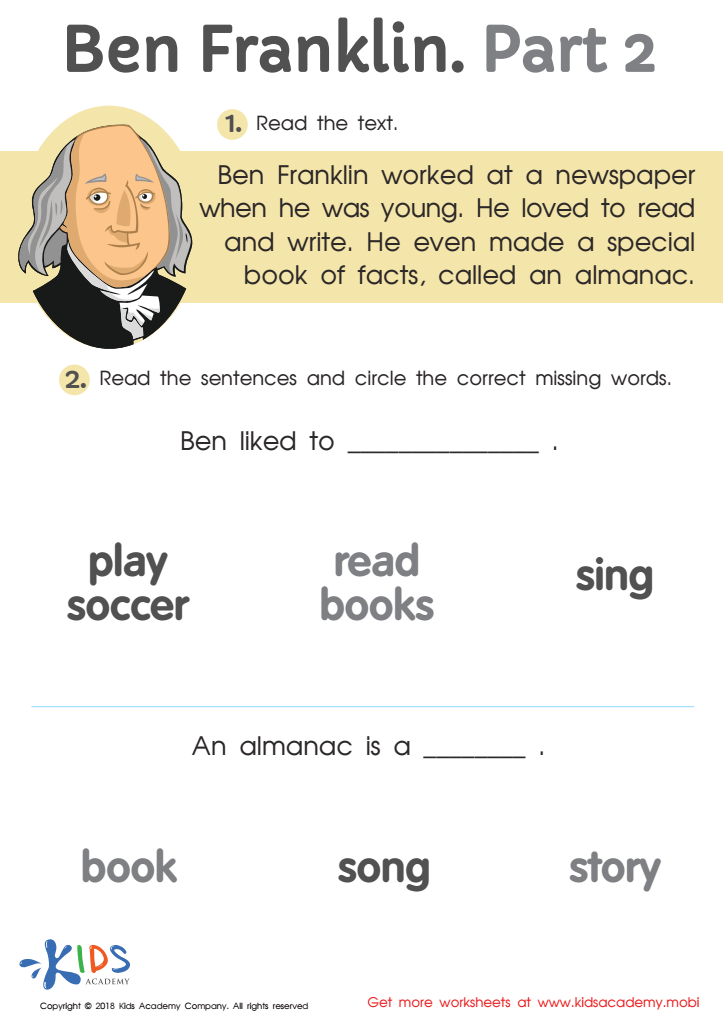
Ben Franklin Part 2 Worksheet


Parents and teachers play a crucial role in early childhood development, and instilling critical thinking, governance, and civics skills in children aged 4-7 is particularly important. During these formative years, young minds are exceptionally curious and malleable, making it an ideal time to introduce fundamental concepts that will shape their thinking and behavior in positive ways.
First and foremost, critical thinking equips children with the ability to analyze situations, make informed decisions, and solve problems creatively. These skills are not only essential for academic success but also for daily decision-making and social interactions.
Introducing basic concepts of governance and civics at an early age can lay the groundwork for responsible citizenship. Understanding rules, fairness, and cooperation teaches children the importance of working together and respecting different viewpoints. Early exposure to these principles helps cultivate empathy, respect for diversity, and a sense of community.
Moreover, by engaging children in discussions about rules, responsibilities, and the fairness of outcomes, parents and teachers foster a sense of justice and ethical behavior. This prepares children to become thoughtful, engaged citizens who contribute positively to their communities.
In summary, focusing on critical thinking, governance, and civics during early childhood sets children up for a lifetime of competent problem-solving, ethical decision-making, and active, respectful citizenship.








