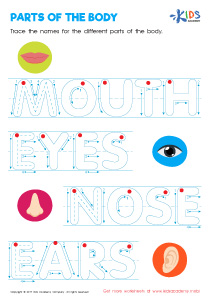
Weather Vocabulary World Around Us Worksheets for Ages 4-7
3 filtered results
Difficulty Level
Grade
Age
-
From - To
Subject
Activity
Standards
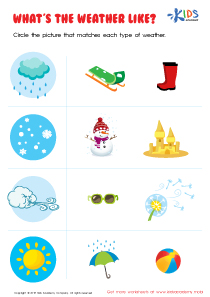
Introduce your young learners to the exciting world of weather with our "Weather Vocabulary World Around Us Worksheets for Ages 4-7". These carefully crafted worksheets help children identify and understand various weather conditions through fun, engaging activities. From sunny days to snowy nights, each worksheet combines vibrant visuals with easy-to-grasp vocabulary to enrich your child's learning experience. Perfect for both classroom and homeschool settings, these resources support early literacy and comprehension, enhancing their curiosity about the world. Help your little ones build a strong foundation in weather vocabulary with our engaging and educational worksheets.
Favorites
With answer key
Interactive
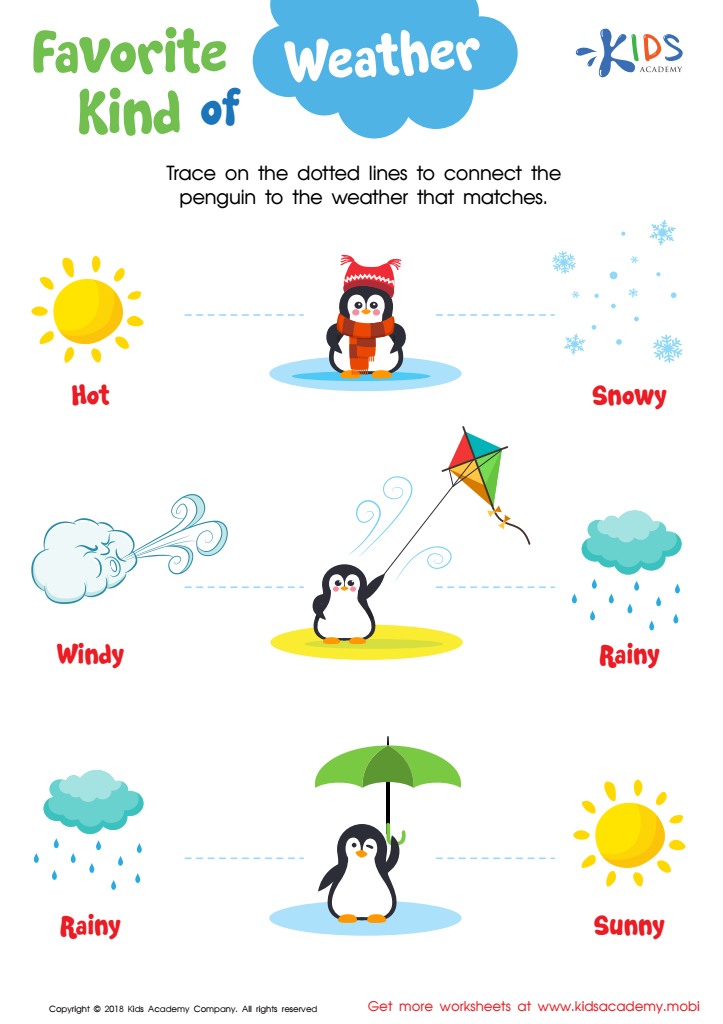
Favorite Kind of Weather Worksheet
!
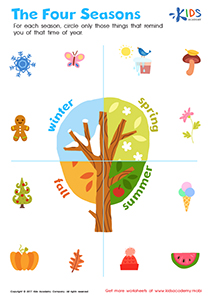
Help your child understand weather and seasons with this fun worksheet featuring a cute penguin. They'll learn to recognize types of weather and associate them with seasons. To practice their fine motor skills, they'll trace lines to select the right seasons and weather. Kids will make a new friend while broadening their knowledge of nature.
Favorite Kind of Weather Worksheet
Worksheet
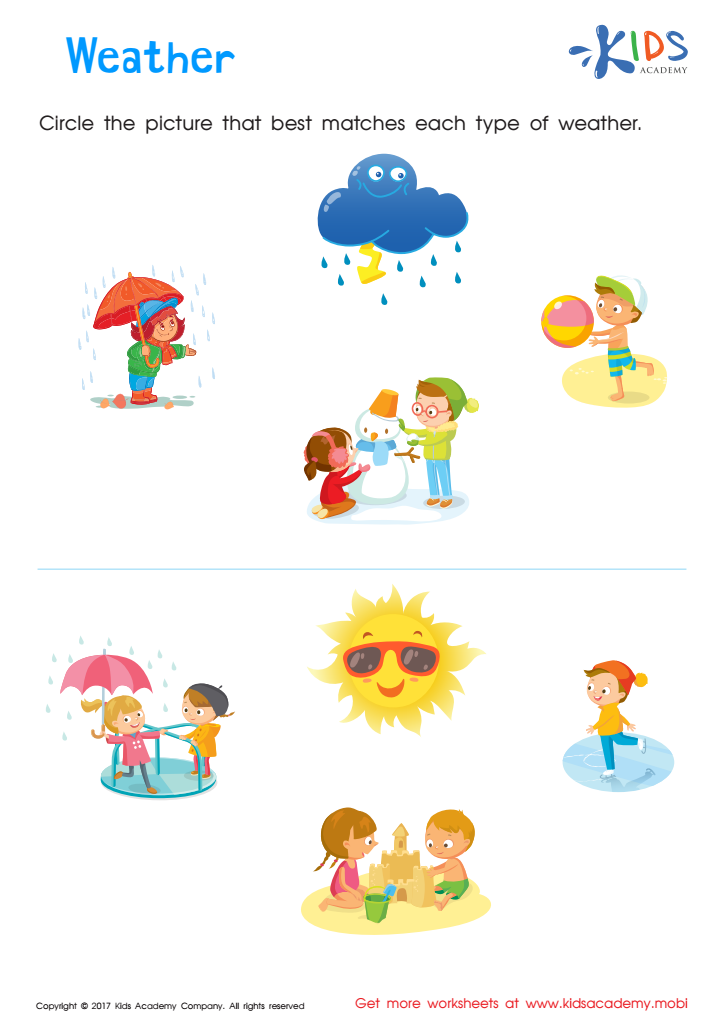
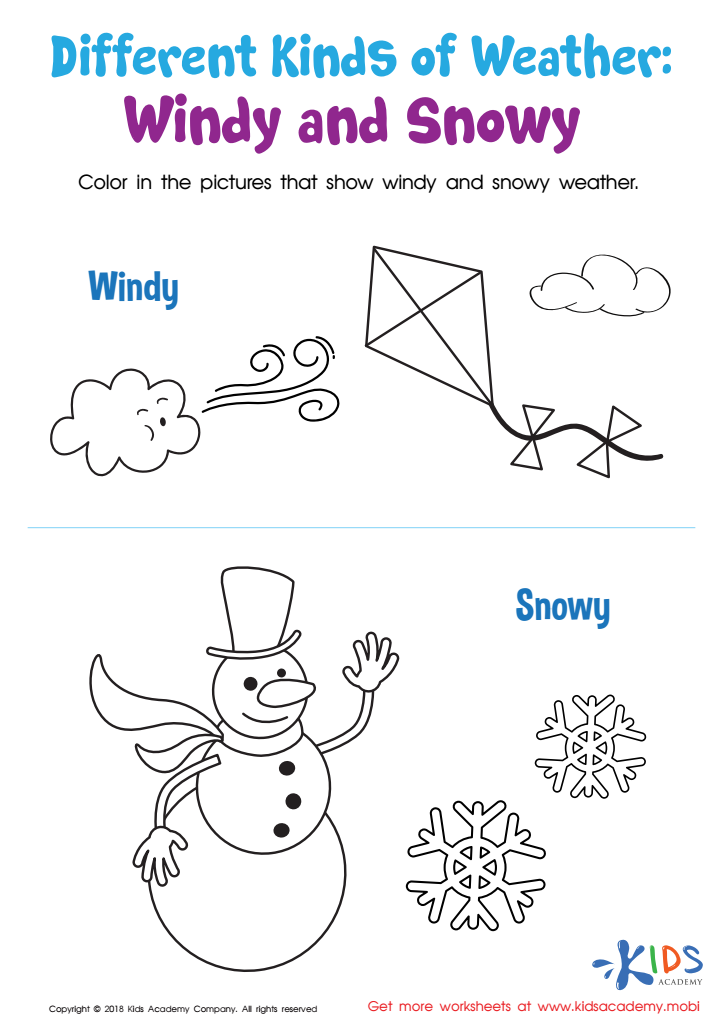
Different Kinds of Weather: Windy and Snowy Worksheet
Invite your little learner to practice their fine motor skills and learn about nature with this fun and charming PDF worksheet! Reinforce weather patterns and examine their environment as they color, giving them a foundation for understanding how weather affects them. No matter the weather, your learner will have a blast!
Download (PDF)
 Assign to My Students
Assign to My Students
Different Kinds of Weather: Windy and Snowy Worksheet
Worksheet
Join Kids Academy for Free
Who is primarily going to use this learning content?








Understanding weather vocabulary is crucial for children ages 4-7 because it enhances their ability to interact with, comprehend, and appreciate the world around them. This critical period in a child's developmental timeline is when their curiosity about nature and their surroundings begins to peak. Introducing weather terms like sunny, rainy, snowy, windy, and cloudy helps them grasp everyday occurrences that they see and feel.
For parents, discussing weather reinforces descriptive language skills, an essential component of early literacy. Children learn to communicate their experiences and observations accurately, thereby expanding their cognitive development and problem-solving skills. Being able to discuss weather also extends learning to home environments, turning real-world experiences into teachable moments.
For teachers, incorporating weather vocabulary into lessons aligns with early science curricula, promoting critical thinking. Activities such as weather charts and simple experiments (like observing melting ice) make learning interactive and fun. This builds foundational knowledge for more complex scientific concepts later on. Additionally, understanding weather-related terms and phenomena enhances a child's safety by helping them understand the importance of clothing choices and preparing for different weather conditions.
Ultimately, fostering an early interest and basic understanding of weather prepares children for broader insights into Earth sciences, making learning an engaging and ongoing adventure.