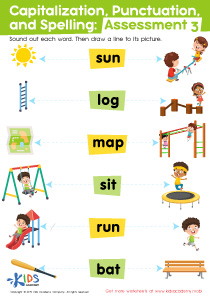
Critical Thinking Grammar Worksheets for Ages 4-7
2 filtered results
Difficulty Level
Grade
Age
-
From - To
Subject
Activity
Standards
Enhance your child's grammar and thinking skills with our Critical Thinking Grammar Worksheets designed for ages 4-7. These engaging activities focus on foundational grammar concepts while fostering problem-solving abilities. Ideal for early learners, the worksheets include fun exercises, such as sorting words, completing sentences, and matching activities, that challenge young minds to think critically. Tailored to help children develop their language skills, our resources support both classroom teaching and homeschooling. Give your young learner a head start in grammar and critical thinking with our expertly crafted, easy-to-use worksheets. Boost confidence, creativity, and cognitive abilities while learning!
Favorites
With answer key
Interactive
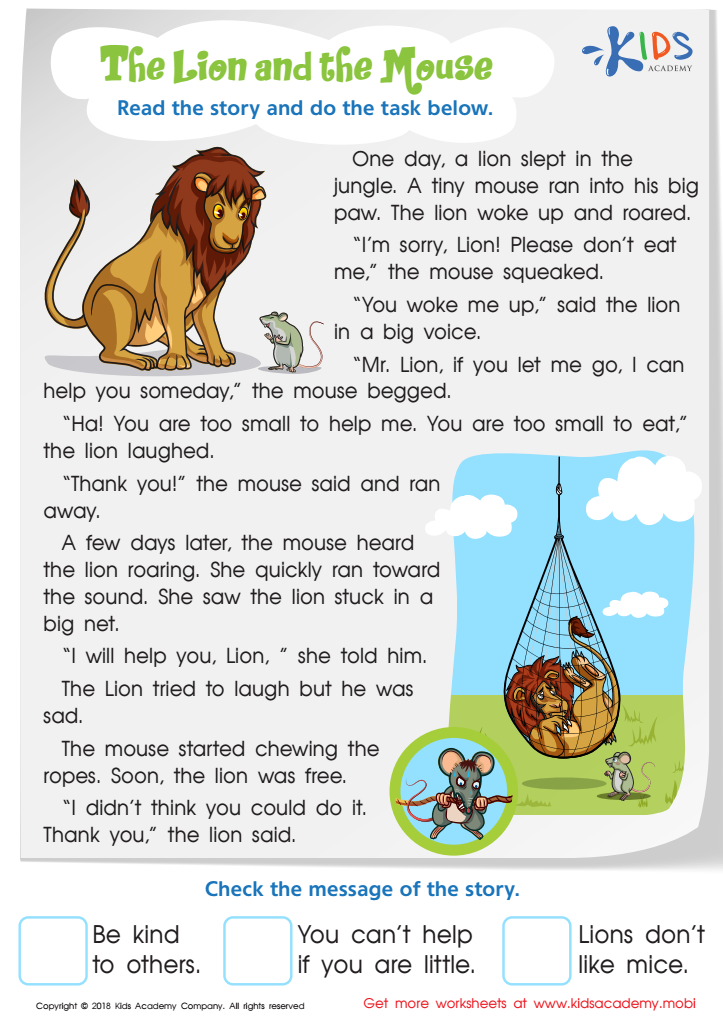
The Lion and the Mouse Worksheet
Writers often have a hidden message or theme in their stories. This printable worksheet helps readers uncover these themes by looking at what characters do and say in "The Lion and the Mouse". It's a great practice resource for learning to interpret stories.
 Assign to My Students
The Lion and the Mouse Worksheet
Worksheet
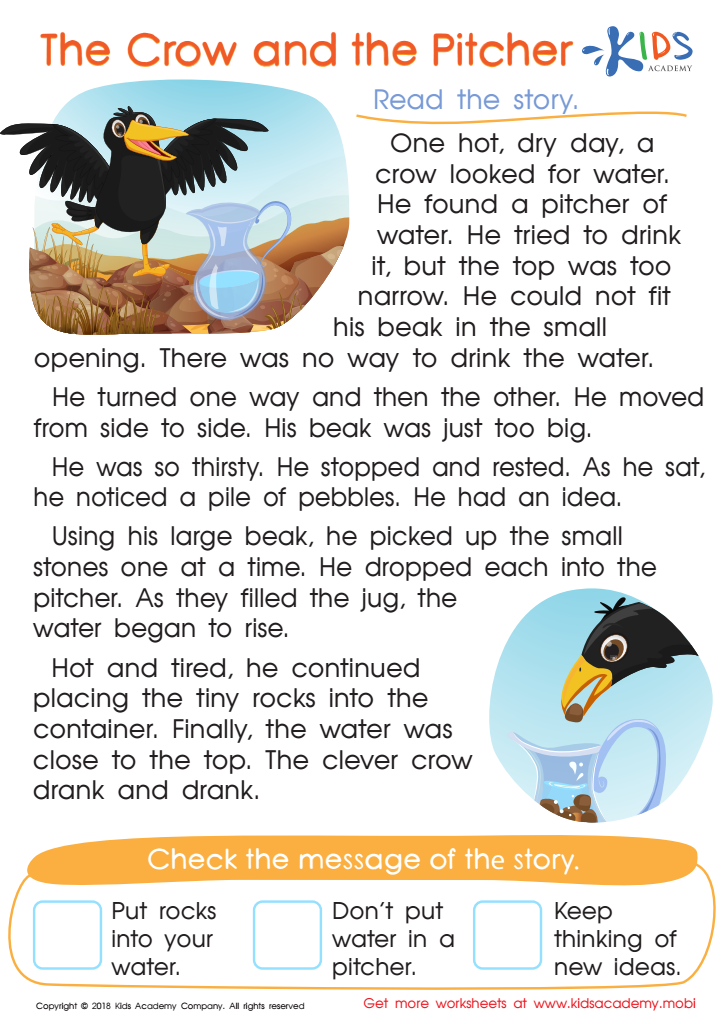
The Crow and the Pitcher Worksheet
Introduce your child to reading comprehension with this fascinating worksheet from Kids Academy! Featuring Aesop's fable of a thirsty crow, your child will enjoy reading and determining the central theme of the passage. This worksheet is a great way to give your child a purpose for reading while helping to build their comprehension skills.
The Crow and the Pitcher Worksheet
Worksheet
Join Kids Academy for Free
Who is primarily going to use this learning content?




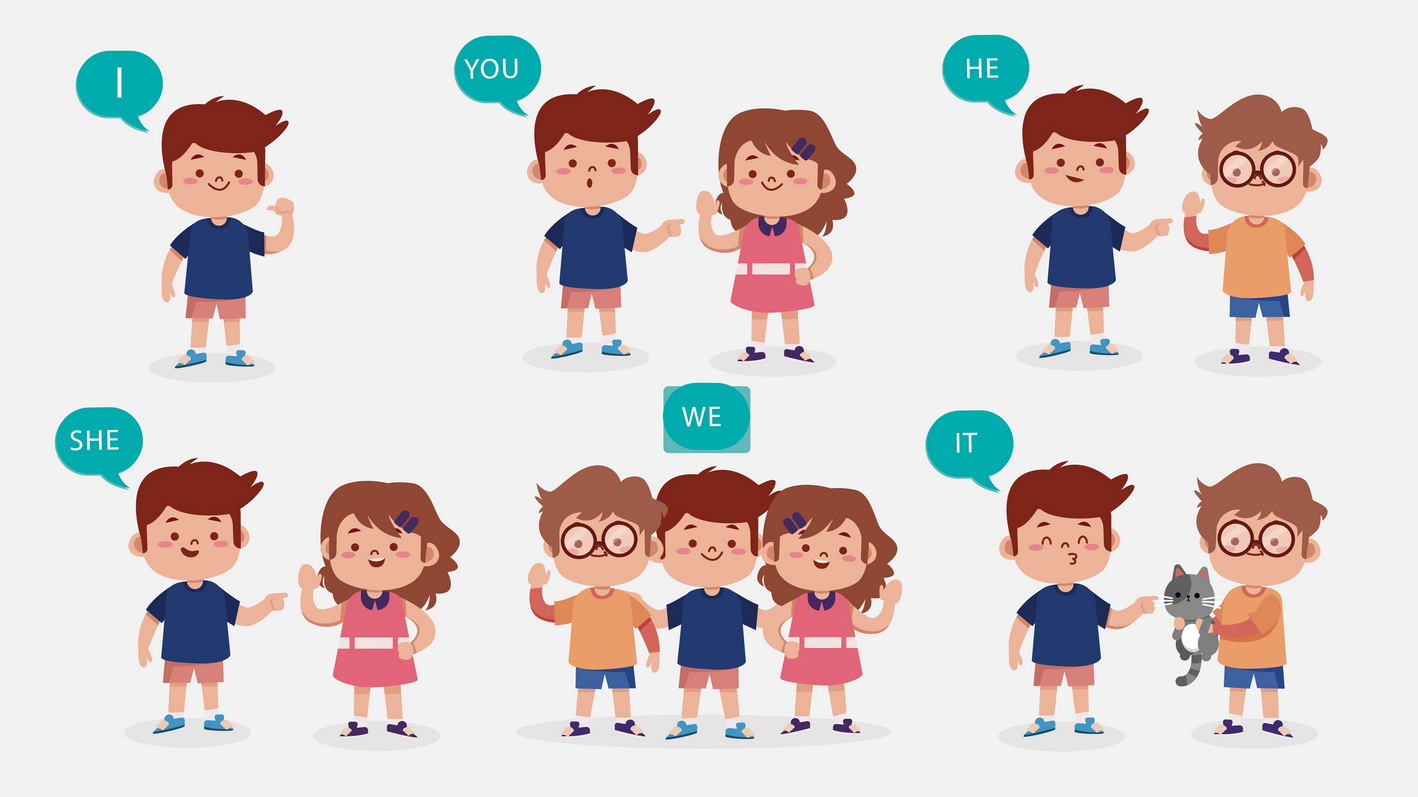


Critical Thinking Grammar (CTG) for ages 4-7 is a foundational tool that blends language learning with problem-solving skills, essential for young children's cognitive, social, and academic development. During this formative period, kids develop rapidly, and integrating CTG into their curriculum equips them with essential reasoning capabilities.
First, active engagement in CTG fosters analytical and logical thinking. By questioning sentence structure, children learn to identify patterns, consistency, and understand exceptions, anchoring their ability to apply reasoning to different contexts.
Secondly, CTG bolsters linguistic competence. It aids in mastering language rules while also encouraging flexibility in language use, helping children articulate thoughts clearly and effectively, thereby enhancing communication skills.
Additionally, CTG creates independent thinkers. Encouraging children to explore 'why' and 'how' grammar works cultivates inquisitiveness and self-reliance. This intrinsic motivation leads to better problem-solving skills and adaptability, qualities valuable for lifelong learning.
Lastly, these early skills impact academic success across various subjects. Students with strong CTG foundations typically show improved comprehension and performance in reading, writing, and math.
In essence, prioritizing CTG in early education ensures holistic development — intellectually enriching, promoting effective communication, and building critical thought capabilities indispensable for future success.