Improving vocabulary Writing Worksheets for Ages 4-7
5 filtered results
-
From - To
Unlock your child's potential with our "Improving Vocabulary Writing Worksheets for Ages 4-7." Designed to make learning fun, these engaging worksheets bolster vocabulary skills through interactive and creative exercises. Children will enhance their reading and comprehension abilities while expanding their word bank. Suitable for preschoolers and early elementary students, our worksheets incorporate vibrant illustrations and thought-provoking prompts to keep young learners engaged. Give your child the tools they need for academic success and watch them thrive with our meticulously crafted resources. Start your educational journey today and see a remarkable improvement in your child's vocabulary and writing skills!
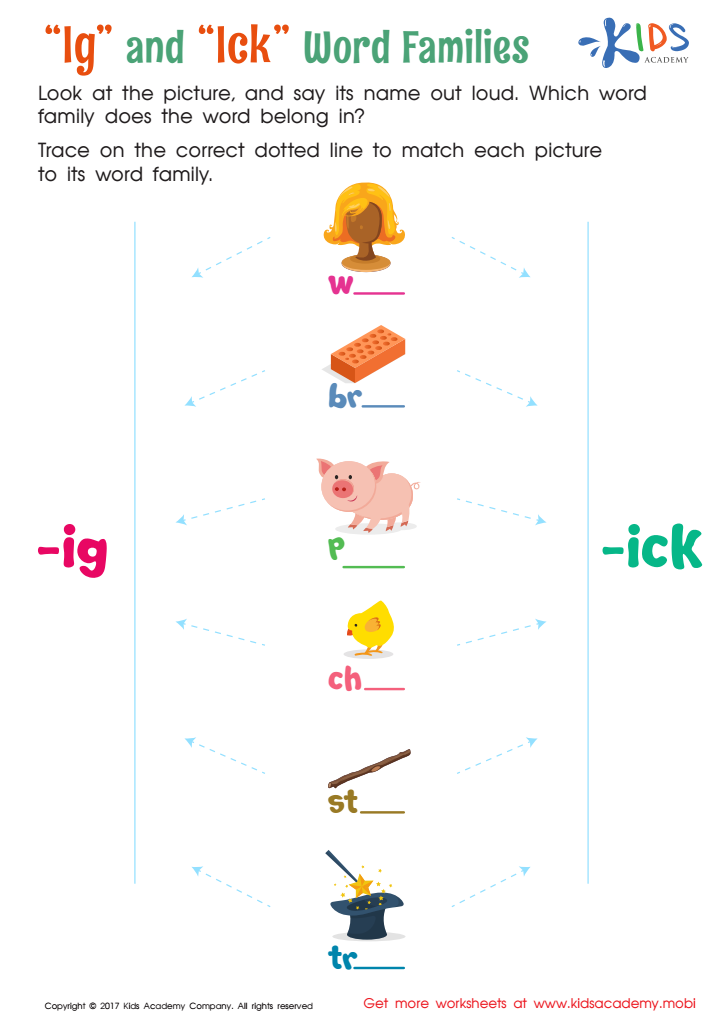
Words Families "ig" and "ick" Spelling Worksheet
 Assign to My Students
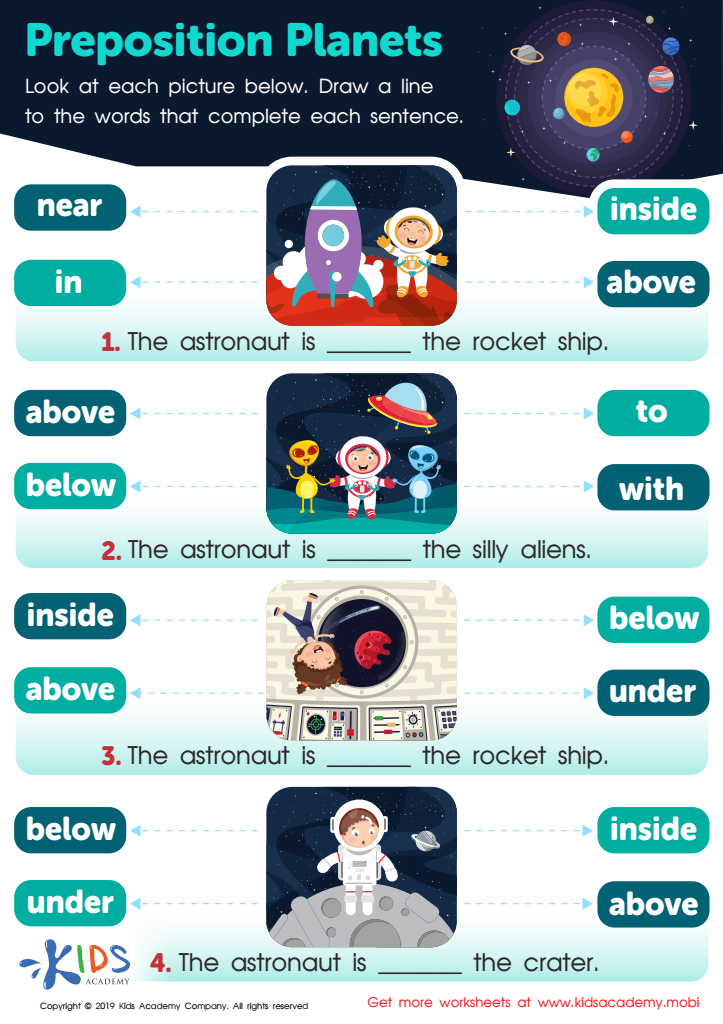
Preposition Planets Worksheet
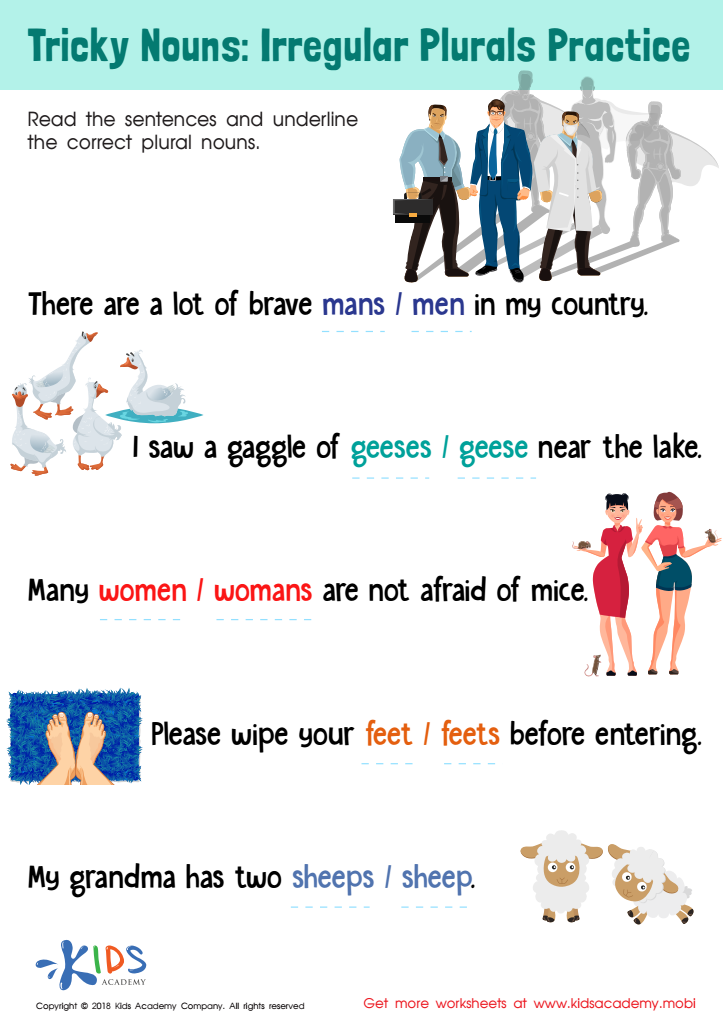
Tricky Nouns: Irregular Plurals Practice Worksheet
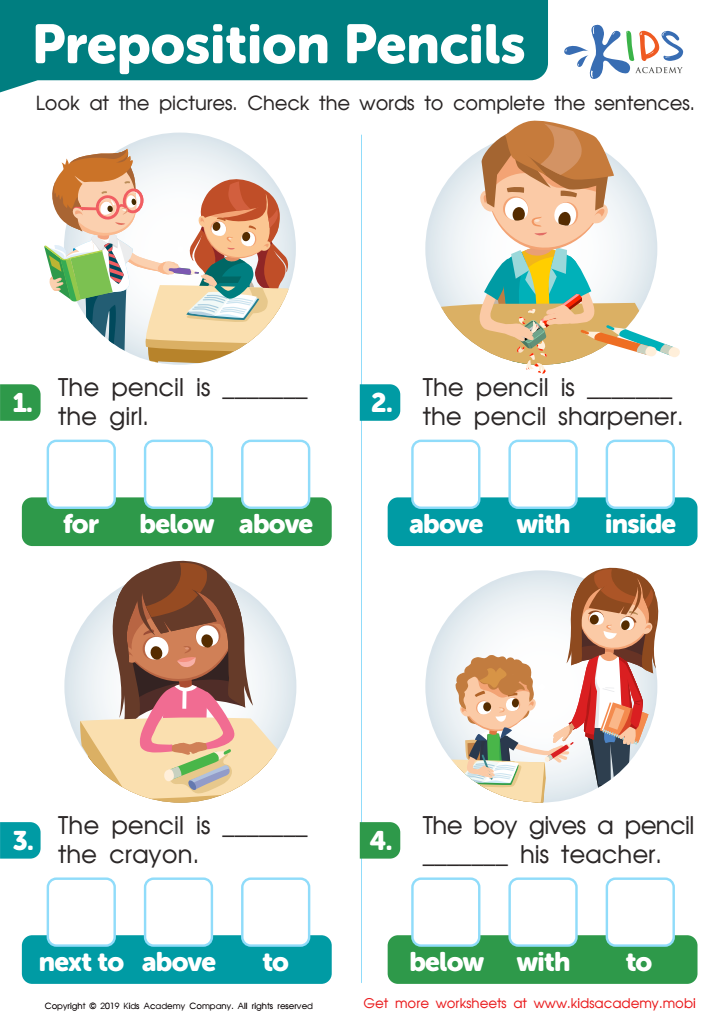
Preposition Pencils Worksheet
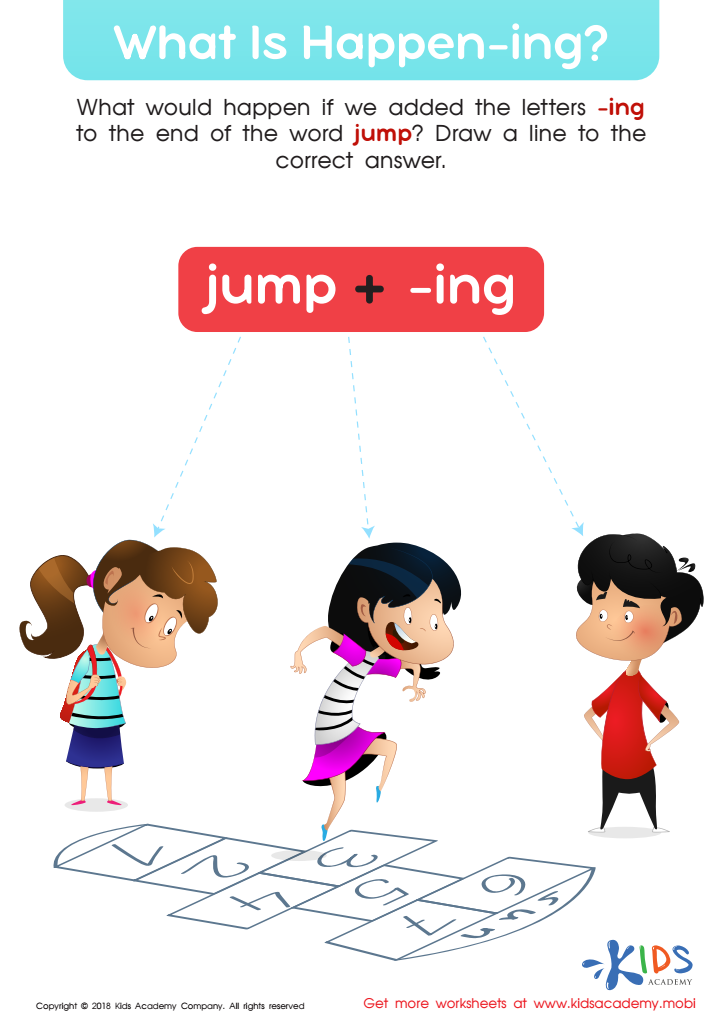
What Is Happen-Ing? Worksheet








Improving vocabulary and writing skills in children aged 4-7 is crucial for several reasons. First, a robust vocabulary enhances communication skills. When children have a wide range of words at their disposal, they can express themselves more effectively and accurately. This improved communication ability aids in social interactions and builds confidence.
Second, early vocabulary acquisition is a foundational element of literacy development. A strong vocabulary supports reading comprehension and enables children to understand stories, follow instructions, and engage with learning materials more deeply. When children encounter new words in reading scenarios, they can decode and comprehend meanings more easily if they already have a rich vocabulary base.
Third, improving writing skills at an early age fosters creativity and critical thinking. Writing encourages children to organize their thoughts, develop their ideas, and think logically. These cognitive skills are instrumental for problem-solving and academic success across various subjects.
Finally, a well-developed vocabulary and early writing proficiency set children up for long-term academic achievement. Studies show that early literacy and language skills are strong predictors of future educational success. By prioritizing vocabulary and writing development, parents and teachers help young learners build a solid foundation for lifelong learning and effective communication.
Investing time in strengthening these skills creates a nurturing environment where children can thrive academically, socially, and emotionally.








