
Logical thinking Writing Worksheets for Ages 4-7
4 filtered results
Difficulty Level
Grade
Age
-
From - To
Subject
Activity
Standards
Enhance your child's writing and reasoning skills with our engaging Logical Thinking Writing Worksheets designed for ages 4-7. These thoughtfully crafted worksheets encourage young learners to develop essential logical thinking abilities through fun and interactive activities. Children will explore concepts such as sequencing, problem-solving, and critical thinking while refining their writing techniques. Each worksheet supports a balanced approach to education, promoting both creativity and cognitive skills. Ideal for homeschooling or classroom use, these worksheets provide the perfect foundation for young minds to grow. Foster a love for learning and watch your child excel in logical reasoning and writing with our captivating resources.
Favorites
With answer key
Interactive
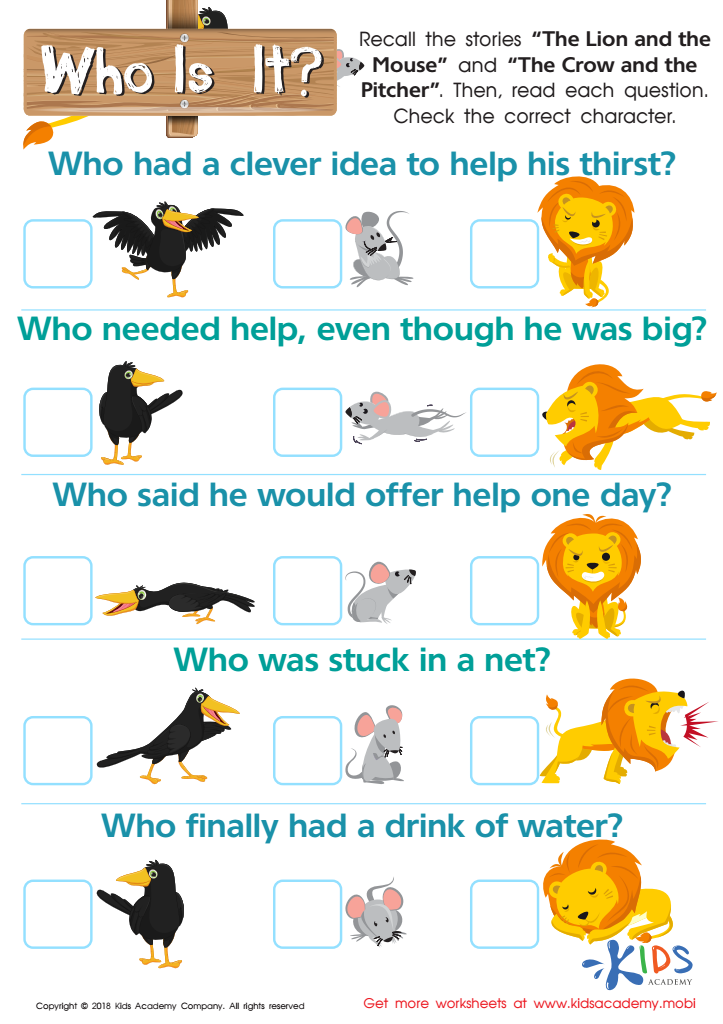
Who Is It? Worksheet
This worksheet helps students recall details from The Crow and the Pitcher and The Lion and the Mouse stories. Students will answer questions about the characters' actions. Use it to assess their understanding of both stories, as this is a key comprehension skill.
 Assign to My Students
Who Is It? Worksheet
Worksheet
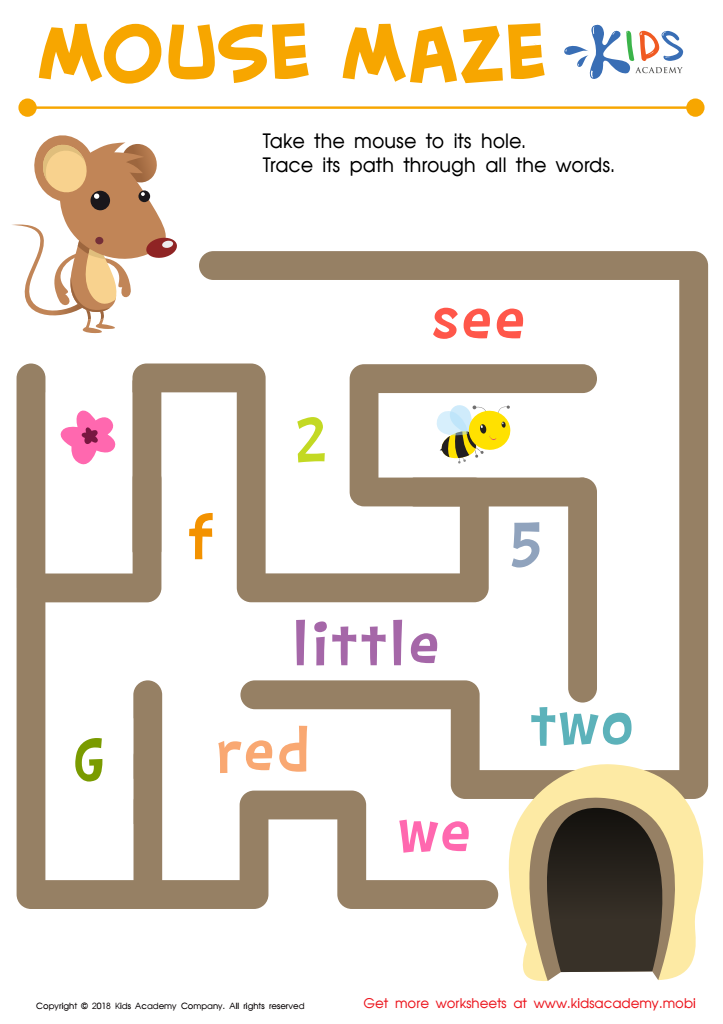
Find Words Mouse Maze Worksheet
Help your child identify words and guide the mouse home! Ask them to point out the colorful animal on the worksheet, then take their hand and show them how to trace the path, going through all the words in the maze to get the mouse back to its hole.
Find Words Mouse Maze Worksheet
Worksheet
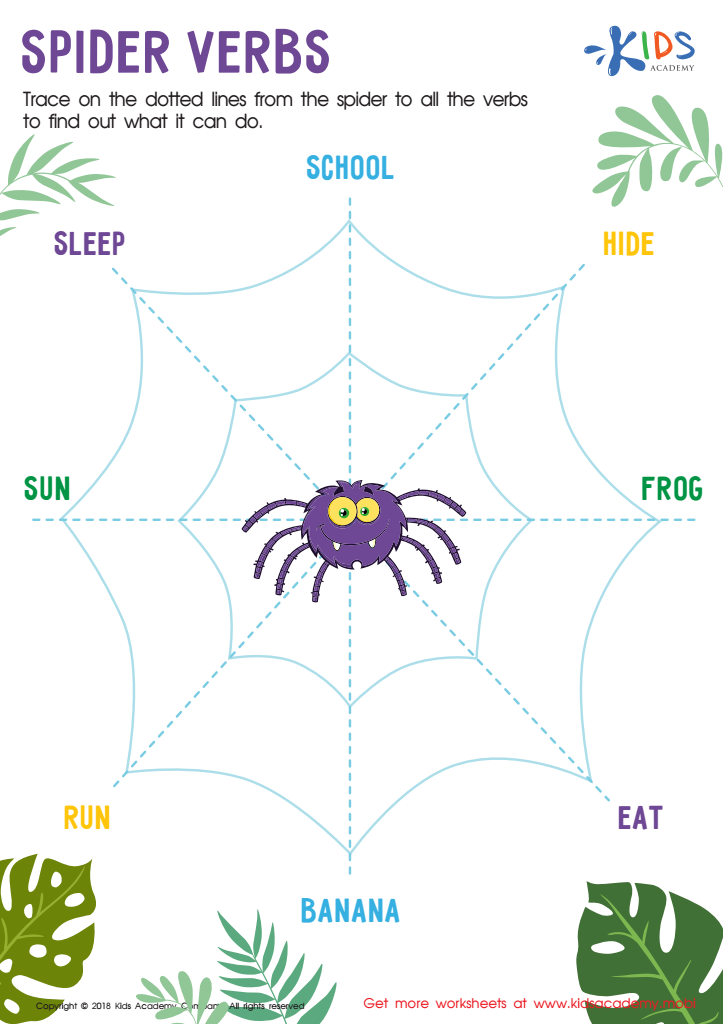
Spider Verbs Worksheet
Verbs are action words. Examples: run, play, talk. Show your child this tracing sheet for them to learn about verbs. Ask them to trace the dotted lines from the spider to the words that are verbs. These words are what the spider can do.
Spider Verbs Worksheet
Worksheet
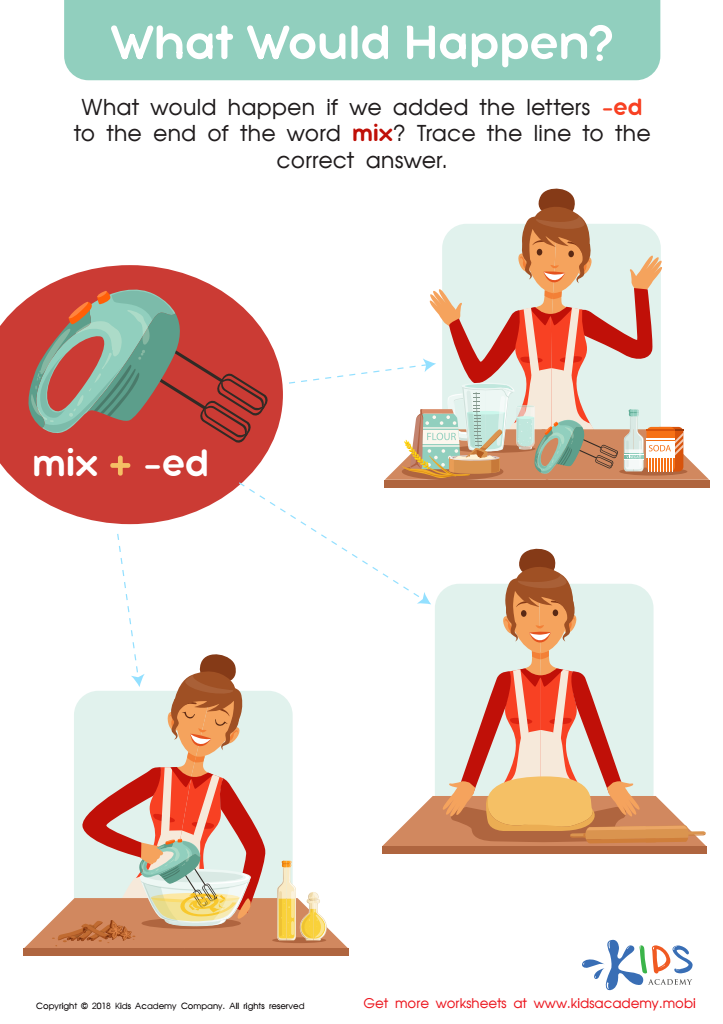
What Would Happen? Worksheet
Are your kids struggling with tenses? Use this worksheet to help them. See what they know by asking them to add '-ed' to the end of 'mix'. Guide them through the tracing sheet as they look for the correct answer.
What Would Happen? Worksheet
Worksheet
Join Kids Academy for Free
Who is primarily going to use this learning content?








Logical thinking writing is crucial for children ages 4-7 as it lays the foundation for critical thinking and problem-solving skills. During these formative years, kids are naturally curious and begin to understand cause and effect, making it an ideal time to cultivate their logical reasoning through writing. When children engage in writing activities that promote logical thinking, they learn to order their thoughts, formulate clear arguments, and create connections between ideas.
This skill enables children to express themselves coherently and enhances their ability to comprehend complex information in later years. Additionally, logical thinking writing boosts literacy skills, aiding in vocabulary development and sentence structure comprehension. In a world increasingly driven by technology and information, these skills will be invaluable as children encounter new challenges.
Furthermore, parents and teachers play a critical role in guiding children through this process. Encouraging children to articulate their thoughts through story writing, journals, or structured prompts fosters a supportive environment where they can thrive. By prioritizing logical thinking writing, parents and teachers not only support academic success but also help children become confident communicators and innovative thinkers in an ever-evolving world.








