Noun identification Writing Worksheets for Ages 4-7
8 filtered results
-
From - To
Discover our engaging Noun Identification Writing Worksheets designed specifically for children ages 4-7! These fun, interactive worksheets help young learners recognize and understand nouns in an enjoyable way. With vibrant illustrations and simple tasks, children will develop essential writing skills, boost their vocabulary, and foster their love for learning. Each worksheet includes a variety of exercises, such as identifying nouns in sentences and honing their writing abilities. Perfect for teachers, parents, or homeschoolers, these resources make learning about nouns both exciting and educational. Download now and watch your child's confidence grow as they embark on their grammar journey!
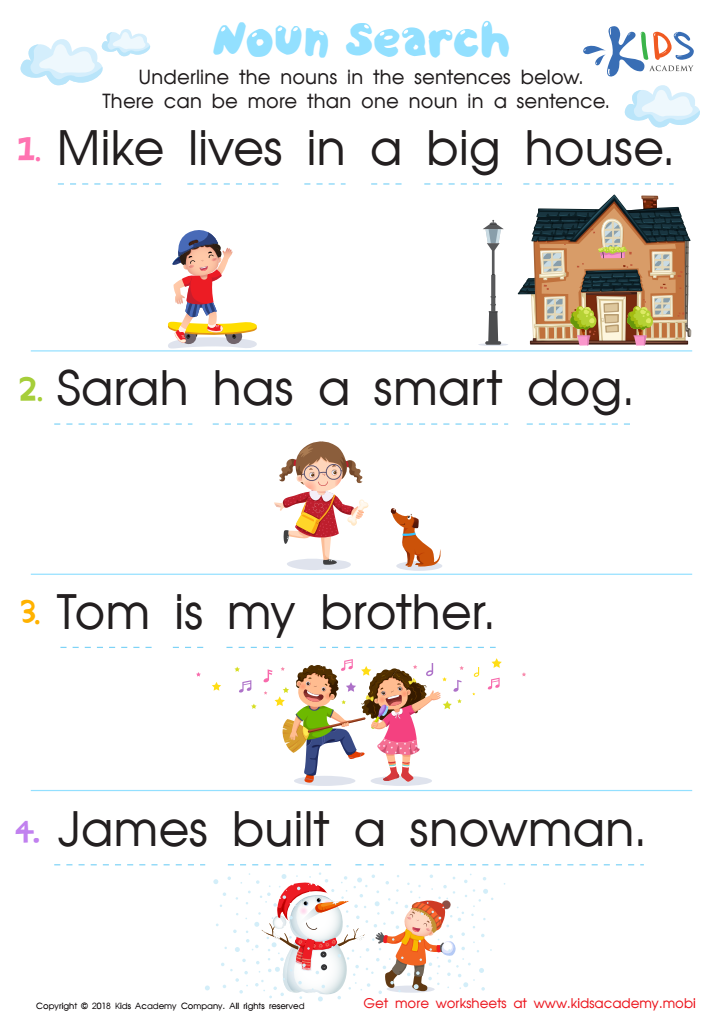
Noun Search Worksheet
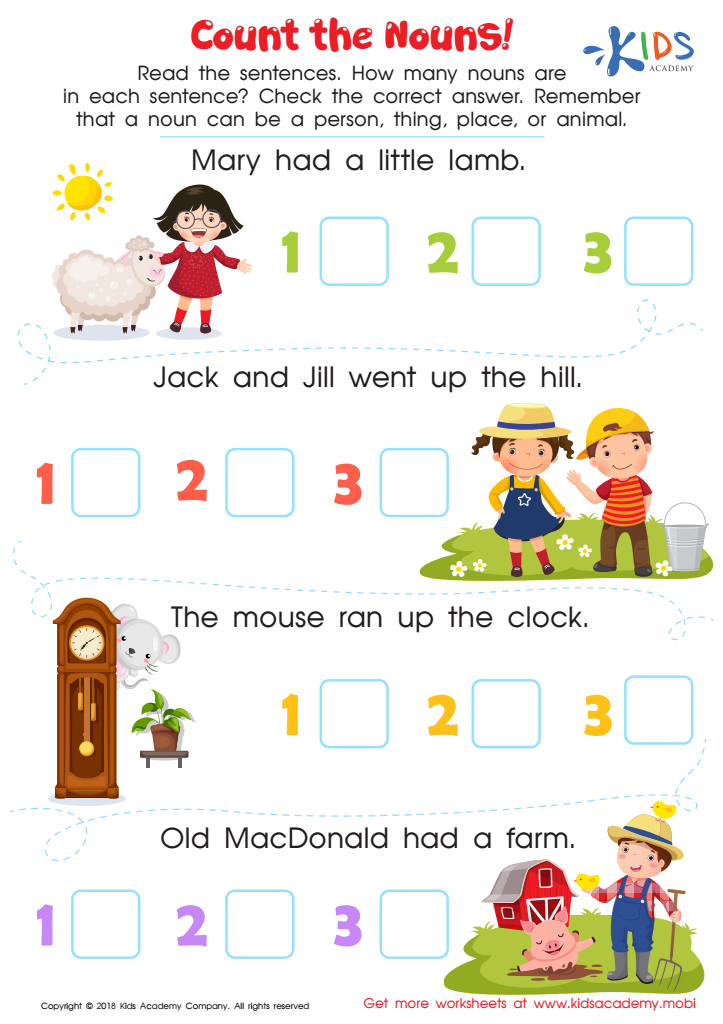
Count the Nouns Worksheet
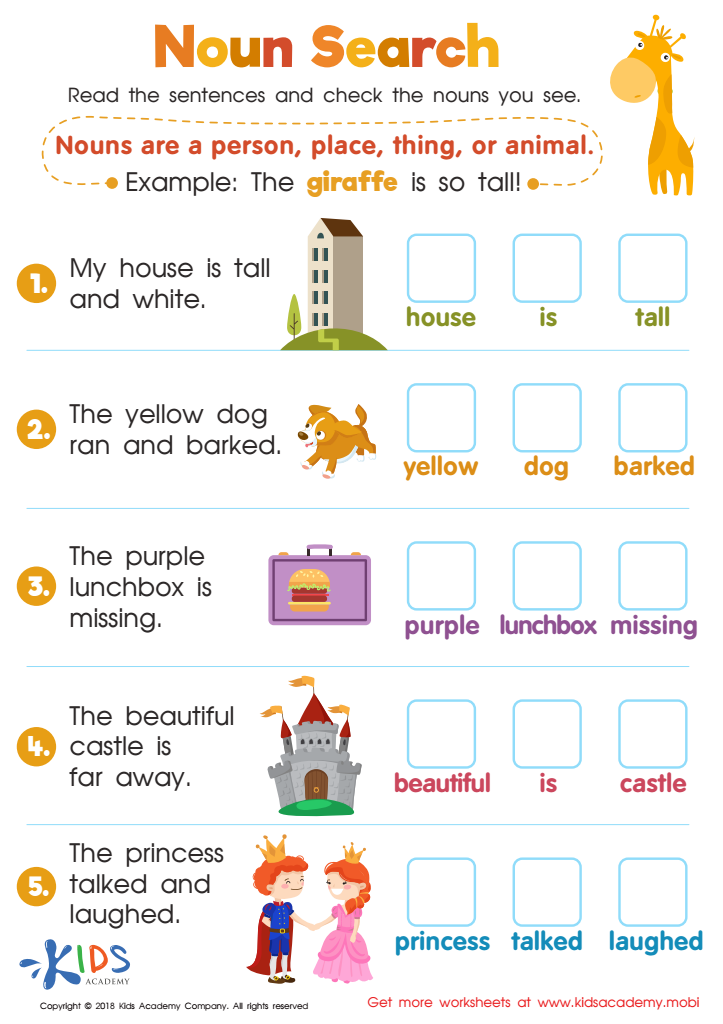
Noun Search Worksheet
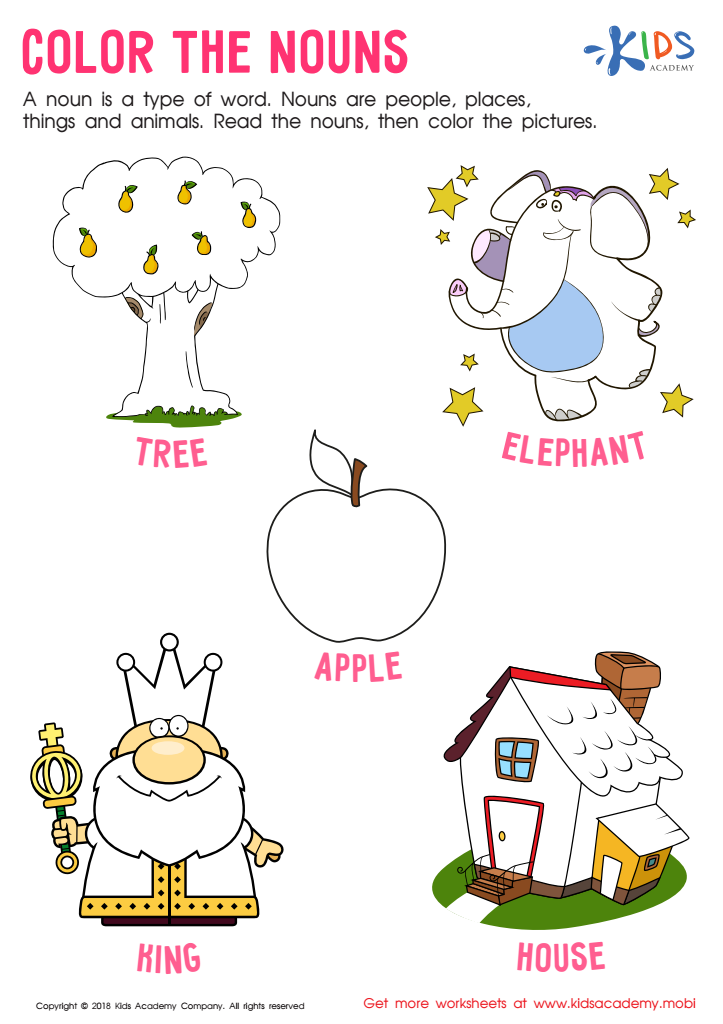
Color the Nouns Worksheet
 Assign to My Students
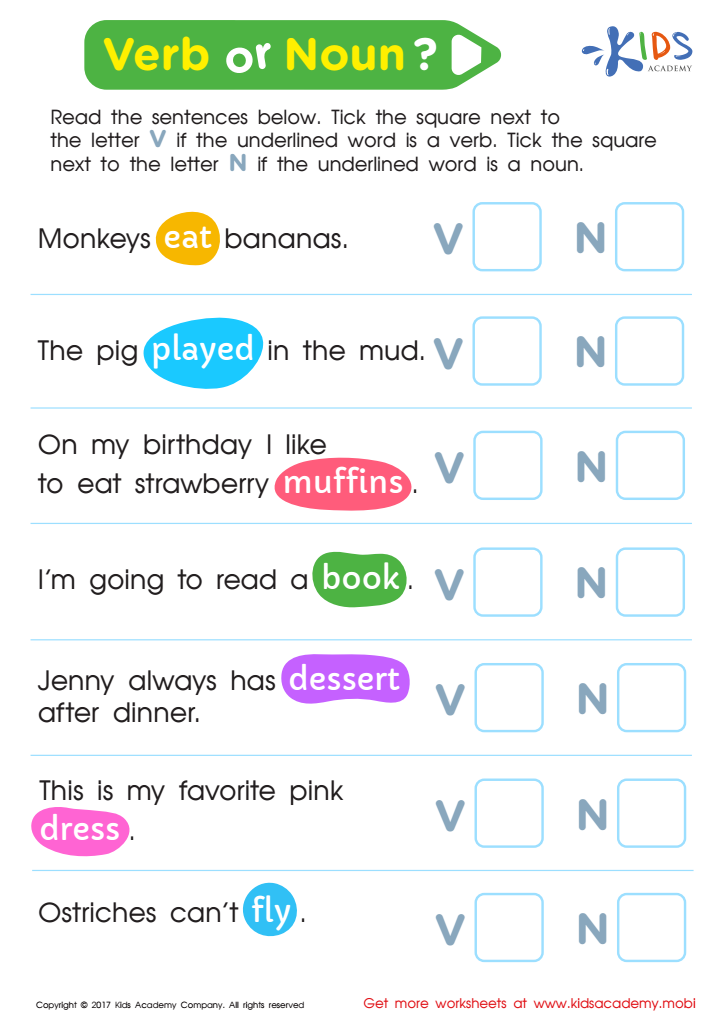
Verb or Noun Worksheet
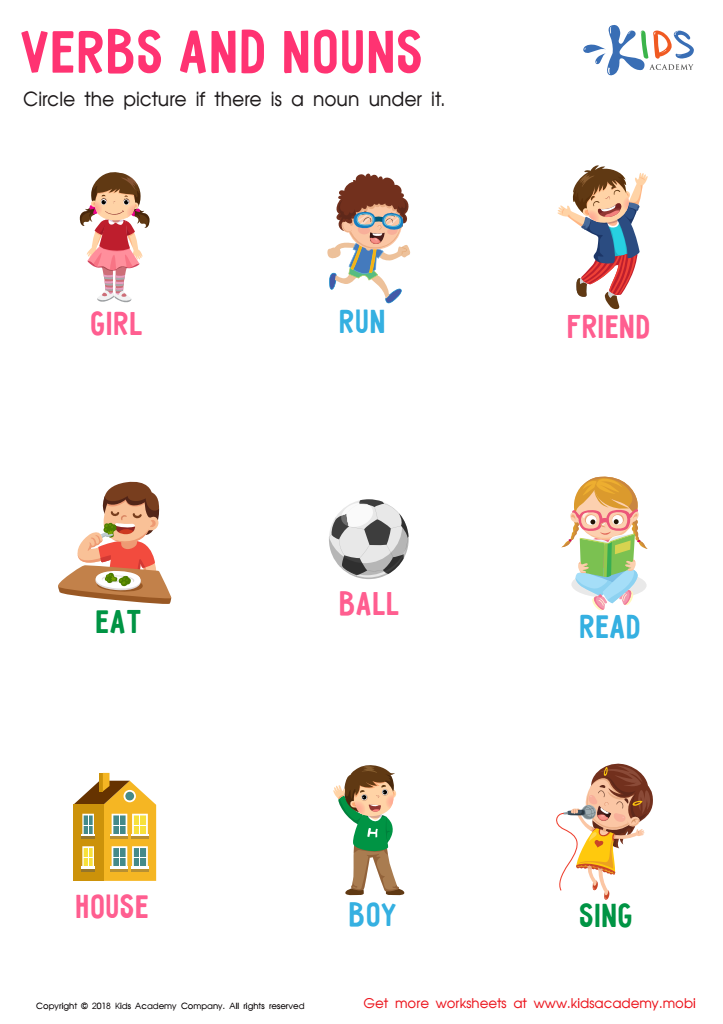
Verbs and Nouns Worksheet
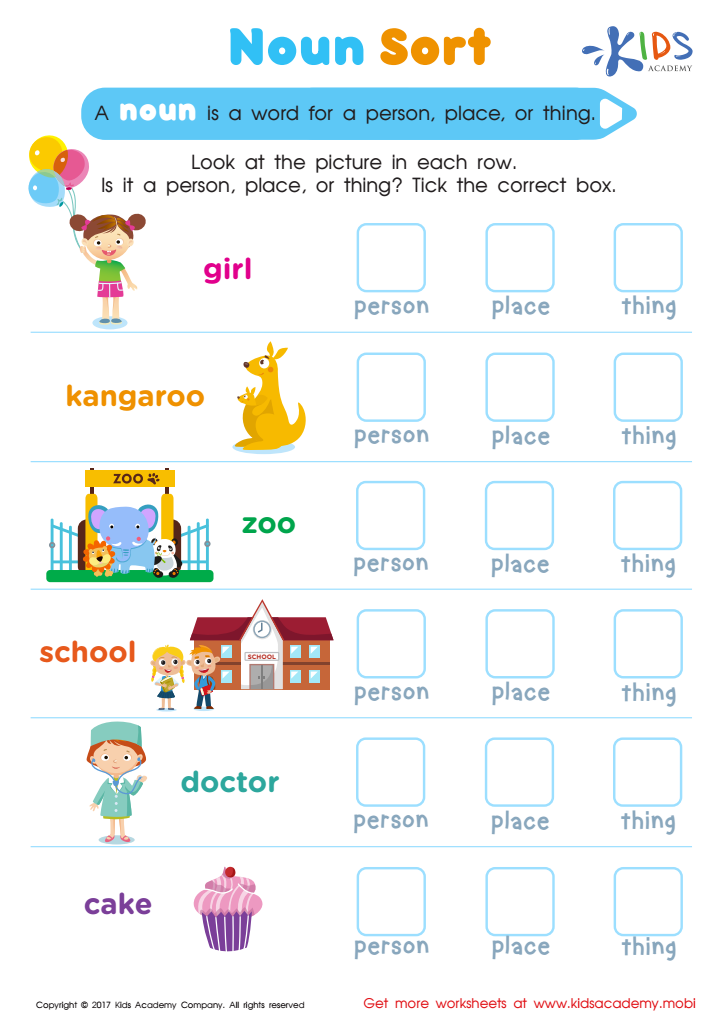
Noun Sort Printable
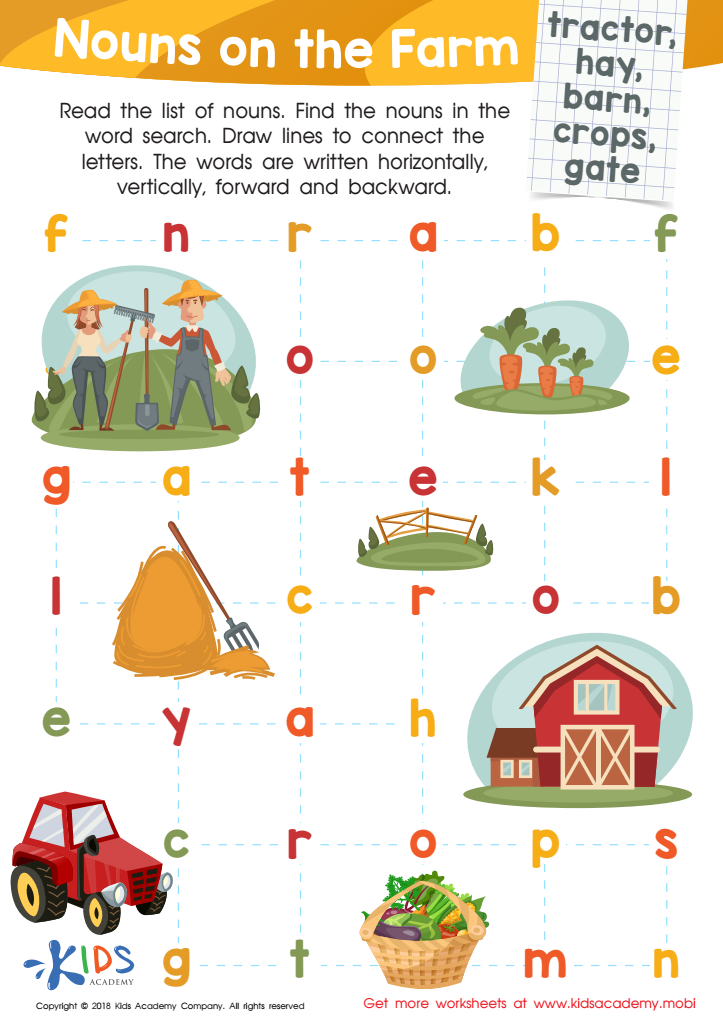
Nouns on the Farm Worksheet








Noun identification writing is a fundamental skill for children aged 4 to 7, playing a crucial role in their overall language development. At this stage, young learners are beginning to grasp the concept of words as representations of objects, people, places, and ideas. By focusing on noun identification, parents and teachers help children build a robust vocabulary, which serves as the foundation for effective communication.
Caring about this skill enhances children's reading and writing capabilities. Recognizing nouns prepares them for sentence construction, allowing them to express thoughts with clarity. As children learn to identify and use nouns in their writing, they develop critical thinking and creativity, driving them to describe their world more accurately.
Additionally, this process fosters enthusiasm for learning—enhancing engagement during activities, stories, and group discussions. It cultivates a sense of accomplishment as students see their writing improve, further motivating them to progress.
Investing time in noun identification writing also prepares children for more advanced literacy skills, setting a positive trajectory for their education. When parents and teachers prioritize this early language skill, they can significantly impact children's confidence, comprehension, and overall academic success, emphasizing the enduring importance of language development in these formative years.








