Phonics recognition Writing Worksheets for Ages 4-7
3 filtered results
-
From - To
Introduce your child to the joy of reading with our Phonics Recognition Writing Worksheets, specifically designed for ages 4-7. These engaging and interactive worksheets help young learners develop essential phonics skills by recognizing letters, sounds, and word formation. Each worksheet includes fun activities, such as tracing, matching, and writing exercises that promote early literacy. With a focus on phoneme awareness and sound-letter correspondence, these resources make learning exciting and effective. Ideal for home or classroom use, our worksheets support kids in building a strong foundation in reading and writing. Start their phonics journey today and watch their skills flourish!
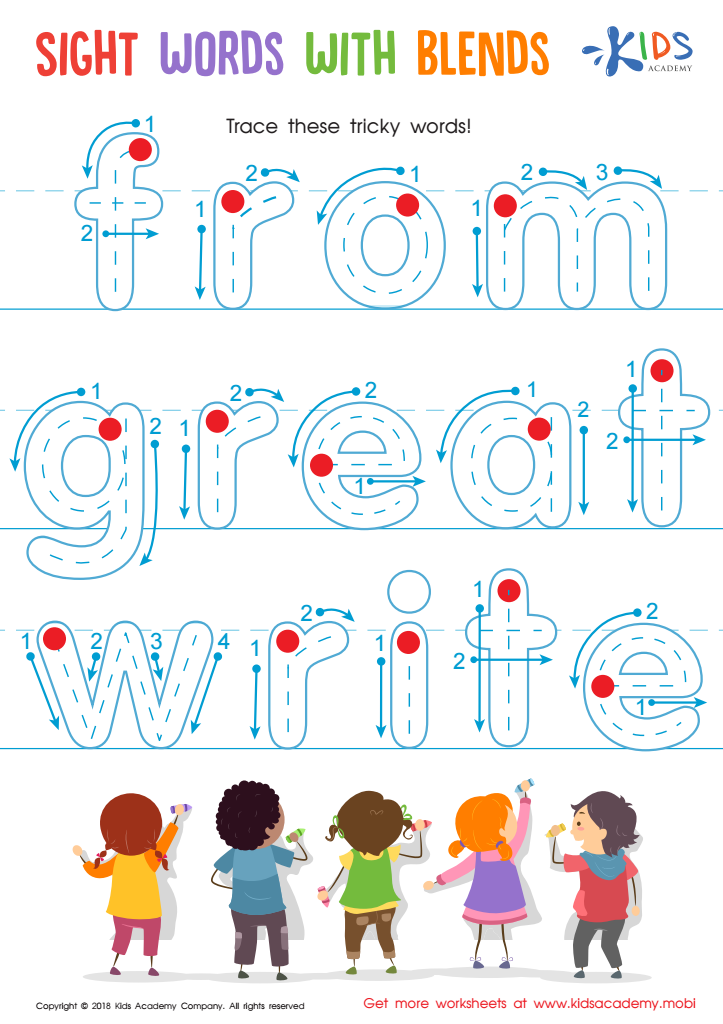
Sight Words with Blends Worksheet
 Assign to My Students
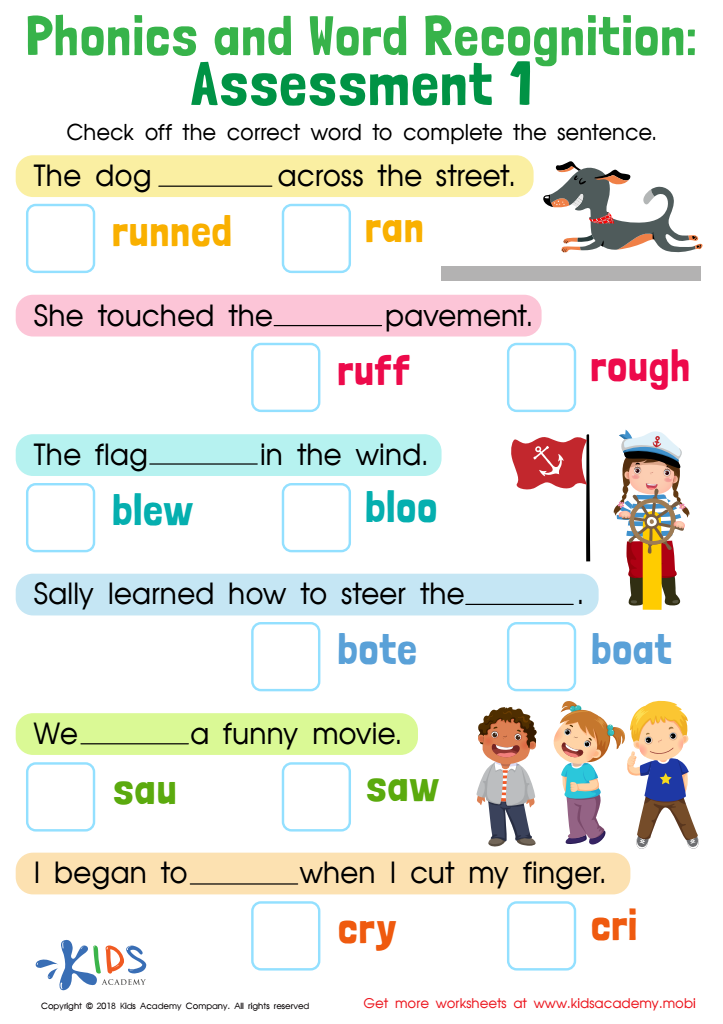
Phonics and Word Recognition: Assessment 1 Worksheet
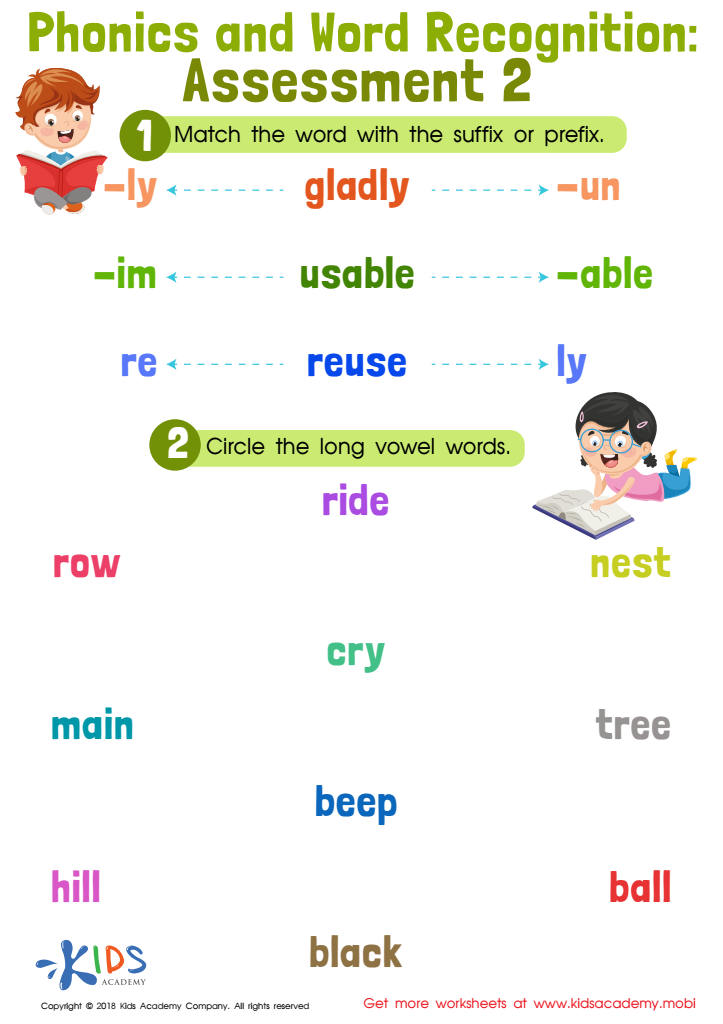
Phonics and Word Recognition: Assessment 2








Phonics recognition writing is crucial for children aged 4-7 as it lays the foundation for reading and writing skills. During these formative years, children develop the ability to decode words and understand the relationship between letters and sounds. This process fosters vocabulary expansion and enhances comprehension, which are vital for academic success later on.
Parents and teachers should care about phonics recognition writing because it not only boosts literacy but also cultivates a child’s confidence and enthusiasm for learning. When children learn to recognize sounds and blend them into words, they experience the satisfaction of reading independently, which can motivate them to engage more deeply with books and writing activities.
Additionally, mastering phonics equips children with essential tools for effective communication. As they progress, they can express their thoughts more clearly through writing, enhancing their overall literacy skills. The early mastery of phonics provides a stepping stone into more complex language arts, ultimately affecting a child’s educational trajectory.
By fostering an environment that prioritizes phonics recognition, parents and teachers can help shape proficient readers and writers, setting the stage for lifelong learning and success.








